
What Are the Main Applications of Grade 2 Titanium Wire?
- Grade 2 Titanium Wire
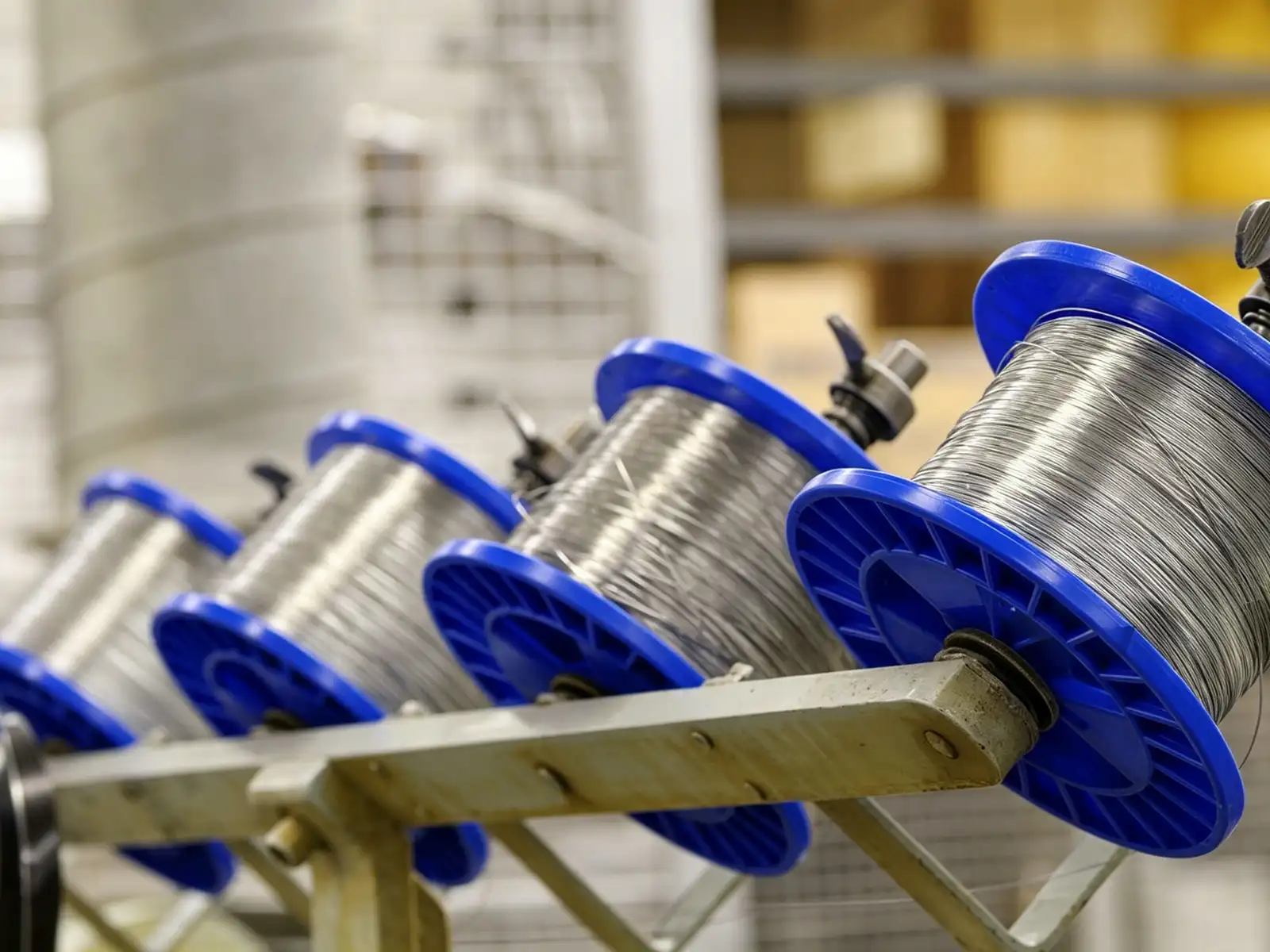
Gr2 titanium wire, as the most widely used industrial pure titanium material, has become a core material in fields such as chemical corrosion protection, marine engineering, medical devices, electronic instruments, and welding materials, thanks to its high purity of over 99.2%, excellent corrosion resistance, and good processing characteristics. This material maintains the excellent ductility of pure titanium while providing a reliable tensile strength of 345-450 MPa and can operate stably within a wide temperature range of -253℃ to 300℃. Compared to industry pain points such as the excessively high cost of high-purity titanium wire and the insufficient strength of ordinary titanium wire, Gr2 titanium wire achieves the best balance between performance and cost-effectiveness, making it particularly suitable for industrial scenarios requiring medium strength, high corrosion resistance, and excellent processing performance. With the growing demand for precision manufacturing and extreme environment applications, this material is showing even broader prospects.
1. Why Is Corrosion-Resistant Applications in Chemical and Marine Engineering Important?
(1) What Should You Know About Key Components in Chemical Equipment?
The core challenge faced by the chemical industry is the rapid corrosion failure of equipment in environments with strong acids, strong bases, and high salt concentrations. Grade 2 titanium wire, through its spontaneously formed dense oxide film on the surface, exhibits corrosion resistance far superior to that of stainless steel in various media such as nitric acid, sulfuric acid, and hydrochloric acid. Heat exchanger tube bundles use φ1.0-3.0mm titanium wire woven into corrosion-resistant screens, with a service life 5-8 times longer than ordinary materials. The anode connection lines in electrolytic cells use φ2.0-4.0mm hard titanium wire, whose 550-750 MPa tensile strength ensures long-term stable operation in electrochemical environments. In reactor vessels, corrosion-resistant lining fasteners and stirring blade connection pins utilize the non-magnetic properties of titanium wire to avoid interfering with the reaction process.
(2) What Should You Know About Long-lasting Protective Materials for Marine Engineering?
Seawater and salt spray environments pose a severe test for metal materials. Gr2 titanium wire showed no signs of corrosion in a 480-hour salt spray test, making it an ideal choice for offshore platforms, seawater desalination equipment, and deep-sea exploration devices. In seawater pipeline systems, φ3.0-5.0mm annealed titanium wire is used as flexible connectors, with an elongation of 15-20% to absorb thermal expansion and contraction stress. Marine mooring systems use φ4.0-6.0mm half-hard titanium wire braided ropes, combining a strength of 480-620MPa with excellent corrosion resistance to ensure the long-term safety of underwater structures. In applications such as ship propeller anti-corrosion nets and submarine cable protective layers, the lightweight characteristic of titanium wire (with a density of only 4.51g/cm³) significantly reduces structural load.
(3) Why Is Performance Advantages in Special Environments Important?
Application scenario | Titanium wire specifications | Core Performance Requirements | Comparison of alternative materials |
Chlor-alkali industry electrolytic cell | φ2.0-3.0mm | Chloride ion corrosion resistance, stable conductivity | Nickel-based alloy costs three times as much |
Seawater Desalination Heat Exchanger | φ1.0-2.0mm | Corrosion-resistant and high heat transfer efficiency | The lifespan of the copper alloy is only 1/5 |
Petrochemical Hydrogenation Reactor | φ3.0-5.0mm | Hydrogen embrittlement resistance, high-temperature stability | Stainless steel fails above 300℃ |
Deep-sea probe structural components | φ0.5-1.5mm | High strength, compressive-resistant, seawater-resistant | Aluminum alloy is prone to corrosion and cracking |
2. What Should You Know About the Core Role of Welding Materials in the Field of Metal Processing?
(1) What Should You Know About ERTi-2 Welding Filler Material?
The connection quality of titanium and titanium alloy structures directly affects equipment safety. Gr2 titanium wire, as ERTi-2 standard welding wire, has strictly controlled chemical composition (O≤ 0.25%, Fe≤ 0.30%, N≤ 0.03%), ensuring the composition of the weld matches the base material. Welding wires with diameters of φ1.0-3.0mm are used in TIG and MIG welding processes, and the tensile strength of the welded joints can reach over 90% of the base material. In aerospace pressure vessel welding, φ1.2mm and φ1.6mm titanium wires are used with argon protection to achieve high-quality full-penetration welds. For automatic circumferential welding of chemical pipelines, φ2.0-2.4mm titanium wires are used; their good molten pool fluidity reduces porosity and slag inclusion defects. For precise welding of medical device housings, φ0.8-1.0mm ultra-fine welding wires are used, resulting in aesthetically pleasing welds without affecting biocompatibility.
(2) What Should You Know About Cold Working Materials for Precision Components?
Gr2 titanium wire’s excellent plastic deformation capability supports complex forming processes. Annealed titanium wires with diameters of φ0.5-2.0mm are used to manufacture fasteners through cold heading and cold extrusion, with yield strength reaching over 480MPa. Spring manufacturing uses φ1.0-3.0mm semi-hard titanium wire, whose 8-12% elongation and 180-240HV hardness provide excellent elastic recovery performance. Eyeglass frames use φ1.5-2.5mm titanium wire formed by bending, combined with anodized surface treatments (space gray, silver, etc.) to achieve a balance of aesthetics and functionality. Lightweight support structures in sports equipment use φ2.0-4.0mm titanium wire woven into meshes, with a strength-to-weight ratio superior to aluminum alloys. Vibration-damping components and sensor leads in precision instruments use φ0.3-0.8mm ultra-fine titanium wire, whose non-magnetic properties prevent interference with electromagnetic signals.
(3) What Should You Know About Surface Treatment and Functional Modification?
Processing technology | Applicable wire diameter range | Performance improvement | Typical Applications |
Pickling treatment | φ0.1-6.5mm | Remove oxide scale and improve cleanliness | Chemical filtration mesh, medical devices |
Bright drawing | φ0.5-5.0mm | Surface roughness Ra ≤ 0.4 um | Electronic components, decorative parts |
Anodizing | φ1.0-4.0mm | Colored coating, wear resistance increased by 50% | Eyeglass frames, consumer electronics |
Lubricating coating | φ2.0-6.0mm | Reduce mold sticking, molding force reduced by 30% | Cold-headed fasteners, forged blanks |
3. Why Is High-end Applications in Medical and Electronic Precision Manufacturing Important?
(1) What Should You Know About Biocompatible Materials for Medical Devices?
The medical industry has extremely high requirements for the biocompatibility and long-term stability of materials. Gr2 titanium wire meets the ISO 5832-2 medical-grade standard, being non-toxic, non-allergenic, and not inducing immune responses. Orthopedic implants use φ2.0-4.0mm titanium wire braided fixation meshes, whose elastic modulus (approximately 110 GPa) is close to that of human bone, reducing the stress shielding effect. Dental orthodontic archwires are made from φ0.4-0.8mm ultra-fine titanium wire, significantly improving patient wearing comfort. Drive cables for minimally invasive surgical instruments use φ0.2-0.5mm high-strength titanium wire, maintaining good pushability and torsional response during intravascular navigation. Pacemaker electrode leads use φ0.15-0.3mm multi-strand twisted titanium wire, balancing conductivity and flexibility. These applications fully utilize titanium wire’s corrosion resistance and long-term biostability in body fluid environments.
(2) What Should You Know About Functional Components of the Electronics Industry?
The miniaturization of electronic devices and the integration of functions have promoted the application of ultra-fine titanium wires. Elastic contacts made from φ0.1-0.4mm titanium wires have a lifespan of tens of thousands of mating cycles, and a resistivity of only 0.57 uOhm.m ensures stable signal transmission. Smartphone shielding covers use a φ0.3-0.6mm titanium wire woven mesh, whose non-magnetic properties do not affect NFC and wireless charging functions. The support structure of sensitive elements in sensors uses φ0.2-0.5mm titanium wires, featuring a low temperature coefficient and excellent vibration resistance. High-temperature fixtures in semiconductor manufacturing equipment use φ1.0-2.0mm titanium wires, maintaining dimensional stability in short-term working environments at 450℃. The tab connections of new energy batteries use φ0.5-1.5mm nickel-plated titanium wires, which are resistant to electrolyte corrosion and have low contact resistance.
(3) What Should You Know About Structural Optimization Materials for Precision Instruments?
Aerospace instruments and scientific research equipment have stringent reliability requirements for materials. The gyroscope balance ring uses φ0.8-1.5mm annealed titanium wire, which does not become brittle in a -253℃ liquid hydrogen environment. Precision adjustment mechanisms in optical instruments use φ0.5-1.0mm titanium wire springs, which do not magnetize or creep during long-term use. The grid structure of the mass spectrometer ion source is woven with φ0.1-0.3mm ultrafine titanium wire, which does not release impurities under high-temperature vacuum conditions. The locking pins of the deployment mechanism in deep space probes use φ2.0-3.0mm hard titanium wire, maintaining locking force under wide temperature fluctuations (-180℃ to 120℃). These applications demonstrate the multidimensional performance advantages of Gr2 titanium wire under extreme conditions.
4. Why Is Emerging Fields and Technology Innovation Application Directions Important?
(1) What Should You Know About Key Materials of the Hydrogen Energy Industry?
Hydrogen energy equipment places special requirements on the hydrogen embrittlement resistance of materials. The flow channels of the bipolar plates in proton exchange membrane fuel cells use φ0.3-0.8mm etched titanium wire mesh, which is resistant to hydrogen corrosion and has a contact resistance of less than 5 mΩ·cm². The inner lining reinforcement mesh of high-pressure hydrogen storage vessels uses φ1.0-2.0mm titanium wire, maintaining structural integrity under 70 MPa pressure cycling loads. The cathode mesh of water electrolysis hydrogen production devices uses φ0.5-1.5mm pickled titanium wire, which has a large catalytic active surface area and increases hydrogen production efficiency by 15%. The piston ring sealing springs of hydrogen compressors use φ2.0-3.0mm semi-hard titanium wire, demonstrating superior resistance to hydrogen-induced delayed cracking compared to high-strength steel.
(2) What Should You Know About 3D Printing and Additive Manufacturing?
Additive manufacturing technology has expanded the applications of titanium wire. The Laser Metal Deposition (LMD) process uses φ0.8-1.5mm titanium wire as the feedstock, achieving forming efficiency 3-5 times higher than that of powder beds. Wire Arc Additive Manufacturing (WAAM) uses φ2.0-3.0mm welding wire to rapidly build large aerospace structures, with material utilization exceeding 85%. In hybrid manufacturing technology, titanium wire injection alternates with milling, enabling complex features such as internal cooling channels. These innovative processes reduce the manufacturing cost of titanium alloy components and shorten the cycle from design to finished product.
(3) What Should You Know About Green Manufacturing and Sustainable Development?
Application field | Environmental protection advantages | Performance indicators | Economic benefits |
Desulfurization and denitrification equipment | Resistant to flue gas corrosion, long lifespan | Use temperature ≤ 300℃, resistant to SO₂/NOₓ | Maintenance cycle extended by 5 years |
Seawater desalination | No heavy metal leaching, no secondary pollution | No corrosion after 480 hours of salt spray test | Energy consumption reduced by 20% |
Renewable energy installations | Lightweight design, high recyclability | Density 4.51 g/cm³, 100% recyclable | Reduce total lifecycle cost by 30% |
Environmental monitoring sensor | Long-term stability, no calibration required | Drift rate <0.5%/year | Operation and maintenance costs reduced by 60% |
(4) What Should You Know About Composite Reinforcement?
Titanium wire plays the role of reinforcement in high-performance composites. In ceramic matrix composites (CMC), weaving φ0.3-0.8mm titanium wire improves toughness, increasing fracture toughness by 40%. Titanium wire interlayers in metal laminates absorb impact energy, offering better ballistic performance than single metals. Resin-based composites utilize surface-treated titanium wire for reinforcement, achieving interfacial bonding strength above 50 MPa. These composite structures demonstrate the unique advantage of being lightweight and high-strength in aerospace engines, protective armor, and sports equipment.
5. Why Is Materials Selection and Engineering Applications Guide Important?
(1) How Should Selection Principles for Titanium Wires in Different States?
Annealed (M state) titanium wire is suitable for cold working processes that require large deformation, such as deep drawing, bending, and weaving. Half-hard (Y2 state) balances strength and plasticity, making it suitable for manufacturing elastic components and medium-strength fasteners. Hard (Y state) provides the highest strength, used for load-bearing structural parts and high-stress environments. Selection should comprehensively consider processing difficulty, final performance, and cost factors. Heat treatment processes can adjust the state of titanium wire on-site: annealing at 350-450℃ for 2 hours restores plasticity, and vacuum annealing at 600-700℃ for 1 hour achieves optimal overall performance.
(2) Why Is Diameter Specifications Match Applications Important?
Diameter range | Typical Applications | Processing technology | Key Points of Quality Control |
φ0.1-0.3mm | Medical minimally invasive devices, precision electronics | Ultra-fine drawing and laser cutting | Surface defects <0.01mm, straightness 2‰ |
φ0.5-2.0mm | Welding filler, sensor leads | Multiple-pass cold drawing, bright annealing | Diameter tolerance ± 0.02mm, tensile strength variability <5% |
φ2.0-4.0mm | Chemical fasteners, marine ropes | Roll forming, surface strengthening | Roundness 0.15mm, yield strength uniformity |
φ4.0-6.5mm | Structural support, forged billet | Continuous rolling, online straightening | Internal defect detection (ultrasonic, eddy current), grain size control |
(3) What Should You Know About Quality Assurance and Technical Services?
Modern titanium wire production uses full-process automated control, with vacuum melting ensuring chemical composition stability and multiple passes of cold drawing to precisely control the microstructure. Induction heating combined with online temperature measurement achieves uniform heating, and continuous rolling units ensure dimensional accuracy, while automatic flaw detection systems remove defective products. Finished product inspection includes chemical analysis (spectrometer), mechanical property testing (tensile, hardness), metallographic inspection (grain size, inclusions), and surface quality assessment (roughness, defect depth). Products that meet ASTM B863 standards are accompanied by a 3.1 material certificate traceable to the raw material batch.
(4) Why Is Cost Optimization Strategies for Engineering Applications Important?
Reasonable material selection can significantly reduce total ownership costs. In chemical equipment, using Gr2 titanium wire instead of high-nickel alloys increases initial investment by 20% but reduces maintenance costs by 70%. In marine engineering, titanium wire ropes are 40% lighter than stainless steel, resulting in considerable savings in installation and transportation costs. Bulk purchasing and customized processing services reduce intermediate steps, while controlling diameter tolerance within ± 0.02mm lowers subsequent processing waste. Surface pretreatment (degreasing, passivation) and protective packaging (vacuum sealing, nitrogen protection) extend storage life and service life.
6. What Is the Conclusion?
Gr2 titanium wire, with its excellent corrosion resistance, moderate strength, superior machinability, and wide temperature adaptability, has become an indispensable functional material in modern industry. From traditional chemical corrosion protection and marine engineering to cutting-edge hydrogen energy equipment and additive manufacturing, its application boundaries continue to expand. Advances in material technology and optimization of production processes have further improved product quality stability and cost competitiveness, providing various industries with high-cost-performance engineering material options.
FAQ
Q1: What is the difference between Gr2 titanium wire and Gr1, Gr4 titanium wire?
Gr2 titanium wire has an oxygen content of 0.25% and a tensile strength of 345-450 MPa, balancing strength and ductility, with the best cost-performance ratio. Gr1 has a lower oxygen content (0.18%) but weaker strength, while Gr4 has a higher oxygen content (0.40%) with a strength of 550 MPa but reduced plasticity. In industrial applications, Gr2 accounts for more than 60%, suitable for most medium-strength corrosion-resistant scenarios.
Q2: How to determine whether the surface quality of titanium wire is qualified?
The surface of qualified titanium wire should be smooth without cracks, pits, inclusions, or folds. The surface roughness of bright-drawn wire should be Ra ≤ 0.4 um, and the pickled surface should be uniform without oxidation coloration. Check with a magnifying glass to ensure there are no scratches with a depth exceeding the diameter tolerance. Eddy current testing can detect internal cracks, and the depth of surface defects should not exceed 2% of the diameter. Suppliers should provide a surface quality inspection report.
Q3: What should be paid attention to when using titanium wire in welding applications?
Titanium welding must be protected with argon or helium to prevent high-temperature oxidation. The welding wire should match the composition of the base material, and the preheating temperature should not exceed 150℃. The welding current is selected according to the wire diameter: φ1.0mm about 60-80A, φ2.0mm about 120-150A. After welding, argon protection is required for cooling down to below 200℃. The joint needs X-ray or ultrasonic testing to ensure there are no porosity or lack of fusion defects.
How Should Need a High-quality Gr2 Titanium Wire Supplier?
Baoji Titanium Valley Titanium Nickel Zirconium Material Processing Co., Ltd. (Titanium Valley), as a professional manufacturer, is equipped with an Italian Danieli continuous rolling production line, with an annual output of 20, 000 tons. We provide titanium wire in full specifications of φ0.1-6.5mm, accompanied by a 3.1 material certificate and free sample testing services. Contact email: sales@titaniumvalleys.com for technical support and customized processing solutions.
References
- Li Minghui, Zhang Guodong. ‘Processing Technology and Application of Industrial Pure Titanium Materials.’ Metallurgical Industry Press, 2021.
- Wang Xiaofeng, Zhao Jianhua. ‘Research on the Application of Titanium and Titanium Alloys in Chemical and Marine Engineering.’ Journal of Materials Engineering, 2020, 48(5): 23-31.
- Liu Yongqiang, Chen Simin. ‘Biocompatibility and Clinical Application of Medical Titanium Alloys.’ Journal of Biomedical Engineering, 2019, 36(3): 456-463.
- International Titanium Association. ‘Technical Guide for Titanium Materials in the Hydrogen Energy Industry.’ 2022 Technical Report.