
What Is Gr2 Titanium Wire? a Comprehensive Guide to Gr2 Titanium Wire?
- Gr2 Titanium Wire
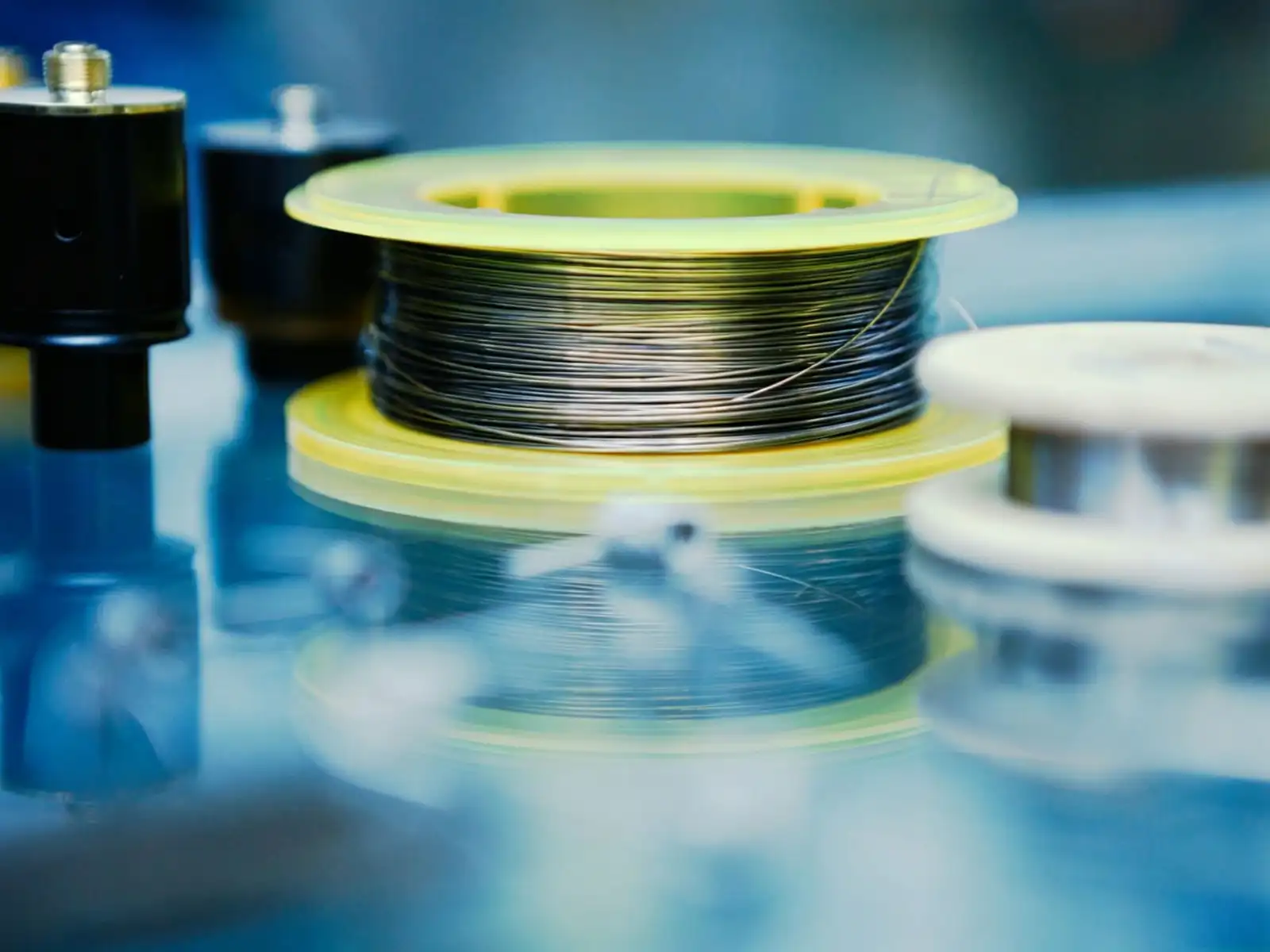
Gr2 titanium wire is the most widely used grade of industrial pure titanium wire, meeting the requirements of ASTM B863 standard. This titanium wire is made from industrial pure titanium with a purity of over 99.2%, providing higher tensile strength than Gr1 while maintaining excellent ductility and weldability. With outstanding corrosion resistance, lightweight advantage, non-magnetic properties, and good biocompatibility, Gr2 titanium wire is widely used in chemical corrosion protection, marine engineering, welding materials, medical devices, electronic components, and other fields. Its balanced overall performance makes it the most cost-effective choice of pure titanium wire in the industrial sector, earning it the reputation of being the ‘all-purpose industrial titanium wire.’
1. What Should You Know About Core Characteristics and Technical Parameters of Gr2 Titanium Wire?
(1) What Should You Know About Chemical Composition and Purity Control?
The chemical composition of Gr2 titanium wire is strictly controlled within a specific range to ensure the stability of material performance. Titanium content is maintained above 99.2%, oxygen content is controlled below 0.25%, iron content does not exceed 0.30%, and carbon content is limited to within 0.08%. This precise composition ratio gives the material unique mechanical properties. Hydrogen content is strictly controlled below 0.015% to prevent hydrogen embrittlement. Nitrogen content is limited to within 0.03%, a single impurity element does not exceed 0.10%, and total impurity content is controlled below 0.40%.
The application of vacuum melting technology ensures the high purity of raw materials and keeps composition fluctuations between batches within a very small range. This strict composition control guarantees that each batch of products has consistent performance, providing a reliable material foundation for downstream precision processing.
(2) What Should You Know About Mechanical Performance?
Gr2 titanium wire exhibits balanced mechanical properties at room temperature. The tensile strength of annealed wire ranges from 400-500 MPa, yield strength reaches 275-420 MPa, elongation remains at 15-20%, and hardness values are between 140-200 HV. The tensile strength of half-hard wire increases to 480-620 MPa, elongation decreases to 8-12%, and hardness rises to 180-240 HV. The tensile strength of hard wire can reach 550-750 MPa, elongation is 5-8%, and hardness values reach 220-300 HV.
This diverse range of mechanical states meets the needs of different application scenarios. Welded applications typically use annealed wire, elastic components prefer semi-hard wire, while high-strength fasteners use hard wire. By precisely controlling the annealing temperature and the degree of cold working, precise regulation of mechanical properties can be achieved.
(3) What Should You Know About Physical Properties and Environmental Adaptability?
The density of Gr2 titanium wire is only 4.51 g/cm³, about 60% that of stainless steel, which provides a significant advantage in lightweight design. It has a high melting point of up to 1668℃, a thermal expansion coefficient of 8.6×10⁻⁶/ C, a thermal conductivity of 15.2 W/(m·K), and an electrical resistivity of about 0.57 uOhm.m. The material exhibits weak paramagnetism and does not cause interference in strong magnetic field environments, making it suitable for precision electronic devices and medical instruments.
The temperature adaptation range is extremely wide, able to withstand a liquid hydrogen and liquid oxygen environment at -253℃ without becoming brittle at the low end, and can work stably for long periods at 300℃ at the high end, with short-term use temperatures reaching up to 450℃. It exhibits excellent corrosion resistance in seawater, salt spray, most organic acids, weak bases, and oxidizing acid solutions, with a service life far exceeding that of ordinary stainless steel materials.
2. What Should You Know About Specification System and Surface Treatment of Gr2 Titanium Wire?
(1) What Should You Know About Diameter Specifications and Tolerance Control?
The standard stock sizes cover φ0.1 mm to φ6.5 mm, and custom diameters can be extended up to φ10.0 mm. Common sizes for welding wire include φ0.8 mm, φ1.0 mm, φ1.2 mm, φ1.6 mm, φ2.0 mm, φ2.4 mm, and φ3.0 mm. Typical specifications for structural parts and electrode wire are φ0.5 mm, φ0.6 mm, φ1.0 mm, φ1.5 mm, φ2.0 mm, φ2.5 mm, φ3.0 mm, φ4.0 mm, φ5.0 mm, and φ6.0 mm.
The ultra-fine specifications start from φ0.1 mm, covering sizes such as φ0.15 mm, φ0.2 mm, φ0.3 mm, and φ0.4 mm, specifically serving the processing of precision instruments, electronic components, and medical implants. The diameter tolerance is controlled within ± 0.002 mm, the ovality error is as low as 0.15-0.2 mm, and the straightness can reach 2‰, ensuring precise positioning in automated production.
(2) What Should You Know About Surface Condition Treatment Method?
The pickled surface removes the oxide layer and surface contaminants through a chemical solution, presenting a uniform matte gray color with moderate surface roughness, suitable for subsequent welding and machining. The bright-drawn surface undergoes multiple cold-drawing processes, resulting in high surface smoothness and metallic luster, making it suitable for direct use on visible parts or precision assembly.
Anodizing can create a variety of colors such as space gray and silver, while also improving surface hardness and wear resistance. The surface of the lubricating coating is suitable for cold forging and precision forming, effectively solving mold sticking problems. Surface cleanliness is strictly controlled, and defects such as oil stains, oxide scale, and scratches are detected online throughout the process, with non-conforming products automatically removed.
(3) What Should You Know About Supply Form and Packaging Specifications?
The straight wire form is available in fixed lengths of 500 mm, 1000 mm, 1500 mm, 2000 mm, and 3000 mm, with flat ends for easy and precise cutting. The coiled wire form has a single coil weighing between 500 m and 3000 m, priced by weight, suitable for continuous processing.
Vacuum packaging prevents surface oxidation, and the aluminum foil bags are filled with inert gas to ensure they do not deteriorate during long-term storage. Wooden or cardboard boxes are suitable for bulk transportation, with shock-absorbing liners to protect the wire from being crushed or deformed. Each batch of products comes with a material certificate (3.1 certificate), which details the chemical composition, mechanical properties, and test data, meeting the quality traceability requirements of the European and American markets.
3. What Should You Know About Production Process and Quality Assurance of Gr2 Titanium Wire?
(1) What Should You Know About Billet Preparation and Continuous Rolling?
The production process begins with the selection of high-purity titanium billets. After the raw materials pass spectral analysis to confirm that the composition meets standards, they enter the heating system. Induction or resistance heating precisely controls the billet temperature at 1200℃, while an auxiliary heating furnace ensures temperature uniformity. A reciprocating bar mill performs the initial breaking of large titanium ingots, and the Danieli GCC short-stress mill, with 5543 and 4334 horizontally/vertically alternating arrangements, achieves high-precision continuous rolling.
The online cutting machine performs fixed-length cutting, with head and tail processing accurate to the millimeter. The finishing mill train completes the final dimension control, and processes such as coiling, straightening, descaling, and polishing are carried out sequentially on the automated production line. The entire line uses the Danieli automation control system, which performs closed-loop regulation of thousands of process points, allowing stable production without manual intervention.
(2) What Should You Know About Cold Drawing and Heat Treatment Processes?
Multi-pass cold drawing is a key process to improve the strength and precision of wire materials. The drawing reduction for each pass is controlled between 15-25%, and the total processing amount is determined based on the target strength. Inter-pass segmental annealing is carried out, holding in a vacuum or argon-protected atmosphere at 550-750℃ for 30-120 minutes to eliminate work hardening and residual stress, preventing material embrittlement.
The precision straightening equipment uses multi-roller straightening technology. By adjusting the roller spacing and pressing amount, the straightness is controlled within 2‰. The roller die cold drawing process synchronously controls dimensional accuracy, grain structure, and surface quality, significantly enhancing yield strength, yield-to-tensile ratio, and the shear performance of fasteners. A lubricating coating is applied before drawing to reduce friction resistance and protect the mold and wire surface.
(3) What Should You Know About Full-process Quality Inspection System?
The spectrometer conducts composition tests on each batch of raw materials to ensure compliance with the Gr2 standard. Mechanical performance tests include four indicators: tensile strength, yield strength, elongation, and hardness, with sampling frequency set according to batch or continuous production length. Diameter, roundness, and ovality are monitored online in real time using a laser micrometer, with data automatically recorded and compared with the set values.
The salt spray test chamber simulates a continuous salt spray environment for 480 hours to test corrosion resistance. Fatigue strength testing evaluates the material’s reliability under dynamic stress through cyclic loading. Eddy current flaw detection and ultrasonic testing are used to identify internal microcracks and inclusions, ensuring non-destructive performance. The automation rate exceeds 90%, with key processes equipped with vision inspection systems, achieving surface defect recognition accuracy at the micron level.
Table 1: Comparison of Mechanical Properties of Gr2 Titanium Wire
State | Tensile Strength (MPa) | Yield Strength (MPa) | Elongation (%) | Hardness (HV) | Typical applications |
Annealed state (M) | 400-500 | 275-420 | 15-20 | 140-200 | Welding materials, deep drawing |
Semi-rigid (Y2) | 480-620 | – | 8-12 | 180-240 | Elastic components, precision parts |
Hard State (Y) | 550-750 | – | 5-8 | 220-300 | High-strength fasteners, load-bearing structures |
4. Why Is Application Scenarios and Industry Value of Gr2 Titanium Wire Important?
(1) What Should You Know About Chemical Engineering Anti-Corrosion and Marine Engineering?
Gr2 titanium wire is widely used in heat exchangers, electrolytic cells, reactors, corrosion-resistant screens, fasteners, and elastic components in chemical equipment. The material remains stable in strong corrosive media such as sulfuric acid, hydrochloric acid, and nitric acid, extending equipment life by 3-5 times and significantly reducing maintenance frequency. Seawater pipelines, ship components, and deep-sea exploration structures do not rust or corrode in long-term salt fog environments. Traditional stainless steel materials often need to be replaced within 2-3 years under the same conditions, whereas Gr2 titanium wire products can operate stably for more than 10 years.
The mooring system of the offshore platform, the fixtures for anti-corrosion coatings, and the critical components of the seawater desalination device all rely on the corrosion resistance characteristics of Gr2 titanium wire. The low material density reduces the structural weight, lowering buoyancy requirements and energy costs in deep-water operations.
(2) What Should You Know About Welding Materials and Machining?
ERTi-2 welding wire is an important application form of Gr2 titanium wire, used for welding titanium equipment, pipelines, and containers. The weld seam has high strength and corrosion resistance consistent with the base material, and the welded joint will not become a weak point in the system. Automated welding equipment has strict requirements for the straightness and surface quality of the wire. The specification of 2‰ straightness ensures smooth wire feeding, stable molten pool, and reduces the welding defect rate by over 60%.
In the field of machining, Gr2 titanium wire is used to manufacture lightweight brackets, thin rods, elastic components, and wound parts. The material has moderate machinability, and forming processes such as cold heading, bending, and stretching are easy to control, with mold wear being less than that of high-strength alloys. Precise tolerances and good dimensional consistency reduce subsequent machining allowances, improve production efficiency, and lower overall costs.
(3) What Should You Know About Medical Devices and Electronic Components?
The medical field has extremely strict requirements for the biocompatibility and non-toxicity of materials, and Gr2 titanium wire fully meets medical-grade standards. This wire is widely used in surgical instruments, implant components, dental materials, and connectors and support structures in minimally invasive devices. The material does not release harmful ions in the human body, does not cause allergic reactions, and is safe and reliable for long-term implantation. Ultra-fine specifications (φ0.1-0.4 mm) are used in high-precision medical devices such as neurostimulators and vascular stents.
In the electronics industry, non-magnetic springs, sensor leads, shielding covers, high-frequency components, and precision supports made from Gr2 titanium wire do not interfere with electromagnetic signals. The material’s low coefficient of thermal expansion ensures dimensional stability of devices during temperature changes. Its moderate resistivity makes it suitable for specific conductive connectors. Consumer electronics products, such as high-end eyeglass frames, also use anodized Gr2 titanium wire, combining both aesthetics and functionality.
Table 2: Main Application Areas and Performance Requirements of Gr2 Titanium Wire
Application field | Common specifications (mm) | Key performance requirements | Pain points to be solved | The value brought |
Chemical anti-corrosion equipment | φ1.0-φ6.0 | Corrosion-resistant, medium strength | Ordinary materials have a short lifespan and require frequent replacement | Equipment lifespan extended by 3-5 times |
Welding materials | φ0.8-φ3.0 | Straightness, surface cleanliness | Unstable wire feeding, high welding defect rate | Welding quality improvement, efficiency increased by 60% |
Medical devices | φ0.1-φ2.0 | Biocompatible and non-toxic | Material allergic reactions, long-term implantation risks | Safe and reliable, with no rejection reaction |
Electronic components | φ0.1-φ1.0 | Non-magnetic, high dimensional accuracy | Magnetic interference and increased thermal deformation | Signal stability and accuracy maintenance |
Marine Engineering | φ2.0-φ5.0 | Salt spray resistant, lightweight | Stainless steel corrodes quickly and is heavy in structure | Over 10 years maintenance-free, reduce weight |
(4) Why Is Sports Equipment and Decorative Applications Important?
High-end sports equipment, such as bicycle frames, golf club components, and connectors in mountaineering gear, is made from Gr2 titanium wire. Its lightweight characteristics reduce the burden of the equipment and enhance athletic performance. The material’s strength is sufficient to withstand dynamic loads during sports activities, and its fatigue life is superior to that of aluminum alloys. The surface can undergo anodizing in various colors to meet personalized aesthetic preferences.
In the field of decoration, artworks woven from titanium wire, architectural decorative meshes, and high-end jewelry accessories showcase a unique metallic texture. The material does not fade or discolor, maintaining its appearance quality over time. Its non-magnetic property allows it to be used in special exhibition environments without affecting nearby sensitive equipment.
5. What Should You Know About Key Considerations for Choosing Gr2 Titanium Wire?
(1) What Should You Know About Specification Matching and Performance Balance?
It is crucial to choose the appropriate diameter specification based on the actual application scenario. Welding applications need to consider the base material thickness and welding current, typically selecting a range of φ1.0-φ2.4 mm. Elastic components require evaluating the elastic modulus and fatigue limit, and semi-hard wire is an ideal choice. High-strength fasteners require hard wire, but the processing difficulty increases accordingly, requiring stronger forging equipment.
There is a trade-off relationship between mechanical properties and ductility. Annealed wire has a high elongation rate, making it suitable for complex deformation, but its strength is relatively low. Hardened wire significantly increases strength, but its elongation decreases, limiting the bending radius. Engineers need to find a balance between strength, toughness, and workability, avoiding excessively pursuing one property at the expense of others.
How Should Supplier Qualification and Quality Traceability?
Choosing manufacturers with a complete production line can ensure product quality and supply stability. Companies that have full process capabilities such as vacuum melting, continuous rolling, cold drawing, and heat treatment can better control every stage of the material from raw material to finished product. Inspecting the scale of a supplier’s equipment investment, internationally renowned brands like Danieli represent a high level of technological advancement.
Quality certification documents are the basis for verifying product compliance. 3.1 Material certificates are issued by third-party organizations or the manufacturer’s quality inspection department and include detailed data such as chemical composition analysis, mechanical performance tests, and heat treatment records. The European and American markets have strict requirements for material traceability, and each batch of products needs to provide complete quality documentation. Inquire with suppliers whether they are certified under the ISO 9001 quality management system and whether they comply with the RoHS environmental directive.
(3) What Should You Know About Custom Processing and Technical Support?
When standard specifications cannot meet the requirements, custom processing services become especially important. Parameters such as diameter tolerance, surface condition, mechanical performance, and fixed length accuracy can be adjusted according to customer requirements. Small batch sample supply helps with preliminary verification, avoiding the risk of discovering incompatibility after large-scale procurement.
The technical support team can provide services such as material selection advice, processing technology guidance, and quality issue diagnosis. In complex application scenarios, the supplier’s engineers can assist in optimizing design plans, recommending alternative materials, or improving processing methods. Inquire about the supplier’s annual production capacity; a capacity of over ten thousand tons ensures the ability to deliver large orders on time.
Table 3: Reference Table for Gr2 Titanium Wire Selection Decisions
Decision factors | Key Points | Evaluation Criteria | Risk Warning |
Specification accuracy | Diameter tolerance, straightness, roundness | Tolerance ± 0.002 mm, straightness ≤ 2‰ | Low-precision filament leads to an increase in processing scrap rate |
Mechanical properties | Annealed/Semi-Hard/Hard Match | Select according to the applied load and deformation requirements | Mismatch in performance leads to fracture or excessive deformation |
Surface quality | Pickling/Brightening/Anodizing | Determined according to subsequent processes and appearance requirements | Surface defects affect welding and assembly quality |
Certificate of Quality | 3.1 Certificates, Composition Reports, Performance Reports | Complete and traceable documentation must be provided | Products without certification may not meet standards |
Supplier capacity | Annual production capacity, delivery cycle | Ten-thousand-ton-level production capacity ensures stable supply | Delivery times from small workshop-style suppliers are uncontrollable |
Customization capability | Non-standard sizes, special treatment | Able to provide small batch samples and technical support | Lack of customization capabilities limits application expansion |
6. What Is the Conclusion?
Gr2 titanium wire, with its balanced mechanical properties, excellent corrosion resistance, wide temperature adaptability, and superior biocompatibility, has become the most widely used wire model in the field of industrial pure titanium. From chemical anti-corrosion to marine engineering, from precision welding to medical implants, from electronic components to sports equipment, Gr2 titanium wire plays an irreplaceable role in multiple industries. Understanding the material’s technical parameters, production processes, application characteristics, and purchasing considerations can help engineers and procurement personnel make informed decisions, achieve an optimal balance between performance and cost, and promote product quality upgrades and industrial technological advancement.
FAQ
Q1: What is the main difference between Gr2 titanium wire and Gr1 titanium wire?
The tensile strength of Gr2 titanium wire (400-500 MPa) is higher than that of Gr1 (240-340 MPa), while still maintaining good ductility and weldability. Gr2 has a slightly higher oxygen content, resulting in greater strength, making it suitable for applications requiring load-bearing capacity. Gr1 has higher purity but lower strength, making it more suitable for extreme corrosion-resistant environments. In most industrial applications, Gr2 offers the best balance of performance and cost.
Q2: How can one determine whether the quality of Gr2 titanium wire meets the standards?
Check the 3.1 material certificate provided by the supplier to confirm the chemical composition (titanium content ≥ 99.2%, oxygen ≤ 0.25%, iron ≤ 0.30%) and mechanical properties (tensile strength 400-500 MPa, elongation ≥ 15%) comply with ASTM B863 standards. Physical inspection includes diameter measurement (tolerance ± 0.002 mm), straightness test (≤ 2‰), and surface quality observation (no obvious scratches or oxide scale). Conduct spectroscopic analysis and tensile testing for verification where conditions allow.
Q3: What precautions need to be taken when using Gr2 titanium wire in welding applications?
Select annealed wire to ensure good plasticity and welding performance, with diameter matched to the thickness of the base material (usually φ1.0-φ2.4 mm). The welding environment must be maintained under argon protection to prevent titanium from reacting with air at high temperatures and forming brittle oxide layers. The wire straightness should reach 2‰ to ensure smooth automatic feeding, and surface cleanliness affects weld quality, so oil and grease should be removed before use. Welding parameters need to consider the low thermal conductivity of titanium to avoid overheating that can cause grain coarsening.
7. What Should You Know About Looking for Reliable Gr2 Titanium Wire Manufacturers?
Baoji Titanium Valley Titanium Nickel Zirconium Material Processing Co., Ltd. is equipped with an Italian Danieli continuous rolling production line, with an annual capacity of over 20, 000 tons, focusing on the precision processing of titanium, nickel, and zirconium wires. We provide full-spec Gr2 titanium wire, accompanied by a 3.1 material certificate, and support custom processing and technical consultation. Contact us for samples and quotes: sales@titaniumvalleys.com
References
- Zhang Wenyu, Handbook of Titanium and Titanium Alloy Materials, Chemical Industry Press, 2020
- Li Minghua, ‘Industrial Pure Titanium Processing Technology and Applications,’ Metallurgical Industry Press, 2019
- Wang Junjie, Liu Haitao, ‘Titanium Alloy Welding Technology and Applications,’ Mechanical Industry Press, 2021
- Zhao Yongqing, ‘Research on the Application of Titanium Materials in Chemical Anti-Corrosion,’ Journal of China Nonferrous Metals, 2022, Issue 3