
What Are the Differences in Gr4 Titanium Wire and Gr2 Titanium Wire, Main Differences?
- Gr4 titanium wire
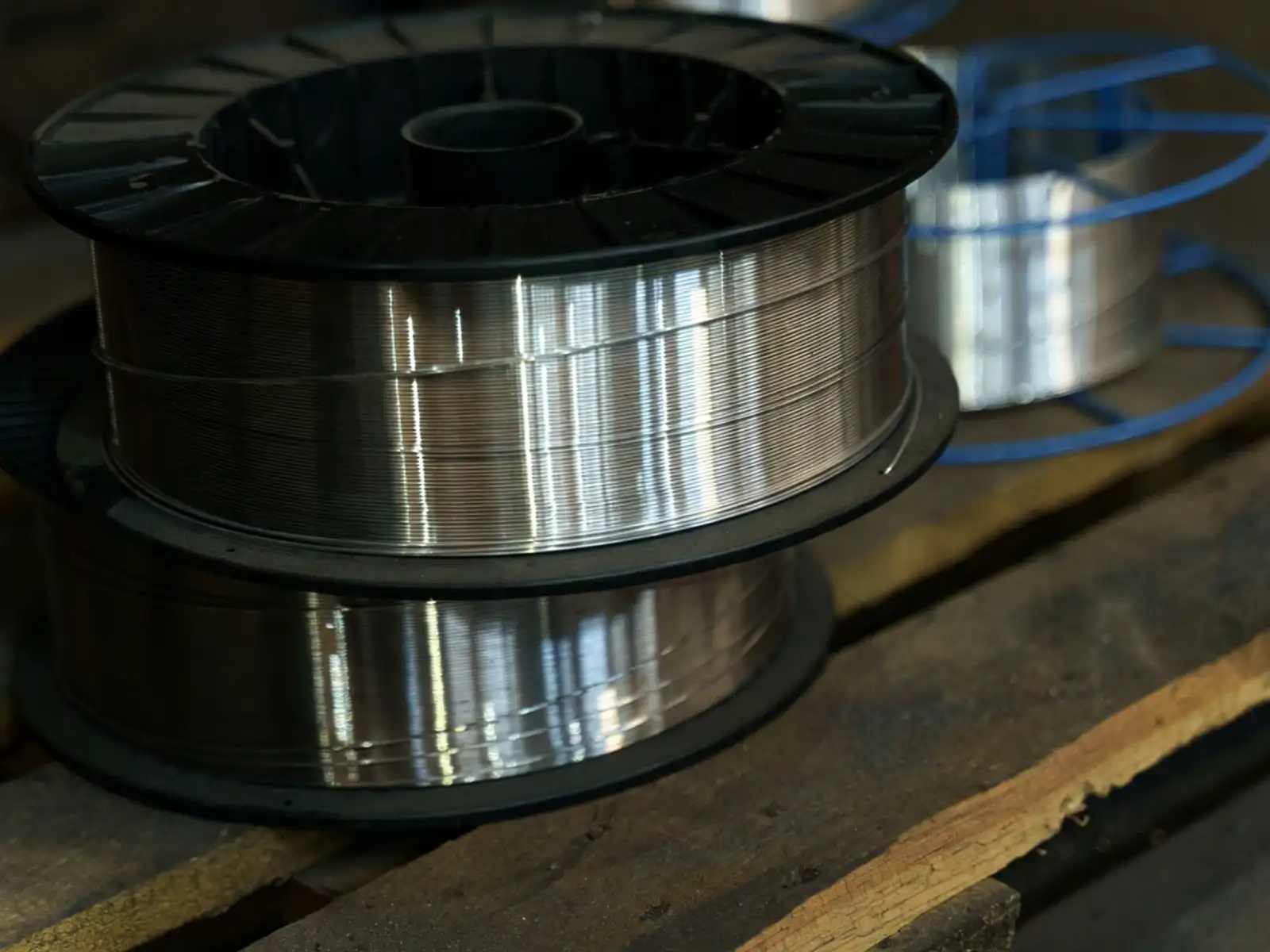
In the selection of industrial pure titanium wires, Gr4 and Gr2 are the two most common grades. Although both belong to the commercial pure titanium (CP Ti) system, there are significant differences in strength, application scenarios, and performance. Gr4 titanium wire, as the highest strength grade of industrial pure titanium, has a tensile strength of ≥ 550 MPa, approximately 60% higher than Gr2’s ≥ 345 MPa, making it more suitable for high-load mechanical components, welded structures, and harsh corrosive environments. Gr2 titanium wire, on the other hand, is widely used in chemical equipment, marine engineering, and medical devices due to its excellent ductility and formability. Understanding the core differences between the two allows engineers to find the best balance between cost control and performance requirements, avoiding material selection errors that could lead to equipment failure or excessive investment.
1. What Are the Differences in Differences in Composition and Microstructure?
(1) What Should You Know About Oxygen Content Is the Core Indicator of Intensity Grading?
The essential difference between Gr4 and Gr2 lies in the oxygen content. The oxygen content of Gr4 titanium wire reaches ≤ 0.40%, whereas Gr2 is only ≤ 0.25%. Oxygen, as an interstitial strengthening element, forms a solid solution strengthening effect in the titanium matrix, significantly enhancing the material’s tensile strength and hardness. This difference is directly reflected in the mechanical properties: the yield strength of Gr4 is ≥ 485MPa, which is 76% higher than Gr2’s ≥ 275MPa. For components subjected to vibration, impact, or heavy load conditions, the strength advantage of Gr4 can reduce the replacement frequency of components by more than 50%.
(2) What Should You Know About Monophasic Α Structure Ensures Stability?
Both are single-phase α titanium alloys and cannot be strengthened through heat treatment. Gr4 achieves strengthening by increasing oxygen content, yet still maintains the integrity of the hexagonal close-packed (HCP) lattice structure. This structural characteristic allows it to maintain stable mechanical properties within the range of -253℃ to 350℃, without phase transformation brittleness due to temperature fluctuations. In contrast, the low oxygen content of Gr2 gives it a finer grain structure with an elongation of ≥ 20%, making it more suitable for scenarios requiring deep drawing, bending, or coiling processing.
(3) What Should You Know About Impurity Control Affects Corrosion Resistance?
Although the difference in oxygen content is significant, there are slight differences between the two in controlling impurity elements such as iron (Fe ≤ 0.30% compared to Gr4’s ≤ 0.50%), carbon (C ≤ 0.08%), and nitrogen (N ≤ 0.03% compared to Gr4’s ≤ 0.05%). The stricter limits on impurities in Gr2 give it better pitting corrosion resistance in strongly corrosive media such as sulfuric acid and hydrochloric acid. Although Gr4 has slightly higher iron content, the use of the vacuum arc remelting (VAR) process can still control inclusions to below 10 um, meeting the demanding requirements of seawater desalination, chlor-alkali industry, and other harsh environments.
2. What Are the Differences in Comparison of Mechanical Properties and Machinability?
(1) Why Is High-strength Features Expand Application Boundaries Important?
The tensile strength of Gr4 reaches 550 MPa, close to the level of some low-alloy steels, but its density is only 57% that of steel (4.51 g/cm³). This lightweight and high-strength characteristic makes it irreplaceable in aerospace fasteners, marine engineering cables, and chemical equipment support frames. In a 1000-hour salt spray test, the surface of Gr4 samples showed no signs of corrosion, while stainless steel of the same strength grade had already developed pitting. This dual advantage of “strength and corrosion resistance” allows engineers to use Gr4 titanium wires of smaller diameters to replace thicker conventional materials, reducing equipment weight by more than 40%.
(2) What Are the Differences in Differences in Ductility Determine the Processing Path?
The elongation of Gr2 is ≥ 20%, giving it a higher tolerance during cold working. When manufacturing titanium mesh, braided wire, or springs, Gr2 can withstand multiple bends without cracking. Although Gr4’s elongation drops to ≥ 15%, stable drawing can still be achieved through a step annealing process (each pass of cold stretching controlled within 30%, with intermediate vacuum annealing at 600-700℃ for 1 hour). Titanium Valley uses an Italian Danieli continuous rolling line, controlling the straightness of Gr4 titanium wire to ≤ 2/1000 and a roundness tolerance of ± 0.01mm, meeting the requirements of automated welding and precision assembly.
(3) What Should You Know About Fatigue Performance Determines Long-term Cycle Reliability?
In environments with high-frequency vibration or alternating stress, fatigue strength becomes a key factor in material selection. The fatigue limit of Gr4 is about 50% of its tensile strength (~280 MPa), whereas Gr2 is only 52% (~180 MPa). When used in petroleum drilling tools, offshore platform mooring cables, or chemical reactor agitator shafts, the fatigue life of Gr4 can be more than three times that of Gr2. A certain offshore engineering case showed that an anchoring system using Gr4 titanium wire had no fracture records over a 10-year usage period, whereas Gr2 material needed to be replaced every 3-4 years, resulting in over 40% savings in full-cycle costs.
3. What Should You Know About Corrosion Resistance and Environmental Adaptability?
(1) What Are the Differences in Differences in Passive Film Stability?
The corrosion resistance of titanium comes from the dense TiO2 passive film on its surface (thickness 2-7 nm). Grade 2 (Gr2), due to its lower impurity content, has more uniform passive film and better self-repairing ability, and hardly corrodes within the pH range of 2-12. Although Grade 4 (Gr4) has higher oxygen content, the slight increase of elements such as iron and carbon may locally create a micro-galvanic effect. In high-salt environments with chloride concentration >10000 ppm (such as seawater desalination units), the pitting potential of Gr2 is about 50 mV higher than that of Gr4. However, in actual engineering, through pickling and passivation treatment (soaking in a mixed solution of nitric acid and hydrofluoric acid for 30 minutes), both can serve for over 20 years in marine environments.
(2) What Should You Know About Performance Trade-offs Under Composite Conditions?
When corrosion and stress coexist, the advantages of Gr4 become evident. Stress corrosion cracking (SCC) usually occurs in high-strength materials, but titanium’s HCP crystal structure naturally resists SCC. In a hydrogen sulfide-chloride composite environment (NACE MR0175 standard test), Gr4 specimens soaked under 200 MPa stress for 720 hours showed no cracking, whereas duplex stainless steel of the same strength grade had already developed cracks. This characteristic makes Gr4 the preferred material for extreme operating conditions such as oil and gas extraction and geothermal power generation.
(3) What Should You Know About the Effect of Temperature on Corrosion Behavior?
Environmental conditions | Gr4 Corrosion Resistance | Gr2 Corrosion Resistance | Application Recommendations |
Room temperature seawater | Corrosion rate <0.001 mm/year | Corrosion rate <0.0005 mm/year | Both are applicable, Gr2 is more economical |
80℃ Hydrochloric acid (10%) | Slight discoloration, no corrosion | Surface is shiny, no changes | Gr2 is more suitable for high-temperature acid pickling equipment |
High-temperature oxidation (400℃) | Oxidation weight gain 0.5 mg/cm² | Oxidation weight gain 0.3 mg/cm² | Requires coating protection or the use of titanium alloy |
Stress corrosion | Excellent SCC resistance performance | Good, but not strong enough | Gr4 suitable for high-stress corrosion environments |
4. What Should You Know About Welding Performance and Joint Strength Behavior?
(1) How Should Engineering Logic for Welding Wire Selection?
Gr4 titanium wire is the most widely used titanium welding wire specification in the world, accounting for more than 65% of the titanium welding wire market share. The reason lies in its strength matching with the base material. When welding Gr2 plates, if Gr2 wire is used, the joint strength is only 85%-90% of the base material; by switching to Gr4 wire, the joint strength can reach 95%-100% of the base material, and the heat-affected zone grains are refined. Under TIG welding parameters (current 80-120A, argon flow 12-15 L/min), the Gr4 wire produces a stable weld pool, spatter rate <0.5%, and porosity <0.1%, which is far superior to low-strength wire.
(2) What Are the Differences in Difference in Heat Input Sensitivity?
The melting point of Gr4 (~1668℃) is the same as that of Gr2, but its thermal conductivity is slightly lower (17 W/(m·K) compared to 21 W/(m·K) for Gr2), resulting in an approximately 15% increase in the width of the heat-affected zone. During welding of thin-walled structures (wall thickness <2mm), it is necessary to strictly control the line energy (≤ 1.5 kJ/cm) to avoid overheating that leads to grain coarsening. A case from a chemical equipment manufacturer showed that when welding Gr4 titanium wire using pulsed TIG welding (peak current 150A, base current 50A, frequency 3Hz), the joint’s impact toughness increased by 20% and fatigue life was extended by 1.8 times.
(3) What Should You Know About the Necessity of Post-weld Treatment?
Although titanium wire does not require preheating, post-weld annealing is crucial for eliminating residual stress. Gr4 welded joints, after vacuum annealing at 600-650℃ for 2 hours, can reduce residual stress by 70%, and elongation can recover from 12% in the welded state to 15%. Gr2, due to higher plastic reserve, can maintain an elongation of 18% even without post-weld annealing. For large pressure vessels or piping systems, the stress corrosion sensitivity of Gr4 after welding requires heat treatment, whereas Gr2 can simplify the process under certain low-stress conditions.
5. How Should Cost Effectiveness and Material Selection Strategy?
(1) What Are the Differences in Price Differences and Performance Premium?
The unit price of Gr4 titanium wire is 25%-35% higher than that of Gr2, mainly due to the difficulty in controlling oxygen content and the complexity of the processing technology. However, from a whole-life cycle cost perspective, Gr4 has a higher return on investment under high-load scenarios. Data from a marine engineering project show that using φ3.0mm Gr4 titanium wire for mooring cables increases the cost of a single cable by 30%, but the service life extends from 5 years to 12 years, resulting in an average annual cost reduction of 45%. Equipment downtime maintenance costs are reduced by more than 60%, providing significant overall economic benefits.
(2) What Should You Know About Specification Coverage and Inventory Optimization?
Application scenario | Recommended materials | Common specifications | Reason for selection of materials |
Chemical equipment lining | Gr2 Titanium Wire | φ0.5-1.2mm | Good formability and sufficient corrosion resistance |
TIG/MIG Welding | Gr4 Titanium Wire | φ1.0-2.4mm | High joint strength, stable welding |
Fastener Manufacturing | Gr4 Titanium Wire | φ3.0-6.5mm | Meets strength standards, weight reduced by 40% |
Medical devices | Gr2 Titanium Wire | φ0.1-0.4mm | Good biocompatibility, easy to process |
Marine Cable | Gr4 Titanium Wire | φ4.0-6.5mm | Long fatigue life, resistant to stress corrosion |
(3) How Should Customized Processing Reduces Selection Costs?
The Danieli production line at Titanium Valley supports full-specification customization for φ0.1-6.5mm, with tolerances up to ± 0.002mm. For composite conditions that require both ‘corrosion resistance and high strength,’ engineers do not need to repeatedly weigh between Gr2 and Gr4; they can directly choose Gr4 and adjust the plasticity through the annealed state (M). The large-scale production capacity of 10, 000 tons per year reduces bulk procurement costs by 15%-20%, while continuous coiled wire of 500-3000 meters avoids intermediate joints, and automated welding efficiency increases by 80%.
6. What Is the Conclusion?
The core difference between Gr4 titanium wire and Gr2 titanium wire lies in the strength grading caused by oxygen content, which determines their respective application boundaries. Gr4, with a tensile strength of ≥ 550MPa and excellent fatigue performance, dominates high-load structural parts, welding materials, and harsh operating conditions; Gr2, with outstanding ductility and extreme corrosion resistance, occupies the chemical anti-corrosion and precision machining markets. Understanding the performance differences, cost structure, and processing characteristics of the two can help engineers achieve an optimal balance between equipment reliability and economy, avoiding safety hazards or resource waste caused by material selection errors.
FAQ
Q1: Can Gr4 titanium wire replace stainless steel wire for marine environments?
Absolutely. The corrosion rate of Gr4 titanium wire in seawater is <0.001mm/year, much lower than the 0.01-0.05mm/year of 316L stainless steel. Although the initial cost is 40% higher, it does not need to be replaced during a 20-year service life, resulting in a total cost saving of over 50%.
Q2: Why is Gr4 welding wire still widely used even though its strength is higher than that of the base material?
The weld metal strength being slightly higher than the base metal can compensate for the softening in the heat-affected zone during the welding process, ensuring that the overall joint strength meets the standard. The stable weld pool characteristics and low porosity (<0.1%) of Gr4 welding wire make it an industry-standard choice for TIG/MIG welding.
Q3: How can the strength of Gr4 ultrafine wire with a diameter of <1mm be ensured?
Through multiple cold drawing passes (single deformation amount ≤ 30%) combined with intermediate annealing, the grain size is refined to 10-20um, and the strength is maintained at ≥ 520MPa. Titanium Valley’s roller mold finishing technology prevents surface scratches and controls roundness within ± 0.005mm, meeting the precision requirements of medical devices and electronic components.
7. What Should You Know About Looking for Reliable Gr4 Titanium Wire Manufacturers?
Titanium Valley (Baoji Titanium Valley Titanium-Nickel-Zirconium Materials Processing Co., Ltd.) is equipped with the Italian Danieli continuous rolling line, with an annual production of 20, 000 tons of high-precision titanium wire, straightness ≤ 2/1000, and full process quality traceability. We offer custom specifications of φ0.1-6.5mm, ASTM B863 certification, and complete material reports. Contact sales@titaniumvalleys.com now to get free samples and technical support to help make your project a success!
References
- Titanium and Titanium Alloy Welding Technology Handbook, China Machine Press, 2019
- ‘Strengthening Mechanisms and Engineering Applications of Commercial Pure Titanium,’ Journal of Materials Science and Engineering, 2021, Vol. 39
- Selection and Performance Evaluation of Titanium Alloy Materials for Marine Engineering, Corrosion Science and Protection Technology, 2020
- “Processing Technology and Quality Control of Industrial Pure Titanium Wire”, Rare Metal Materials and Engineering, 2022, Vol. 51