
What Are the Differences in Cold-Rolled and Annealed Gr5 Titanium Foil, Key Differences Explained?
- Gr5 Titanium Foil
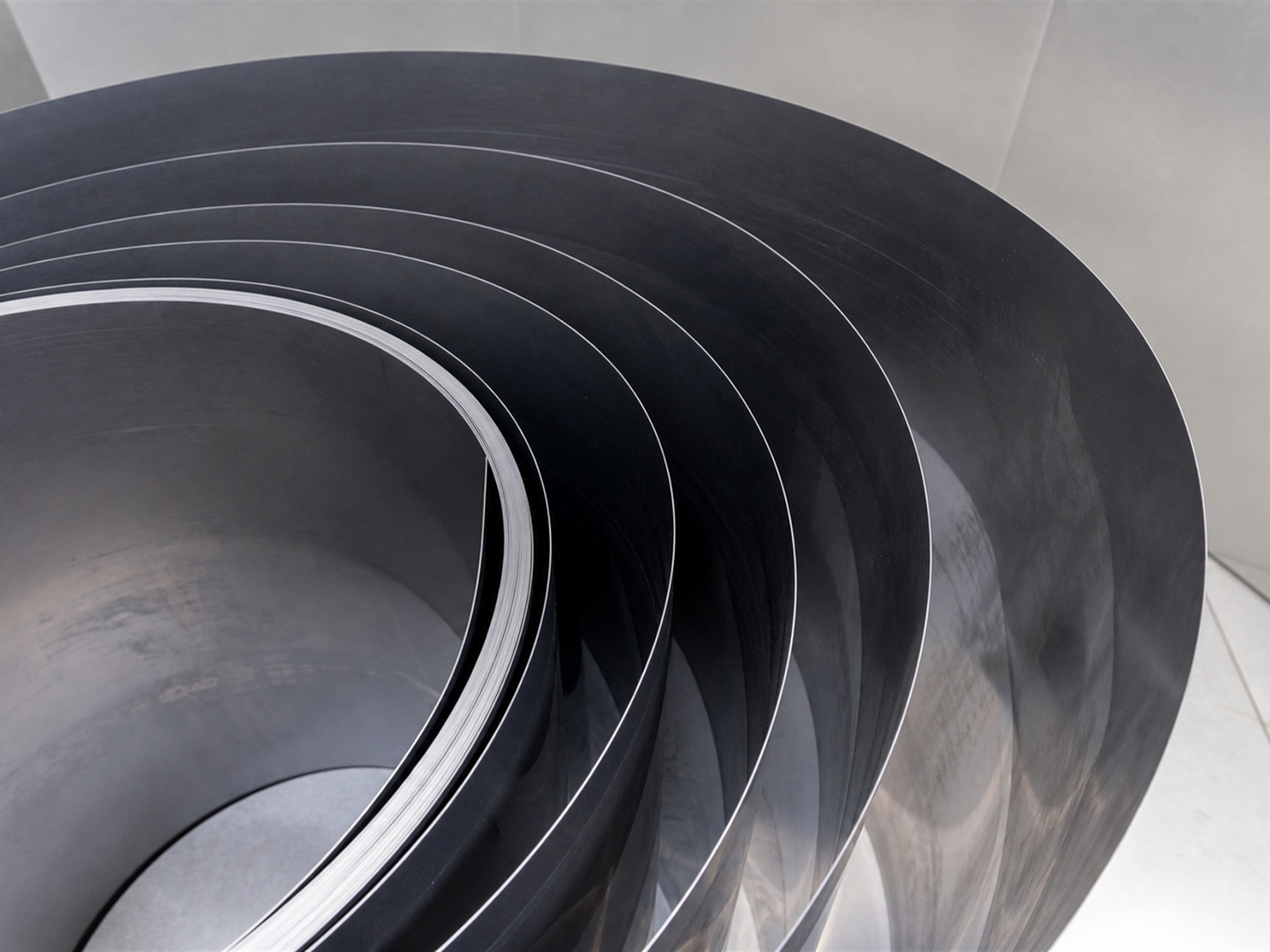
Cold rolling and annealing are two distinct yet interdependent processes in the production of Gr5 titanium foil. Cold rolling achieves thickness reduction and strength enhancement through multiple passes, but it causes a large number of dislocations and residual stresses within the material, making the titanium foil harder and more brittle. Annealing, on the other hand, releases stress, restores ductility, and adjusts the distribution of the α-β dual-phase structure through heat treatment. Cold-rolled Gr5 titanium foil can have a tensile strength exceeding 1100 MPa but an elongation of only 5-8%, while annealed foil sees strength reduced to 895-1000 MPa but elongation increased to 10-15%. The two conditions are respectively suitable for high-strength load-bearing and complex forming scenarios, and understanding their fundamental differences is key to optimizing material selection and process matching.
1. How Does the Cold Rolling Process Shape the Strength Characteristics of Gr5 Titanium Foil?
(1) What Should You Know About Multi-pass Rolling and Work Hardening Mechanism?
During the cold rolling process of Ti-6Al-4V alloy, the dislocation density within the grains continuously increases. A 20-roll precision mill, through per-pass reductions of 5-15%, can achieve a cumulative deformation of over 80%. Dislocation interactions form cell structures and subgrain boundaries, hindering subsequent dislocation slip and causing the material’s yield strength to jump from 825 MPa in the annealed state to 950-1050 MPa. This work hardening effect is particularly significant in ultra-thin sheets of 0.03-0.1 mm, but it is accompanied by a sharp decrease in elongation.
(2) What Should You Know About Residual Stress Distribution Characteristics?
During the cold rolling process, the surface layer of Gr5 titanium foil may develop high residual stress, which needs to be relieved through subsequent annealing, while the interior exhibits a complex three-dimensional stress field. Stress differences between the edges and the center of wide foils (350-670 mm) can lead to plate shape defects, manifested as edge waves, center waves, or dish-shaped warping. A high-precision tension control system is required to monitor and compensate for uneven stress during rolling in real time, ensuring that thickness tolerances are maintained within ± 0.001 mm.
(3) What Should You Know About Effect of Texture Evolution on Performance?
Cold rolling increases the basal texture intensity of Ti-6Al-4V, causing the crystal planes to preferentially align parallel to the rolling surface. This anisotropy leads to differences in mechanical properties between the transverse and longitudinal directions of up to 15-20%, while also affecting subsequent forming behavior. Key applications such as aerospace skins require material orientation to be confirmed through texture analysis to avoid anisotropic failure during service.
2. What Should You Know About Microstructure Reconstruction of Gr5 Titanium Foil by Annealing Treatment?
(1) What Should You Know About Vacuum Annealing and Α-β Phase Equilibrium Regulation?
The continuous vacuum annealing furnace, at a temperature range of 700-850℃, promotes the recovery, recrystallization, and phase composition adjustment of the unstable microstructures formed during cold rolling through precise temperature control. The ratio of α phase (hexagonal close-packed) to β phase (body-centered cubic) is adjusted from 92: 8 in the cold-rolled state to 88: 12 in the annealed state, with an increased number of phase boundaries enhancing coordinated deformation capability. Vacuum or inert gas protection prevents oxygen and nitrogen contamination, ensuring that surface oxygen content is controlled below 0.18% and preventing the formation of brittle layers.
(2) What Should You Know About Recrystallization Kinetics and Grain Size Control?
After the annealing temperature exceeds the recrystallization critical point, the nucleation and growth process eliminates the dislocation entanglement introduced by cold rolling. When the holding time is extended from 30 minutes to 2 hours, the grain size can grow from 5 um to 15 um. Although the fine-grained structure sacrifices some plasticity, it maintains a relatively high yield-to-tensile strength ratio (0.85-0.92), suitable for structural components requiring a balance of strength and toughness. Excessive annealing will result in grain coarsening, increasing the fatigue crack growth rate by 25-40%.
(3) What Should You Know About Stress Relief and Dimensional Stability Recovery?
Annealing reduces the residual stress level from 300 MPa to below 50 MPa, eliminating the risk of springback and warping in subsequent processing. For applications requiring precision stamping, such as electromagnetic shielding foils, the dimensional consistency of annealed material can improve by 30%. Cooling rate control is also crucial: rapid cooling retains more β phase to enhance strength, while slow cooling promotes α phase precipitation to improve ductility.
3. What Should You Know About Comparative Analysis of Mechanical Properties in Cold-Rolled and Annealed States?
(1) What Should You Know About the Trade-off Between Strength and Plasticity?
The following table shows the typical differences in mechanical properties of Gr5 titanium foil under two conditions:
Performance indicators | Cold-rolled state (Y) | Annealed state (M) | range of change |
|---|---|---|---|
Tensile Strength (MPa) | 1050-1150 | 895-1000 | -12% to -15% |
Yield Strength (MPa) | 950-1050 | 825-900 | -13% to -15% |
Elongation (%) | 5-8 | 10-15 | 80% to 100% |
Hardness (HV) | 320-360 | 270-310 | -13% to -16% |
The cold-rolled state is suitable for scenarios such as high-strength bolt washers and load-bearing structural reinforcement; the annealed state meets the requirements for deep-drawn honeycomb cores and complex curved surface forming.
(2) What Are the Differences in Differences in Fatigue Performance and Fracture Toughness?
The fatigue limit of cold-rolled Gr5 titanium foil is approximately 45-50% of the tensile strength, while the annealed state can reach 55-60%. This is because annealing eliminates micro-crack initiation sources (dislocation accumulation zones), prolonging the crack initiation stage life. In terms of fracture toughness KIC, the annealed state is 30-45 MPa·m^0.5 higher than the cold-rolled state and performs better under impact loads. Components such as aircraft engine heat shields, which are subjected to thermal cyclic stresses, must use the annealed state to prevent low-cycle fatigue failure.
(3) What Should You Know About Temperature Sensitivity and High-Temperature Stability?
Under long-term service conditions at 300℃, cold-rolled state can experience dimensional creep due to the release of residual stress, with annual deformation reaching 0.3-0.5%; the annealed state has completed structural stabilization, reducing the creep rate to below 0.05%. In high-temperature corrosive environments such as chemical reactor linings and seawater desalination evaporators, the resistance to stress corrosion cracking of the annealed state is improved by 2-3 times.
4. How Should Engineering Decision Logic for Process State Selection?
(1) Why Is Application Scenario Matching Principle Important?
For Gr5 titanium foil, the choice between cold-rolled and annealed states mainly depends on the requirements for strength, plasticity, formability, and service environment.
Preferred scenarios for cold-rolled state:
- Aerospace fastener washers (must withstand a preload of over 10, 000 N)
- Battery pack conductive connecting piece (requires contact resistance <5 mΩ and deformation <0.5%)
- Semiconductor equipment load-bearing frame (dimensional accuracy ± 0.02 mm, bending strength >900 MPa)
Cold-rolled Gr5 titanium foil has high work hardening strength and dimensional stability, making it suitable for structural components that require high load capacity, stiffness, and precision dimensional control.
Preferred scenarios for annealed state:
- Honeycomb core material (requires biaxial bending forming, R/t ratio < 3)
- Medical implant surface foil layer (elongation >12% to match the elasticity of biological tissue)
- Automotive hydrogen fuel cell bipolar plate (requires hydraulic forming of complex channels, forming depth >2 mm)
Annealed Gr5 titanium foil, by reducing residual stress and improving plasticity and elongation, is more suitable for complex stamping, deep drawing, and high-deformation processing scenarios.
(2) What Should You Know About Secondary Processing Process Compatibility?
When laser welding cold-rolled materials, the heat-affected zone is narrow (0.3-0.5 mm) but prone to forming hardened structures, requiring subsequent annealing to eliminate brittleness. The welding performance of annealed materials is better, but the molten pool is easily oxidized and requires enhanced protection. In precision punching, the shear surface quality of cold-rolled materials is better (surface roughness Ra<0.8 um), while annealed materials require a larger punching clearance (8-12% of the material thickness) to prevent tearing.
(3) What Should You Know About Cost and Delivery Cycle Considerations?
Annealing increases the production cycle by 2-3 days and raises energy costs by 15-20 yuan/kg. For orders less than 500 kg, cold-rolled material can be purchased directly, and annealed by the customer to reduce overall costs. For ultra-thin foils (<0.05 mm) that require multiple intermediate annealing steps, the cumulative number of annealing cycles can reach 3-5 times. In this case, choosing a supplier with a continuous annealing line can shorten the delivery cycle by more than 30%.
5. What Should You Know About Key Points of Quality Control in the Production Process?
(1) What Should You Know About Cold Rolling Process Plate Shape and Thickness Accuracy Assurance?
The table below lists the relationship between key control parameters and quality indicators of the 20-roll mill:
Control parameters | Target Range | Impact quality indicators | Consequences of losing control |
|---|---|---|---|
Rolling Speed (m/min) | 15-45 | Surface roughness | Vibration patterns caused by excessive speed |
Tension front-rear ratio | 1: 1.15-1.25 | Plate flatness | Edge waves caused by tension mismatch |
Emulsion Concentration (%) | 3-5 | Friction coefficient stability | Low concentration causes sticky rollers |
Work Roll Roughness (um) | Ra 0.2-0.4 | Finished product surface quality | Roll surface scratch transferred to foil |
The ultrasonic thickness measurement system monitors in real time, and when the deviation exceeds ± 0.002 mm, it automatically adjusts the hydraulic AGC (Automatic Thickness Control) system, with a response time of less than 0.3 seconds.
(2) What Should You Know About Annealing Process Window and Atmosphere Control?
The vacuum level must be maintained below 5×10^-3 Pa, with an oxygen partial pressure <1×10^-4 Pa to prevent the formation of a brittle TiO2 oxide film on the surface. Temperature uniformity is achieved through multi-zone temperature control, with the temperature difference between any two points inside the furnace being <± 5℃. For medical-grade applications, the oxygen content after annealing must be <0.15%, and ICP-MS (inductively coupled plasma mass spectrometry) must be used to inspect each roll, with a pass rate of over 99.5%.
(3) What Should You Know About Surface Treatment and Cleanliness Management?
After pickling to remove the oxide scale, the ultrasonic cleaning system processes the material in a 60℃ alkaline solution for 8-12 minutes to remove residual grease and particles. The cleanroom assembly requires cleanliness up to ISO Class 7 (10, 000 class) to prevent dust from embedding on surfaces and causing electronic component breakdown. The final product’s cleanliness is verified through a contact angle test (for pure titanium surfaces, it should be <20°); non-conforming products must be reworked and rewashed.
6. What Is the Conclusion?
Cold rolling gives Gr5 titanium foil excellent strength and dimensional accuracy, but at the expense of ductility and stress state; annealing restores processing performance and service stability through microstructure reconstruction. Engineering applications require comprehensive decision-making based on load type, forming requirements, and environmental conditions: for high-stress static loads, the cold-rolled state is preferred, while for complex deformation and fatigue conditions, the annealed state is necessary. Advanced production lines can achieve performance customization through the synergistic optimization of precision rolling and controlled annealing, meeting the stringent standards of high-end fields such as aerospace and medical. Mastering the essential differences between the two states is the core capability for maximizing material performance and optimizing cost.
FAQ
Q1: Can cold-rolled Gr5 titanium foil be used directly for applications requiring a 180° bend?
The elongation in the cold-rolled state is only 5-8%, and a 180° bend will cause the outer surface to crack. For such applications, it is necessary to choose the annealed state (elongation ≥ 10%), or perform local annealing treatment after cold rolling to eliminate work hardening, but this will increase processing costs by 15-20% and the delivery cycle by 3-5 days.
Q2: How much does an annealing temperature deviation of ± 20℃ affect the performance of Gr5 titanium foil?
For every 10℃ increase in temperature, the grain size increases by approximately 2 um, and the tensile strength decreases by 15-25 MPa. A deviation of ± 20℃ may cause the strength variation of materials from the same batch to exceed 8%, which does not meet the batch consistency requirement for aerospace-grade materials (≤ 5%), making it necessary to strictly control the furnace temperature uniformity within ± 5℃.
Q3: How can you determine whether titanium foil is cold-rolled or annealed based on its appearance?
The annealed surface appears uniformly silver-gray, while the cold-rolled surface has a slight metallic luster and may retain rolling marks. A more reliable method is hardness testing: HV>320 indicates cold-rolled state, HV 270-310 indicates annealed state. Professional testing requires metallographic analysis to observe recrystallized structures and residual stress testing (X-ray diffraction method).
7. What Should You Know About Looking for a Reliable Gr5 Titanium Foil Manufacturer?
Baoji Titanium Valley Titanium-Nickel-Zirconium Materials Processing Co., Ltd. is equipped with a 750mm 20-roll precision rolling mill and a continuous vacuum annealing line, capable of stably supplying cold-rolled and annealed Gr5 titanium foil in the specifications of 0.03-0.8mm × 350-670mm, with an annual production capacity of 3, 000 tons. Contact us now to obtain technical datasheets and samples: sales@titaniumvalleys.com
References
1. Chen Jun, Wang Dongsheng. ‘Study on Cold Rolling Texture Evolution and Anisotropy of Ti-6Al-4V Alloy.’ Rare Metal Materials and Engineering, 2021, 50(6): 2145-2152.
2. Williams, ‘Titanium (2nd Edition): Engineering Materials and Processes.’ Springer-Verlag Berlin Heidelberg, 2007: 203-248.
3. Zhang Zhiqiang, Li Shubo. ‘Optimization of Vacuum Annealing Process and Microstructure Performance Regulation of Titanium Alloy Foils.’ Journal of Materials Heat Treatment, 2020, 41(3): 98-105.
4. Donachie M J. ‘Titanium: A Technical Guide (2nd Edition)’. ASM International, 2000: 135-167.