
UNS R60705 Zirconium Wire Vs. Titanium Wire, Which Material Is More Suitable for Industrial Applications?
- UNS R60705 Zirconium Wire
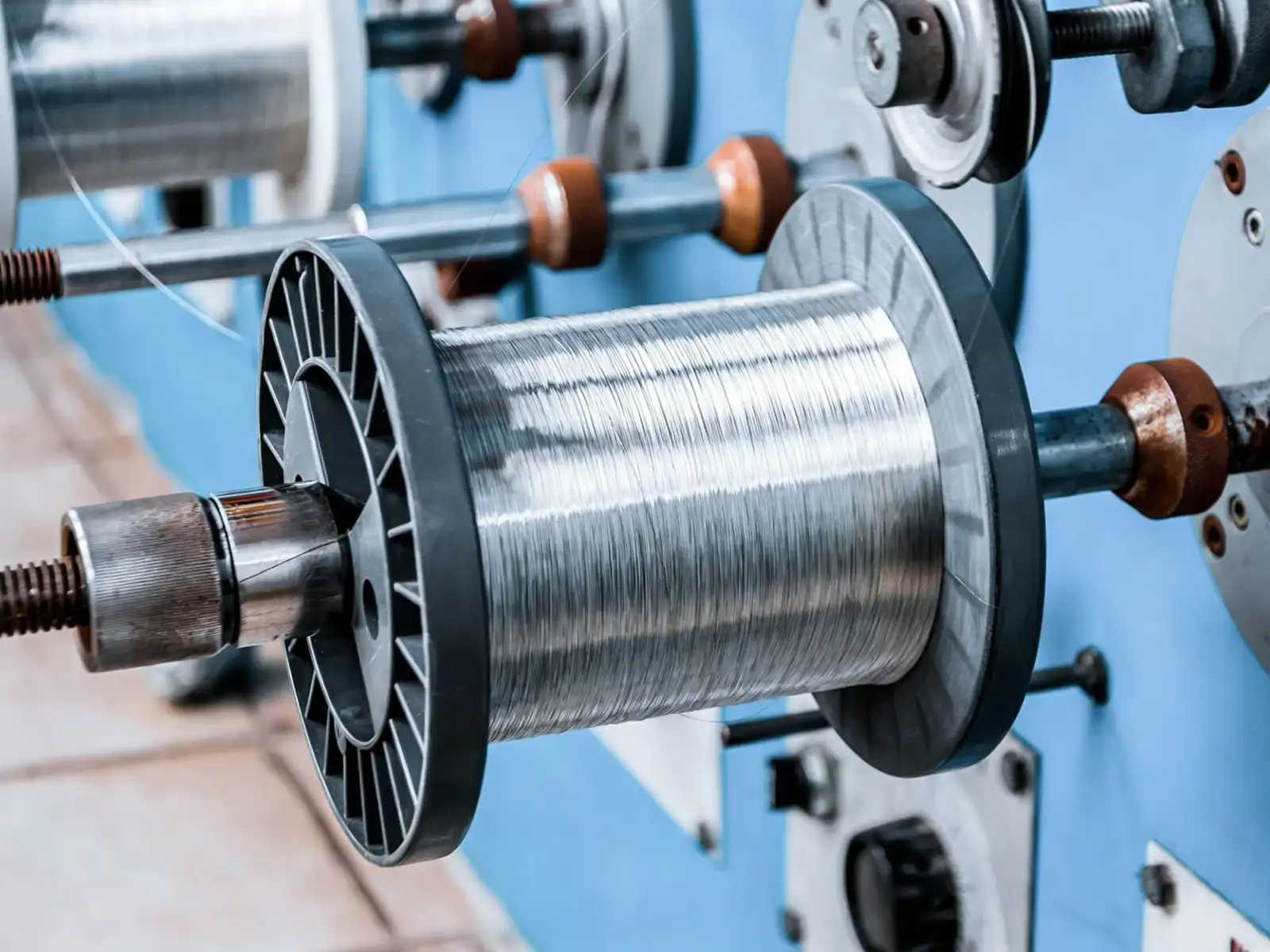
In the selection of materials for high-end manufacturing and extreme industrial conditions, UNS R60705 zirconium wire and titanium wire are often weighed against each other. Simply put: R60705 zirconium alloy wire is more suitable for extreme corrosive conditions such as strong acids, high chlorine, and nuclear power environments; its alloy composition containing 2.0-3.0% Nb endows it with corrosion resistance and mechanical strength far exceeding pure titanium. On the other hand, titanium wire balances lightweight properties, biocompatibility, conventional corrosion resistance, and cost control, making it more suitable for aerospace, medical implants, and consumer electronics. The core of the selection lies in whether the working medium contains hydrochloric acid, wet chlorine, or high-temperature organic acids, whether non-magnetic or zero-precipitation characteristics are required, and the rigid requirements for strength and toughness. This article will analyze the essential differences between the two from four dimensions: composition, performance, application scenarios, and economy, helping you make the optimal decision.
1. What Should You Know About Composition and Alloy Design, Zirconium-Niobium Reinforcement Vs Titanium Alloy System?
(1) What Should You Know About the Core Components and Strengthening Mechanisms of R60705 Zirconium Wire?
UNS R60705 zirconium wire belongs to the zirconium-niobium alloy system. Its chemical composition includes: Zr Hf balance, Nb 2.0-3.0% (typically 2.5%), Hf ≤ 4.5%, Fe ≤ 0.20%, O ≤ 0.18%, C ≤ 0.05%. The solid solution strengthening effect of niobium significantly enhances the alloy’s yield strength and creep resistance, allowing it to maintain structural stability under high-temperature and high-pressure conditions. This alloy design follows the ASTM B550 standard and is specially customized for demanding environments such as nuclear power and chemical industries.
(2) Why Is the Alloy Lineage of Titanium Wire and Its Lightweight Advantage Important?
Industrial titanium wire is mainly divided into pure titanium (Grade 1-4) and titanium alloys (such as Ti-6Al-4V, Ti-3Al-2.5V). Pure titanium has a density of only 4.51 g/cm³, about 30% lighter than R60705 zirconium wire with 6.51 g/cm³, which translates to a direct improvement in fuel efficiency in the aerospace field. Titanium alloys, through the addition of elements such as aluminum and vanadium, can achieve a higher strength-to-weight ratio, but their corrosion resistance in media such as hydrochloric acid and wet chlorine is significantly worse than that of zirconium alloys.
(3) What Are the Differences in Comparison of Material Purity and Cleanliness?
R60705 zirconium wire is produced using a vacuum melting process, with hydrogen content controlled at ≤ 0.005% and nitrogen content ≤ 0.025%, ensuring that the material will not introduce heavy metal contamination in high-purity applications such as pharmaceuticals and semiconductors. Titanium wire also possesses high-purity characteristics, but in extreme media such as wet metallurgy and high-chloride brine, its surface oxide film is easily damaged, increasing the risk of pitting corrosion.
Table 1: Comparison of Chemical Composition Between R60705 Zirconium Wire and Titanium Wire
element | UNS R60705 Zirconium Wire | Pure Titanium Wire (Grade 2) | Ti-6Al-4V titanium alloy wire |
Main element | Zr Hf remainder | Ti surplus | Ti surplus |
Enhancement Element | Nb 2.0-3.0% | – | Al 5.5-6.75%, V 3.5-4.5% |
Oxygen content | ≤ 0.18% | ≤ 0.25% | ≤ 0.20% |
Hydrogen content | ≤ 0.005% | ≤ 0.015% | ≤ 0.015% |
Density (g/cm³) | 6.51 | 4.51 | 4.43 |
2. What Are the Differences in Corrosion Resistance, Decisive Differences in Extreme Media?
(1) Why Is Strong Acid Environment, the Overwhelming Advantage of Zirconium Wire Important?
In strong acid media such as hydrochloric acid, sulfuric acid, and organic acids, R60705 zirconium wire demonstrates excellent corrosion resistance. Experimental data show that the corrosion rate of zirconium alloy in boiling hydrochloric acid (10% concentration) is less than 0.1 mm/year, whereas titanium wire rapidly experiences hydrogen embrittlement and pitting under the same conditions. This is due to the dense ZrO₂ passive film formed on the zirconium surface, whose chemical stability far exceeds that of titanium’s TiO2 film, especially in acidic environments containing chloride ions.
(2) What Should You Know About High-Temperature Corrosion, the Touchstone of Material Stability?
R60705 zirconium wire can be used long-term in high-temperature corrosive environments up to ≤ 350℃, with a melting point of 1850℃. It will not undergo intergranular corrosion or embrittlement under high-temperature steam or high-temperature organic acid conditions. Titanium wire has a temperature resistance limit of about 300℃, and its mechanical properties significantly deteriorate beyond this temperature. Additionally, it tends to form a loose oxide layer in high-temperature oxidizing atmospheres, leading to loss of dimensional accuracy.
(3) What Should You Know About Chloride Ion Pitting and Crevice Corrosion Resistance?
In seawater, salt spray, and chlor-alkali industrial environments, chloride ion corrosion is the main cause of material failure. R60705 zirconium wire has a very high tolerance to chloride ions and can maintain surface integrity even in high-chloride brine (Cl⁻ concentration > 200, 000 ppm). Titanium wire, when chloride ion concentration exceeds 1000 ppm, is prone to localized corrosion at crevices, leading to failure of threaded connections or heat exchanger leaks.
Table 2: Material Performance in Typical Corrosive Media
Medium | R60705 Zirconium Wire | Pure titanium wire | Stainless Steel 316L |
10% boiling hydrochloric acid | Excellent (<0.1mm/year) | Not recommended (rapid corrosion) | Not applicable |
Wet chlorine gas | Excellent | Poor (pitting) | Not applicable |
Seawater (room temperature) | Excellent | Good | Moderate (risk of pitting) |
High-temperature steam (300℃) | Excellent | Medium (performance degradation) | Good |
High-chlorine brine | Excellent | Not recommended | Not applicable |
3. What Should You Know About Mechanical Properties and Machining Characteristics, Strength, Toughness, and Precision?
(1) What Are the Differences in Comparison of Tensile Strength and Yield Performance?
After cold working and annealing, the tensile strength of UNS R60705 zirconium wire can reach 550-650 MPa, with a yield strength of 380-450 MPa, significantly higher than that of pure titanium wire (Grade 2 tensile strength 345 MPa). This makes zirconium wire less prone to plastic deformation under high-stress conditions such as high-pressure valve stems and elastic fasteners. Ti-6Al-4V titanium alloy wire has even higher strength (tensile strength ≥ 895 MPa), but its ductility and weldability are not as good as zirconium wire.
(2) What Should You Know About Cold Working Performance and Dimensional Accuracy?
With the Danieli continuous rolling production line, R60705 zirconium wire can achieve full-size coverage from φ0.06 to 8.0 mm, with tolerance controlled within ± 0.01 mm and straightness ≤ 1 mm/m. Its good plasticity allows multiple passes of cold drawing without cracking, making it suitable for manufacturing ultra-fine medical guidewires or precision springs. Titanium wire has a higher work hardening rate during cold processing and requires more frequent intermediate annealing, resulting in relatively lower production efficiency.
(3) What Should You Know About Non-magnetic Properties and Biocompatibility?
R60705 zirconium wire is completely non-magnetic and does not interfere with the electromagnetic fields of MRI equipment or precision instruments, which is a rigid requirement in the medical and nuclear power fields. Titanium wire also possesses non-magnetic properties and excellent biocompatibility, and its lightweight characteristics make it dominant in orthopedic implants and dental implants. However, in semiconductor wet etching environments that require high purity and cleanliness, the zero-deposition advantage of zirconium wire is even more prominent.
4. Application Scenario Analysis, Who Is the Optimal Solution in Each Field?
(1) What Should You Know About Nuclear Power and Chemical Industry, the Exclusive Domain of Zirconium Wire?
Core applications of R60705 zirconium wire include nuclear reactor fuel assemblies, heat exchanger tube bundles, and corrosion-resistant pump shafts. Its low neutron absorption cross-section (σ≈0.18 barn) makes it a preferred material for nuclear-grade applications, whereas titanium becomes brittle under nuclear radiation and cannot meet safety standards. In the production of chlor-alkali, hydrometallurgy, and pesticide intermediates, filters, stirring paddles, and heating coils made of zirconium wire can have a service life 5-10 times longer.
(2) Why Is Aerospace and Healthcare, the Natural Advantages of Titanium Wire Important?
Commercial aircraft fasteners and engine connectors extensively use Ti-6Al-4V titanium wire, whose specific strength (strength/density) is four times that of steel, significantly reducing structural weight. In the medical field, surgical sutures and cardiac stent guidewires made of pure titanium wire have characteristics such as no rejection reaction and X-ray transparency, with a market maturity far exceeding that of zirconium materials.
(3) Why Is Semiconductors and Precision Electronics, Competing with Different Focuses Important?
In semiconductor wafer transport systems, claws and brackets made of UNS R60705 zirconium wire can withstand highly corrosive cleaning solutions such as hydrofluoric acid and aqua regia, and do not contaminate the chip surface. Titanium wire, on the other hand, is widely used in thermal modules and connectors for consumer electronics, with a thermal conductivity (about 21.9 W/m·K) slightly better than zirconium wire (about 22.6 W/m·K) and at a lower cost.
Table 3: Typical Industrial Scenario Material Selection Guide
Application field | Recommended materials | Core considerations |
Nuclear power reactor components | R60705 Zirconium Wire | Low neutron absorption, resistant to high-temperature water corrosion |
Hydrochloric Acid Storage Tank Agitator | R60705 Zirconium Wire | Resistant to strong acids and pitting corrosion |
Aerospace engine fasteners | Ti-6Al-4V titanium wire | High specific strength, high temperature resistance |
Cardiac stent guidewire | Pure titanium wire | Biocompatible, X-ray transparent |
Semiconductor Wet Etching Equipment | R60705 Zirconium Wire | Zero precipitation, resistant to HF acid |
Seawater Desalination Heat Exchanger | R60705 Zirconium Wire/Titanium Wire | Chloride resistance (zirconium is better), cost balance |
Medical surgical instruments | Pure titanium wire | Non-magnetic, sterilizable, lightweight |
5. What Should You Know About Economics and Supply Chain, Whole Life Cycle Cost Analysis?
(1) What Should You Know About Raw Material Prices and Processing Costs?
The raw material cost of R60705 zirconium wire is about 3 to 5 times that of titanium wire, due to the scarcity of zirconium ore resources and the complex extraction process. However, under highly corrosive conditions, the service life of zirconium wire can exceed 10 times that of titanium wire, making the unit cost over time actually lower. Titanium wire has obvious advantages in mass production, with a global annual production capacity of over 20, 000 tons, stable prices, and a mature supply chain.
(2) What Should You Know About Maintenance Costs and Downtime Losses?
The downtime loss of replacing a titanium heat exchanger in a chemical plant can reach hundreds of thousands of dollars, whereas using R60705 zirconium wire can extend the maintenance cycle from 2 years to 8-10 years, resulting in significant overall economic benefits. Under non-extreme conditions (such as normal temperature seawater cooling systems), titanium wire has a higher cost-performance ratio, and there is no need to pay a premium for excess performance.
(3) What Should You Know About Customized Production and Delivery Cycle?
The Danieli production line at Baoji Titanium Valley can achieve full-process customization of R60705 zirconium wire, ranging from φ0.06mm ultra-fine medical wire to φ10mm structural wire, with a delivery cycle controlled at 4-8 weeks. The market stock of titanium wire is sufficient, and conventional specifications can be supplied immediately, but the customization period for special alloy grades is comparable to that of zirconium wire.
6. What Is the Conclusion?
UNS R60705 zirconium wire and titanium wire are not simply interchangeable, but each has irreplaceable qualities under different conditions. Zirconium wire, with its excellent resistance to strong acids, high chlorine, and high-temperature stability, dominates extreme corrosion fields such as nuclear power, chemical industry, and hydrometallurgy. Titanium wire, on the other hand, with advantages of lightweight, biocompatibility, and a mature supply chain, firmly occupies the aerospace, medical device, and consumer electronics markets. The golden rule of material selection is: the more extreme the medium and the harsher the conditions, the more outstanding the full lifecycle value of zirconium wire; in conventional environments or scenarios with a rigid need for lightweight, titanium wire offers a better overall cost-performance ratio.
FAQ
Q1: Can R60705 zirconium wire be welded? How is its weldability?
R60705 zirconium wire has excellent weldability and can be welded using inert gas protection methods such as TIG and MIG. The weld strength can reach 85-95% of the base material, and the heat-affected zone is narrow, making it less prone to porosity or cracking, suitable for manufacturing complex corrosion-resistant structural components.
Q2: Under what circumstances will titanium wire fail? How can it be prevented?
Titanium wires are prone to pitting corrosion and hydrogen embrittlement in environments with hydrochloric acid, wet chlorine, and high concentrations of chloride ions. Preventive measures include: selecting higher-grade titanium alloys (such as Ti-0.2Pd), controlling the medium temperature and chloride ion concentration, and regularly inspecting the integrity of the surface oxide film.
Q3: How to determine whether the project should choose zirconium wire or titanium wire?
The key points are three: whether the medium contains hydrochloric acid/wet chlorine (choose zirconium if it does); whether the operating temperature exceeds 300℃ (choose zirconium if it does); whether weight sensitivity is important and the corrosiveness is moderate (choose titanium if so). It is recommended to provide the operating conditions to the supplier for material compatibility assessment.
7. What Should You Know About Looking for Reliable Zirconium Wire and Titanium Wire Manufacturers?
Baoji Titanium Valley Titanium-Nickel-Zirconium Materials Processing Co., Ltd., is equipped with a Danieli continuous rolling production line worth 40.5 million USD, producing 5, 000 tons of high-end zirconium-titanium wire annually, serving global customers in aerospace, nuclear power, chemical, medical, and electronics industries. From φ0.06mm ultra-fine wire to customized alloy solutions, we provide full-process technical support and 3.1 quality certificates.
Contact immediately: sales@titaniumvalleys.com
References
- Zhang Minghui, Li Jianguo. ‘Application and Performance Optimization of Zirconium Alloy in the Nuclear Power Industry.’ Chinese Journal of Nonferrous Metals, 2021.
- Smith, J.R., Thompson, K.L. Corrosion resistance of zirconium and titanium alloys in chemical processing. Journal of Materials Engineering and Performance, 2020.
- Wang Xiaofeng, Zhao Haitao. ‘Research on Cold Processing Technology and Microstructure Properties of Titanium Alloy Wires.’ Rare Metal Materials and Engineering, 2022.
- Davis, J.A. ASM Specialty Handbook: Nickel, Cobalt, and Their Alloys (Including Zirconium Applications). ASM International, 2019.