
What Is Gr5 Titanium Foil? a Comprehensive Guide to Grade 5 Titanium Alloys?
- Gr5 Titanium Foil
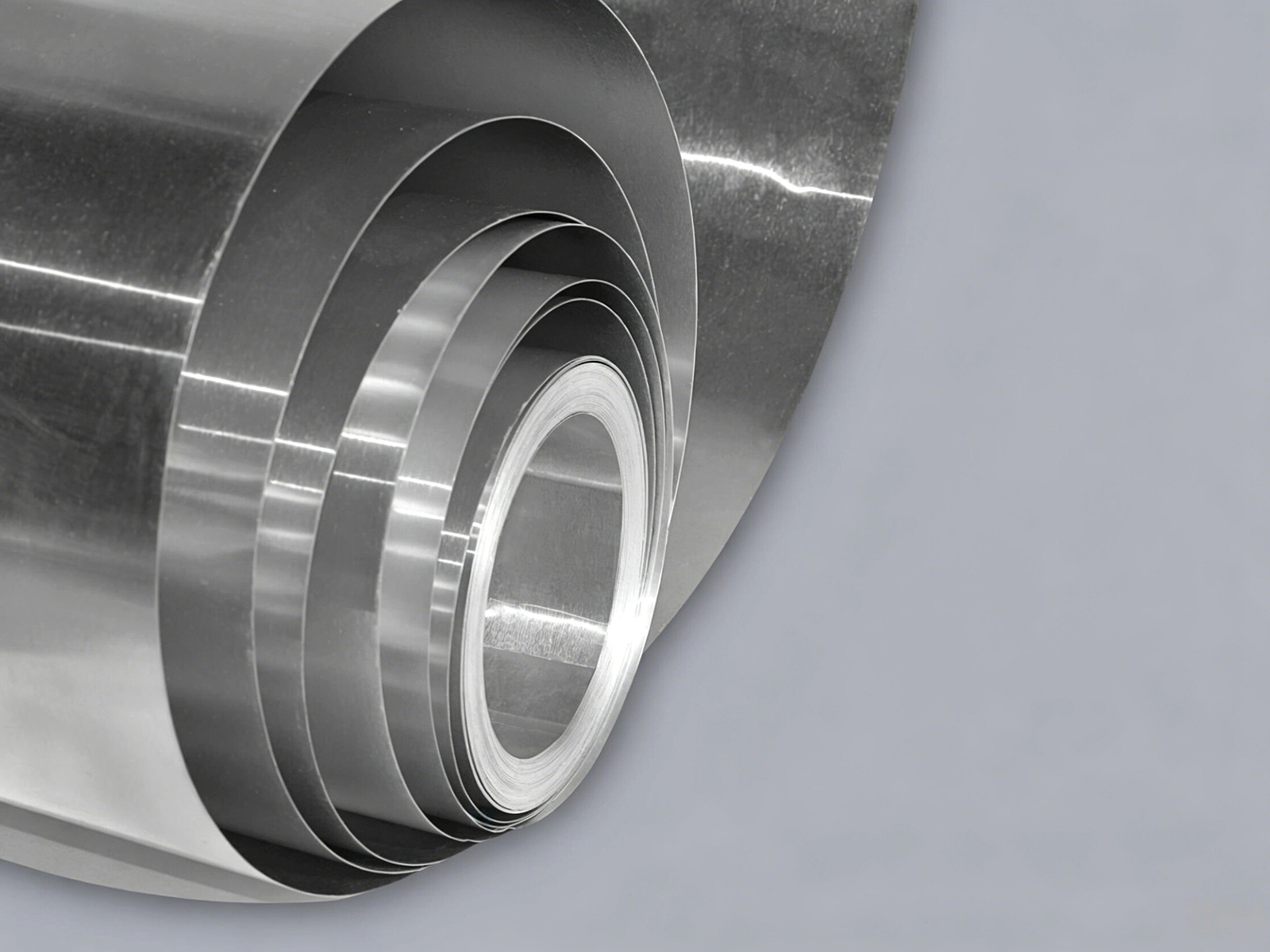
Gr5 titanium foil is a high-performance titanium alloy thin material based on Ti-6Al-4V, which belongs to the α+β dual-phase titanium alloy system. Made through multi-pass precision cold rolling and vacuum annealing processes, the thickness ranges from 0.03-0.8mm and the width can reach 350-670mm. Compared with pure titanium, Gr5 titanium foil has a tensile strength of more than 895MPa and a yield strength of more than 825MPa, while maintaining a low density of 4.43 g/cm³ and excellent corrosion resistance. This material is widely used in high-end fields such as aerospace, medical implants, battery cooling, and electromagnetic shielding. It is especially suitable for structural components that require high strength, lightweight, and long-term stability. It can work in an environment of 300℃ for a long time and can withstand high temperatures of 400℃ in the short term. It is a key material to break through the strength bottleneck of pure titanium.
1. What Should You Know About Material Composition and Performance Characteristics of Gr5 Titanium Foil?
(1) What Should You Know About Ti-6Al-4V Alloying Principle?
The core composition of Gr5 titanium foil is Ti-6Al-4V, in which aluminum (5.5-6.75%) serves as the α-stabilizing element and vanadium (3.5-4.5%) serves as the β-stabilizing element. This dual-phase structure enables the material to form an α-phase matrix and a small amount of β-phase at room temperature, which not only retains the high strength and creep resistance of the α-phase, but also uses the β-phase to improve toughness and processability. The oxygen content is controlled below 0.20% to avoid excessive embrittlement; the iron content is limited to 0.30% to prevent the formation of brittle phases. This precise composition control gives Gr5 titanium foil a tensile strength of 930-1100MPa, far exceeding the 340MPa of Gr2 pure titanium.
(2) What Are the Differences in Comparison of Performance Differences with Pure Titanium?
Although pure titanium (Gr1/Gr2) has excellent ductility and corrosion resistance, its tensile strength is only 240-340MPa, which cannot meet the needs of high-load structures. The strength of Gr5 titanium foil is increased to more than three times through alloying, while the hardness reaches HB 270-330, which is significantly better than the HB 120-200 of pure titanium. In terms of fatigue properties, the fatigue limit of Gr5 is approximately 40-50% of the tensile strength, compared to only 30-40% of pure titanium. In terms of density, Gr5’s 4.43 g/cm³ is only 2% higher than pure titanium, but its specific strength (strength/density ratio) is increased by more than 180%.
(3) What Should You Know About Standards and International Certifications?
Gr5 titanium foil complies with ASTM B265 Grade 5 standard, corresponding to UNS R56400 number, and the aerospace grade specification is AMS 4911. Corresponds to EN 3.7165 (Ti-6Al-4V) in the European standard system. Materials need to pass a full set of tests such as chemical composition analysis, tensile testing, and microstructure inspection to ensure batch stability. High-end applications also need to provide material certificates (MTR), non-destructive testing reports and traceability documents to meet AS9100 aviation quality system requirements.
2. What Should You Know About Gr5 Titanium Foil Manufacturing Process?
(1) What Should You Know About Multi-pass Precision Cold Rolling Technology?
After the titanium ingot is hot-rolled, it is subjected to multi-pass cold rolling through a 20-roll finishing mill, with each reduction strictly controlled at 10-15%. The high-strength and low-plastic Ti-6Al-4V material is prone to edge cracks and uneven thickness during ultra-thin rolling. The front and rear tension ratio (1.2-1.5) needs to be adjusted in real time through the tension control system. The 750mm wide 20-roll mill is equipped with a hydraulic automatic thickness control (AGC) system, which can control the thickness tolerance to ± 0.001mm, ensuring stable production of 0.03mm ultra-thin foil.
(2) What Should You Know About Vacuum Annealing and Tissue Regulation?
There are high-density dislocations and residual stress inside the cold-rolled titanium foil, which need to be released through vacuum or inert gas protective annealing. The annealing temperature is set at 700-850℃, held for 1-3 hours and then cooled slowly. The vacuum level is maintained at 10⁻³ Pa level to prevent the intrusion of oxygen and nitrogen from causing surface hardening. During the annealing process, the α phase recrystallizes and fine β phases precipitate, forming a uniform two-phase structure, which not only restores the elongation to more than 10% (annealed state), but also maintains high strength. Microstructure uniformity directly affects material batch stability and fatigue resistance.
(3) What Should You Know About Shape Control and Precision Smoothing?
Ultra-thin wide-width titanium foil is prone to plate defects such as waves and buckles during rolling and annealing. A plastic extension of 0.5-1.5% is applied through a Tension Leveler to eliminate internal stress and improve flatness. The precision flattening roller system is equipped with a laser thickness gauge and CCD visual inspection to monitor the plate shape in real time and provide feedback for adjustment. Before slitting, it must undergo ultrasonic cleaning to remove surface oil and particles to ensure that the cleanliness meets the requirements of electronic and medical grade applications.
Process link | Key parameters | effect |
Multi-pass cold rolling | Reduction 10-15%, tension ratio 1.2-1.5 | Achieve ultra-thin thickness and control board shape |
Vacuum annealing | 700-850℃, vacuum degree 10⁻³ Pa | Relieve stress and homogenize tissue |
Stretch straightening | Plastic elongation 0.5-1.5% | Eliminate waves and improve flatness |
Ultrasonic cleaning | Frequency 40kHz, temperature 60℃ | Remove oil stains and ensure cleanliness |
3. Why Is Core Performance Advantages of Gr5 Titanium Foil Important?
(1) What Should You Know About Ultra-high Specific Strength and Lightweight Potential?
The specific strength (strength/density) of Gr5 titanium foil is about 200-250 MPa·cm³/g, far exceeding that of stainless steel (80-100) and aluminum alloy (120-150). In the aerospace field, replacing steel with Gr5 titanium foil can reduce weight by 40-50%, and replacing aluminum alloy can reduce weight by 20-30%, while providing greater load-bearing capacity. The use of 0.05mm Gr5 titanium foil in the honeycomb structure as the skin can achieve a 3-5 times improvement in strength-to-weight ratio and significantly reduce fuel consumption and emissions.
(2) What Should You Know About Excellent High Temperature Stability?
When Ti-6Al-4V alloy is used for a long time below 300℃, its strength retention rate exceeds 90%, and it can withstand high temperatures of 400℃ in the short term. In contrast, aluminum alloys soften significantly above 150℃, and stainless steel is resistant to high temperatures but is too dense. Gr5 titanium foil is used for aero-engine insulation foil, turbine blade protective layer and other components, which can not only withstand high-temperature impact, but also can be designed into a pleated structure to increase the heat dissipation area (note: Gr5 room temperature thermal conductivity is about 7.2 W/m·K. Low thermal conductivity is conducive to heat insulation rather than heat dissipation, so the heat dissipation structure needs to be designed with pleats to increase the effective heat dissipation area).
(3) What Should You Know About Excellent Corrosion Resistance and Biocompatibility?
A stable TiO2 passivation film is naturally formed on the surface of Gr5 titanium foil, and the corrosion rate in seawater, acid and alkali solutions is less than 0.01 mm/year. Even in marine environments with chloride ion concentrations up to 3.5%, pitting corrosion or stress corrosion cracking will not occur. In the field of medical implants, Gr5 titanium foil complies with the ISO 5832-3 biocompatibility standard. It will not cause rejection reactions after being implanted into the human body, and bone tissue can grow directly on the surface. It is an ideal material for manufacturing orthopedic screws and dental implants.
Performance indicators | Gr5 titanium foil | Gr2 pure titanium | 316L stainless steel | 7075 aluminum alloy |
Tensile strength (MPa) | 930-1100 | 340 | 480-620 | 540-570 |
Density (g/cm³) | 4.43 | 4.51 | 8.00 | 2.81 |
Specific strength (MPa·cm³/g) | 210-248 | 75 | 60-78 | 192-203 |
300℃ strength retention rate | >90% | >85% | >95% | <60% |
Seawater corrosion rate (mm/year) | <0.01 | <0.01 | 0.02-0.05 | 0.5-1.0 |
4. Why Is Industrial Application Scenarios of Gr5 Titanium Foil Important?
(1) What Should You Know About Aerospace High Load Structural Parts?
In the aircraft honeycomb sandwich structure, 0.05-0.1mm Gr5 titanium foil is used as the skin, which is bonded with the aluminum honeycomb core material to form a lightweight and high-strength sandwich panel. This structure is 10-15 times stiffer in bending than solid panels, yet weighs 60-70% less. 0.15mm titanium foil is used as a thermal insulation layer or protective layer in the hot end parts of the engine. It can withstand temperatures up to 400℃ and effectively block thermal radiation. The lining of the rocket fuel tank is made of 0.3mm Gr5 titanium foil (note: Ti-5Al-2.5Sn ELI is often used under low-temperature conditions of liquid hydrogen, which has better toughness; the toughness of Gr5 decreases at extremely low temperatures, and the applicability needs to be verified), which has high strength and anti-leakage capabilities.
(2) What Should You Know About New Energy Battery Heat Dissipation and Connection?
In lithium battery packs, 0.05-0.08mm Gr5 titanium foil is used as the heat dissipation structure substrate. Although its thermal conductivity is low, it has low density and high strength. It can be designed into a complex pleated structure to increase the heat dissipation area. The passivation film on the surface of the titanium foil prevents electrolyte corrosion and avoids the risk of short circuit inside the battery pack. The power battery tab connection is made of 0.1mm titanium foil ultrasonic welding. The contact resistance is less than 0.5 mΩ and the tensile strength exceeds 800MPa, ensuring large current transmission stability and mechanical reliability.
(3) What Should You Know About Electromagnetic Shielding and Precision Electronic Components?
In high-frequency equipment such as 5G base stations and radar systems, 0.03-0.05mm Gr5 titanium foil is used as an electromagnetic shielding layer (the test thickness is usually 0.05mm), with a shielding efficiency of 60-80dB (frequency 1-10GHz). The non-magnetic nature of titanium foil (magnetic susceptibility is close to zero) avoids interference with precision magnetic field measurements. The vacuum chamber of semiconductor manufacturing equipment is lined with 0.2mm titanium foil, which not only meets the sealing requirements of ultra-high vacuum (10⁻⁷ Pa), but also has the ability to withstand plasma bombardment and has a service life of more than 10 years.
(4) What Should You Know About Medical Implants and Surgical Devices?
The locking steel plate used in orthopedic surgery is stamped from 0.5-0.8mm Gr5 titanium foil (common bone plate thickness is 1-3mm, please verify the actual specifications here). It is strong enough to fix the fracture site, but is 45% lighter than stainless steel. The dental implant abutment is rolled and welded from 0.3mm titanium foil. After the surface is sandblasted and acid-etched, the roughness reaches Ra 3-5 um to promote osseointegration. The pacemaker shell is made of 0.15mm titanium foil deep drawing (pacemaker shells are commonly made of pure titanium or Ti-6Al-4V ELI, which needs to be differentiated for use). It not only shields external electromagnetic interference, but also passes biocompatibility certification and can be implanted in the body for 15-20 years.
Application areas | Typical thickness (mm) | critical performance requirements | Comparison of alternative materials |
Aero honeycomb skin | 0.05-0.1 | High specific strength, anti-fatigue | Aluminum alloy (insufficient strength) |
Battery heat dissipation substrate | 0.05-0.08 | Corrosion-resistant, designable wrinkles | Copper foil (high density, easy to corrode) |
Electromagnetic shielding layer | 0.03-0.05 | Non-magnetic, high shielding effectiveness | Stainless steel (magnetic) |
medical implants | 0.3-0.8 | Biocompatible, high strength | 316L steel (high density) |
5. What Should You Know About Key Points for Purchasing and Customizing Gr5 Titanium Foil?
(1) What Should You Know About Specification Parameter Matching Strategy?
Thickness selection needs to be balanced based on load-bearing requirements and formability. 0.03-0.1mm ultra-thin foil is suitable for non-load-bearing components such as electromagnetic shielding and battery separators; 0.2-0.5mm medium-thick foil is used for stamped structural parts; 0.6-0.8mm thick foil meets the needs of high-strength welded components. Among the width specifications, 350-450mm is suitable for small batch customization, and 600-670mm wide material is suitable for continuous processing of large-area skin or coil materials. The length is mainly supplied in coils, and the weight of a single roll is 50-150kg, which needs to be determined according to the equipment carrying capacity and logistics conditions.
(2) What Should You Know About Surface Condition and Post-processing Requirements?
The pickled surface (Pickled) appears uniform silver gray after removing the oxide scale, with a surface roughness of Ra 0.8-1.6 um, and is suitable for subsequent spraying or bonding. The bright surface (Bright) is processed by a polishing roller, the roughness is reduced to Ra 0.2-0.4 um, and the reflectivity is increased to 60-70%, and is used for decorative or optical reflective parts. The matte surface (Matte) has been sandblasted to Ra 2-4 um (Ra 1-2 um is commonly used for surface treatment of medical implants and needs to be selected according to actual needs) to enhance surface adhesion and is suitable for osseointegration coating pretreatment of medical implants. The annealed state (M) has high elongation and is easy to stamp, while the cold-rolled state (Y) has higher strength but limited formability.
(3) What Should You Know About Quality Certification and Testing Documents?
High-end applications require a complete material certificate (MTR), including heat number, chemical composition spectral analysis, tensile test data, and microstructure photos. Aerospace grade orders require an AMS 4911 Statement of Conformity and a non-destructive testing report (ultrasonic or eddy current testing). Medical-grade materials are required to pass ISO 13485 quality system certification and provide biocompatibility test reports (ISO 10993 series). Independent inspection reports from third-party testing agencies (such as SGS, TÜV) can increase the credibility of the material.
6. What Is the Conclusion?
As an ultra-thin form of Ti-6Al-4V dual-phase titanium alloy, Gr5 titanium foil has become a key material in high-end fields such as aerospace, new energy, and medical implants with its high strength exceeding 895MPa, lightweight advantage of 4.43 g/cm³, and excellent corrosion resistance. Through precision cold rolling, vacuum annealing and plate shape control technology, stable mass production in the thickness range of 0.03-0.8mm and width of 350-670mm is achieved. Its high specific strength, high temperature stability and biocompatibility break through the performance bottleneck of pure titanium and provide reliable support for lightweight structural design and extreme working conditions applications.
FAQ
Q1: What are the main differences between Gr5 titanium foil and pure titanium foil?
Gr5 titanium foil is made of Ti-6Al-4V alloy composition, and its tensile strength exceeds 895MPa, which is 2.5-3 times that of Gr2 pure titanium. Although the ductility is slightly lower (10% elongation in annealed state vs 20% in pure titanium, and even lower in cold-rolled state), its high temperature stability and fatigue resistance are significantly better than pure titanium, making it suitable for high-load structural parts. Pure titanium is more suitable for deep drawing forming and extremely corrosion-resistant environments.
Q2: Can 0.03mm ultra-thin Gr5 titanium foil be stamped and formed?
Yes, but you need to use annealed (M) materials and optimize the mold design. When stamping ultra-thin foil, it is necessary to control the blank holder force and drawbead resistance to avoid wrinkling or cracking. For complex shapes, it is recommended to use hydroforming or superplastic forming process (800-900℃, strain rate 10⁻³-10⁻⁴ s⁻¹), and the elongation can be increased to 200-300%.
Q3: How to connect Gr5 titanium foil to stainless steel or aluminum alloy?
It is recommended to use TIG argon arc welding or laser welding, and the surface oxide layer must be completely removed before welding. Direct welding of titanium to steel will form brittle intermetallic compounds, requiring the use of a nickel or vanadium transition layer. Titanium-aluminum connections can be made using friction stir welding (FSW) or explosion welding techniques. Titanium alloy fasteners should be used for mechanical connections to avoid electrochemical corrosion.
7. What Should You Know About Consult Titanium Valley Today – Your Specialist Gr5 Titanium Foil Manufacturer?
Baoji Titanium Valley Ti-Ni-Zr Materials Processing Co., Ltd. has a high-end titanium foil production line with an annual output of 3, 000 tons, equipped with a 750mm 20-roll finishing mill and vacuum annealing system, which can stably supply 0.03-0.8mm ultra-thin Gr5 titanium foil. We offer custom slitting, surface preparation and full inspection documentation to meet aerospace and medical grade standards. Welcome to contact us to obtain technical specifications and samples: sales@titaniumvalleys.com
References
- Zhao Yongqing, Hong Quan, Ge Peng. (2010). “Metalographic Atlas of Titanium and Titanium Alloys”. Central South University Press.
- Zhang Xiyan, Zhao Yongqing, Bai Chenguang. (2005). “Titanium Alloys and Applications”. Chemical Industry Press.
- “China Aviation Materials Manual” Editorial Committee. (2002). “China Aviation Materials Manual (2nd Edition) Volume 4: Titanium Alloys, Copper Alloys”. China Standard Publishing House.
- Wang Jinyou, Ge Zhiming, Liu Qing. (1998). “Titanium Alloys for Aviation”. Shanghai Science and Technology Press.