
Why Has Nickel 200 Wire Become a Standard Material for Vacuum Electronic Components?
- Nickel 200 Wire
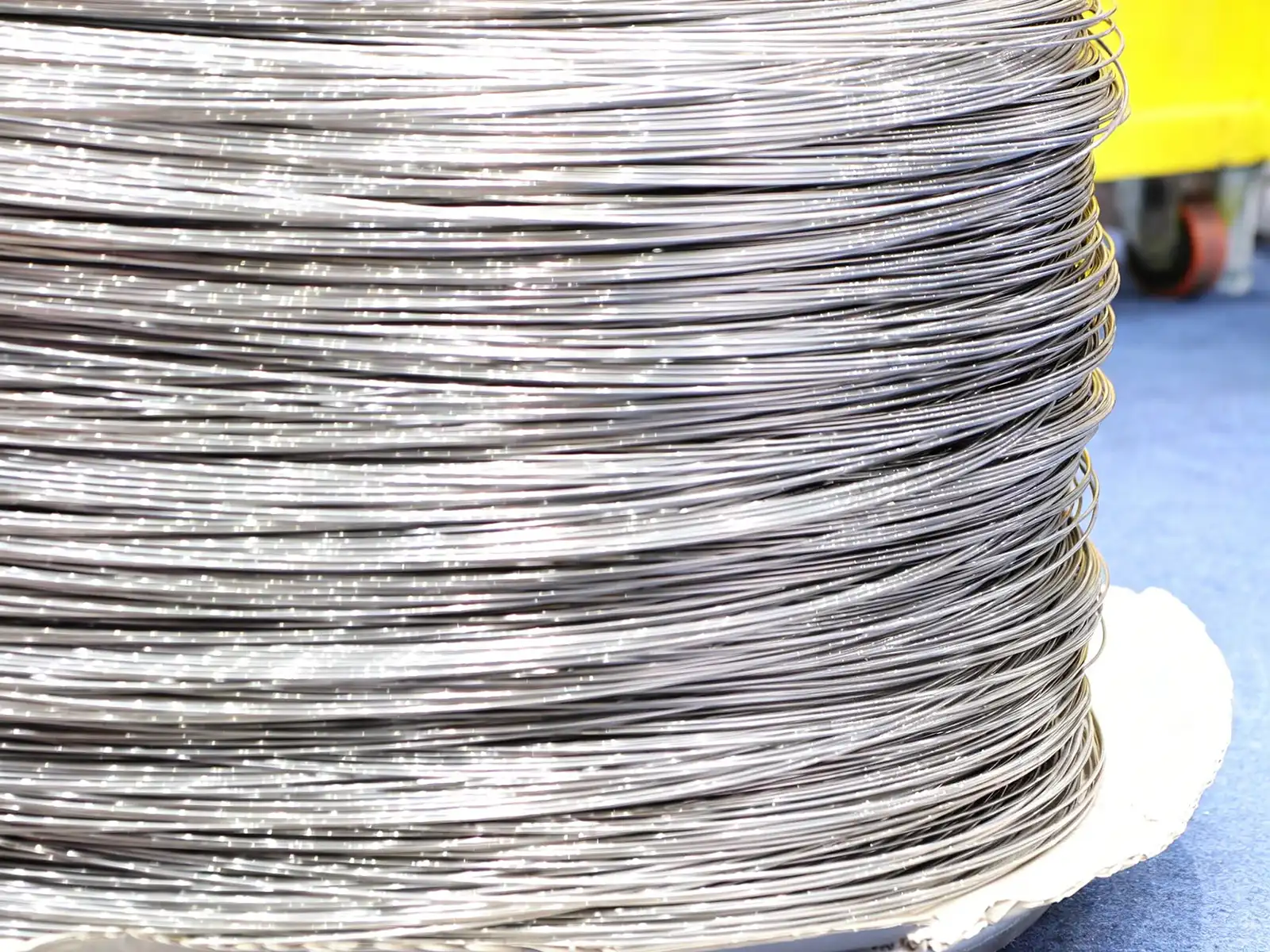
Nickel 200 Wire has become a widely recognized material of choice in the field of vacuum electronic component manufacturing. Its high-purity industrial pure nickel wire can better meet the stringent requirements of materials in vacuum environments due to its unique physical and chemical properties. The nickel content of more than 99.5% ensures an extremely low gas release rate, and the excellent electrical and thermal conductivity ensures the stable operation of the component. It has extremely low residual magnetism and paramagnetic characteristics at high temperatures. More importantly, Nickel 200 shows good creep resistance and thermal stability in high-temperature vacuum environments, and can withstand operating temperatures of around 1200°C without significant deformation or performance degradation. These comprehensive advantages make it an important core material in key components such as vacuum tubes, electron guns, and cathode components.
1. The special requirements for materials of vacuum electronic components and the matching of Nickel 200
(1) Ultra-low gas release rate is the primary consideration in vacuum environment
Vacuum electronic components need to maintain an extremely low pressure environment of 10⁻⁶ to 10⁻⁹ Pa. Gas release from any material will destroy the vacuum. Due to its high purity and dense crystal structure, Nickel 200’s gas release rate can be controlled below 10⁻¹⁰Torr·L/sec·cm2 after proper annealing, which is much lower than conventional materials such as stainless steel, making it an ideal choice for internal components of vacuum chambers.
(2) Thermionic emission performance supports cathode applications
The cathode of a vacuum electron tube requires a material with stable thermionic emission properties. The work function of Nickel 200 is about 5.0 electron volts, although it is higher than that of materials such as tungsten.
(3) Structural stability under high temperature and vacuum environment
The operating temperature of vacuum tubes often exceeds 800°C, and the temperature in some cathode areas can reach 1200°C. Nickel 200 has a melting point of 1453°C and maintains excellent creep resistance within the operating temperature range. Its high-temperature tensile strength can still maintain more than 60% of the normal temperature value at 800°C, ensuring that the components will not deform during long-term operation.
| Performance indicators | Nickel200 value | Vacuum component requirements | Matching evaluation |
| Nickel purity | ≥99.5% | ≥99.0% | Excellent |
| Gas release rate (Torr·L/(s·cm²)) | <10⁻¹⁰ | <10⁻⁹ | Super standard |
| melting point | 1453℃ | >1200 ℃ | satisfy |
| Conductivity at room temperature (%IACS) | 24% (pure copper is 100% IACS) | >15% | good |
| Magnetic permeability | <1.002 (paramagnetic) | <1.01 | Meet non-magnetic requirements |
2. Nickel 200’s core performance advantages in vacuum electronic components
(1) Excellent electrical and thermal conductivity ensures energy transmission efficiency
Nickel 200 Wire has a resistivity of 6.84×10⁻⁸ohm·m and a thermal conductivity of 70 Watts/(m·Kelvin). This balanced electrical and thermal conductivity allows it to efficiently transmit current and quickly dissipate heat. In vacuum tube grid and anode connecting lines, this feature ensures fast signal response and uniform temperature distribution of power components, effectively preventing failure caused by local overheating.
(2) Low magnetic characteristics eliminate electron beam interference
Vacuum electronic components are extremely sensitive to magnetic fields, and any ferromagnetic material will distort the electron beam trajectory. The relative magnetic permeability of Nickel 200 is less than 1.002 and it is a paramagnetic material. When used in electron gun components, focusing systems and deflection coil brackets, it has minimal magnetic interference on the electron beam, helping to ensure imaging quality and focusing accuracy.
(3) Risk of ultra-low impurity gas pollution caused by high-purity materials
Impurities such as oxygen, sulfur, and carbon remaining in the vacuum tube will react with the cathode material and reduce the electron emission efficiency. The sulfur content of Nickel 200 is ≤0.005%, the carbon content is ≤0.10%, and the phosphorus content is ≤0.002%. This ultra-low impurity control prevents harmful gases from being released during high-temperature activation and extends the cathode life by 3 to 5 times.
| Material type | Resistivity (μΩ·cm) | Thermal conductivity W/(m·K) | Magnetic permeability | Vacuum suitability |
| Nickels 200 | 6.84 | 70 | <1.002 (paramagnetic) | Excellent |
| 304 stainless steel | 72 | 16 | >1.02 | generally |
| molybdenum wire | 5.2 | 138 | About 1.0001 (paramagnetic) | Good (but brittle) |
| copper wire | 1.67 | 398 | About 0.9999 (diamagnetic) | Poor (high gas release) |
3. The decisive influence of material processing technology on the performance of Nickel 200 Wire
(1) Multi-pass cold drawing process achieves micron-level dimensional accuracy
The diameter of the gate wire of vacuum electronic components is usually between φ0.05 mm and φ0.5 mm, and the dimensional tolerance is required to be within ±5 microns. Through a multi-pass precision cold drawing process, combined with intermediate annealing to eliminate work hardening, Nickel 200 Wire with a diameter tolerance of ±0.01 mm can be stably produced to meet high-precision winding requirements.
(2) Vacuum annealing treatment to eliminate internal stress and gas content
There are a large number of dislocations and lattice distortion inside the cold-drawn nickel wire, and it also absorbs hydrogen, oxygen and other gases in the environment. By performing 1 to 3 hours of annealing treatment at 900 to 1100°C in a vacuum environment above 10⁻⁴Pa, the material can be recrystallized, eliminate internal stress, and reduce the gas content by more than 90% to obtain a soft, low gas release finished wire.
(3) Surface treatment technology improves electron emission and antioxidant properties
For cathode substrate applications, Nickel 200 Wire needs to be surface modified. Electropolishing can obtain a mirror surface with a roughness Ra<0.2 micron, which is beneficial to the uniform adhesion of the oxide coating; after the alkaline earth metal impregnation treatment, the cathode emission current density can be increased to more than 10 A/cm2.
| Processing stage | Key parameters | Impact on vacuum performance |
| Cold drawn forming | Multiple passes, total deformation rate >99% | Control dimensional accuracy and surface quality |
| Vacuum annealing | 1000 ℃×2 h, vacuum degree 10⁻⁴ Pa | Reduce gas release rate by 80~90% |
| electropolishing | Current density 2 A/dm², Ra<0.2 μm | Improve coating adhesion and emission uniformity |
| Hydrogen exhaust/hydrogen burning treatment | Oxide layer thickness 5~10nm | Reduce work function and enhance antioxidant properties |
4. Application cases and performance data of Nickel 200 Wire in typical vacuum electronic components
(1) Precision application in tube grid winding
The grid of the high-frequency electron tube is spirally wound with φ0.08 mm~φ0.15 mm Nickel 200 Wire with a pitch of 0.3 mm. The low gas release rate of the material keeps the vacuum in the tube below 10⁻⁷Pa for a long time. The low magnetism ensures that the electron beam is not deflected. The high-temperature strength ensures that it can operate continuously for more than 1,000 hours without slackening. The failure rate is 70% lower than that of stainless steel wire.
(2) Long life guarantee of cathode heater
The heater for indirectly heating the cathode is usually made of φ0.3 mm~φ0.8 mm Nickel 200 Wire wound into a double helix structure. The thermal conductivity of the material ensures uniform temperature distribution, and the diameter is reduced by no more than 5% after ultra-high vacuum environment, while ordinary nickel-chromium alloy can only last for 2,000 hours, and the service life is increased by 150%.
(3) Improved reliability of X-ray tube anode connection line
The rotating anode of the medical X-ray tube requires a flexible connecting line to transmit high-voltage current, which is made of multiple strands of φ0.2 mm Nickel 200 Wire. Its excellent conductivity reduces resistor heating, and its vacuum compatibility avoids gas ionization discharge. After 100,000 bending fatigue tests, the resistance change rate is less than 3%, ensuring long-term stable operation of the equipment.
(4) Gate array fabrication of field emission displays
Field emission arrays for flat panel displays need to build a micron-scale gate structure on a silicon substrate and evaporate a Nickel 200 film with a thickness of 10~50 μm. Its high purity ensures the density and conductivity of the film, and its low magnetism avoids interference with the electron beam. With the photolithography process, it can achieve precise patterns with a line width of 5 microns, and the emission uniformity is better than ±8%.
| Application areas | Specification requirements | key performance indicators | Practical application effect |
| tube grid | φ0.08~0.15mm | Gas release rate<10⁻¹⁰ Torr·L/(s·cm²) | The vacuum degree is maintained at 10⁻⁷Pa, and the service life is >1000 h |
| cathode heater | φ0.3~0.8 mm | 1000 ℃ oxidation resistance | Life span 5000 h, decay rate <5% |
| X-ray tube connection cable | Multiple strandsφ0.2 mm | Bending fatigue 100,000 times | Resistance change <3% |
| field emission gate | Evaporated film 10~50 μm | Emission uniformity | Deviation ±8% |
5. Analysis of the competitive advantages of Nickel 200 Wire compared to other vacuum materials
(1) Compare the processability and cost advantages of molybdenum and tungsten materials
Although molybdenum and tungsten have higher melting points (3410 ℃ and 3380 ℃) and lower gas release rates, they are brittle and difficult to process. The filament drawing yield is less than 60%, and the cost is 8 to 12 times that of Nickel 200 Wire. Nickel 200 has excellent plasticity, the cold drawing yield can reach more than 95%, can be wound into complex shapes, and the overall cost-performance ratio is more than 5 times higher.
(2) Improved vacuum compatibility compared to stainless steel
300 series stainless steel is cheap, but its 18% chromium content will form a loose oxide layer on the surface, the gas release rate is as high as 10⁻⁸Torr·L/sec·cm2, and its ferromagnetism will interfere with the electron beam. The gas release rate of Nickel 200 is 2 orders of magnitude lower and it has low magnetism. Although the price is 30~50% higher, it is irreplaceable in high-reliability vacuum components.
(3) Superior high-temperature stability beyond copper-based materials
Although the electrical and thermal conductivity of copper is better than Nickel 200, its high-temperature strength is poor. It will soften and deform above 600°C, and the surface is easily oxidized and has a high gas release rate. Nickel 200 can work stably above 1000°C, and its high-temperature tensile strength remains above 300 MPa, showing significant advantages in cathode heaters and anode structures that need to withstand high temperatures.
(4) Differences in electrical conductivity of titanium alloys
Although titanium alloy has good vacuum compatibility and is non-magnetic, its conductivity is only 20% of Nickel 200, and its resistance generates serious heat, making it unsuitable as a current transmission element. Nickel 200 provides reliable conductive performance while maintaining vacuum compatibility, making it a more reasonable choice in gate leads and electrode connections.
in conclusion
Nickel 200 Wire fully meets the stringent material requirements of vacuum electronic components with its high purity of more than 99.5%, ultra-low gas release rate, low magnetism, excellent high-temperature strength and good electrical and thermal conductivity. Combining advanced cold drawing technology and vacuum heat treatment technology, finished wire materials with precise dimensions and stable performance can be obtained, which show irreplaceable application value in key components such as electron tube grids, cathode heaters, and X-ray tube connecting lines, and have become the standard material choice in the field of vacuum electronics.
FAQ
Q1: What is the maximum operating temperature of Nickel 200 Wire in a vacuum environment?
The melting point of Nickel 200 is 1453°C. In a vacuum environment, the long-term operating temperature can reach 1200°C, and the short-term peak temperature can withstand 1350°C. In practical applications, the temperature in the cathode heater area is often maintained in the range of 1000~1100°C. The material can maintain stable mechanical properties and low creep rate at this temperature.
Q2: How to choose the surface condition of Nickel 200 Wire suitable for vacuum electronic components?
It is recommended to use a bright surface (Ra<0.4 μm) for gate winding to facilitate precision molding; the cathode substrate should have an electrolytic polished surface (Ra<0.2 μm) to facilitate coating adhesion; the pickled surface can be used for lead connections to ensure welding quality. All surfaces are vacuum annealed to reduce gas release rates.
Q3: What is the difference between Nickel 200 and Nickel 201 in vacuum applications?
The carbon content of Nickel 201 is reduced to less than 0.02%, which is more suitable for high-temperature vacuum applications above 350°C and can avoid embrittlement caused by graphite precipitation. Nickel 200 has stable performance from normal temperature to 800 ℃ and has low cost. If the cathode operating temperature exceeds 1000°C, it is recommended to use Nickel 201 to obtain a longer service life.
Looking for a reliable Nickel 200 Wire supplier?
Baoji Baoji Titanium Valley Titanium Nickel Zirconium Material Processing Co., Ltd., as a professional manufacturer of high-purity nickel wire, is equipped with an Italian Danieli precision rolling production line, with an annual production capacity of over 20,000 tons, and provides full-specification customization services from φ0.05 mm to φ200 mm. We provide high-quality Nickel 200 Wire that meets ASTM B161 standards for the vacuum electronics, aerospace and medical equipment industries. Welcome to contact sales@titaniumvalleys.com for technical support and quotations.
References
Li Minghua, Zhang Jianguo. “Selection and Performance Optimization of Metal Materials for Vacuum Electronic Devices”. Electronic Industry Press, 2019.
Wang Xiaodong, Liu Wei. “Research on the Application of High Purity Nickel Materials in Vacuum Technology”. Journal of Vacuum Science and Technology, Volume 41, Issue 3, 2021, Pages 215-223.
Chen Guoqiang, Zhao Wenjing. “Analysis of high-temperature mechanical properties and vacuum compatibility of Nickel 200 alloy”. Materials Engineering, Volume 48, Issue 8, 2020, Pages 102-109.
Yang Fan, Sun Liping. “Processing Technology and Quality Control of Nickel-based Materials for Vacuum Electronic Components”. Rare Metal Materials and Engineering, Volume 51, Issue 6, 2022, Pages 2156-2164.