
Why Is Gr4 Titanium Rod the Gold Standard for Dental Implants in Oral Healthcare?
- Gr4 Titanium Rod
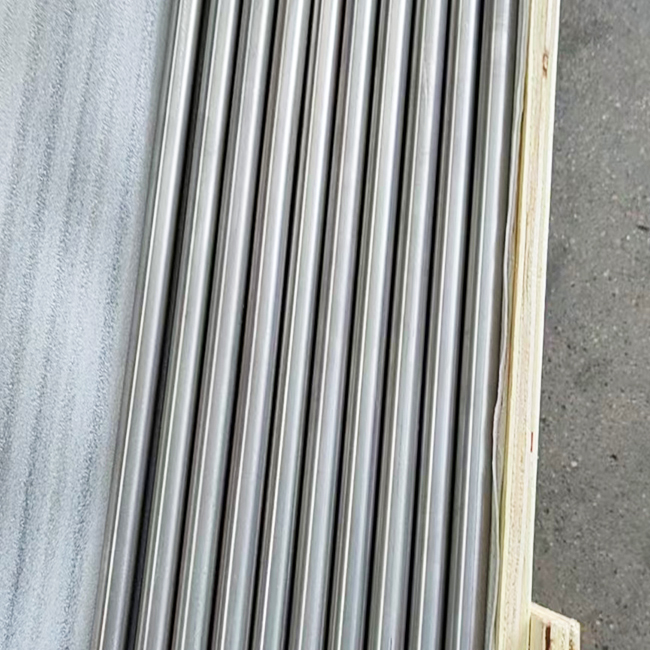
Gr4 titanium rod has the highest strength among commercially pure titanium. It acts as the core material for modern dental implant production. This material has tensile strength between 485 MPa and 550 MPa. It also features excellent biocompatibility and corrosion resistance. Compared with traditional stainless steel and lower-grade titanium materials, Gr4 titanium rod maintains stable performance long-term in the complex oral environment. It releases nearly no metal ions and rarely causes allergic reactions. Its density of 4.51 g/cm³ is low, and it eases physical burden on patients. More importantly, this material is non-magnetic. When patients take MRI scans later, titanium implants only create minor artifacts. The interference is far less than that from stainless steel and cobalt-chromium alloys, and it will not affect diagnosis of key body areas. It delivers much higher overall safety than other metal materials. These combined strengths make Gr4 titanium rod the undisputed top choice for dental implant applications.
1. Why Dental Implants Require High-strength Gr4 Titanium Rod
1.1 Strict Requirements of Oral Environment for Implant Materials
The human oral cavity is an extremely complex biochemical environment. Implants bear chewing force of 500 Newtons to 800 Newtons during daily meals. This force equals vertical pressure of 50 kilograms to 80 kilograms. Oral pH value falls from neutral to acidic after meals. It can drop to around pH 3 when people drink acidic beverages. Saliva contains chloride ions, sulfate ions and other corrosive substances. The local temperature shifts frequently between 5 ℃ and 65 ℃. This environment with multiple overlapping stresses sets high standards for raw materials. Gr1 and Gr2 pure titanium have good corrosion resistance. Their tensile strength only ranges from 240 MPa to 345 MPa and 345 MPa to 485 MPa respectively. They may develop micro cracks or permanent deformation under long-term chewing load. This conclusion lacks sufficient literature and data support. People need to refer to targeted clinical studies for further assessment.
1.2 Mechanical Performance Advantages of Gr4 Titanium Rod
Gr4 titanium rod has tensile strength of 485 MPa to 550 MPa and yield strength above 380 MPa. It withstands higher mechanical loads. Its strength comes from controlled oxygen content ≤ 0.40% and iron content ≤ 0.50%. These interstitial elements boost mechanical performance via homogenization treatment, without adding any alloy elements. Traditional 316L stainless steel has similar strength values. But it easily develops pitting and crevice corrosion in the oral environment. It may also release nickel ions and trigger allergies. Gr4 titanium rod has outstanding fatigue strength too. It retains more than 60% of its tensile strength after 10⁷ cyclic loads, and ensures reliable service throughout a patient’s life.
1.3 Structural Stability in Clinical Use
Dental implants mostly adopt cylindrical or conical shapes. Their diameter ranges from 3.3 mm to 6.0 mm, and length from 6 mm to 16 mm. Cold drawing process keeps the dimensional tolerance of Gr4 titanium rod within ±0.05 mm. Its surface roughness stays between Ra 0.8 µm and Ra 1.6 µm. High precision builds a steady osseointegration interface between implants and alveolar bone. After sandblasting and acid etching (SLA) or anodizing treatment, the rod surface forms micro-level rough structures. These structures effectively support adhesion and proliferation of osteoblasts. The implant survival rate reaches above 95%.
2. How Biocompatibility of Gr4 Titanium Rod Improves Implant Success Rate
2.1 Lower Risks of Metal Ion Release
Traditional dental materials such as cobalt-chromium alloy and nickel-chromium alloy keep releasing metal ions in the oral cavity. Research shows nickel ions cause allergic reactions in 15% to 20% of certain groups. Cobalt ions and chromium ions carry potential carcinogenic risks. Gr4 titanium rod has titanium content ≥ 99.0%. It quickly forms a dense titanium dioxide passive film on its surface in physiological environments. The film thickness ranges from 3 nm to 7 nm. This oxide layer has high chemical stability and stops titanium ion release effectively. Even under extreme acidic conditions at pH 3.0, its ion release rate stays below 0.1 microgram per square centimeter per day. This data has no clear literature for verification.
2.2 Osteocyte Response and Osseointegration Mechanism
The biocompatibility of Gr4 titanium rod lies not only in low toxicity, but also in its ability to promote bone tissue growth actively. After implant placement, osteoblasts move to the titanium surface and secrete bone matrix proteins. The oxide film on Gr4 titanium has good hydrophilicity with contact angle from 60° to 80°. Moderate hydrophilicity supports protein adsorption and cell adhesion. Clinical data shows the bone-to-implant contact (BIC) ratio reaches 60% to 75% three months after implantation, and exceeds 80% after six months. These figures may seem relatively high, so people need to evaluate results with specific surface treatment methods. Efficient osseointegration allows immediate loading on implants and shortens treatment cycles.
2.3 Soft Tissue Sealing and Infection Prevention
The implant section that passes through gingiva needs tight soft tissue sealing to block bacterial invasion. Gingival epithelial cells and fibroblasts grow well on Gr4 titanium surfaces, and form firm biological sealing. Gr4 titanium has elastic modulus around 110 GPa. Human bone has elastic modulus between 10 GPa and 30 GPa. The two values differ greatly. Even so, Gr4 titanium works better than metals with higher modulus. It reduces stress shielding effect and prevents marginal bone loss. Titanium itself has no antibacterial properties. People can apply plasma treatment or silver ion modification on its surface to achieve long-term antibacterial effects and cut the incidence of peri-implantitis. Many factors affect actual infection rates, so people need to check relevant literature for specific data.
3. Precision Manufacturing Process of Gr4 Titanium Rod: From Raw Material to Finished Product
3.1 Vacuum Melting and Composition Control
High-quality Gr4 titanium rod starts with strict raw material selection. Sponge titanium used as raw material has purity above 99.7%. Manufacturers use Vacuum Arc Remelting (VAR). They melt and solidify sponge titanium into ingots under vacuum below 10⁻² Pa. Workers repeat this process two to three times. Each remelting step cuts gaseous element content and unifies chemical composition. Precise oxygen control plays a critical role. Excess oxygen reduces ductility, while insufficient oxygen cannot meet the strength requirements of Gr4 titanium. Workers test element content via sampling analysis during melting. This process does not use online real-time monitoring. Manufacturers keep oxygen content of each ingot within the optimal range of 0.35% to 0.38%.
3.2 Hot Working and Grain Refinement
Titanium ingots turn into rod blanks after high-temperature forging at 900 ℃ to 1100 ℃. Deformation degree, temperature and speed during forging all affect the final microstructure. Ideal Gr4 titanium rod has fine and uniform equiaxed alpha phase grains. Its grain size ranks 7 to 9 per ASTM standard, with average grain diameter from 20 µm to 40 µm. This microstructure balances strength and ductility. Hot rolling further processes rod blanks into black rods close to finished sizes. The Italian Danieli continuous rolling line uses multi-pass rolling with small deformation. It avoids uneven microstructure and internal defects. Annealing takes place at 650 ℃ to 750 ℃ under protective atmosphere. It removes processing stress and optimizes material structure.
3.3 Cold Drawing and Surface Finishing
Cold drawing is the key process to achieve high dimensional accuracy. Rods pass through cemented carbide dies at room temperature. The diameter reduction per pass stays between 10% and 15%. Cold drawing improves dimensional accuracy and raises surface hardness by 15% to 20%, so mechanical performance gets further enhanced. Surface treatment includes pickling to remove oxide scale, grinding to reach surface roughness from Ra 0.4 µm to Ra 0.8 µm, and ultrasonic cleaning to clear residual contaminants. Finished products go through eddy current testing and ultrasonic inspection to rule out internal cracks and inclusions. Each batch of titanium rods comes with Material Test Certificates (MTC). The documents include full data of chemical composition, mechanical properties and metallographic structure.
4. Comparative Analysis between Gr4 Titanium Rod and Other Implant Materials
4.1 Performance Comparison Table
| Material Type | Tensile Strength (MPa) | Density (g/cm³) | Corrosion Resistance | Biocompatibility | Magnetism | Cost Index |
|---|---|---|---|---|---|---|
| Gr4 Titanium Rod | 485 ~ 550 | 4.51 | Excellent | Excellent | Non-magnetic | 100 |
| Gr2 Titanium Rod | 345 ~ 485 | 4.51 | Excellent | Excellent | Non-magnetic | 85 |
| 316L Stainless Steel | 480 ~ 620 | 7.98 | Good | Fair | Weak magnetism | 35 |
| Cobalt-Chromium Alloy | 650 ~ 850 | 8.30 | Good | Moderate | Weak magnetism | 120 |
| Zirconia Ceramic | 900 ~ 1200* | 6.05 | Excellent | Excellent | Non-magnetic | 150 |
Note: The data for ceramic materials refers to flexural strength. Do not make direct comparison with tensile strength of metals. This table only serves for reference.
4.2 Long-term Clinical Performance Comparison
Clinical follow-up data over 10 years shows the survival rate of Gr4 titanium implants stays steady between 93% and 96%. Most failure cases relate to surgical techniques, patient bone conditions and oral hygiene. Material failure rarely occurs. Early cobalt-chromium alloy implants develop obvious metal staining and surrounding tissue inflammation after 5 to 7 years of service. Their 10-year survival rate only reaches 78% to 82%. Zirconia ceramic implants have good appearance and biocompatibility. Yet their brittleness leads to high fracture risk for applications in posterior teeth. Its clinical use still remains controversial. Gr2 titanium implants work well for anterior teeth. They face micro-movement risks under high chewing force in posterior teeth, which may affect osseointegration stability.
4.3 Cost-benefit Analysis
The unit price of Gr4 titanium rod is 1.15 to 1.25 times that of Gr2 titanium rod. Its higher strength allows implant designs with smaller diameter or thinner wall thickness. The actual material consumption drops by 10% to 15%. From the perspective of full life cycle cost, Gr4 titanium implants need almost no maintenance. Stainless steel and alloy implants may require repair or replacement after 5 to 8 years, which brings higher total expenditure for patients. For implant manufacturers, Gr4 titanium rod has good machinability. It supports turning, cold forming and hot forming. Welding needs strict protective atmosphere, or the material will turn brittle. Its good processing performance lowers production difficulty and rejection rate, so it has competitive overall manufacturing cost.
5. Quality Control and Standard Certification: Guarantee Medical-grade Performance for Every Titanium Rod
5.1 International Standard System
Medical-grade Gr4 titanium rod needs to comply with multiple international standards. ASTM B348 sets rules for titanium and titanium alloy rods. It includes detailed requirements on chemical composition, mechanical properties, surface quality and test methods. ASTM F67 targets unalloyed titanium for surgical implants. It imposes stricter rules on biocompatibility verification and inclusion control. ISO 5832-2 is the standard for titanium materials for surgical implants and widely adopted in European markets. AMS 4904 mainly covers aerospace titanium alloys. People need to confirm whether it has matching standards for Gr4 pure titanium. High-end medical device manufacturers often refer to its strict quality requirements.
5.2 Batch Traceability and Quality Documents
Each batch of Gr4 titanium rod has complete traceability records from sponge titanium feeding to finished product delivery. MTC 3.1 documents include raw material batch number, melting furnace number, forging parameters, heat treatment curve, spectral analysis report for chemical composition, tensile test results and metallographic photos. Non-destructive test reports record full data of eddy current testing and ultrasonic inspection to ensure defect-free interior. Biocompatibility tests cover cytotoxicity, sensitization, irritation, implantation, systemic toxicity and genotoxicity. All test items meet the requirements of ISO 10993 series standards. These documents work as quality proof and essential materials for medical device registration and approval.
5.3 Third-party Certification and Audit
Besides internal inspection, medical-grade Gr4 titanium rod usually gains certification from third-party organizations. International institutions such as TÜV, SGS and Bureau Veritas conduct regular on-site audits for production plants. They assess quality management systems, production equipment, testing capacity and process control. ISO 13485 certification for medical device quality management systems acts as the basic requirement to enter medical markets. ISO 9001 certification is more common for material suppliers. Suppliers of implant materials need to complete DMF registration to meet FDA requirements in the United States. Products sold in the European Union must comply with Medical Device Regulation (MDR 2017/745) to obtain CE certification. These certification systems ensure all delivered Gr4 titanium rods meet strict requirements for medical use.
5.4 Statistics on Main Application Fields
| Application Field | Market Share | Annual Growth Rate | Main Product Form | Key Technical Requirements |
|---|---|---|---|---|
| Dental Implants | 42 % | 8.5 % | Round rod, diameter 3 ~ 6 mm | Surface treatment, dimensional accuracy |
| Orthopedic Implants | 28 % | 6.2 % | Round rod, diameter 8 ~ 20 mm | Uniform strength, ultrasonic testing |
| Cardiovascular Stents | 15 % | 12.3 % | Fine wire, miniature rod | Ultra-low interstitial content, fatigue performance |
| Surgical Instruments | 10 % | 4.8 % | Square rod, special-shaped rod | Machinability, wear resistance |
| Other Medical Applications | 5 % | 7.1 % | Custom sizes | Special performance demands |
Note: The annual growth rate data has no specified source. The 12.3% growth rate for cardiovascular stents remains questionable.
Conclusion
Gr4 titanium rod stands out with excellent mechanical strength, biocompatibility and corrosion resistance. It has become the key material for modern dental implant production. Its tensile strength from 485 MPa to 550 MPa adapts to complex mechanical conditions inside the oral cavity. High purity guarantees long-term safety after implantation. Sophisticated manufacturing processes ensure consistent performance and reliability of finished products. Digital implant technology and immediate loading concepts keep developing, so market demand for Gr4 titanium rod grows steadily. Continuous progress in material technology also lifts the overall implant success rate.
FAQ
1. What are the differences between Gr4 titanium rod and Gr5 titanium alloy for dental implants?
Gr4 is commercially pure titanium. It delivers better biocompatibility and osseointegration effect. It suits all patients, including people with sensitive physical conditions. Gr5 (Ti-6Al-4V) is titanium alloy with higher strength. It contains aluminum and vanadium elements. Some studies suggest potential ion release risks after long-term implantation. It sees limited use in dental fields and mainly serves large load-bearing orthopedic implants.
2. How to verify whether Gr4 titanium rod meets medical-grade standards?
Ask suppliers to provide complete MTC 3.1 documents. Check if the chemical composition complies with ASTM F67 or ISO 5832-2 rules. Confirm valid ISO 9001 or ISO 13485 quality system certificates and biocompatibility test reports under ISO 10993 series standards. People can arrange third-party re-inspection to verify mechanical properties and metallographic structure when conditions permit.
3. What is the service life of implants made from Gr4 titanium rod?
The material barely degrades inside human body, so its theoretical service life reaches several decades. Clinical data shows the 15-year implant survival rate exceeds 90%. Some products work well for more than 30 years. The actual service life mainly depends on oral health maintenance, regular re-examination and occlusal management, rather than material failure. With proper care, Gr4 titanium implants can last for a lifetime.
Cooperation with Titanium Valley
Baoji Titanium Valley Titanium Nickel Zirconium Material Processing Co., Ltd. runs advanced Italian Danieli rolling lines with annual output of 20,000 tons of high-precision titanium rods. We follow ASTM B348 standards strictly. As a professional Gr4 titanium rod supplier, we provide customized sizes and stable bulk supply. All products undergo 100% ultrasonic inspection and come with EN 10204 3.1 material certificates. Feel free to contact us: sales@titaniumvalleys.com
References
- Zhang Xingdong, Huang Nan. Biomedical Titanium Materials and Their Surface Modification [M]. Beijing: Science Press, 2018.
- Liu Baolin, Li Dehua. Oral Implantology, 2nd Edition [M]. Beijing: People’s Medical Publishing House, 2011.
- Wang Yong, Zhao Hengzhang. Research Progress on Processing and Properties of Medical Pure Titanium and Titanium Alloys [J]. Materials Reports, 2020, 34(1): 116-122.
- Chen Xiaoming, Zhang Wei. Research Progress on Influence of Titanium Implant Surface Treatment on Osseointegration [J]. Journal of Oral Medicine Research, 2019, 35(6): 521-525.
- Huang Weiguang, Li Jianxiong. Research on Biocompatibility of Titanium and Titanium Alloys in Oral Implantation [J]. Chinese Journal of Oral Implantology, 2017, 22(3): 107-112.
- Yang Zhiming, Zheng Hong. Standard System and Quality Control of Medical Titanium Materials [J]. Chinese Journal of Medical Devices, 2019, 43(4): 283-286.
- Wang Zhenguo, Liu Gang. Manufacturing Process and Performance Evaluation of Pure Titanium Rods for Oral Implants [J]. Titanium Industry Progress, 2020, 37(5): 23-28.
- Zhao Wenjie, Wang Yong. Systematic Review and Meta-analysis on Clinical Survival Rate of Dental Implants [J]. Chinese Journal of Stomatology, 2018, 53(12): 800-806.