
What Are the Key Performance Advantages of Gr1 Titanium Wire in Precision Manufacturing?
- Gr1 Titanium Wire
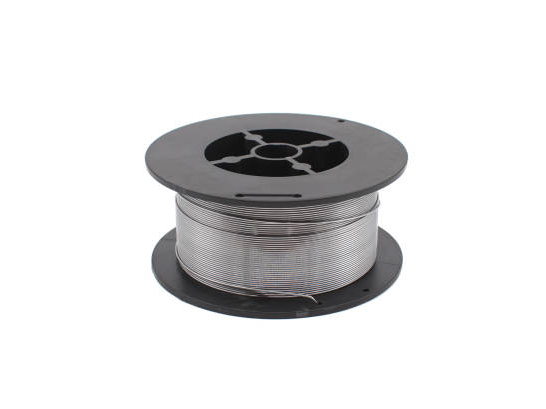
Material reliability decides product performance in aerospace, medical device and precision electronics industries. Gr1 titanium wire features great plastic deformation capacity, good fracture toughness and outstanding corrosion resistance. It is an ideal choice for precision manufacturing. As the purest grade of commercially pure titanium with titanium content above 99.5%, it strikes a perfect balance between toughness, formability and corrosion resistance. The material releases stress gradually through plastic deformation under impact or bending, and avoids brittle fracture. This is why precision manufacturers worldwide prefer it for key component design.
1. Engineering Value of Fracture Toughness and Material Properties of Gr1 Titanium Wire
1.1 Definition of Fracture Toughness and Its Role in Precision Manufacturing
Fracture toughness refers to a material’s ability to stop crack growth, marked by the K_IC value. Parts like tiny medical devices, marine detection equipment and electronic connectors bear cyclic load, thermal shock and mechanical vibration. Low fracture toughness will lead to component failure. Gr1 titanium wire has fracture toughness between 60 and 80 MPa·m^1/2. The value is lower than high-strength titanium alloys such as Ti-6Al-4V whose toughness exceeds 80 MPa·m^1/2. Still, its excellent ductility delivers stable performance in actual use.
1.2 Microstructure of Gr1 Titanium Wire
Gr1 titanium wire made by vacuum melting has a single alpha phase crystal structure with a hexagonal close-packed (HCP) lattice. Its grains are fine and even. This microstructure brings excellent ductility. The elongation rate of annealed products reaches over 24%, much higher than many engineering alloys. Fine grains create winding paths for expanding cracks and boost energy absorption capacity.
1.3 How Impurity Control Affects Toughness
Strict limits set oxygen content below 0.18% and iron content below 0.20%, which keeps the base material pure. Excess interstitial elements form brittle phases and reduce toughness. Multiple cold drawing passes combined with intermediate annealing eliminate work hardening, and maintain a good balance between toughness and ductility.
2. Toughness of Gr1 Titanium Wire in Different States
Mechanical Properties of Gr1 Titanium Wire in Different States (ASTM B863 Standard)
| Material State | Tensile Strength (MPa) | Yield Strength (MPa) | Elongation (%) | Fracture Toughness Range (MPa·m^1/2) |
| Annealed (M) | 240 ~ 345 | 170 ~ 275 | ≥ 24 | 65 ~ 80 |
| Half-hard (Y2) | 345 ~ 480 | 275 ~ 410 | ≥ 15 | 58 ~ 70 |
| Full-hard (Y) | 480 ~ 620 | 410 ~ 520 | ≥ 8 | 55 ~ 65 |
Note: The fracture toughness values come from literature and practical experience. Actual results vary with test methods and sample sizes. We use Rp0.2 (0.2% proof stress) to mark yield strength for half-hard and full-hard wire.
2.1 Optimal Toughness of Annealed Titanium Wire
Annealing at 650 ℃ to 750 ℃ fully removes internal stress. Grain boundaries stay clean with no precipitates. Wire in this state has high elongation and fracture toughness. It works well for parts requiring complex forming, such as woven filter screens, springs and medical sutures.
2.2 Trade-off between Strength and Toughness for Cold-worked Wire
Roll die cold drawing controls the degree of work hardening. Half-hard wire gains higher strength while retaining proper ductility. It suits structural parts that need both load-bearing capacity and deformability. Full-hard wire has the highest strength but lower toughness, so it fits static load working conditions.
2.3 Surface Quality Restrains Fatigue Cracks
Bright finished wire with surface roughness Ra ≤ 0.4 μm has very few surface defects and microcracks. It strongly resists fatigue crack initiation. The Italian Danieli continuous rolling line and precision drawing process produce wire that meets medical-grade surface standards, and prevent early failure caused by stress concentration. Further polishing brings surface roughness down to Ra ≤ 0.2 μm.
3. How Environmental Factors Influence the Toughness of Gr1 Titanium Wire
3.1 Toughness Changes with Temperature
Performance of Gr1 Titanium Wire at Different Temperatures
| Test Temperature | Strength Trend | Toughness Performance | Typical Application Scenarios |
| -196 ℃ (Liquid Nitrogen) | Slight strength increase | Stable alpha HCP structure, no phase change, good toughness | Aerospace low-temperature systems |
| Room Temperature (20 ℃) | Standard value | Best overall performance | General precision machining |
| 300 ℃ | Moderate strength drop | Good ductility remains | Chemical heat exchangers |
Gr1 titanium wire maintains stable performance across different temperatures. The alpha HCP structure of pure titanium never transforms at low temperatures, an advantage ferritic stainless steel cannot match. This low-temperature stability plays a key role in deep-sea exploration and liquefied natural gas transportation.
3.2 Toughness Retention in Corrosive Environments
Common metals easily suffer stress corrosion cracking and sharp toughness loss in seawater, salt spray and chloride-rich environments. Gr1 titanium wire forms a dense and stable TiO₂ passive film on its surface to block corrosive media. Its mechanical properties show no obvious decline after 1000 hours of immersion in 3.5% NaCl solution.
3.3 Toughness Maintenance at Weld Joints
Workers use ERTi-2 welding wire for argon arc welding. The heat-affected zone is only 2 to 3 mm wide. Proper heat input control stops grain coarsening. Weld zones achieve performance close to the base metal, better than stainless steel welds. This feature makes titanium wire reliable for pressure vessels and pipeline systems.
4. Toughness Requirements and Solutions for Different Application Scenarios
4.1 Biosafety and Mechanical Reliability for Medical Devices
Applications of Gr1 Titanium Wire in Medical Devices
| Application Type | Wire Diameter (mm) | Toughness Requirements | Technical Solutions |
| Surgical suture | 0.1 ~ 0.3 | High elongation, fracture resistance | Ultra-fine annealed wire, elongation ≥ 24% |
| Orthopedic implant stent | 0.5 ~ 2.0 | Fatigue resistance, bending resistance | Precision half-hard wire with surface polishing |
| Minimally invasive device components | 1.5 ~ 3.0 | Balanced load capacity and toughness | Custom heat treatment, comply with ISO 5832 standards |
Parts like heart valve stools bear cyclic load from human body movement and need non-toxic, non-magnetic materials. Gr1 titanium wire passes ISO 10993 biocompatibility tests. It has fine grains per ASTM standards and uniform microstructure.
4.2 Adaptability to Extreme Conditions in Marine Engineering
Deep-sea pipeline systems face combined threats of high pressure, corrosion and impact load. Fasteners and sealing rings made from Gr1 titanium wire work steadily in deep sea. Its good toughness absorbs stress from wave impact and thermal expansion, and avoids leakage caused by sudden fracture.
4.3 Precision Forming and Long-term Reliability for Electronic Industry
Ultra-fine wire with diameter from 0.06 mm to 0.4 mm goes through complex bending, weaving and spot welding in semiconductor packaging and connector production. Roll die drawing controls diameter tolerance within ±0.01 mm. Matched with bright surface treatment, the wire stays crack-free during micro forming and raises product yield.
5. Optimize Toughness of Gr1 Titanium Wire via Machining Processes
5.1 Precision Shaping Technology on Continuous Rolling Lines
The introduced Italian Danieli production line adopts short-stress mill technology for continuous rolling under precise temperature control. It keeps ovality of 5 mm wire below 0.15 mm, far better than the industry standard of 0.3 mm, and reduces stress concentration points.
5.2 Combined Effect of Multi-pass Cold Drawing and Intermediate Annealing
Each cold drawing pass limits area reduction to 15% to 25%, followed by short-time annealing in inert gas. This gradual processing prevents crack formation from one-time heavy deformation. Finished products retain fine and uniform grains, with yield-to-tensile strength ratio kept between 0.70 and 0.80.
5.3 Surface Strengthening Improves Fatigue Toughness
Controlled-atmosphere pickling removes surface oxide layers. Ultrasonic cleaning and passivation follow to bring surface roughness down to Ra ≤ 0.2 μm. High-quality surfaces greatly extend fatigue crack initiation life. The wire suits elastic parts and transmission components under cyclic load.
5.4 On-line Inspection Ensures Batch Stability
Automatic production lines integrate laser diameter gauges, eddy current flaw detectors and ultrasonic testing devices. These tools monitor diameter variation, surface defects and internal inclusions in real time. Full automation produces wire spools over 100 kg with no intermediate welds, and guarantees consistent performance for the whole roll.
Conclusion
Gr1 titanium wire has lower fracture toughness than high-strength titanium alloys such as Ti-6Al-4V. Yet its excellent plastic deformation capacity, environmental stability and biocompatibility make it highly valuable for precision manufacturing. Advanced processing technology and strict quality control convert the material’s inherent strengths into reliable engineering performance. It helps clients solve core technical problems including corrosion, magnetic interference and biosafety, and supports product upgrading and long-term economic benefits.
FAQ
1. Why does Gr1 titanium wire suit medical use even without the highest toughness?
Gr1 titanium wire has slightly lower fracture toughness than Ti-6Al-4V and other alloys. Its ultra-high purity above 99.5% and single alpha phase structure deliver outstanding biocompatibility and ductility. It contains no aluminum or vanadium alloy elements, so it works better for patients sensitive to metal ions. Its elongation above 24% adapts to physical movement of human bodies, a feature hard for high-strength alloys to match. Ti-6Al-4V, especially ELI grade, is also a mature medical material verified by long-term clinical tests and widely used in orthopedics and dentistry. Users need to select materials based on patient conditions, implant locations and professional experience.
2. How to verify consistent toughness across different batches of Gr1 titanium wire?
Carry out full-range tests for every batch, including spectral analysis for chemical composition, room temperature tensile test, metallographic inspection and surface scanning. Standardize process parameters with automatic control systems, and apply intermediate annealing to keep stable grain size and mechanical properties across batches. We provide material certificates complying with EN 10204-3.1 to ensure full traceability.
3. Will long-term service in salt spray environments affect the toughness of Gr1 titanium wire?
Salt spray tests per ASTM B117 standards prove the wire retains stable tensile strength and elongation. The surface TiO₂ passive film has self-repair ability in chloride environments and stops stress corrosion cracks from expanding. By contrast, 316 stainless steel develops pitting and performance decline under the same conditions. This is a major reason for choosing titanium wire in marine engineering and chemical equipment.
Custom Solutions for Gr1 Titanium Wire
Baoji Titanium Valley Titanium Nickel Zirconium Material Processing Co., Ltd. is a leading global manufacturer of Gr1 titanium wire. We rely on Italian Danieli production lines and vacuum melting technology with an annual output of 5000 tons, and serve high-end sectors including aerospace, medical treatment and electronics. Contact our engineering team for customized services for ultra-fine wire starting from 0.06 mm or special surface treatment. Email: sales@titaniumvalleys.com
References
- Huang Boyun, Li Chenggong, Shi Likai, et al. China Materials Engineering Canon Volume 4: Non-ferrous Metal Materials Engineering [M]. Beijing: Chemical Industry Press, 2006.
- Zhao Yongqing, Chen Yongnan, Zhang Xuemin, et al. Phase Transformation and Heat Treatment of Titanium Alloys [M]. Changsha: Central South University Press, 2012.
- Li Xu, Wang Kuaishe. Research on Microstructure and Properties of Welded Joints of Commercially Pure Titanium [J]. Welding Technology, 2015, 44(6): 25-28.