
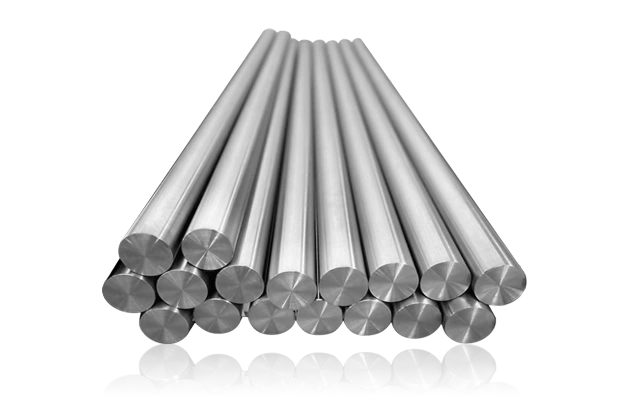
Gr4 titanium rod is the strongest grade among commercially pure titanium. It plays an important role in high-end manufacturing. This high-strength pure titanium material is UNS R50700. Its tensile strength reaches 550 MPa or above in annealed state, with typical values between 550 MPa and 680 MPa. It also has good corrosion resistance and workability. Its density is about 4.51 g/cm³, around 57% of steel. It has nearly zero magnetism and great biocompatibility. It sees wide use in chemical industry, marine engineering, medical devices, aerospace, precision electronics and energy sectors worldwide.
1. Full-range Applications for Chemical Corrosion Protection
1.1 Reaction Vessels for Strong Acid and Alkali Environments
Gr4 titanium rod is widely used to make reactors and pressure vessels in chemical plants. Traditional stainless steel suffers intergranular corrosion and pitting when it contacts concentrated sulfuric acid, hydrochloric acid or sodium hydroxide solution for long periods. Gr4 titanium rod adopts vacuum arc remelting technology. Its oxygen content stays below 0.40%. A dense oxide film forms on its surface. This passivation film keeps stable in solutions with pH value from 1 to 14. It greatly extends service life of equipment. Shafts and internal parts of reactors made from Gr4 titanium rod work well in sulfuric acid or acetic acid solutions of common concentrations.
1.2 Long-term Protection for Storage Tanks and Pipeline Systems
Chemical storage and delivery systems require materials with uniform structure. Gr4 titanium rod goes through hot rolling or forging, then stress relief annealing. It has even microstructure and yield strength over 380 MPa. Hypochlorite solutions cause stress corrosion cracking on common steel in chlor-alkali industry. Gr4 titanium material resists chloride corrosion very well. Flanges and pipe joints made of Gr4 titanium rod need much less maintenance than stainless steel parts.
1.3 Precision Components for Valves and Pumps
Core parts of chemical pumps and control valves need corrosion resistance and high precision at the same time. Cold drawing process gives Gr4 titanium rod a dimensional tolerance of ±0.05 mm and surface roughness of Ra0.8 μm. It has good weldability. Workers use TIG welding to make complex valve bodies. Weld strength exceeds 90% of base metal strength. Pump shafts and valve stems made of Gr4 titanium rod show good wear resistance and stable size in organic acid such as acetic acid and formic acid.
2. Applications in Marine Engineering and Coastal Corrosive Areas
2.1 Key Material for Seawater Desalination Equipment
Seawater desalination equipment demands strong resistance to seawater corrosion. Gr4 titanium rod is common in multi-stage flash distillation and reverse osmosis systems. Seawater contains 3.5% salt and dissolved oxygen, which speeds up metal corrosion. The corrosion rate of Gr4 titanium rod in seawater is lower than 0.001 mm per year. It works better than super duplex stainless steel against chloride pitting. It is ideal for plungers of high-pressure pumps, tube sheets of heat exchangers and fasteners.
2.2 Structural Parts for Ships and Offshore Platforms
| Application Part | Material Replacement | Weight Reduction | Extended Maintenance Cycle | Overall Cost Trend |
|---|---|---|---|---|
| Propeller shaft | Stainless steel to Gr4 titanium | About 43% | Greatly extended | Remarkable saving |
| Pipeline system | Copper-nickel alloy to Gr4 titanium | About 52% | Greatly extended | Remarkable saving |
| Mooring connectors | High-strength steel to Gr4 titanium | About 38% | Maintenance-free | Remarkable saving |
| Seawater pump body | Bronze to Gr4 titanium | About 47% | Greatly extended | Remarkable saving |
Fasteners and guide rods for deep-sea oil platforms face corrosion from high-pressure seawater and sulfide. Gr4 titanium rod receives ultrasonic inspection after forging. Its internal defects meet Class A standard. Its fatigue strength reaches over 300 MPa. Titanium connectors serve far longer than traditional alloy steel parts on offshore platforms.
2.3 Durable Solutions for Coastal Infrastructure
Bridge cables, lighthouse structures and dock facilities stay in salt spray all year round in coastal areas. Anchor rods and support bars made of Gr4 titanium rod cut structural weight greatly, for its density is only 57% of steel. Its elastic modulus is about 106 GPa. It absorbs thermal stress effectively and prolongs service life of structures.
3. Medical Devices and Biomedical Engineering
3.1 Standard Material for Orthopedic Implants
Gr4 titanium rod is widely used in orthopedics. Human bone has elastic modulus of 10 to 30 GPa. Pure titanium stands at 106 GPa, much lower than 200 GPa of stainless steel. It reduces stress shielding effect. Workers process Gr4 titanium rod into intramedullary nails and bone plates via cold drawing and precision grinding. Surface sand blasting and acid etching control roughness between Ra1.2 μm and Ra1.8 μm, and help bone cells attach. Clinical records prove orthopedic implants of Gr4 titanium have high long-term success rate.
3.2 Precision Manufacturing of Surgical Instruments
| Instrument Type | Processing Method | Dimensional Accuracy | Surface Treatment | Key Performance |
|---|---|---|---|---|
| Bone drill | Turning and milling | ±0.03 mm | Electrolytic polishing | Moderate hardness, good wear resistance |
| Surgical handle | Cold drawing and grinding | ±0.02 mm | Anodizing | Comfortable grip, corrosion resistance |
| Endoscope rod | Seamless tube processing | ±0.01 mm | Mirror polishing | Straight shape, non-magnetic |
| Implant screw | Cold forging and thread rolling | M3.5-0/+0.02 | Passivation | High torsion strength |
Microsurgical scalpels and endoscope rods need fully non-magnetic material. The magnetic permeability of Gr4 titanium rod is close to 1.0. It creates no artifacts under MRI. Laparoscopic instruments made of Gr4 titanium weigh about 45% less than stainless steel ones, and ease fatigue for surgeons. Its thermal conductivity is about 17 W/m·K. It stops tissue damage caused by heat transfer during operations.
3.3 Biocompatibility for Dental Restorations
Oral environment has changing pH value and active microbes, which set strict requirements for materials. Abutments and crown frames made from Gr4 titanium rod release very few metal ions. They meet ISO 10993 biological safety standards. It forms stable passivation film in saliva electrolyte, and brings good osseointegration for dental implants.
4. High-performance Structural Applications in Aerospace
4.1 Fuselage Fasteners and Connection Systems
Lightweight aircraft cuts fuel cost a lot. Manufacturers forge Gr4 titanium rod into bolts, screws and rivets for aviation use. It has higher specific strength than aluminum alloy. It keeps stable strength from -50℃ to 350℃. Replacing steel fasteners with Gr4 titanium parts on civil aircraft fuselage brings obvious weight reduction. The material goes through vacuum arc remelting. Its hydrogen content stays below 0.012%, and prevents fatigue cracks caused by hydrogen embrittlement.
4.2 Hydraulic Systems and Drive Shaft Components
Aircraft hydraulic systems work under high pressure. Pipe parts need to resist pulse impact. Pipe joints made of Gr4 titanium rod adopt spinning forming technology to meet pressure resistance requirements. Gr4 titanium is widely used on non-load-bearing aircraft structures for light weight and corrosion resistance. Its low density raises critical speed of drive shafts and cuts vibration and noise.
4.3 Parts around Engine Units
The maximum working temperature of Gr4 pure titanium is around 300℃. It still has wide use on non-combustion parts of aircraft engines. Guide vane brackets, fuel manifolds and sensor bases for compressors can use Gr4 titanium rod. It works better than aluminum alloy against oxidation, and runs stably for long time in high-temperature oil around 200℃.

5. Precision Electronics and Semiconductor Manufacturing
5.1 Ultra-clean Parts for Semiconductor Equipment
Chip production requires ultra-pure materials. Gr4 titanium rod adopts electron beam melting or vacuum melting. Its iron content is below 0.35% and carbon content below 0.08%, to avoid particle pollution. Electrode brackets and gas distribution plates of plasma etchers use Gr4 titanium. A protective fluoride layer forms in fluorine-containing gas, and offers better corrosion resistance than nickel-based alloy. Fasteners for semiconductor chambers use finely processed Gr4 titanium rod. Surface roughness reaches Ra0.4 μm with very few falling particles.

5.2 Electronic Connectors and Precision Sensors
| Application | Technical Requirement | Advantages of Gr4 Titanium Rod |
|---|---|---|
| PCB test probe | Non-magnetic, high elasticity | Permeability near 1.0, no signal interference, long service life |
| Optical fiber connector | Matched thermal expansion | Similar expansion rate with quartz, low insertion loss |
| MEMS sensor base | Stable dimension | Low residual stress, small temperature drift |
| Vacuum coating fixture | Low outgassing | Little gas release, maintains high vacuum |
Filter cavities for 5G base stations need high precision and stable performance under changing temperature. Precision turning gives Gr4 titanium rod mirror surface. It has low dielectric loss and reduces signal attenuation. Its thermal expansion coefficient is 60% of stainless steel, which lowers frequency drift.
5.3 Flat Panel Displays and Optical Instruments
Sputtering target brackets for liquid crystal panel production need pure and corrosion-resistant material. Target back plates made of Gr4 titanium rod receive oxygen-free annealing. They have even grain structure and ensure uniform sputtering. Reference rods for optical measuring instruments use Gr4 titanium rod. Its stable elastic modulus keeps size unchanged for a long time.

6. Key Materials for Energy Industry
6.1 Core Parts for Hydrogen Energy Industry Chain
Hydrogen embrittlement limits common metals for hydrogen energy use. Gr4 titanium rod has hydrogen content below 0.015%. It works safely under normal conditions or specific hydrogen-free environments. Electrode frames and gas-liquid separators for water electrolysis hydrogen production use Gr4 titanium. It resists corrosion well in alkaline electrolyte. Structural parts of PEM electrolyzers choose Gr4 titanium rod for good conductivity and corrosion resistance. It provides reliable lightweight solutions for hydrogen energy equipment.
6.2 Durable Components for Solar PV Equipment
Trichlorosilane and silicon tetrachloride in polysilicon production have strong corrosion. Internal parts and pipe supports of rectifying towers made of Gr4 titanium rod serve long time in chlorosilane vapor. Heat shield brackets for monocrystalline furnaces use Gr4 titanium rod. It has low high-temperature creep rate and keeps precise size for years.
6.3 Auxiliary Systems for Nuclear Power Plants
Cooling water circulation and waste liquid treatment systems of nuclear power plants need high reliability. Heat exchanger tubes made of Gr4 titanium rod resist stress corrosion well in chloride-containing cooling water. All products pass 100% ultrasonic and eddy current testing to meet nuclear safety standards.

7. Environmental Water Treatment and Pollution Control
7.1 Seawater Circulating Cooling Systems
Seawater cooling towers of coastal power plants and chemical factories process large volume of seawater. Spray pipes and water distributors made of Gr4 titanium rod resist marine organism adhesion and need no extra coating. Titanium pipes have almost no thickness loss in seawater cooling systems. They stand erosion under high flow speed.
7.2 Advanced Oxidation Equipment for Wastewater Treatment
Electrodes and diffusers of ozone generators work in strong oxidation environment all the time. Anodizing forms photocatalytic layer on Gr4 titanium rod surface and improves organic matter degradation efficiency. The material never rusts in water with residual chlorine. Its non-magnetic property stops magnetic impurities from attaching and keeps the whole system clean.
7.3 Flue Gas Desulfurization and Denitrification Systems
Spray layers and mist eliminators of wet desulfurization towers in thermal power plants face erosion from acidic droplets. Mist eliminator blades made of Gr4 titanium rod have high yield strength and resist sulfuric acid dew point corrosion. Replacing stainless steel with Gr4 titanium greatly extends equipment life. Ammonia injection pipes for SCR denitrification systems use Gr4 titanium. The pipe wall stays smooth in ammonia-containing corrosive atmosphere.

8. General Equipment for Petrochemical Industry
8.1 Rectifying Towers and Extraction Equipment
Internal parts of petrochemical rectifying towers include valve trays, wire mesh demisters and redistributors. Stamped float valves from Gr4 titanium rod have high compression strength and keep shape in mixed solutions of methanol and xylene under high temperature. Titanium internal parts raise separation efficiency and cut maintenance frequency. Its low surface energy reduces liquid adhesion on pipe wall and improves mass transfer efficiency.
8.2 Low-temperature Parts of Hydrogenation Reactors
Hydrocracking units work under high pressure and high temperature. Gr4 titanium rod replaces high-cost corrosion-resistant alloys on low-temperature and hydrogen-free areas, such as feed distributors and product collection pipes. It brings good corrosion resistance and cost advantages, with no risk of hydrogen embrittlement.
8.3 Key Connectors for Storage and Transportation Equipment
Reinforcing ribs and manhole flanges of crude oil and product oil tanks need high strength and good weather resistance. Forged flanges and bolts from Gr4 titanium rod work well with PTFE gaskets for tight sealing. Titanium loading arms and fasteners resist corrosion in marine atmosphere and need no paint protection. It has good low-temperature impact toughness and fits transportation in cold regions.

Conclusion
Gr4 titanium rod has tensile strength over 550 MPa, excellent corrosion resistance and low density of 4.51 g/cm³. It becomes a multi-purpose material across many industries. Its applications keep expanding in chemical anti-corrosion, marine engineering, medical implants, aerospace, semiconductor manufacturing and new energy. Technologies like vacuum arc remelting, precision rolling and advanced heat treatment balance stable performance and consistent processing quality. With global manufacturing upgrading and high-end equipment development, this versatile titanium material will play a bigger role in more fields.
FAQ
1. What are the main differences between Gr4 titanium rod and Gr2 titanium rod in use?
Annealed Gr4 titanium rod has tensile strength over 550 MPa, 40% to 60% higher than Gr2 (over 345 MPa). It suits structural parts under high stress, such as aviation fasteners and offshore platform connectors. Gr2 titanium rod has better ductility, and fits deep-drawn heat exchanger tubes and thin-wall containers. The two grades have similar corrosion resistance. Users choose grades mainly based on strength requirements.
2. How to guarantee biological safety of Gr4 titanium rod for medical implants?
Medical grade Gr4 titanium rod needs ISO 13485 certification. Its oxygen content stays between 0.30% and 0.40%, and hydrogen content below 0.012% to avoid brittleness. Products go through double acid washing and electrolytic polishing. Metal ion release tests follow ISO 10993 standards to ensure safety for long-term implantation.
3. How long can Gr4 titanium rod serve in seawater?
The uniform corrosion rate of Gr4 titanium rod in natural seawater is lower than 0.001 mm per year. It can work for decades in theory. Actual service life relates to flow erosion, crevice corrosion and marine organism adhesion. With proper design and regular maintenance, parts like seawater pump shafts run 15 to 20 years. Structural parts on offshore platforms have a design life over 50 years.
Contact Titanium Valley
Baoji Titanium Valley Titanium, Nickel & Zirconium Material Processing Co., Ltd. is a leading manufacturer and supplier of Gr4 titanium rod in China. Our annual precision processing capacity reaches 20,000 tons. All products comply with ASTM B348, AMS 4904 and GB/T 2965 standards. We supply round rods, square rods and custom special profiles with diameter from 3 mm to 300 mm. Full-process traceability system ensures stable performance of every batch. Global buyers can contact us for technical solutions and quotations: sales@titaniumvalleys.com
References
- Chinese Society for Corrosion and Protection. Research on Application and Corrosion Behavior of Titanium and Titanium Alloys in Marine Engineering. Chinese Journal of Corrosion and Protection, 2023, 43(2): 245-254.
- Chinese Society of Biomedical Engineering. Biocompatibility Evaluation and Clinical Application Progress of Medical Grade Pure Titanium. Chinese Journal of Biomedical Engineering, 2022, 41(3): 321-330.
- National Technical Center for Chemical Equipment Design. Material Selection and Design Specification of Commercially Pure Titanium for Chemical Equipment. Chemical Equipment and Piping, 2023, 60(1): 45-52.
- China Aeronautical Materials Research Institute. Manufacturing Technology and Performance Optimization of Titanium Alloy Fasteners for Aerospace. Journal of Aeronautical Materials, 2024, 44(2): 112-121.
- National Non-ferrous Metals Standardization Technical Committee. GB/T 2965-2020 Titanium and Titanium Alloy Bars. Beijing: China Standards Press, 2020.