
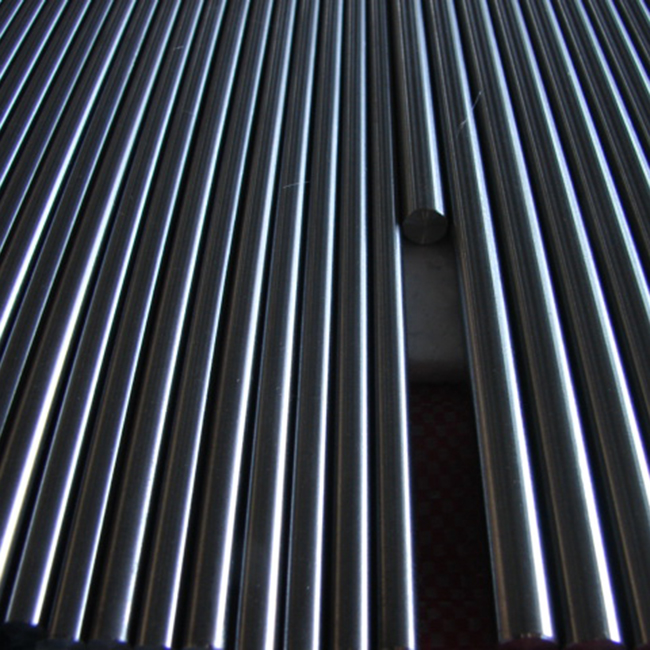
TB13 titanium alloy rod is a Chinese-brand near-beta titanium alloy material. It carries outstanding high elasticity, great cold working capacity and excellent specific strength. It holds a vital position in high-end manufacturing industries. This Ti-4Al-22V alloy meets global standards including ASTM and ISO. Factories use precise vacuum melting, hot forging and beta phase stabilization treatment. These processes deliver steady mechanical performance and tight dimensional tolerance control. TB13 titanium alloy rod serves high-end eyewear frames, medical devices, aerospace precision parts, electronic connectors and high-performance structural components. They supply ideal material solutions for lightweight design and high-reliability products. As global manufacturing shifts toward high-end, lightweight and intelligent production, market demand for TB13 titanium alloy rod keeps rising. It becomes a key material across precision manufacturing sectors.
1. Material Features and Technical Advantages of TB13 Titanium Alloy Rod
1.1 Unique alloy composition and internal microstructure
Engineers carefully design the chemical makeup of TB13 titanium alloy rod. Titanium acts as the base metal. Aluminum content stays between 3.0% and 4.5%. Vanadium content ranges from 20.0% to 23.0%. Manufacturers set strict limits for impurity elements: Fe ≤ 0.20%, C ≤ 0.10%, N ≤ 0.05%, H ≤ 0.015%, O ≤ 0.20%. This specific element ratio creates a metastable beta phase structure. The structure brings balanced excellent material properties. Compared with traditional alpha+beta titanium alloys, the beta phase structure of TB13 delivers lower elastic modulus (roughly 60–70 GPa) and stronger cold forming capacity. The material takes cold deformation up to 80% without cracks.
1.2 Excellent mechanical performance
TB13 titanium alloy rod shows great ductility under beta phase stabilized condition. Elongation reaches 20%–30%. This property simplifies forming work for complex parts. Beta solution treatment plus aging heat treatment lifts material strength sharply. Tensile strength hits 900–1100 MPa, yield strength reaches 800–1000 MPa, while the material keeps good toughness. This balance between strength and toughness makes TB13 the top choice for structural parts under heavy stress. Its fatigue performance stands out among alloy materials. The material resists fatigue crack expansion steadily under cyclic loads. It fits products that bear alternating stress for long service periods.
1.3 High elasticity and stable shape retention
One core feature of TB13 titanium alloy rod is its superior elastic performance. The material handles large elastic deformation (elastic limit strain reaches 2%–3%) with no permanent distortion. It bounces back to its original shape after bending. This high elasticity comes from the metastable beta phase’s low shear modulus and fully reversible crystal lattice. For eyewear frame production, this feature means frames recover fully after accidental squeeze or twist. It greatly cuts product deformation damage and after-sales repair costs.
| Performance Index | TB13 Beta Stabilized State | TB13 Aged State | 304 Stainless Steel |
|---|---|---|---|
| Density (g/cm³) | 4.82 | 4.82 | 7.85 |
| Elastic Modulus (GPa) | 65 | 70 | 193 |
| Tensile Strength (MPa) | 750–850 | 900–1100 | 520–750 |
| Elongation (%) | 20–30 | 10–15 | 12–25 |
| Elastic Limit Strain (%) | 2.0–2.5 | 1.5–2.0 | 0.5–1.0 |
2. Practical Applications of TB13 Titanium Alloy Rod in Core Industries
2.1 Material upgrade for premium eyewear manufacturing
The use of TB13 titanium alloy rod in eyewear blends advanced material technology and fashion design. Traditional nickel-copper alloys and stainless steel frames carry much higher weight. TB13 only weighs 4.82 g/cm³, around 40% lighter than stainless steel. It eases pressure on users’ noses and ears and improves comfort for all-day wear. Its high elasticity lets frames restore original shape after external squeeze or twist. It cuts deformation and damage from accidental collision completely. The nickel-free formula removes all risks of nickel allergy. It meets strict rules from EU REACH regulation and US FDA for skin-contact products. It works perfectly for users with sensitive skin.

2.2 Medical devices and biomedical engineering
TB13 titanium alloy rod holds strong biocompatibility and corrosion resistance. These traits make it a premium raw material for medical equipment. In orthodontic treatment, TB13 archwires use high elasticity to deliver soft steady orthodontic force. They lower patient discomfort and shorten full treatment cycles. Its low elastic modulus (around 65 GPa) sits higher than human bone (10–30 GPa) yet far lower than stainless steel (around 193 GPa). It effectively reduces stress shielding and supports natural bone regrowth. For surgical instruments, makers process TB13 titanium alloy rod into precision clamps, probes and support bars. These parts combine light weight, high strength and solid resistance to disinfectant corrosion. The finished products satisfy all relevant medical titanium alloy standards.

2.3 Aerospace and national defense applications
Aerospace projects set extremely strict standards for raw materials. The high specific strength (strength-to-density ratio) of TB13 titanium alloy rod delivers great value for aircraft lightweight design. Fasteners, connecting pins and precision shafts made from TB13 titanium alloy rod cut component weight by 15–25% while meeting high reliability and long service life standards. The alloy’s outstanding fatigue resistance keeps complete structural integrity under high-frequency vibration and alternating loads. TB13 carries ultra-low magnetism. This trait proves critical for navigation systems, sensor brackets and electronic equipment housings. It blocks magnetic field interference and guarantees accurate instrument readings.

2.4 Precision electronics and 3C consumer goods manufacturing
Electronic production lines demand tight dimensional tolerance, premium surface finish and consistent processing performance from raw materials. Makers use cold drawing to turn TB13 titanium alloy rod into precision stock with diameter tolerance of ±0.02 mm and surface roughness below Ra0.4 μm. The material fits production of micro connectors, elastic contacts and tiny precision springs. It maintains stable corrosion resistance under humid or salt-fog environments and extends the service life of electronic devices. For smart wearable products, manufacturers craft watch bands, watch cases and fasteners from TB13 titanium alloy rod. These parts deliver high-end texture while eliminating common flaws of traditional alloys including skin allergy and surface fading. The material lifts product added value and brand premium space.

| Application Field | Typical Products | Core Advantages | Performance Improvements |
|---|---|---|---|
| Premium Eyewear | Frames, Temples, Hinges | High elasticity, nickel-free hypoallergenic, ultra-light | Better all-day wearing comfort, lower frame deformation rate |
| Medical Devices | Orthodontic Archwires, Surgical Tools | Biocompatible, low modulus, disinfectant resistant | Shorter treatment cycles, reduced stress shielding effect |
| Aerospace | Fasteners, Transmission Shafts, Structural Parts | High specific strength, anti-fatigue, ultra-low magnetism | 15–25% weight reduction, longer fatigue service life |
| Precision Electronics | Elastic Contacts, Micro Springs, Connectors | High dimensional accuracy, corrosion resistant, good conductivity | More stable contact performance, longer product lifespan |
| Sports Equipment | Bicycle Frames, Golf Shafts | Lightweight, high strength, impact resistant | Lower component weight with unchanged or improved structural strength |
3. Production Process and Quality Control of TB13 Titanium Alloy Rod
3.1 Advanced melting and forging technology
Production of TB13 titanium alloy rod starts with careful selection of high-purity raw materials and electrode fabrication. Factories adopt Vacuum Arc Remelting (VAR) technology. Multiple remelting cycles under high vacuum fully remove impurity elements and gaseous inclusions. The process secures uniform alloy composition and high metal purity. The forging stage uses multi-directional forging techniques. This process breaks down as-cast microstructure, refines grain size and eliminates element segregation. It builds a high-quality foundation for all subsequent forming steps.
3.2 Precision rolling and cold working process
Forged rod blanks pass through hot rolling and cold drawing steps to form finished TB13 titanium alloy rod of all target sizes. Hot rolling controls forming temperature within beta phase region or alpha+beta dual-phase region. Production teams select suitable rolling temperatures and pass reduction rates based on target mechanical properties. Cold drawing acts as a core processing step for TB13 titanium alloy rod. The alloy’s excellent cold forming capacity supports multi-pass drawing with small single-pass deformation. This method delivers precise dimensions and mirror-smooth surfaces. Dislocation strengthening and work hardening generated during cold forming get adjusted via follow-up annealing steps. Operators gain precise control over the final mechanical properties of the rod.
3.3 Heat treatment and surface finishing process
Beta phase stabilization serves as the core process to adjust the performance of TB13 titanium alloy rod. The standard workflow holds the rod at 750–850°C for a set duration then conducts rapid cooling via water quenching or gas quenching. This cycle generates the target metastable beta phase microstructure. Aging treatment runs at 450–550°C. Precipitation of fine alpha phase particles brings significant strength gains. Computer-controlled vacuum heat treatment furnaces deliver precise temperature uniformity within ±5°C and full protective atmosphere coverage. The equipment prevents surface oxidation and external contamination. Surface finishing steps include pickling, polishing and precision grinding. These steps strip surface oxide layers and reach target surface roughness of Ra0.4–0.8 μm to meet appearance and performance standards of high-end applications.
| Process Stage | Key Process Parameters | Core Quality Control Standards |
|---|---|---|
| VAR Vacuum Melting | Vacuum level <10⁻² Pa, melting speed 3–5 kg/min | Composition deviation <±0.1%, Class A inclusion rating |
| Hot Forging | Heating temperature 850–950°C, total deformation >70% | Grain size Grade 7–9, zero surface or internal cracks |
| Beta Phase Stabilization | 780–820°C × 1–2 h, water quenching | Hardness HRC 28–32, fully uniform microstructure |
| Cold Drawing | Single-pass deformation 15–25%, total deformation 70–80% | Diameter tolerance ±0.05 mm, straightness <0.5 mm/m |
| Aging Treatment | 480–520°C × 4–8 h, air cooling | 200–300 MPa strength gain, elongation >10% |
4. Material Selection Guide and Procurement Key Points for TB13 Titanium Alloy Rod
4.1 Size selection and property matching
Users select proper specifications and material states of TB13 titanium alloy rod based on actual application demands. Round rod diameters cover Φ3 mm to Φ100 mm. Square and hexagonal rod side lengths range from 5 mm to 50 mm. Pick aged state (STA) stock for high-stress structural parts. This state delivers tensile strength of 900–1100 MPa. Choose beta stabilized state (M state) for components requiring complex forming to access maximum ductility. Specify ground or polished surface finish for projects with strict surface quality rules, with target roughness Ra ≤0.4 μm. Select cold-drawn stock for tight dimensional accuracy requirements, which holds diameter tolerance between ±0.02 mm and ±0.05 mm.
4.2 Quality certification and inspection standards
Buyers must verify full quality certifications and complete test reports when purchasing TB13 titanium alloy rod. Qualified suppliers supply Material Test Certificates (MTC) that align with international standards such as ASTM B348 or ISO 5832. These documents contain full chemical composition analysis, mechanical property test data and metallographic inspection records. Ultrasonic Testing (UT) screens the full rod volume to rule out internal flaws including cracks, inclusions and pores. The inspection follows non-destructive testing specifications such as ASTM E2375. Medical-grade applications demand additional ISO 13485 quality system certification and compliance documents for environmental regulations like REACH and RoHS. Third-party laboratory performance test reports offer extra proof of stable material reliability.
4.3 Supplier screening and long-term cooperation strategies
Buyers evaluate TB13 titanium alloy rod suppliers across three dimensions: technical capacity, annual production output and after-sales service quality. Professional manufacturers located in Baoji Titanium Industry Base leverage the region’s complete titanium industrial chain and decades of technical experience. These factories deliver more competitive pricing and stable order delivery cycles. When assessing suppliers, check the sophistication of their production equipment, including vacuum melting furnaces, precision cold drawing lines and CNC machining centers. Large-volume buyers can sign long-term supply contracts with qualified manufacturers. Both sides customize exclusive rod sizes and target mechanical parameters to achieve perfect matching between material performance and product design. Top-tier suppliers provide full technical support services, covering material selection consultation, machining process guidance and product failure analysis. These services help buyers optimize product design and cut overall manufacturing costs.
| Procurement Evaluation Factor | Detailed Requirement | Verification Method |
|---|---|---|
| Chemical Composition Control | Al 3.0–4.5%, V 20.0–23.0%, impurities within standard limits | Request full ICP spectral analysis report |
| Mechanical Properties | Tensile strength, yield strength and elongation meet technical specifications | Review tensile test records and hardness measurement data |
| Dimensional Accuracy | Diameter tolerance ±0.02–0.05 mm, straightness ≤0.5 mm/m | On-site caliper measurement or CMM coordinate measuring machine report |
| Surface Quality | Zero scratches, cracks or oxide scale, roughness Ra ≤0.8 μm | Visual inspection + surface roughness gauge testing |
| Internal Material Quality | No internal inclusions, pores or cracks | Ultrasonic inspection report compliant with ASTM E2375 |
| Quality Management System | Valid ISO 9001, AS9100, ISO 13485 certification | Audit certificate validity and covered production scope |
5. Future Development Trends and Market Outlook for TB13 Titanium Alloy Rod
5.1 Technical innovation and performance optimization directions
Future research and development of TB13 titanium alloy rod focus on further property upgrades and expanded application scenarios. Micro-composition adjustment and micro-alloying studies add trace rare earth elements or adjust the aluminum-vanadium ratio. These methods promise better balance between tensile strength and ductility plus improved corrosion resistance. New heat treatment technologies including multi-step aging and thermomechanical treatment enable ultra-fine control over internal microstructure and mechanical performance. Surface modification technologies such as laser surface treatment, ion implantation and nano-coating deposit special functional layers on rod surfaces. These layers deliver extra features such as superhydrophobicity, antibacterial activity or enhanced wear resistance. Additive manufacturing (3D printing) breaks the processing limits of traditional metal forming. It supports integrated molding of complex structural components, shortens product development cycles and cuts raw material waste.
5.2 Market expansion into emerging industrial sectors
Global manufacturing upgrades and diversified consumer demands keep expanding the application boundaries of TB13 titanium alloy rod. The lightweight trend in new energy vehicles drives wider use of titanium alloys in battery housings, connecting hardware and structural frames. The high specific strength and corrosion resistance of TB13 fully satisfy harsh operating environment requirements. The hydrogen energy industry sees rapid growth. Hydrogen production, storage, transportation and fuel cell systems need high-strength raw materials with strong hydrogen embrittlement resistance. The beta-phase microstructure of TB13 titanium alloy rod creates great application potential in this field. Marine engineering equipment operates under extreme environments with heavy salt spray and high humidity. TB13’s stable seawater corrosion resistance and ultra-low magnetism bring unique advantages for underwater detection devices and offshore platform connecting parts.
5.3 Sustainable development and green manufacturing
The global titanium alloy industry actively responds to carbon neutrality goals and green manufacturing concepts. Production process optimization for TB13 titanium alloy rod raises vacuum melting efficiency, lowers heat treatment power consumption and adopts renewable energy sources. These adjustments effectively cut total carbon emissions. The alloy holds a high recycling rate above 95% and fully fits circular economy principles. Production waste and offcuts go back into vacuum melting cycles for remanufacturing, which greatly reduces natural resource waste. Full Life Cycle Assessment (LCA) data shows lightweight finished products made from TB13 save far more energy during their service life than the energy consumed during rod production. Its overall environmental impact stays much lower than conventional metal materials.
Conclusion
TB13 titanium alloy rod combines balanced core strengths including high elasticity, light weight, corrosion resistance and biocompatibility. It has grown into an essential raw material for all high-end manufacturing sectors. From premium eyewear and medical instruments to aerospace hardware and precision electronic parts, TB13 continuously lifts finished product performance and improves end-user experience. Three key steps unlock the full value of TB13 titanium alloy rod: partnering with professional and reliable manufacturers, enforcing strict in-house quality control standards and adopting science-backed product design workflows. With ongoing technical innovation and continuous market expansion, TB13 titanium alloy rod will take a more important role amid the global industry shift toward lightweight and high-performance manufacturing.
FAQ
Q1: What key differences exist between TB13 titanium alloy rod and TC4 titanium alloy?
TB13 belongs to near-beta titanium alloy. It carries lower elastic modulus (65 GPa against TC4’s 110 GPa) and far superior cold forming capacity, tolerating cold deformation up to 80%. TC4 falls into alpha+beta alloy category with higher base strength yet lower ductility. The outstanding elastic recovery of TB13 makes it the better choice for products requiring large reversible bending deformation, such as eyewear frames and precision elastic components.
Q2: Does TB13 titanium alloy rod carry a much higher unit price than stainless steel?
The per-kilogram price of TB13 titanium alloy rod sits around 3–5 times higher than stainless steel, yet it delivers better comprehensive cost performance. Its low density cuts total material usage for each finished part. High elasticity lowers product damage rates and after-sales maintenance costs. Strong corrosion resistance extends product service life by 2–3 times with no extra surface anti-rust coating treatment required. For high-end consumer goods and long-lifecycle industrial equipment, its full life cycle cost actually runs lower than traditional metal materials. It also supports product differentiation and higher brand profit margins.
Q3: How to guarantee stable reliable quality of purchased TB13 titanium alloy rod?
Select suppliers holding internationally recognized quality certifications such as ASTM and ISO plus complete ISO quality management system credentials. Demand full Material Test Certificates (MTC) covering all chemical composition and mechanical property data, together with ultrasonic inspection reports that verify internal material quality per ASTM E2375 or equivalent standards. Request third-party independent lab test reports or conduct incoming material inspection for mission-critical applications. Prioritize cooperation with manufacturers with solid technical research teams and advanced full-process production equipment.
Looking for a Trusted TB13 Titanium Alloy Rod Manufacturer?
Titanium Valley Titanium, Nickel & Zirconium Material Processing Co., Ltd. operates advanced Italian Danieli rolling production lines with annual output over 20,000 tons. We supply premium TB13 titanium alloy rod compliant with global industrial standards and accept custom size orders and bulk volume supply. Reach our team for technical consultation and formal quotations: sales@titaniumvalleys.com
References
- Zhao Yongqing, Qu Henglei, Zhou Lian. Phase Transformation and Heat Treatment of Titanium Alloys[M]. Beijing: Metallurgical Industry Press, 2012.
- Li Miaoquan, Wang Kelu, Chen Zhiyong. Research Progress and Industrial Applications of Near-Beta Titanium Alloys[J]. Rare Metal Materials and Engineering, 2018, 47(6): 1923-1931.
- ASTM B348-20 Standard Specification for Titanium and Titanium Alloy Bars and Billets.
- Zhang Xuejun, Lin Xin, Huang Weidong. Research Progress on Additive Manufacturing Technology of Titanium Alloys[J]. Journal of Aeronautical Materials, 2020, 40(5): 1-25.
- ASTM E2375-21 Standard Practice for Ultrasonic Testing of Wrought Products.