
What Cutting Processes Suit Gr4 Titanium Foil Including Method Selection, Parameter Tuning and Quality Control?
- Gr4 Titanium Foil
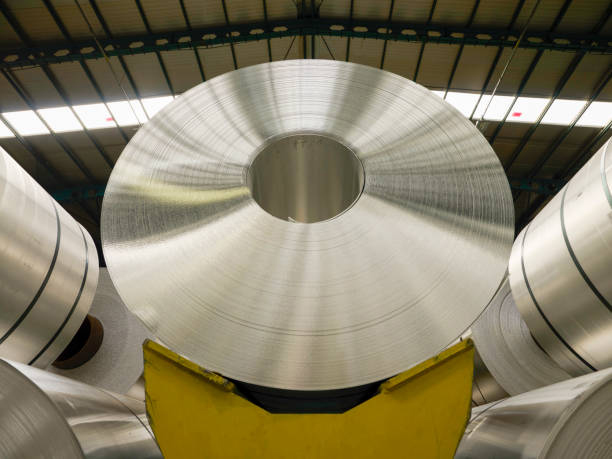
Workers need to weigh material features, equipment types and process parameters before cutting Gr4 titanium foil. Gr4 titanium foil holds the highest strength level among commercially pure titanium grades, with tensile strength above 550 MPa. Its high strength and relatively low ductility demand special care during cutting work. Four practical cutting methods cover all production needs. Mechanical shearing fits sheets from 0.1 mm to 1.0 mm thick. Laser cutting delivers high precision work. Waterjet cutting creates zero heat affected zones. Chemical etching handles ultra-thin foil. Operators focus on four core points. They set proper cutting speeds, pick matching cutting tools like cemented carbide or ceramic blades, stop material property shifts from overheating, and guarantee edge quality for downstream processes. Factories raise production output and cut material waste by matching cutting plans to specific application demands.
1 Master Gr4 Titanium Foil Material Traits and Cutting Difficulties
1.1 Core Physical Features of Gr4 Titanium Foil
Gr4 titanium foil carries a density of 4.50 g/cm³, roughly 60% the weight of steel. This lightweight trait makes it widely popular in aerospace manufacturing. Its melting point reaches 1668 °C. Heat buildup during standard cutting changes the foil’s mechanical performance. The material has resistivity around 50 μΩ·cm, equal to 0.50 Ω·mm²/m. This conductive property affects laser cutting and electrical discharge machining results. The foil carries no magnetic signals. This feature works well for precision instrument parts, yet creates obstacles for cutting machines that rely on magnetic positioning.
1.2 Cutting Challenges Brought by High Material Strength
Gr4 titanium foil delivers tensile strength above 550 MPa and yield strength between 480 MPa and 665 MPa. It ranks as the strongest commercially pure titanium grade. Gr1 titanium foil has minimum tensile strength of 240 MPa, and Gr2 titanium foil reaches 345 MPa. Gr4 generates much higher cutting resistance. High strength requires larger shearing force or higher energy density during cutting. Cutting blades wear out faster, and cutting machines need higher power output. The material also shows limited ductility with minimum elongation of 15%. Cracks and burrs easily form along cut edges during shearing. Operators need tighter controls over cutting precision.
1.3 Impacts of Foil Thickness on Cutting Method Selection
Matching Guide Between Gr4 Titanium Foil Thickness, Recommended Cutting Methods and Risk Management
| Thickness Range | Recommended Cutting Methods | Main Considerations | Core Potential Risks |
|---|---|---|---|
| 0.005 ~ 0.05 mm | Chemical Etching, Ultrashort Pulse Laser | Ultra-thin sheets deform easily; avoid mechanical stress | Surface deformation, thermal embrittlement |
| 0.05 ~ 0.3 mm | Laser Cutting, Precision Shearing | Balance processing accuracy and speed; limit heat affected zones | Thermal brittleness, edge burrs |
| 0.3 ~ 1.0 mm | Mechanical Shearing, Waterjet Cutting | Prioritize cutting efficiency; maintain clean cut edges | Stress concentration, material tearing |
Gr4 titanium foil acts differently under cutting loads at different thickness ranges. Ultra-thin foil from 0.02 mm to 0.1 mm lacks rigid structure. Mechanical shearing creates wavy surfaces or material tears. Medium-thickness foil from 0.1 mm to 0.5 mm works with nearly all cutting techniques. Operators tune cutting parameters carefully to strike a balance between speed and surface quality. Thick foil from 0.5 mm to 1.0 mm features higher mechanical strength but stronger cutting resistance. These sheets demand higher machine power and longer blade service life.
2 Applicability Analysis and Parameter Tuning for Mainstream Cutting Technologies
2.1 Mechanical Shearing: Top Choice for Mass Linear Production
Mechanical shearing stands as the most widely used cutting method for Gr4 titanium foil in industrial workshops. It handles straight cuts and slitting tasks for sheets 0.1 mm to 1.0 mm thick. Core equipment includes high-precision shears and slitting machines. Manufacturers make cutting blades from cemented carbide grades YG8 and YG15, or powder metallurgy high-speed steel. Four key process parameters control cutting results. Blade clearance stays between 5% and 7% of foil thickness. Gr4’s high strength and low ductility lead to tearing and heavy burrs at 8% clearance. Shear angles range from 1° to 3° to lower required cutting force. Cutting speed adjusts from 10 m/min to 60 m/min based on foil thickness. All thin foil shearing machines add vacuum suction fixtures to stop wavy deformation.
Operators check blade sharpness on a regular schedule to maintain clean cut edges. Dull cutting edges produce extra burrs and surface tears. Cutting fluid selection also shapes finished quality. Factories pick low-viscosity titanium-specific cutting fluid or deionized water solutions. These liquids reduce cutting resistance and leave no surface contaminants. High-precision slitting lines control width tolerance within ±0.1 mm, fully meeting precision manufacturing standards.
2.2 Laser Cutting: Ideal Tool for Complex Precision Patterns
Laser cutting delivers outstanding flexibility and accuracy for Gr4 titanium foil processing. It handles complex outlines, tiny holes and delicate patterned cuts. Fiber lasers serve as mainstream equipment thanks to stable beam quality and high energy conversion rates. Laser power ranges from 500 W to 3000 W based on foil thickness. Cutting speed runs between 1 m/min and 10 m/min. Laser kerf width stays narrow from 0.1 mm to 0.3 mm, with positioning accuracy up to ±0.01 mm.
Controlling heat affected zones (HAZ) acts as the core rule for laser cutting Gr4 foil. Titanium absorbs oxygen and nitrogen at high temperatures and turns brittle. Operators feed high-purity argon gas (minimum purity 99.99%) as shielding gas, with gas pressure set between 0.5 MPa and 1.5 MPa. Pulsed laser modes cut total heat input far better than continuous laser modes. This setup lowers risks of surface discoloration and material performance loss. Precision laser cutting limits heat affected zones between 0.03 mm and 0.10 mm. Aerospace production sets a stricter standard below 0.05 mm. The width of heat affected zones must match grade requirements for high-end sectors including aerospace and medical devices.
2.3 Waterjet Cutting: Cold Processing Solution with Zero Heat Impact
Ultra-high pressure waterjet cutting offers fully cold processing for Gr4 titanium foil. It fits heat-sensitive parts and products that need to keep original material mechanical traits. Waterjet machines pressurize water to 250 MPa to 400 MPa, then mix garnet abrasive grains from 80 mesh to 120 mesh. High-speed abrasive jets strip away excess material. Operators adjust cutting speed from 50 mm/min to 500 mm/min according to foil thickness. Standard kerf width falls between 0.8 mm and 1.2 mm.
The biggest advantage of waterjet cutting comes from complete elimination of heat affected zones. The foil’s mechanical properties, microscopic grain structure and chemical composition remain unchanged. This trait proves critical for parts requiring follow-up precision machining or strict performance rules. Standard cut surface roughness lands at Ra 1.6 μm to 3.2 μm, enough for most industrial applications. One notable downside exists. Abrasive particles stick to foil surfaces after cutting. Workers complete full ultrasonic cleaning or chemical washing to remove these grains and avoid contamination in later production steps or finished goods.
2.4 Special Uses of Chemical Etching and Electrical Discharge Machining
Full Comparison, Applicable Thresholds of Four Main Cutting Technologies
| Cutting Method | Applicable Thickness | Accuracy Range | Core Advantages | Main Drawbacks | Forbidden Scenarios in High-End Production |
|---|---|---|---|---|---|
| Mechanical Shearing | 0.1 ~ 1.0 mm | ± 0.1 mm | High output speed, low production cost | Only fits straight cuts, hard to control burrs | Ultra-thin foil thinner than 0.05 mm |
| Laser Cutting | 0.02 ~ 1.0 mm | ± 0.01 mm | Ultra-high precision, processes complex shapes | Creates heat affected zones, high machine cost | Must use argon shielding gas; nitrogen gas banned |
| Waterjet Cutting | 0.3 ~ 1.0 mm | ± 0.15 mm | Zero heat impact, retains full material performance | Wide kerf width, residual abrasive grains | Parts requiring kerf narrower than 0.5 mm |
| Chemical Etching | 0.005 ~ 0.2 mm | ± 0.02 mm | Works for ultra-thin sheets, supports mass production | Needs chemical waste treatment, strict environmental rules | Requires professional hazardous chemical management systems |
| Electrical Discharge Machining | 0.05 ~ 0.5 mm | ± 0.02 mm | No large mechanical cutting force | Forms recast layers and microcracks | Aerospace load-bearing parts, medical implants, battery conductive foil |
Chemical etching mainly processes ultra-thin Gr4 titanium foil from 0.005 mm to 0.2 mm thick. Factories use standard low-corrosion mixed hydrofluoric and nitric acid etchant with volume ratios HF:HNO₃ from 1:3 to 1:5. Operators tune the exact ratio based on foil thickness and target etching speed. All etching work runs inside sealed constant-temperature tanks, paired with dedicated hazardous chemical protection gear and waste liquid treatment devices. Etching speed stays controlled between 2 μm/min and 8 μm/min to stop intergranular corrosion and over-etched surfaces. Electrical Discharge Machining (EDM) handles fine precision cuts on conductive titanium foil. Discharge gaps measure just 0.01 mm to 0.05 mm, with surface roughness reaching Ra 0.4 μm to 1.6 μm. EDM runs at slow processing speeds from 1 mm²/min to 20 mm²/min. Operators note that EDM creates recast layers, microcracks and heat affected layers on cut surfaces. This method only serves regular precision structural parts. Factories never use EDM for aerospace load-bearing components, medical implant accessories or new energy conductive functional foil.
3 Cutting Quality Control and Solutions for Common Defects
3.1 Evaluation Standards and Testing Tools for Cut Edge Quality
Teams judge cut edge quality from multiple angles. These angles cover geometric precision (size tolerance, straightness, perpendicularity), surface finish (roughness, burr height, microcracks) and material performance (hardness shifts, residual stress, microscopic grain structure). Precision production limits size tolerance within ±0.05 mm, with edge perpendicular deviation below 0.1 mm per mm of foil thickness. Surface roughness Ra values differ by cutting method. Mechanical shearing delivers Ra 3.2 μm to 6.3 μm. Laser cutting produces Ra 1.6 μm to 3.2 μm. High-precision waterjet cutting hits roughness below Ra 1.6 μm.
Workers use several standard testing devices. Optical microscopes with 50x to 200x magnification observe edge profiles and burr shapes. Surface roughness testers measure exact Ra values. Hardness meters detect hardness changes along cut edges. X-ray diffraction equipment maps residual stress distribution. High-end products for aerospace and medical devices need extra metallographic analysis to check for damaged grain structures and ultrasonic flaw detection to spot hidden microcracks.
3.2 Root Causes and Fixes for Regular Cutting Defects
Burrs rank as the most frequent defect from mechanical shearing. Three main causes include worn cutting blades, oversized blade clearance and mismatched cutting speeds. Fixes involve regular blade replacement or regrinding, tuning blade clearance to 5%–7% of foil thickness, and adjusting cutting speed to match foil hardness and thickness.
Dross and surface discoloration appear often after laser cutting. Root triggers include insufficient shielding gas pressure, dirty laser nozzles, shifted focal points and mismatched laser power. Effective solutions include maintaining argon purity above 99.99%, cleaning laser nozzles and adjusting gas pressure, tuning pulsed laser parameters and strictly limiting total heat input.
Edge tearing and microcracks mostly form on ultra-thin foil or at excessively fast cutting speeds. The foil’s limited ductility cannot adapt to rapid shape deformation. Preventative process steps include tension-controlled unwinding reels, vacuum suction cutting tables, segmented low-speed cutting, optimized tiny blade gaps and shock-proof positioning fixtures. These measures eliminate cracks and tearing at the source of cutting work.
Out-of-spec size tolerance usually links to low machine accuracy or loose foil clamping. Operators calibrate machine positioning systems and use vacuum or electrostatic suction to fix thin foil firmly during processing.
3.3 Post-Cutting Surface Treatment and Cleaning Rules
Freshly cut Gr4 titanium foil carries residual cutting fluid, abrasive dust, oxide films or oil stains on its surface. These contaminants ruin downstream welding, coating and bonding processes. The recommended standard cleaning workflow has three steps. Workers first rinse the foil with warm water (40 °C to 60 °C) or low-concentration alkaline solution (pH 9–11) to wash away large surface particles. Next they run ultrasonic cleaning with titanium-specific detergent for deep surface purification. The final step uses deionized water rinsing followed by full drying.
High-end finished products demand surface dyne level above 40 mN/m. Operators verify this value with dyne pens or contact angle measuring instruments. Some production lines add surface passivation treatment. Workers soak the foil inside 5%–10% nitric acid solution at room temperature for 5 to 15 minutes. This process forms dense passive oxide films and lifts overall corrosion resistance. The foil receives complete deionized water rinsing after passivation to remove all leftover acid liquid. Drying temperatures stay below 60 °C, and workers avoid long open-air storage to prevent surface oxidation and discoloration. Cleaned foil stock sits inside dust-free storage areas, wrapped with moisture-proof packaging materials.
4 Custom Cutting Process Plans for Different Application Fields
4.1 Large-Size Cutting Demands for Chemical and Energy Industries
Chemical factories use Gr4 titanium foil for large electrolytic cell anode sheets, anti-corrosion structural liners and membrane modules. These applications require wide foil rolls up to 670 mm wide and stable mass production capacity. Factories install high-precision slitting lines for lengthwise cutting. Servo control systems deliver automatic deviation correction and steady material tension, keeping consistent cutting accuracy across hundreds of continuous meters. Transverse cutting uses high-speed flying shears or laser cutting equipment, reaching production cycles of 10 to 30 cuts every minute.
Parts for seawater desalination modules and marine sensor electrodes rely on flawless cut edges to guarantee reliable welding and long-term corrosion resistance. Workers run full degreasing and surface passivation after cutting to eliminate residual stress and microscopic edge defects. Batch quality consistency carries critical importance. Factories build Statistical Process Control (SPC) systems to monitor real-time cutting dimensions and surface quality metrics.
4.2 High-Precision Micro Machining for Aerospace Components
Aerospace standards set extremely strict rules for dimensional accuracy and surface finish of Gr4 titanium foil. Typical aerospace products cover large honeycomb core materials, thin-wall sealing gaskets and lightweight structural parts. Honeycomb core manufacturing needs complex unfolded patterns cut into 0.02 mm to 0.1 mm foil sheets. Fiber laser cutting paired with high-speed scanning systems works best here. Cutting speed hits 5 m/min to 8 m/min, and heat affected zones stay under 0.05 mm to preserve original foil strength.
Thin-wall sealing gaskets usually require dimensional tolerance of ±0.02 mm and maximum surface roughness Ra 1.6 μm. Precision blanking or electrical discharge machining deliver better results in these cases. Blanking dies use cemented carbide or polycrystalline diamond (PCD) materials, with service life over 100,000 cutting cycles. All cutting operations take place inside ISO Class 7 or higher clean rooms to block particle contamination. Operators note EDM only fits non-load-bearing decorative structures. Aerospace load-bearing parts never adopt EDM processing.
4.3 Functional Cutting for Electronics and New Energy Industries
Custom Cutting Process Plans and Core Quality Standards by Industry
| Application Field | Typical End Products | Foil Thickness Range | Selected Cutting Method | Key Quality Requirements |
|---|---|---|---|---|
| Chemical and Energy Sectors | Electrolytic Cell Anodes, Membrane Modules | 0.1 ~ 0.5 mm | High-Speed Slitting + Flying Shear | Width tolerance ± 0.1 mm, burr-free cut edges, passivation treatment to remove residual stress |
| Aerospace Industry | Honeycomb Core Materials, Sealing Gaskets | 0.02 ~ 0.15 mm | Argon-Shielded Laser Cutting | Heat affected zone ≤ 0.05 mm, cleanroom production, zero microscopic surface defects |
| Electronics and New Energy Sectors | Battery Current Collectors, Electromagnetic Shielding Sheets | 0.02 ~ 0.2 mm | Ultra-Pure Argon Shielded Laser Cutting | Unchanged conductive performance, ultra-high surface cleanliness, nitrogen gas forbidden |
Electronics and new energy manufacturers use Gr4 titanium foil for wide flexible shielding sheets, battery current collectors, tab assemblies, ultra-thin heat dissipation structures and sensor packaging materials. These products demand stable electrical conductivity and ultra-clean surfaces after cutting. Cutting work for battery current collectors cannot introduce foreign impurities or damage electrochemical performance. Ultrashort pulsed nanosecond or picosecond lasers provide contact-free cutting solutions. Operators feed 99.99% minimum purity argon as shielding gas and ban nitrogen gas entirely. Titanium reacts with nitrogen at high temperatures and creates brittle titanium nitride layers. Cutting speed runs from 2 m/min to 6 m/min.
Shielding material cutting often needs both intricate surface patterns and fast production speeds. Factories combine laser cutting and chemical etching processes. Laser cutting shapes the outer product outline first. Photolithography and etching then form tiny conductive surface patterns. Cut and etched foil receives ion-exchange resin water rinsing plus ultrasonic cleaning. Surface ion contamination levels drop to ppb range, and surface resistivity changes stay below 5%. These standards meet strict reliability rules for high-end electronic assemblies.
Conclusion
Successful Gr4 titanium foil cutting requires balanced evaluation of high-strength material traits, foil thickness ranges, end-use requirements and production batch sizes. Mechanical shearing handles mass linear cutting tasks. Laser cutting excels at precise complex pattern work. Waterjet cutting delivers cold processing without heat affected zones. Three core rules control finished cutting quality. Operators tune all process parameters, enforce strict cut edge quality checks, build complete post-cut cleaning workflows and customize cutting plans for specific application fields. Factories steadily lift cutting output and stabilize finished quality by building dedicated process databases and adopting intelligent manufacturing control systems.
FAQ
1 How to remove burrs and cracks appearing after Gr4 titanium foil cutting?
Blade wear or mismatched blade clearance creates surface burrs. Workers replace dull blades promptly and adjust blade clearance to 5%–7% of foil thickness. Microcracks mostly emerge on ultra-thin foil or at overly fast cutting speeds. Operators adopt tension-controlled unwinding reels, vacuum suction cutting tables, segmented low-speed cutting, optimized tiny blade gaps and shock-proof positioning fixtures. These process steps stop cracks and tearing at the cutting stage.
2 How to control heat affected zones and surface discoloration during Gr4 titanium foil laser cutting?
Use argon gas with minimum purity of 99.99% as shielding gas, never nitrogen gas. Keep gas pressure between 0.5 MPa and 1.5 MPa. Select pulsed laser modes and match focal distance with laser power settings. Precise parameter control limits heat affected zones from 0.03 mm to 0.10 mm. Aerospace-grade production enforces a tighter limit below 0.05 mm, preventing material performance loss and surface oxidation discoloration.
3 Which cutting method fits different thickness ranges of Gr4 titanium foil?
Pick chemical etching or ultrashort pulse lasers for ultra-thin foil 0.005 mm to 0.05 mm thick. Choose laser cutting or precision mechanical shearing for medium-thickness sheets from 0.05 mm to 0.3 mm. Select mechanical shearing or waterjet cutting for thick foil between 0.3 mm and 1.0 mm. Final method selection also weighs pattern complexity, accuracy standards, production batch size, cost budgets and downstream processing steps such as welding and surface coating.
Reach Titanium Valley — Your Professional Expert for Gr4 Titanium Foil Cutting Solutions
Baoji Titanium Valley Titanium Nickel Zirconium Material Processing Co., Ltd. works as a professional manufacturer and supplier of Gr4 titanium foil. Our factory runs advanced strip and foil production lines with an annual output of 3000 tons, alongside full-process custom machining services. We deliver precision cutting and surface treatment for Gr4 foil from 0.02 mm to 1.0 mm thick and 15 mm to 680 mm wide. Our high-quality cutting solutions serve aerospace, chemical energy, electronics and new energy industries. Contact our team for full details of custom cutting process services: sales@titaniumvalleys.com
References
- Li Minghua, Wang Jianguo. Research on Cutting Processing Technology of Titanium and Titanium Alloy Thin Sheets and Strips[J]. Rare Metal Materials and Engineering, 2021, 50(6): 2145-2153.
- Zhang Wei, Liu Dongsheng, Chen Zhiqiang. Parameter Optimization and Quality Control of Laser Cutting Process for Commercially Pure Titanium Foil[J]. Chinese Journal of Lasers, 2020, 47(9): 0902008.
- Zhao Yongqing, Qu Henglei. Precision Machining Technology of Titanium Alloys[M]. Beijing: National Defense Industry Press, 2019.
- China Nonferrous Metals Industry Association. Compilation of Standards for Titanium and Titanium Alloy Wrought Products[M]. Beijing: China Standards Press, 2020.