
Why Is Gr12 Titanium Rod a Reliable Choice for Corrosion Protection in Chemical Processing and Marine Engineering?
- Gr12 Titanium Rod
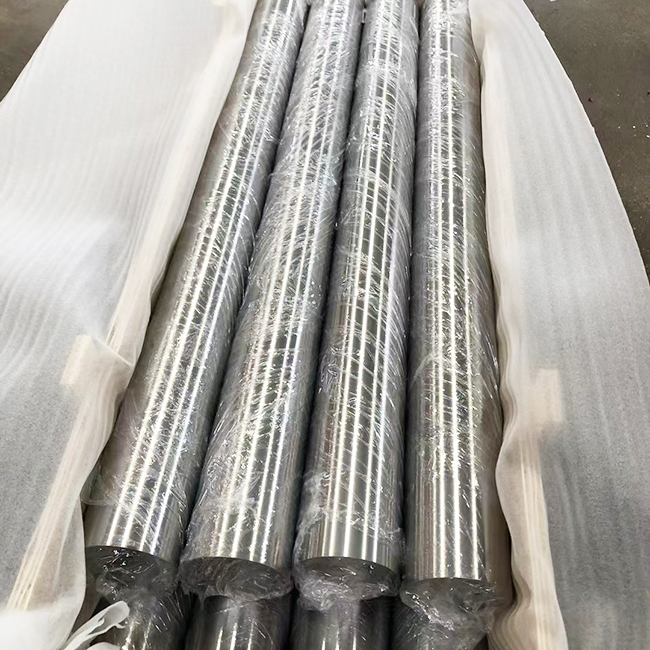
In chemical processing and marine engineering, equipment failure often starts with material damage in harsh corrosion environments. Gr12 titanium rod (Ti-0.3Mo-0.8Ni low-alloy titanium) solves problems caused by chlorides and reducing acids. Engineers designed this alloy for demanding corrosion conditions.
Gr12 titanium rod contains molybdenum and nickel. These elements improve resistance to pitting corrosion and crevice corrosion. As a result, Gr12 works very well in chloride environments, reducing acids, and seawater systems. It also solves the weak points of commercially pure titanium, especially poor crevice corrosion resistance and hydrogen embrittlement resistance.
Compared with pure titanium, Gr12 keeps excellent weldability and machinability. At the same time, it improves strength by about 30%. This allows the material to handle medium- and high-strength pressure-bearing structures. This article explains how Gr12 titanium rod solves major problems in chemical and marine industries. It also helps engineers and buyers make better material decisions.
Why Has Gr12 Titanium Rod Become a Preferred Material for Chemical and Marine Engineering?
1. How Does Alloy Design Solve the Weak Points of Traditional Materials?
Stainless steel often suffers from pitting corrosion and crevice corrosion in chloride environments. This can cause sudden equipment failure and serious safety risks.
Gr12 titanium rod controls molybdenum at 0.2%–0.4% and nickel at 0.6%–0.9%. These alloying elements help create a stable passive film on the titanium surface. Even in hot chloride solutions, the material keeps long-term corrosion stability.
Molybdenum reduces hydrogen penetration in strong acid environments. This lowers the risk of hydrogen embrittlement. Nickel improves passive film stability in reducing acids such as sulfuric acid and hydrochloric acid. Together, these elements help Gr12 perform well in severe corrosion conditions.
Because of this alloy design, Gr12 titanium rod lasts much longer in seawater desalination systems and chemical reactors. Under the same corrosion conditions, service life often becomes three to five times longer than standard 304 or 316 stainless steel.
2. How Does Standardized Production Keep Material Quality Stable?
Many engineering projects face delays because material properties change between batches. This can cause rework and higher costs.
Gr12 titanium rod that meets ASTM B348-21 standards goes through vacuum consumable arc remelting (VAR), multi-step forging, and controlled heat treatment. These processes help keep chemical composition uniform and microstructure stable.
Manufacturers keep oxygen content below 0.25% and hydrogen content below 0.015%. Strict quality control helps maintain stable machining performance and dimensional accuracy. It also lowers scrap rates during mass production.
3. How Does Gr12 Reduce Total Life-Cycle Cost?
Gr12 titanium rod offers tensile strength above 480 MPa. This is about 30% higher than commercially pure titanium. At the same time, elongation stays above 18%. The material balances strength and toughness well.
At temperatures between 150°C and 260°C, Gr12 keeps stable mechanical properties and corrosion resistance. It can also handle short-term exposure up to 300°C. This makes it suitable for continuous heat exchanger operation.
Gr12 also offers strong weldability. Argon arc welded joints can reach more than 90% of base metal strength. Because of this balance of properties, maintenance intervals become longer and replacement frequency becomes lower. In the long run, operating cost decreases.
Corrosion Resistance and Mechanical Property Comparison Between Gr12 Titanium Rod, Pure Titanium, and Stainless Steel (Typical Test Data Under Standard Room Temperature Conditions)
| Property | Gr12 Titanium Rod | Pure Titanium (Gr2) | 316 Stainless Steel |
|---|---|---|---|
| Tensile Strength (MPa) | ≥480 | ≥340 | ≥485 |
| Elongation (%) | ≥18 | ≥20 | ≥40 |
| Chloride Pitting Potential (mV) | 450 | 300 | -50 |
| Critical Crevice Corrosion Temperature (°C) | >90 | 60–70 | <40 |
| Hydrogen Embrittlement Sensitivity | Low | Medium | High |
Note: Gr12 offers slightly lower tensile strength than stainless steel, but much stronger corrosion resistance and hydrogen embrittlement resistance. This makes Gr12 more reliable in harsh service environments.
How Does Gr12 Titanium Rod Perform in Chemical Processing Equipment?
1. Why Does Gr12 Work Well in Strong Acid Systems?
Reducing acids such as sulfuric acid and hydrochloric acid attack many metals very quickly. Traditional materials often fail within one year in these environments.
Molybdenum inside Gr12 titanium rod forms a stable molybdenum oxide protection layer in reducing acids. This improves corrosion resistance significantly.
In 20% sulfuric acid at 80°C, the corrosion rate of Gr12 stays below 0.01 mm/year. This equals only about 1/50 of 316L stainless steel. Because of this, Gr12 works well in medium- and low-concentration reducing acid systems.
Chemical reactors, heating coils, and mixing shafts made from Gr12 can run for long periods with stable performance. This lowers unplanned shutdowns caused by material failure.
2. Why Does the Chlor-Alkali Industry Choose Gr12?
Chlor-alkali electrolyzers face very harsh conditions. High chloride concentration, alkali solution, and chlorine gas exist at the same time. These conditions create strong oxidation and reduction reactions.
Gr12 titanium rod performs very well in this environment. Its pitting resistance equivalent number (PRE value) reaches above 25. This exceeds the corrosion resistance level of standard austenitic stainless steel.
When manufacturers use Gr12 in anode busbar connectors, cathode frames, and piping systems, equipment can run for more than ten years with little corrosion damage.
Nickel also improves stability in alkaline environments. This helps lower the risk of stress corrosion cracking.
3. Why Is Gr12 Reliable in High-Temperature Corrosion Conditions?
Some chemical processes handle corrosive media at temperatures between 150°C and 300°C. In these conditions, material performance often drops quickly.
Gr12 titanium rod keeps stable strength and corrosion resistance below 250°C. Its oxide layer remains stable even as temperature rises.
Heat exchanger tubes and furnace coils made from Gr12 often show stable thermal efficiency and long service life.
Compared with carbon steel lined with PTFE, Gr12 equipment avoids lining separation problems. Maintenance also becomes easier.
Typical Applications of Gr12 Titanium Rod in Chemical Processing Equipment
| Chemical Application | Typical Conditions | Common Failure Mode | Gr12 Titanium Rod Solution |
|---|---|---|---|
| Sulfuric acid concentration system | 20–60% H₂SO₄, 80–130°C | Uniform corrosion, hydrogen embrittlement | Molybdenum improves corrosion resistance, nickel lowers embrittlement risk |
| Hydrochloric acid production | 10–20% HCl, room temperature–60°C | Pitting corrosion, stress corrosion | High PRE value and good toughness |
| Hydrometallurgical leaching | Mixed acid and salt system, 60–90°C | Crevice corrosion, perforation | Excellent crevice corrosion resistance |
| Chlor-alkali electrolysis | NaCl + NaOH + Cl₂, 90°C | Anode corrosion, alkali embrittlement | Strong oxidation and reduction corrosion resistance |
How Does Gr12 Titanium Rod Support Marine Engineering Applications?
1. Why Is Gr12 a Key Material for Seawater Desalination Systems?
Seawater desalination equipment operates in high salt, high temperature, and high flow conditions. Corrosion often limits equipment life and system efficiency.
Multi-effect distillation (MED) units and reverse osmosis (RO) pump shafts made from Gr12 titanium rod can run for more than five years under seawater chloride levels of 19,000 ppm at 70°C without serious corrosion.
Its strong crevice corrosion resistance also protects weak points such as flange connections and weld heat-affected zones. This lowers leakage risk caused by local corrosion.
2. How Does Gr12 Improve Offshore Cooling System Life?
Offshore oil platform cooling systems process thousands of tons of seawater every day. Pipes and heat exchangers face marine fouling and flow-accelerated corrosion (FAC).
Heat exchanger tubes made from Gr12 titanium rod stay smooth and resist fouling. Fluid resistance stays low, and heat transfer efficiency stays high.
Even in seawater with sand and high flow speeds of 3–5 m/s, corrosion rate stays below 0.05 mm/year.
Compared with traditional stainless steel, maintenance intervals can extend from 2–3 years to more than 10 years. This lowers offshore maintenance cost and reduces downtime loss.
3. Why Does Gr12 Support Lightweight Marine Equipment?
Modern ships need better fuel efficiency and higher loading capacity. This increases demand for materials with a better strength-to-weight ratio.
Gr12 titanium rod has a density of 4.51 g/cm³. This equals only about 60% of stainless steel density. Under the same strength requirement, total component weight can decrease by more than 40%.
Manufacturers use Gr12 in propeller shafts, rudder shafts, and mooring equipment. The material resists seawater corrosion and supports lightweight design at the same time.
In deep-sea equipment and marine research systems, Gr12 offers even greater value because of its balanced performance.
Conclusion
Gr12 titanium rod uses a carefully designed alloy system and strict manufacturing control. It provides strong resistance to pitting corrosion and crevice corrosion. It also keeps stable batch quality and good processing performance.
Although the initial cost is higher, the long-term economic benefit is clear. It reduces maintenance cost, extends service life, and improves system safety.
For chemical processing and marine engineering, Gr12 titanium rod is a strong solution for harsh corrosion environments.
FAQ
1. What Is the Main Advantage of Gr12 Compared with Pure Titanium?
Gr12 improves pitting and crevice corrosion resistance by more than 50% through molybdenum and nickel addition. It also increases strength by about 30%. It works better in chloride and reducing acid environments and lowers hydrogen embrittlement risk.
2. How Can You Verify Gr12 Titanium Rod Authenticity?
Each batch should include a material test certificate (MTC). This report contains chemical analysis, mechanical test results, and non-destructive testing data.
Third-party testing can confirm composition and performance to ensure compliance with ASTM B348-21.
3. How Long Can Gr12 Titanium Rod Last in Seawater?
In normal seawater at room temperature without extreme flow or pollution, service life can reach over 30 years. Actual life depends on flow speed, temperature, and contaminants.
Even in harsh conditions, Gr12 still lasts much longer than stainless steel. It is a long-life solution for marine engineering.
Contact for Professional Titanium Valley Solutions
Baoji Titanium Valley Titanium Nickel Zirconium Material Processing Co., Ltd. is a leading manufacturer of Gr12 titanium rod in China. The company operates a complete production line and quality system.
We supply ASTM and ISO compliant titanium materials with custom machining and technical support.
Contact: sales@titaniumvalleys.com
References
- China Nonferrous Metals Industry Association, Titanium-Zirconium-Hafnium Branch. Application Guide for Titanium and Titanium Alloys in Chemical Equipment. Metallurgical Industry Press, 2021.
- Zhang Jianjun, Li Qiang, Wang Ming. Corrosion Behavior and Protection Technology of Titanium Alloys in Marine Engineering. Materials Protection, 2022, 55(8): 45–52.
- Zhao Yongqing, Qu Henglai. Titanium Alloy Materials Handbook. Chemical Industry Press, 2019.
- ASTM International. ASTM B348-21 Standard Specification for Titanium and Titanium Alloy Bars and Billets, 2021.