
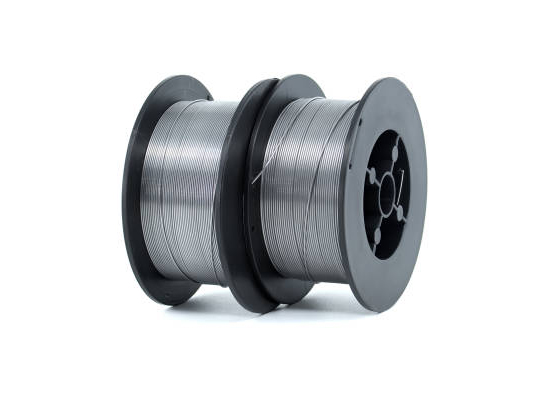
Gr1 titanium wire ranks among commercially pure titanium products with the lowest impurity content. It has unique dual machining properties. Compared with common metals like stainless steel and copper, it shows excellent ductility under cold working. Workers can bend, draw and weave it into target shapes. Titanium has high chemical activity, so traditional cutting work needs special cutter selection and cooling methods. In line with ASTM B863 standards, annealed Gr1 titanium wire has elongation above 24%. With proper process parameters, it meets strict precision machining requirements in aerospace, medical devices and chemical anti-corrosion industries. It is non-magnetic and has titanium content over 99.5%. Products made from it feature uniform microstructures, which makes it a top choice for high-end manufacturing.
1. How Basic Properties of Gr1 Titanium Wire Affect Machining Performance
1.1 How Purity and Impurity Control Decide Machinability
Gr1 titanium wire contains no less than 99.5% titanium. Its oxygen content stays below 0.18%, iron content below 0.20% and carbon content below 0.08%. Strict impurity limits directly shape its flow behavior during machining. Interstitial elements such as oxygen, nitrogen and carbon raise material hardness and reduce ductility. Manufacturers produce Gr1 titanium wire via Vacuum Arc Remelting (VAR) or Vacuum Induction Melting (VIM). These vacuum melting methods cut gas and low-melting impurities effectively. They also create uniform ingot structures. The finished wire resists local stress concentration and cracking in subsequent cold working.
1.2 Internal Links between Grain Structure and Machining Response
Roll die cold drawing refines grains of Gr1 titanium wire through multiple deformation passes. The annealed wire has fine grains that comply with ASTM grain size standards. Finer grains activate slip systems easily in plastic deformation. The wire can bend to a radius three times its wire diameter without cracking. Half-hard (Y2) titanium wire goes through partial cold working and incomplete annealing. It delivers decent strength while retaining good ductility. It fits parts that need further precision forming.
1.3 Guidance of Physical Properties for Parameter Setting
Gr1 titanium wire has a density of 4.51 g/cm³. Its light weight creates low inertia load during high-speed winding, so production lines can run at high linear speeds. Its thermal conductivity is about 15.2 W/(m·K). Heat builds up quickly during machining, so sufficient cooling is necessary to avoid local overheating. Its resistivity ranges from 0.54 to 0.58 μΩ·m. Operators need to adjust parameters for wire electrical discharge machining and electrolytic polishing to get ideal surface quality.
2. Process Adaptability of Gr1 Titanium Wire under Different Machining Methods
2.1 Advantages and Control Points of Cold Deformation
Gr1 titanium wire performs well in cold drawing. The single-pass area reduction reaches 15% to 25%. With regular intermediate annealing, workers can process wire from 8.0 mm down to 0.06 mm in diameter. The continuous rolling line from Danieli Italy uses short-stress mill sets for alternating horizontal and vertical rolling. A 5 mm titanium wire achieves straightness within 1/1000, and ovality between 0.15 mm and 0.2 mm. The standard ovality for common products stands at around 0.3 mm. Cold working causes work hardening. Hardness rises from 140–180 HV in annealed state to 220–260 HV in full hard state. Timely intermediate annealing restores ductility.
2.2 Welding Performance and Application as Filler Metal
Gr1 titanium wire works as ERTi-2 welding wire with good weldability. Common wire sizes from 0.8 mm to 3.0 mm create stable molten pools in TIG and MIG welding. Welds rarely form pores or slag inclusions. Each spool weighs over 100 kg with no joints inside, which supports non-stop welding work. Welded joints reach 85% to 95% of the base metal strength. This material suits titanium pressure vessels and heat exchanger tubes. Titanium reacts strongly with oxygen and nitrogen at high temperatures. Workers conduct welding under argon shielding, and feed argon to the back side to prevent oxidation.
2.3 Combined Effects of Precision Forming and Surface Treatment
Workers make precision springs for electronic parts and guide wires for medical devices from Gr1 titanium wire. Common processes include precision coiling, weaving and stamping. Bright wire from roll die drawing has clean surfaces with no oil contamination. It serves applications with strict cleanliness rules. Pickling removes oxide scales and leaves a silvery metallic surface. The treated wire supports anodizing and Physical Vapor Deposition (PVD) coating for combined decorative and functional use. Different treatments produce varied surface roughness values. Bright drawn wire has Ra ≤ 0.4 μm, precision polished wire has Ra ≤ 0.2 μm, and pickled wire has Ra ≤ 0.8 μm.
3. Machining Accuracy Requirements for Gr1 Titanium Wire in High-end Manufacturing
3.1 Dimensional Tolerance Control for Aerospace Products
Non-load fasteners and hydraulic pipe connectors for aero-engines require wire diameter tolerance within ±0.02 mm. Manufacturers use induction heating and bogie furnaces for precise temperature control. The hot working temperature for pure titanium ranges from 900 ℃ to 1000 ℃. Online cutting produces fixed-length products and guarantees consistent dimensions across batches. Full automatic production lines form closed-loop control for process parameters. They eliminate errors from manual operation and meet aerospace quality standards for batch stability.

3.2 Surface Cleanliness and Biosafety for Medical Implants
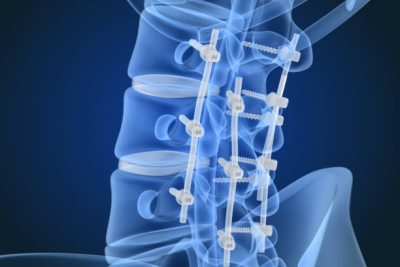
Gr1 titanium wire for non-load orthopedic implants, temporary fixation parts and dental materials must meet ISO 10993 biocompatibility standards. The material is non-toxic and non-allergenic. Strict surface control removes oil and particles, so finished parts go straight to sterilization. Ultra-fine wire from 0.06 mm to 0.4 mm makes minimally invasive surgical tools. Proper annealing temperature and time balance flexibility and kink resistance. The typical annealing range is 650 ℃ to 750 ℃, with holding time set according to wire size. The finished wire maintains enough rigidity and resists fatigue fracture.
3.3 Dual Requirements for Non-magnetism and Conductivity in Electronic Industry
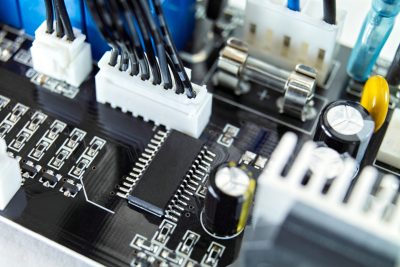
Lead wires for precision sensors and high-frequency shielding parts need fully non-magnetic materials. Gr1 titanium wire has weak paramagnetism and fits this demand. Its higher resistivity compared with stainless steel becomes an advantage for current-limiting components. Conductive coatings or precious metal plating add good electrical contact performance while keeping titanium’s corrosion resistance. Clips for semiconductor production equipment work in plasma and corrosive gas environments for long periods. Parts made from Gr1 titanium wire withstand tens of thousands of assembly and disassembly cycles.
Technical Requirements of Gr1 Titanium Wire in Typical Application Fields
| Application Field | Typical Size (mm) | Key Machining Process | Performance Requirements |
| Aerospace non-load fasteners | φ2.0 ~ φ5.0 | Cold heading + thread rolling | Tensile strength 240 ~ 345 MPa (annealed), good fatigue resistance |
| Chemical heat exchanger | φ1.0 ~ φ3.0 | Coiling + welding | Acid and alkali resistance, leak-free welds |
| Medical guide wire | φ0.2 ~ φ0.8 | Bright drawing + surface passivation | Surface Ra ≤ 0.2 μm, qualified biocompatibility |
| Precision spring | φ0.4 ~ φ2.0 | CNC coiling + aging treatment | Stable elastic modulus, long cycle life |
4. Solutions for Machining Difficulties and Innovative Processes
4.1 Cutter Selection and Parameter Optimization for Cutting Work
Titanium has low thermal conductivity and high chemical activity. Cutting temperature at the tool tip exceeds 800 ℃. Standard high-speed steel cutters wear out quickly. Cemented carbide cutters such as YG8 and YT15, or coated cutters with TiAlN and TiCN layers extend service life by 3 to 5 times. Operators set cutting speed between 15 m/min and 30 m/min, and feed rate between 0.05 mm/r and 0.15 mm/r. Large-flow cutting fluid, either emulsion or special titanium cutting fluid, provides forced cooling. Titanium has an elastic modulus of 103–107 GPa, nearly half that of steel. It deforms easily under clamping force. Special fixtures with large contact areas solve this problem.
4.2 Fracture Control Technology for Ultra-fine Titanium Wire
Ultra-fine wire with diameter from 0.06 mm to 0.1 mm faces conflicts between strength and surface quality. Manufacturers adopt segmented annealing. They perform short-time annealing under protective atmosphere after every 3 to 4 drawing passes. The temperature ranges from 650 ℃ to 750 ℃. This method restores ductility and prevents excessive grain growth. Graphite or molybdenum disulfide composite coatings work as lubricants and reduce friction coefficient below 0.05. Tools use polycrystalline diamond (PCD) or tungsten carbide coating. Tool surface roughness stays below Ra 0.1 μm to avoid scratches on wire.
4.3 Long-term Protection Strategies for Corrosive Environments
Gr1 titanium wire for marine engineering has good corrosion resistance. It may still develop pitting or crevice corrosion under high-speed seawater flow or sulfide exposure. Anodizing forms dense TiO₂ films with thickness from 10 μm to 50 μm and boosts protection ability. Woven mesh and filter screens for chemical equipment go through pickling, passivation and ultrasonic cleaning. These steps remove residual iron ions and prevent electrochemical corrosion. Designers avoid direct contact between titanium and dissimilar metals. Install insulating gaskets at joints connecting titanium and stainless steel.
Common Problems and Solutions in Typical Machining Processes
| Machining Process | Common Problems | Solutions | Effect Verification |
| Cold drawing | Surface scratches, wire breakage | PCD dies + composite lubricants | Surface Ra ≤ 0.4 μm, low wire breakage rate |
| Cutting | Fast tool wear, workpiece deformation | Coated cutters + large-flow cooling | Tool life rises 3 times, dimensional accuracy ±0.02 mm |
| Welding | Pores, oxidation | Double-side argon shielding + proper heat input | Welds pass X-ray inspection, joint strength ≥ 85% of base metal |
| Surface treatment | Over-pickling, rough surface | Control pickling time + passivation | Low corrosion rate in target media, good surface quality |
5. Certification Requirements for Gr1 Titanium Wire Machining in Global High-end Markets
5.1 Compliance with International Standards and Material Traceability Systems
European and American markets require Gr1 titanium wire to follow ASTM B863 strictly. Suppliers must provide EN 10204-3.1 material test certificates. Each batch carries a heat number for full traceability of raw materials, melting records and machining parameters. High-end manufacturers in Germany demand ISO 9001, AS9100 for aerospace products and ISO 13485 for medical products. These quality management systems ensure full-process control. Precision electronic industries in Japan set strict rules for surface cleanliness. Suppliers need to submit trace element analysis reports to prove qualified surface pollutant levels.
5.2 Market Advantages of Customization Service
Aerospace and medical clients in the United States often order non-standard wire sizes from 0.5 mm to 2.5 mm and require fast delivery. Continuous rolling lines with reversible billet mills and short-stress mills adjust production flexibly and support large-volume stable supply. Battery manufacturers in South Korea require wire ovality below 0.1 mm. Online straightening and inspection systems reject defective products in real time and improve yield.
5.3 Emerging Demands from Carbon Neutrality and Hydrogen Energy Industries
The carbon neutrality drive in Europe boosts demand for Gr1 titanium wire used in Proton Exchange Membrane (PEM) electrolyzers. The wire makes bipolar plates and gas diffusion layers. It needs stable performance in acidic electrolyte under high potential. Gr1 titanium wire has oxygen content below 0.18%, so it maintains good machinability and corrosion resistance. Titanium wire acts as welding material for pipe connectors in hydrogen storage and transportation equipment. It passes hydrogen compatibility tests and keeps good toughness at low temperatures.
Demand Features of Major Regional Markets
| Regional Market | Leading Industries | Core Demands | Quality Standards |
| North America (USA) | Aerospace, medical devices | High quality, full traceability | ASTM B863, AS9100, medical device standards |
| Europe (Germany) | High-end manufacturing, chemical industry | Precise tolerance, corrosion resistance | DIN 17861, EN 10204-3.1 |
| East Asia (Japan, South Korea) | Precision electronics, battery industry | Ultra-clean surface, non-magnetic property | JIS H4630, IPC standards |
| South Asia (India) | Industrial upgrading, infrastructure | Cost performance, bulk supply | ISO standards, local certification |
Conclusion
The excellent machinability of Gr1 titanium wire comes from its high purity, fine grain structure and superior cold forming capacity. Advanced roll die drawing, precision heat treatment and surface strengthening processes help the wire meet strict requirements in aerospace, medical devices, chemical anti-corrosion and precision electronics industries. Mastering key technologies including cutting parameter optimization, welding atmosphere control and fracture prevention for ultra-fine wire turns material advantages into reliable product performance. Strict global standards for quality traceability, customized production and environmental compliance drive continuous innovation in Gr1 titanium wire machining technology.
FAQ
1. Why does Gr1 titanium wire stick to cutters during cutting work?
Titanium has low thermal conductivity of around 15.2 W/(m·K). Cutting heat concentrates on the tool tip. Its high chemical activity causes diffusion bonding between material and cutters. TiAlN coated cutters, cutting speed below 30 m/min and large-flow cooling fluid effectively solve sticking problems.
2. How to select proper Gr1 titanium wire sizes for medical devices?
Use annealed wire from 2.0 mm to 4.0 mm for non-key parts of orthopedic plates. This size guarantees good cold heading performance. Choose Ti-6Al-4V ELI alloy for load-bearing implants. Select bright drawn wire from 0.3 mm to 0.8 mm for minimally invasive guide wires, with surface Ra ≤ 0.2 μm. Half-hard wire from 0.4 mm to 0.6 mm works for dental arch wires to balance elasticity and strength. All products need valid ISO 10993 biocompatibility test reports.
3. Can Gr1 titanium wire work for seawater desalination equipment?
Yes, it fits well. Gr1 titanium wire has better resistance against seawater, chloride ions and salt spray than 316L stainless steel. It sees wide use in filter screens for pre-treatment systems and heat exchanger tubes of Multi-effect Distillation (MED) and Reverse Osmosis (RO) systems. Pickled surface treatment prevents oxide scale from damaging membrane components. The wire runs stably for long periods in seawater environments.
Looking for Reliable Gr1 Titanium Wire Manufacturers and Suppliers?
Baoji Titanium Valley Titanium Nickel Zirconium Material Processing Co., Ltd. owns Danieli continuous rolling production lines imported from Italy, with an annual output of 5000 tons. We provide customized in all sizes from φ0.06 mm to φ8.0 mm. Our complete quality traceability system and EN 10204-3.1 certificates satisfy requirements from global high-end markets. Feel free to contact us: sales@titaniumvalleys.com
References
- Zhao Yongqing, Wu Juan, Li Qian. Titanium and Titanium Alloys [M]. Changsha: Central South University Press, 2020.
- Shao Yongzhe, Wang Guangsheng. Titanium Alloys and Their Machining Technologies [M]. Beijing: Chemical Industry Press, 2015.
- Wang Yao, Zhang Qiang, Liu Wei. Properties and Applications of Commercially Pure Titanium [J]. Materials Reports, 2018, 32 (Supplement 1): 86-90.
- Li Jie, Chen Jian. Application of Titanium Alloys in Aerospace Industry [J]. Aeronautical Manufacturing Technology, 2019, 62(12): 34-41.