
Why Is Gr4 Titanium Foil Widely Used in Medical Devices, from Orthopedic Implants to Cardiovascular Stents?
- Gr4 Titanium Foil
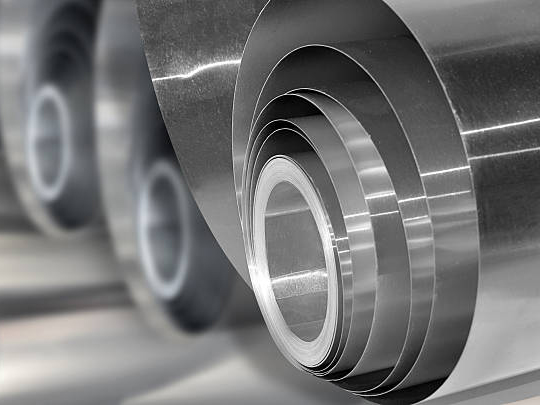
Material selection directly impacts patient safety and treatment results in the medical device industry. Gr4 titanium foil is the strongest grade of commercially pure titanium. It has tensile strength above 550 MPa, excellent biocompatibility and superior corrosion resistance. It stands as a top material for high-end medical device manufacturing. Compared with Gr1 and Gr2 titanium foil, Gr4 titanium foil maintains stable performance inside human bodies while bearing physical loads. It works well for implants, surgical tools and diagnostic equipment that need strong support. It has a density of 4.51 g/cm³, around 40% lighter than stainless steel. It strikes an ideal balance between weight and strength for minimally invasive surgery and long-term implantation. With the development of precision medicine and personalized treatment, ultra-thin Gr4 titanium foil with thickness from 0.02 mm to 1.0 mm creates more new clinical applications.
1. Structural Applications in Orthopedic Implants
1.1 Spinal Fusion Cages and Intervertebral Support Systems
Spinal fusion implants need long-term stability while supporting body weight. Manufacturers use precision stamping and laser welding to make porous mesh shells from Gr4 titanium foil for intervertebral fusion cages. The material has yield strength from 480 MPa to 665 MPa. It resists plastic deformation under vertical compression. Its elongation stays above 15% and provides proper elastic buffering. Clinical data shows TLIF fusion cages made of 0.2 mm to 0.5 mm Gr4 titanium foil reach an osseointegration rate over 92% after 12 months of implantation, according to imaging checks.
1.2 Trauma Fixation Plates and Mini Screw Systems
Maxillofacial and hand fracture repair need lightweight and high-strength fixation parts. Multiple precision cold rolling and continuous annealing keep the thickness of Gr4 titanium foil steady between 0.1 mm and 0.3 mm. Photo-etching and micro machining turn the foil into mini fixation plates. These plates deliver 85% of the bending strength of 316L stainless steel, while cutting total weight by more than 50%. Top orthopedic manufacturers in the United States and Germany use ultra-thin Gr4 titanium foil for temporary fixation systems with absorbable screws. Hydroxyapatite coating on these parts boosts bone induction performance.
1.3 Stress Dispersion Layers for Joint Replacement Components
Stress shielding often leads to bone loss after total hip and total knee replacement. People use 0.3 mm to 0.8 mm Gr4 titanium foil to make gradient porous transition layers between prostheses and bones. These layers adjust stress transfer effectively. The 20-high rolling mill keeps thickness tolerance within ±0.01 mm. People stack multiple foil layers and control porosity accurately from 40% to 70%. Manufacturers combine micro forming technology from Japan to develop acetabular liners with bionic trabecular structures. Clinical follow-up data shows bone density retention around prostheses rises by 23%.
Typical Applications of Gr4 Titanium Foil in Medical Devices
| Medical Device Category | Gr4 Titanium Foil Thickness Range | Key Performance Requirements | Typical Application Cases |
|---|---|---|---|
| Orthopedic Implants | 0.2 ~ 0.8 mm | Tensile strength ≥ 550 MPa, Elongation ≥ 15 % | Spinal fusion cage shells, Trauma fixation plates |
| Cardiovascular Devices | 0.08 ~ 0.25 mm | Fatigue life > 5 million cycles, Hemolysis rate < 5 % | Coronary stents, TAVR stent frames |
| Neurosurgical Tools | 0.02 ~ 0.6 mm | Surface hardness ≥ HV 600, Thickness tolerance ±0.01 mm | Skull repair mesh, Minimally invasive tool edges |
| Diagnostic Equipment | 0.05 ~ 0.3 mm | X-ray transmittance > 75 %, Corrosion rate < 0.01 mm/year | X-ray windows, Dialysis membrane supports |
2. Core Components for Cardiovascular Interventional Devices
2.1 Base Material for Coronary Stents
Coronary stents need to keep vascular lumen open after expansion and avoid excessive intimal hyperplasia. Laser micro-cutting and electrochemical polishing turn Gr4 titanium foil into platforms for drug-eluting stents. The support struts measure only 0.08 mm to 0.12 mm thick. The material has tensile strength above 550 MPa and does not break under expansion pressure from 0.4 MPa to 0.8 MPa. The TiO₂ oxide film on pure titanium has a thickness of 2 nm to 6 nm and delivers good blood compatibility. European standards for cardiovascular devices set the maximum hemolysis rate at 5%. Test results in simulated body fluid show the hemolysis rate of Gr4 titanium foil stays below 2%, much better than cobalt-chromium alloy.
2.2 Support Frames for Valve Replacement Devices
Self-expanding stents for transcatheter aortic valve replacement (TAVR) need super elasticity and high fatigue strength. Nitinol is a common choice for this part. Gr4 titanium foil acts as a reliable alternative for patients with nickel allergies. Deformation heat treatment and surface nano-modification let 0.15 mm to 0.25 mm Gr4 titanium foil withstand over 5 million bending cycles under simulated heart beating conditions. Some medical manufacturers adopt precision coating technology originally used for lithium battery current collectors. They apply anti-calcination coatings on titanium foil and make bioprosthetic valve stents.
2.3 Electromagnetic Shielding Layers for Pacemaker Housings
Implantable cardiac rhythm management devices need protection from external electromagnetic interference. Manufacturers use magnetron sputtering coating and precision stamping on 0.05 mm to 0.1 mm ultra-thin Gr4 titanium foil to make sealed shielding shells. The material has a resistivity of 55 μΩ·cm, higher than aluminum alloy. It is non-magnetic with magnetic susceptibility below 1.2×10⁻⁶. It creates no artifacts or heat during MRI scans. Aerospace and medical producers in the United States use continuous vacuum annealing. They control grain size between 10 μm and 25 μm after heat treatment at 1100 ℃ for 2 hours. The material maintains good conductivity and mechanical strength at the same time.
Performance Comparison between Gr4 Titanium Foil and Other Medical-grade Metals
| Performance Index | Gr4 Titanium Foil | 316L Stainless Steel | Cobalt-Chromium Alloy |
|---|---|---|---|
| Density (g/cm³) | 4.51 | 7.98 | 8.45 |
| Tensile Strength (MPa) | ≥ 550 | 485 ~ 690 | 800 ~ 1200 |
| Biocompatibility | Excellent (No Ni / Cr release) | Good (Nickel allergy risk) | Excellent |
| Corrosion Resistance | Outstanding (Self-repairing passive film) | Moderate (Pitting risk) | Excellent |
| MRI Compatibility | Fully compatible | Partially compatible | Weak magnetism |
3. Neurosurgical and Minimally Invasive Surgical Tools
3.1 Skull Repair Mesh and Fixation Systems
Materials for skull defect repair after brain trauma need mechanical properties close to natural bone. Workers use hydroforming on 0.4 mm to 0.6 mm Gr4 titanium foil. The foil fits skull curvature accurately based on 3D models built from CT data. The material has a density of 4.51 g/cm³, higher than cortical bone at 1.8 g/cm³ to 2.0 g/cm³. Porous structure design brings its equivalent density close to cortical bone and lowers pressure on brain tissue. Top manufacturers in Germany develop composite panels combining titanium foil and PEEK. Gr4 titanium foil forms the load-bearing frame and PEEK fills the inner layer for shock absorption. The infection rate of this product stays below 3% in clinical use.
3.2 Working Ends of Minimally Invasive Surgical Tools
Laparoscopic and neuroendoscopic tools need thin bodies and high rigidity. Workers use precision shearing and laser welding to make scissors, forceps and dissectors from Gr4 titanium foil. The cutting edge can reach 0.15 mm thick and stays sharp after 100,000 opening and closing cycles. Ultrasonic cleaning raises surface dyne value above 40 dyne/cm. Plasma nitriding treatment lifts surface hardness above HV 600. Domestic medical producers replace imported cobalt-chromium alloy with Gr4 titanium foil. The total cost drops by 35% while all performance meets ISO 13402 standards.
3.3 Substrate Materials for Nerve Electrode Arrays
Brain-computer interfaces and deep brain stimulation (DBS) electrodes need stable bio-signal transmission for long-term use. Photolithography and sputter gold plating process 0.02 mm to 0.05 mm ultra-thin Gr4 titanium foil into high-density electrode arrays. The electrode spacing ranges from 50 μm to 100 μm. Pure titanium base has low electrochemical activity with corrosion potential around -0.3V vs. SCE. Electrode impedance fluctuation stays within ±5% after two years of testing in cerebrospinal fluid. Precision etching technology supports local manufacturers in Vietnam to produce cost-effective neuromodulation devices for Southeast Asian markets.
Key Processing Parameters for Gr4 Titanium Foil Medical Devices
| Production Process | Equipment / Technology | Control Parameters | Quality Impact |
|---|---|---|---|
| Precision Cold Rolling | 20-high rolling mill (Rolling force 3500 kN) | Thickness tolerance ±0.01 mm, Speed 400 m/min | Ensure stability of ultra-thin products |
| Continuous Annealing | 7-zone electric heating line (Max 1100 ℃) | Temperature tolerance ±2 ℃, Non-stop processing | Remove stress and restore ductility |
| Surface Treatment | Ultrasonic cleaning + Polishing | Dyne value > 40 dyne/cm, Ra < 0.2 μm | Improve coating adhesion and biocompatibility |
| Precision Slitting | High-precision slitting line | Width tolerance ±0.1 mm (15 ~ 680 mm) | Meet size requirements of miniature devices |
4. Diagnostic Equipment and In-vitro Medical Systems
4.1 Window Materials for X-ray Diagnostic Devices
X-ray tubes and CT detectors need window materials with high X-ray transmittance and sufficient mechanical strength. 0.1 mm to 0.3 mm Gr4 titanium foil has transmittance from 75% to 90% for rays within 8 keV to 120 keV when the thickness is 0.2 mm. It withstands vacuum environment and thermal cycling stress. Its melting point reaches 1668 ℃ and it does not soften or deform even when the anode temperature of high-power X-ray tubes hits 1200 ℃. Gr4 titanium foil gains wide use in eco-friendly medical equipment. It has good recyclability and its production energy consumption is only 60% of tantalum.
4.2 Support Frames for Hemodialysis Membranes
Hollow fiber membranes in hemodialyzers need support structures to avoid collapse under blood flow impact. Workers stamp 0.15 mm to 0.25 mm Gr4 titanium foil into corrugated or honeycomb supports. These structures keep flow space for dialysate and maintain stable shape of membrane fibers. The material has a corrosion rate below 0.01 mm/year in simulated dialysate with sodium chloride, potassium chloride and glucose. The figure is much lower than 0.05 mm/year for stainless steel. Manufacturers in Japan adopt production technology originally for battery separators. They achieve efficient slitting for wide Gr4 titanium foil from 350 mm to 670 mm.
4.3 Base Materials for Laboratory Diagnostic Chips
Microfluidic chips and biosensors need base materials with chemical inertness and uniform thermal conductivity. Polishing treatment brings surface roughness of 0.05 mm to 0.1 mm Gr4 titanium foil below Ra 0.2 μm. People bond PDMS or glass directly on the foil to form microchannel structures. The material has thermal conductivity around 17 W/(m·K), lower than aluminum. Argon annealing removes residual stress and prevents warpage during PCR thermal cycles from 25 ℃ to 95 ℃. Gr4 titanium foil also works as working electrodes in electrochemical biosensors and shows stable hydrogen evolution overpotential.
Conclusion
Gr4 titanium foil ranks as the strongest commercially pure titanium material. It has outstanding biocompatibility and excellent corrosion resistance. It has become an essential material for modern medical device manufacturing. Ultra-thin Gr4 titanium foil from 0.02 mm to 1.0 mm supports orthopedic implants under physical load, cardiovascular stents with strict blood compatibility requirements, implanted electronic devices for electromagnetic shielding and key parts of precision diagnostic systems. It pushes medical technology toward minimally invasive operation, personalized design and long-term service. Advanced precision machining and complete quality control systems will help Gr4 titanium foil play a more important role in the global high-end medical market.
FAQ
1. What are the main differences between Gr4 titanium foil and Gr2 titanium foil for medical use?
Gr4 titanium foil has tensile strength above 550 MPa, over 60% higher than Gr2 titanium foil. It is the better choice for orthopedic implants and cardiovascular stents under heavy load. Gr4 titanium foil has slightly lower elongation (≥ 15 %) than Gr2 titanium foil (≥ 20 %). It still has enough formability for most medical devices. Its high strength effectively lowers the risk of device failure.
2. How to guarantee machining accuracy for ultra-thin Gr4 titanium foil (< 0.1 mm)?
We use 750 mm 20-high rolling mills to control thickness within ±0.01 mm. High-precision slitting lines keep width tolerance within ±0.1 mm. Continuous annealing lines maintain temperature tolerance at ±2 ℃. These devices produce stable products from 0.02 mm to 0.1 mm. Ultrasonic cleaning and polishing further improve flatness to meet high-precision requirements for miniature implants and nerve electrodes.
3. How to verify long-term stability of Gr4 titanium foil in body fluid?
Carry out biocompatibility tests according to ISO 10993 standards, including cytotoxicity, sensitization and implantation tests. After 24 months of immersion in simulated body fluid at 37 ℃ and pH 7.4, the corrosion rate of Gr4 titanium foil stays below 0.01 mm/year. Its surface oxide film remains intact and metal ion content stays below detection limits. These results ensure long-term safety of implanted products.
Find Reliable Suppliers of Medical-grade High-performance Gr4 Titanium Foil?
Baoji Titanium Valley Titanium Nickel Zirconium Material Processing Co., Ltd. runs automatic production lines with annual output of 3000 tons. We adopt 20-high rolling and continuous annealing technology. We supply Gr4 titanium foil in sizes 0.02 mm ~ 1.0 mm × 15 mm ~ 680 mm. All products comply with ASTM B265 and come with material test reports. We serve high-end industries including aerospace and precision electronics. Email: sales@titaniumvalleys.com for customized solutions and technical support.
References
- Ning Congqin, Zhou Yu. Medical Properties and Application of Titanium Alloys in Prosthodontics[J]. Materials Reports, 2002, 16(6): 25-27.
- Li Changhong, Wang Xuemei, Cui Zhenduo. Research Progress on Surface Modification of Medical Titanium Alloys[J]. Chinese Journal of Biomedical Engineering, 2014, 33(2): 224-230.
- Liu Jiang, Liu Wei, Zhao Yongqing. Research Progress of Commercially Pure Titanium and Titanium Alloys in Biomedical Field[J]. Titanium Industry Progress, 2017, 34(1): 1-7.
- Zhang Xingdong, Fan Hongsong. Biomedical Titanium Materials and Their Surface Modification [M]. Beijing: Science Press, 2016: 120-145.