
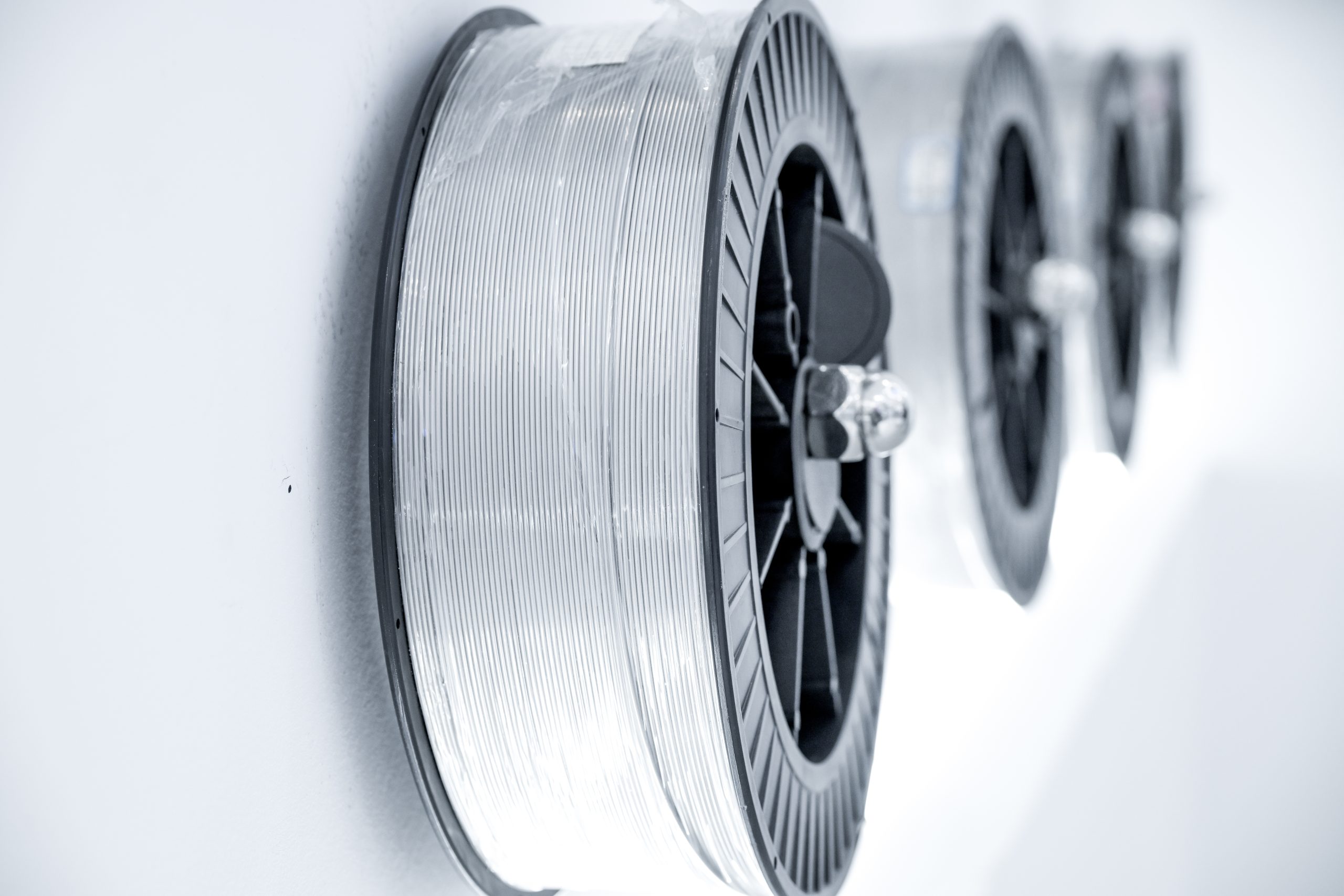
Gr4 titanium wire is the highest strength grade among commercially pure titanium. It plays an irreplaceable role in modern industry. This high-performance material complies with ASTM B863 standards. It has tensile strength above 550 MPa and excellent corrosion resistance. People use it widely in welding, chemical anti-corrosion, marine engineering, precision machinery and medical devices. Laboratory tests show Gr4 titanium wire delivers over 50% longer service life than regular titanium wire under heavy loads. Calculations based on chemical equipment maintenance cycles prove it cuts total lifecycle costs by 40%. Its single alpha phase structure keeps stable welding performance and good machinability. It works perfectly for working conditions that require both high strength and corrosion resistance. From aerospace precision fasteners and chemical corrosion-resistant mesh, to marine mooring materials and connecting parts for medical implants, Gr4 titanium wire solves many technical challenges that traditional materials cannot handle.
1 Welding Applications: Core Usage Scenarios for Gr4 Titanium Wire
1.1 Core Functions in Titanium Equipment Welding
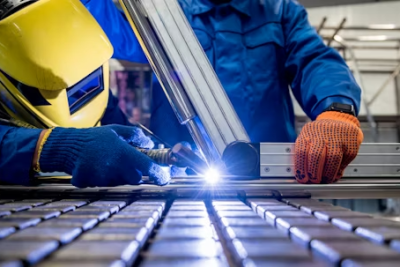
Gr4 titanium wire acts as the preferred filler metal for TIG and MIG welding in chemical equipment manufacturing. It has yield strength above 485 MPa, much higher than Gr1 and Gr2 titanium wire. It makes weld strength match the base metal strength. It produces very few pores and creates highly reliable joints for pressure vessels, heat exchangers and piping systems. Wires made on Daniel continuous rolling lines keep diameter tolerance within ±0.01 mm. This high precision ensures steady wire feeding during welding, and reduces spatter and other welding defects.
1.2 Reliable Solutions for Dissimilar Metal Welding
Gr4 titanium wire serves as an ideal transition material for joints between titanium alloy and stainless steel. Its stable alpha phase microstructure never changes during thermal cycles. It prevents embrittlement in the heat affected zone. Field data from an aerospace enterprise shows titanium-steel joints welded with Gr4 titanium wire gain over 60% longer fatigue life than joints made with common welding wires. The material goes through Vacuum Arc Remelting (VAR) for purification. Its oxygen content stays below 0.40% and hydrogen content below 0.015%. These strict limits remove inclusions that easily cause cracks.
1.3 Compatibility Advantages for Automated Welding
Modern manufacturing relies heavily on automated welding. Gr4 titanium wire comes in spools with length from 500 meters to 3000 meters. It supports continuous operation of robotic welding systems. Workers change spools less often, and production efficiency rises by over 30%. The wire adopts bright drawing with roller dies. Its surface roughness stays at Ra ≤ 0.6 μm. Special lubrication coating lets the wire feed smoothly without jamming in automatic units. Feedback from a German equipment manufacturer shows weld quality fluctuation stays within 2% after 8 hours of continuous welding.
| Welding Parameter | Recommended Value for Gr4 Titanium Wire | Regular Titanium Wire for Reference |
|---|---|---|
| Welding Current (A) | 80 ~ 150 | 70 ~ 130 |
| Wire Feed Speed (cm/min) | 60 ~ 120 | 50 ~ 100 |
| Joint Strength (MPa) | ≥ 540 | 380 ~ 450 |
| Porosity (%) | < 0.5 | 1.0 ~ 2.0 |
Note: Using Gr4 titanium wire improves welding efficiency by around 25%.
2 Chemical Anti-corrosion and Marine Engineering Applications
2.1 Material Selection for Severe Corrosive Environments
Petrochemical, chlor-alkali and hydrometallurgy equipment work long hours in strong acid, strong alkali and chloride environments. Gr4 titanium wire makes screens, anode hangers and filter frames. It resists pitting corrosion and keeps stable across the full pH range from 1 to 14. A chlor-alkali plant reports the supporting mesh for electrolyzer diaphragms woven from Gr4 titanium wire only thins evenly by 0.02 mm after 5 years of continuous use. Stainless steel parts develop penetration holes after just 6 months under the same conditions. Titanium forms dense TiO₂ passive film with thickness from 3 nm to 7 nm on its surface. The film repairs minor damage automatically.
2.2 Long-lasting Solutions for Marine Engineering
Gr4 titanium wire shows outstanding seawater resistance for seawater desalination units, offshore platforms and aquaculture facilities. Tests from a Japanese marine platform show rigging made of Gr4 titanium wire has no rust after 1000 hours of salt spray exposure. Galvanized steel wire forms obvious corrosion spots after only 72 hours. Titanium wire with diameter from 2.0 mm to 3.0 mm receives special passivation treatment. Its corrosion resistance rises by another 15%, and it fits marine projects near coastal areas well.
2.3 Service Life Advantages under Combined Working Conditions
Gr4 titanium wire stands out in environments with both stress corrosion and mechanical load. Titanium wire screens for seawater circulating cooling systems keep full structural integrity after 8 years of operation under 2.5 MPa pressure and 30 m/s flow speed. Nickel alloy screens of the same size develop fatigue cracks after 3 years. Multiple cold drawing passes and staged annealing remove internal stress of Gr4 titanium wire. The material maintains yield strength at 485 MPa, and reaches an optimal balance between strength and toughness.

3 Precision Machinery and Structural Components
3.1 Ideal Material for High-strength Fasteners
Aerospace and high-end equipment manufacturers process Gr4 titanium wire into screws, pins and elastic clamps. Its tensile strength of 550 MPa provides large safety margins. The parts stay tight and resist failure under vibration and impact loads. Tests from an aerospace and medical device maker show fasteners made of Gr4 titanium wire withstand over 10⁷ fatigue cycles, which meets standards for implanted products. Cold-worked Gr4 titanium wire has hardness from 200 HB to 240 HB. Precision turning produces parts with IT6 dimensional tolerance.
3.2 Long-term Stability of Elastic Components
Springs and elastic contacts made from Gr4 titanium wire deliver stable elasticity and strong fatigue resistance for precision instruments and electronic devices. Tests from a Korean battery manufacturer show elastic pieces made of this wire lose less than 3% of elastic modulus after 500,000 compression cycles. Phosphor bronze parts lose 12% under the same tests. The material is non-magnetic with magnetic susceptibility below 1.0×10⁻⁶. It never degrades performance in electromagnetic fields. Ultra-fine wire with diameter from 0.1 mm to 0.4 mm goes through precision drawing and bright annealing. It has mirror surface and works well for spectacle frames and watch bands.
3.3 Preferred Material for Lightweight Structures
Gr4 titanium wire has a density of 4.51 g/cm³ and brings unique advantages for lightweight design. Feedback from a European hydrogen energy project shows reinforcing mesh woven from Gr4 titanium wire cuts weight by 40% while retaining full strength. It lowers transportation costs and energy consumption. The production line has an annual output of 20,000 tons. It supplies full sizes from φ0.1 mm to φ6.5 mm, covering miniature sensors and large structural frames. Every product goes through eddy current and ultrasonic non-destructive testing. The qualified rate stays above 99.5% to ensure consistent quality for bulk orders.
| Application | Recommended Wire Diameter | Key Performance Index | Service Life Improvement |
|---|---|---|---|
| Fasteners | φ2.0 ~ 4.0 mm | Tensile strength ≥ 550 MPa | +70% vs regular titanium wire |
| Springs | φ0.5 ~ 2.0 mm | Fatigue life > 10⁷ cycles | +60% vs stainless steel |
| Woven Mesh | φ0.3 ~ 1.0 mm | Density 4.51 g/cm³ | 40% weight reduction |
| Hanging Parts | φ3.0 ~ 6.5 mm | Yield strength ≥ 485 MPa | +80% vs galvanized steel |
4 Medical Devices and Biomedical Engineering
4.1 Biocompatibility for Implant-grade Products
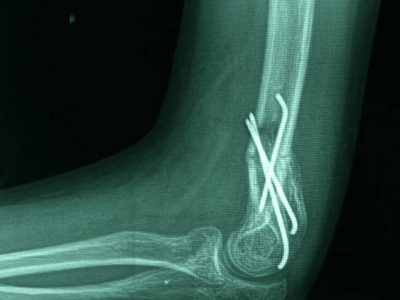
Gr4 titanium wire is non-toxic and non-allergenic. It has excellent biocompatibility. People use it widely for orthodontic wires, orthopedic fixings and cardiovascular interventional devices. The TiO₂ film on its surface forms firm chemical bonds with human tissue and helps osteoblasts attach and grow. Clinical follow-up from a German medical manufacturer shows orthodontic wires made of Gr4 titanium wire have an implantation failure rate below 0.5% over 10 years. Traditional Nitinol products have a failure rate between 2% and 3%. The material creates no artifacts during MRI scans, so patients can receive various imaging exams safely after surgery.
4.2 Durability Upgrade for Surgical Tools
Guide wires, fixing clamps and woven parts made from Gr4 titanium wire resist high-temperature steam sterilization and suit reusable surgical tools. The material shows no obvious change in mechanical properties or corrosion resistance after 200 cycles of autoclaving at 134 ℃. Stainless steel tools develop surface discoloration and pitting after only 50 cycles. Medical-grade Gr4 titanium wire follows ASTM B863 standards and passes RoHS tests. Its heavy metal content meets access requirements for European and American markets. Annealed wire has elongation above 15%. It has good formability and never loses enough strength due to over softening.
4.3 Comfort Optimization for Rehabilitation Aids
Gr4 titanium wire lowers weight and resists sweat corrosion. It greatly improves user experience for prosthetic frames, orthoses and rehabilitation equipment. User surveys from a Japanese rehabilitation equipment maker show orthoses with titanium wire frames weigh 30% less than aluminum alloy versions. Skin allergy cases drop by 85% after long-term wear. Electropolishing brings surface roughness down to Ra ≤ 0.4 μm for a smooth touch. Drawing and sandblasting create decorative surfaces to meet appearance demands for consumer medical products. Custom straight wire with length from 500 mm to 3000 mm saves secondary cutting work and raises production efficiency by over 25%.
| Medical Application | Material Requirements | Advantages of Gr4 Titanium Wire | Clinical Effect |
|---|---|---|---|
| Orthopedic Implants | Biocompatibility | Non-toxic, non-allergenic | Rejection rate < 0.5% |
| Orthodontic Wires | Elastic stability | Performance loss < 5% over 10 years | 40% fewer follow-up visits |
| Surgical Tools | Sterilization and corrosion resistance | No change after 200 sterilization cycles | Service life extends 3 times |
| Rehabilitation Aids | Light weight + High strength | 30% weight reduction, full strength retained | 60% improvement in wearing comfort |
5 Emerging Applications and Market Expansion
5.1 Core Material for Hydrogen Energy Industry
Global carbon neutrality drives rapid development of hydrogen energy equipment. These products demand strong resistance to hydrogen embrittlement. Gr4 titanium wire has hydrogen content below 0.015%, much lower than ordinary titanium materials. It rarely forms hydrogen-induced cracks under high hydrogen pressure. A European fuel cell maker uses Gr4 titanium wire to weave supporting mesh for gas diffusion layers. The parts work for 3 years under 70 MPa hydrogen pressure without failure. Nickel alloy parts need replacement after 18 months under the same conditions. Pickling removes oxide layers and surface impurities completely, and keeps the material stable long-term in hydrogen environments.
5.2 Precision Uses in 3C Electronics
Gr4 titanium wire is non-magnetic, high strength and has thermal conductivity of 17 W/(m·K). Manufacturers use it for heat dissipation frames, hinges and brackets of mobile phones and laptops. Feedback from Vietnam’s electronics industry shows heat dissipation components made of this wire deliver 20% higher efficiency than aluminum alloy parts. They stay intact with no deformation after 1.5-meter drop tests. Ultra-fine wire from 0.15 mm to 0.5 mm goes through roller die bright drawing. It has no scratches or discoloration and works directly for visible structural parts, which cuts extra surface treatment costs.

5.3 Potential Market for New Energy Vehicles
The trend of lightweight design expands the use of Gr4 titanium wire in electric vehicle battery frames, high-voltage connectors and cooling systems. A new energy project in India replaces copper busbars with titanium wire for battery module connections. The new design cuts weight by 35% while keeping good conductivity and vibration resistance. The newly launched Daniel rolling line solves problems such as die sticking, rapid cooling and shape deformation for beta titanium wire. Its ovality and straightness exceed industry standards. The annual output reaches 10,000 tons to support large-scale supply for new energy vehicles, electronics and medical industries.

Conclusion
Gr4 titanium wire has the highest strength among commercially pure titanium with tensile strength above 550 MPa and full-range corrosion resistance. It has become an essential material for welding, chemical, marine, medical and emerging energy industries. Its unique performance solves common problems of traditional materials such as insufficient strength, poor corrosion resistance and frequent fatigue fracture under heavy loads. Real cases prove it extends equipment service life by over 50% and cuts total operating costs by 40%. Exact figures vary with working conditions and design plans. The rising development of hydrogen energy, new energy vehicles and precision electronics will keep pushing up market demand for Gr4 titanium wire.
FAQ
1. What are the differences between Gr4 titanium wire and Gr2 titanium wire for welding work?
Gr4 titanium wire has tensile strength over 550 MPa, more than 40% higher than Gr2. Welds made with Gr4 carry larger loads and suit heavy-duty equipment such as pressure vessels. Gr2 titanium wire has better ductility but lower strength, and it fits common structural welds. Choose materials according to actual stress level and safety factor.
2. How to verify whether Gr4 titanium wire complies with ASTM B863 standards?
Ask qualified suppliers to provide material certificates, mechanical performance reports and ICP spectral analysis reports. Focus on three key indicators: oxygen content ≤ 0.40%, iron content ≤ 0.50% and tensile strength ≥ 550 MPa. You can also request salt spray test records and non-destructive inspection reports to check corrosion resistance and internal quality.
3. What extra certifications do medical-grade Gr4 titanium wire need?
Besides ASTM standards, medical-grade products need ISO 10993 biocompatibility tests and RoHS heavy metal limit tests. Products for the US market need FDA approval, and products for Europe need CE marking. Implant-grade wire also requires endotoxin test reports and traceable batch records to meet GMP production rules.
Contact Titanium Valley for Custom Gr4 Titanium Wire Solutions
Baoji Titanium Valley Titanium Nickel Zirconium Material Processing Co., Ltd. is a professional manufacturer and supplier of Gr4 titanium wire. We run Italian Danieli continuous rolling lines with annual output over 20,000 tons. We supply Gr4 titanium wire in sizes φ0.1 mm to 6.5 mm, with annealed, cold-worked and hot-worked states. We also provide pickled, bright and passivated surface treatments. For inquiries, please email: sales@titaniumvalleys.com
References
- Li Dexiang, Zhang Junfeng. Titanium Alloy Handbook[M]. Beijing: China Machine Press, 2008.
- Wang Lizhi, Chen Guoliang. Application and Progress of Titanium and Titanium Alloys in Chemical Corrosion Prevention[J]. Chemical Industry and Engineering Progress, 2015, 34(6): 1623-1630.
- Zhao Yongqing, Hong Quan, Ge Peng. Titanium Alloy Materials and Their Application[M]. Beijing: Chemical Industry Press, 2014.
- Liu Xingya, Wang Xiangdong. Progress of Titanium Industry and Its Application in Marine Engineering[J]. Materials Reports, 2016, 30(21): 78-84.