
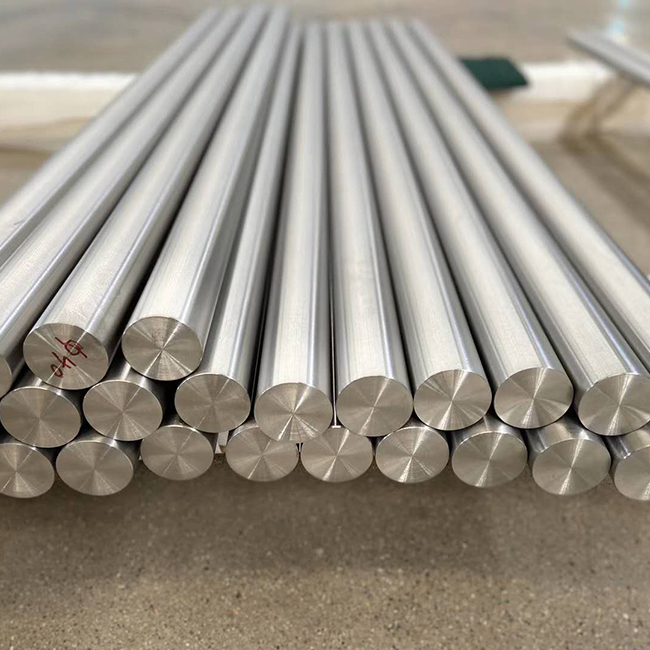
Engineers turn to Gr5 titanium rod (Ti-6Al-4V) to solve material failure issues. Procurement managers choose it to avoid unstable batch quality. This alpha-beta titanium alloy gains wide recognition in high-end manufacturing. It has strength close to high-strength steel, with a density only about 56% of steel. It maintains stable structure at 400 ℃ to 500 ℃. It also resists corrosion from seawater and chloride ions well. Manufacturers adopt Vacuum Arc Remelting (VAR), precision forging and strict heat treatment for Gr5 titanium rod. These processes keep consistent performance across batches, and address the core reliability problems for high-end production.
1 Why Gr5 Titanium Rod Is a High-performance Engineering Material
1.1 Balance between Strength and Weight
Strength-to-weight ratio is a classic challenge in material selection. Annealed Gr5 titanium rod follows ASTM B348 standards. Its tensile strength reaches 895 MPa or higher, and yield strength stands at 828 MPa or above. These values match many high-strength structural steels. Its density is just 4.43 g/cm³, while steel has a density of 7.85 g/cm³. Gr5 titanium rod cuts product weight greatly while delivering equal load-bearing capacity.
This feature brings clear economic benefits to the aerospace industry. Lighter aircraft consume less fuel. Replacing stainless steel with Gr5 titanium rod for key structural parts reduces weight by dozens of kilograms for single components. The total weight saving adds up significantly.
1.2 Comprehensive Performance under Combined Working Conditions
Traditional materials often have drawbacks. Aluminum alloy is light but lacks strength. Stainless steel resists corrosion but loses performance at high temperatures. High-strength steel has good rigidity but rusts easily. Gr5 titanium rod uses a tailored alloy formula, with aluminum at 5.5% to 6.75% and vanadium at 3.5% to 4.5%. It performs well in multiple performance aspects at the same time.
A dense TiO₂ passive film forms naturally on its surface in chloride-rich environments for long-term protection. Its hardness ranges from 280 HB to 340 HB. It has good fatigue resistance and longer cycle life than common structural materials under alternating loads. It also has strong creep resistance at medium and high temperatures, and keeps stable dimensions for long service. One single material fits various working conditions. It simplifies material inventory and design selection work.
1.3 Performance Stability via Microstructure Control
Strict production processes make Gr5 titanium rod performance predictable. Electrode fabrication, VAR vacuum melting, multi-pass forging and precision heat treatment all shape the final alpha-beta microstructure. Alpha phase has a hexagonal close-packed structure. Beta phase has a body-centered cubic structure. The proportion and shape of the two phases directly decide mechanical properties. Manufacturers adjust annealing temperature between 700 ℃ and 850 ℃ and control cooling speed. They balance strength and ductility by regulating alpha lamella and beta phase content.
Ultrasonic testing and eddy current testing find tiny internal defects. All batches keep consistent metallurgical quality. This reduces redundant safety margins caused by uncertain material performance.
2 Production Process: From Raw Material to Finished Rod
2.1 Vacuum Melting to Ensure Alloy Purity
VAR vacuum melting lays the foundation for high-quality Gr5 titanium rod. Workers melt preformed electrodes with DC electric arc under high vacuum of 10⁻² Pa level. The material solidifies into ingots. This process removes interstitial elements such as hydrogen, oxygen and nitrogen effectively. Hydrogen content stays below 0.015% to meet ASTM B348 standards and avoid hydrogen embrittlement.
Multiple remelting steps unify chemical composition. Manufacturers control content deviation of main alloy elements aluminum and vanarium strictly. All ingots go through full-section ultrasonic inspection after melting. No shrinkage cavities or porosity exist inside.
2.2 Precise Control of Hot Working Parameters
Forging and rolling form the final microstructure of titanium rod. The beta transus temperature of Gr5 titanium rod falls between 980 ℃ and 1000 ℃. Heating temperature is set from 950 ℃ to 1050 ℃. Excessively high temperature makes grains grow abnormally. Too low temperature increases deformation resistance and raises cracking risks. Workers adopt multi-pass forging with small single deformation. Large total deformation fully breaks down cast structures.
Manufacturers use cross rolling or longitudinal rolling for forming. Intermediate annealing eliminates work hardening. Rods with diameter from 8 mm to 200 mm go through hot rolling and scale removal before delivery. Rods with diameter from 4 mm to 30 mm adopt cold drawing. Multiple diameter reduction passes and lubrication create high dimensional accuracy and bright surface.
2.3 Decisive Influence of Heat Treatment
Annealing is a key process to obtain ideal performance. The standard procedure includes holding the material at 700 ℃ to 850 ℃ for 2 to 4 hours, then furnace cooling or air cooling. This temperature range sits in the alpha-beta two-phase zone. Cooling speed adjusts alpha lamella and beta phase ratio to balance strength and ductility.
Metallographic inspection after annealing checks grain size per ASTM E112 standards. It rules out overheating and overburn defects. Fine grains guarantee good fatigue performance.
Performance of Gr5 Titanium Rod in Different Processing States
| Processing State | Production Route | Tensile Strength (MPa) | Elongation (%) | Typical Application |
|---|---|---|---|---|
| Annealed (M) | Forging + Hot rolling + Annealing | ≥ 895 | ≥ 10 | Welded structures, Semi-finished blanks |
| Hot-worked (R) | Forging + Hot rolling (No annealing) | Relatively high | 8 ~ 12 | High-strength fasteners, Direct-use shafts |
| Cold-worked (Y) | Hot working + Cold drawing + Stress relief | Greatly increased | 6 ~ 10 | Precision bearings, Medical components |
Note: All performance values comply with ASTM B348 and relevant standards. Cold-worked products have higher tensile strength but lower elongation than annealed products.
3 Application Practices in Different Industries
3.1 Aerospace Industry
Manufacturers use Gr5 titanium rod for compressor disks, blades and fasteners of commercial aero-engines. These parts work under high-speed rotation, high-temperature airflow and repeated fatigue loads. The material needs low fatigue crack growth rate besides sufficient strength.
Optimized forging aligns material flow lines with main stress direction to improve fatigue strength. Shot peening creates compressive stress on the surface and stops crack initiation. Using Gr5 titanium rod cuts component weight and reduces fuel consumption.
Gr5 titanium rod also works well for low-temperature aerospace parts. Ordinary steel turns brittle in liquid hydrogen environment. Gr5 titanium rod retains good low-temperature toughness. It becomes a reliable choice for rocket fuel pipes and storage tanks.

3.2 Medical Implants
Human body forms a complex corrosive environment. Body fluid contains chloride ions. pH value changes constantly. Protein adhesion and cell metabolites also accelerate corrosion. The TiO₂ film on Gr5 titanium rod is only several nanometers thick. It has dense structure and good chemical inertness, and releases no harmful metal ions.
Gr5 titanium rod has an elastic modulus around 110 GPa, close to human bone. It reduces stress shielding effect. Stainless steel has an elastic modulus above 200 GPa and often causes bone loss around implants. Clinical data proves hip prostheses made of Gr5 titanium rod have long service life.
Medical-grade Gr5 titanium rod follows ASTM F136 standards, stricter than industrial ASTM B348. It has tighter limits on oxygen and iron content, and adds fracture toughness tests. Do not mix the two grades for medical use.
Dental implants require strict surface treatment. Acid etching or sandblasting creates micro roughness on Gr5 titanium rod surfaces. It boosts osteoblast adhesion and osseointegration, and improves early stability. Gr5 titanium takes a large share among medical-grade titanium materials worldwide.
3.3 Marine Engineering
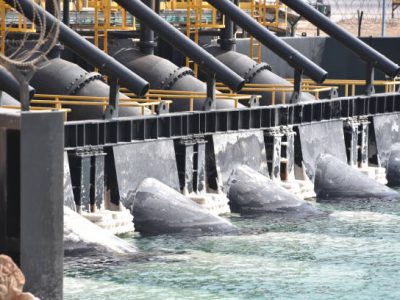
Seawater is a strong corrosive medium. Sodium chloride, dissolved oxygen, sulfate and marine organisms speed up corrosion of ordinary steel. Evaporators and condensers for seawater desalination need frequent replacement if made of common materials. High maintenance costs disrupt normal production.
Gr5 titanium rod has extremely low corrosion rate in seawater and long theoretical service life. Field applications show seawater treatment equipment made of Gr5 titanium rod runs stably for much longer time. Total operating costs drop obviously. Titanium resists flow-accelerated corrosion well. Designers set higher flow speed for titanium heat exchangers to improve heat transfer efficiency.
Deep-sea equipment works under high pressure. Gr5 titanium rod keeps sufficient yield strength and stable corrosion resistance. Key parts of China’s Jiaolong manned submersible adopt titanium alloy. Its high specific strength and corrosion resistance support deep-sea operations.
| Application Field | Typical Working Conditions | Key Performance Requirements | Alternative Materials | Main Advantages |
|---|---|---|---|---|
| Aero-engine | High speed, high temperature, cyclic load | High fatigue srength, creep resistance | Nickel-based superalloy | Weight reduction, lower fuel consumption |
| Orthopedic Implant | Body fluid corrosion, long-term load | Biocompatibility, matched elastic modulus | 316L Stainless Steel | Less stress shielding, higher long-term stability |
| Seawater Desalination | Chloride corrosion, high flow speed | Seawater resistance, thermal conductivity | Copper-nickel alloy | Longer maintenance cycle, lower total cost |
| Chemical Equipment | Strong acid & alkali, high temperature & pressure | Comprehensive corrosion resistance, high-temperature strength | Hastelloy | Longer service life, excellent overall performance |
4 Procurement Risks and Optimization Strategies
4.1 Quality Risks of Low-cost Gr5 Titanium Rod
Price gaps exist among Gr5 titanium rod products. The differences come from raw material quality and process control. Some suppliers use recycled titanium scrap or secondary sponge titanium. Their products barely meet chemical composition standards but contain excess impurities and inclusions. These defects lead to degraded fatigue performance and brittle fracture.
Check items to select qualified Gr5 titanium rod. First, ask for Material Test Reports (MTC) with melting number and batch test data. Second, review ultrasonic inspection reports to make sure internal defects meet ASTM E428 standards. Third, check surfaces for cracks, folds and overlaps. Third-party test reports on chemical composition and mechanical properties are effective ways to avoid risks.
4.2 Inventory Management Optimization
Traditional procurement requires multiple material types. Manufacturers use ordinary steel for general load parts, stainless steel for corrosion resistance, aluminum alloy for light weight and nickel alloy for high temperature. Multiple material types raise inventory quantity, occupy capital and increase management work.
Gr5 titanium rod has all-round performance. Combining material types simplifies inventory, speeds up inventory turnover and cuts capital occupation. Fewer material types also reduce work for supplier management and incoming inspection. Total management costs go down.
Choose suppliers with comprehensive processing capacity. Services such as peeling, turning, polishing and cut-to-length eliminate secondary processing. Material utilization rises and unit cost decreases.
4.3 Strategic Value of Long-term Partnership
Raw material price fluctuations affect supply stability of non-ferrous metals like titanium. Sign framework agreements or set price adjustment rules with reliable long-term suppliers. This hedges risks from sponge titanium price changes.
Professional technical support is another key factor. Top Gr5 titanium rod manufacturers have application engineers. They provide material selection advice, processing guidance and failure analysis. These services shorten product development cycles.
5 Key Processing Points for Gr5 Titanium Rod
5.1 Tool Selection and Parameter Optimization for Machining
Gr5 titanium rod belongs to difficult-to-machine materials. Its thermal conductivity is about 7.5 W/(m·K), only one fifth of steel. Most cutting heat gathers at tool tips. Tool temperature exceeds 1000 ℃ and causes rapid wear. The material has high chemical activity at high temperature. It sticks to cutter tools and forms built-up edges, and even leads to tool chipping.
Use coated cemented carbide or cubic boron nitride (CBN) tools. TiAlN coating lowers friction and cutting temperature to reduce tool wear. Set cutting line speed at 20 ~ 40 m/min, feed rate at 0.1 ~ 0.3 mm/r. Adopt tools with rake angle 10 ~ 15° and relief angle 5 ~ 8° to cut cutting force and friction heat.
Adequate cooling and lubrication play vital roles. Spray high-pressure coolant (≥ 70 bar) directly to cutting areas to remove heat and form lubricating films. Some workshops adopt Minimum Quantity Lubrication (MQL). They atomize tiny cutting oil with compressed air to cutting points. This method protects the environment, extends tool life and improves surface finish.
5.2 Shielding Gas Control for Welding
Gr5 titanium rod reacts strongly with oxygen and nitrogen at high temperatures. Improper shielding creates brittle oxide and nitride layers and weakens weld performance. TIG/GTAW is the main welding method. Use full protection measures: nozzle shielding on weld front, argon backing on weld root and extended shielding hood. Argon purity stays above 99.99% with oxygen content below 50 ppm.
Complete surface cleaning before welding. Use stainless steel brushes or acetone to remove oil stains. Grind the area 20 mm to 30 mm on both sides of weld lines to pure metal. Adjust welding current and speed according to plate thickness. Use 80 ~ 120 A current and 100 ~ 150 mm/min speed for 3 mm thick material. Control interpass temperature below 150 ℃ to prevent grain coarsening.
Post-weld stress relief annealing at 650 ℃ for 2 hours works for load-bearing welds. It optimizes weld microstructure. Proper treatment raises X-ray inspection pass rate and makes weld strength close to base metal.
5.3 Performance Improvement via Surface Treatment
Shot peening effectively improves fatigue performance. Use ceramic or glass shots with diameter 0.3 ~ 0.6 mm at speed 50 ~ 60 m/s. It creates compressive stress layers 0.1 ~ 0.2 mm deep on surfaces, with stress value from -600 MPa to -900 MPa. This method works well for parts with stress concentration such as shoulders and threads.
Anodizing thickens surface oxide film to dozens of micrometers. It adds wear resistance and decorative colors including gold, blue and purple. Medical manufacturers use different anodizing colors to distinguish implant specifications. It also increases surface hardness.
Laser surface modification is an advanced technology. Laser cladding adds ceramic coatings to improve wear resistance. Laser shock peening creates deep residual compressive stress and extends fatigue life. These technologies gain wider use in high-end aerospace fields.
Conclusion
Gr5 titanium rod stands as a core material for high-end manufacturing thanks to its all-round performance. It works reliably for extreme conditions of aero-engines, life-critical medical implants, corrosion-resistant deep-sea equipment and precision machinery. Select Gr5 titanium rod that complies with international standards such as ASTM B348 for industrial use, ASTM F136 for medical implants and AMS 4928 for aerospace products. Match with standard processing and full-life cycle cost management. It reduces project risks, improves product competitiveness and brings long-term economic benefits.
FAQ
Gr5 is an alpha-beta titanium alloy with about 6% aluminum and 4% vanadium. Its annealed tensile strength reaches over 895 MPa, around 2.6 times that of Gr2 pure titanium. It retains good ductility and weldability and suits heavy-load structural parts. Commercially pure titanium has excellent corrosion resistance and formability, and is more common for chemical pipes and deep drawn parts.
Industrial-grade Gr5 titanium rod must follow ASTM B348. Check key chemical composition: aluminum 5.5 ~ 6.75%, vanadium 3.5 ~ 4.5%, and tensile strength ≥ 895 MPa. Surgical implant products need to follow ASTM F136, which has stricter limits on oxygen ≤ 0.13% and iron ≤ 0.25%, plus extra fracture toughness tests. Confirm required standards according to end use and ask for corresponding material certificates.
Use TiAlN coated cemented carbide tools and set cutting speed at 20 ~ 40 m/min. Apply high-pressure coolant above 70 bar to cool cutting areas fast. Choose tools with large rake angle 12 ~ 15° to lower cutting force. Use peeled or polished rod stock to avoid hard scale from wearing tools quickly.
Find Reliable Gr5 Titanium Rod Manufacturers
Baoji Titanium Valley Titanium Nickel Zirconium Material Processing Co., Ltd. runs Italian Danieli rolling lines with annual output of 20,000 tons. We supply Gr5 titanium rod in sizes φ4 ~ 300 mm. Our products comply with ASTM B348 and ASTM F136. We provide complete traceability documents and third-party test reports. Feel free to contact us for technical support and quotations: sales@titaniumvalleys.com
References
- Zhao Yongqing, Wu Jinping, et al. Titanium Alloy Handbook [M]. Beijing: Science Press, 2018.
- Wu Quanxing. Titanium Alloy and Its Application [M]. Beijing: Chemical Industry Press, 2016.
- Zhang Shusheng, Liu Yong. Welding Metallurgy and Process of Titanium Alloy [M]. Beijing: China Machine Press, 2015.
- Li Guojun, Wang Huaming. Research Progress of Titanium Alloys for Aerospace [J]. Journal of Aeronautical Materials, 2019, 39(4): 1-15.
- Chen Feng, Zhang Wei. Long-term Follow-up Survival Analysis of Titanium Alloy Hip Prostheses [J]. Chinese Journal of Orthopaedics, 2018, 38(12): 741-748.