
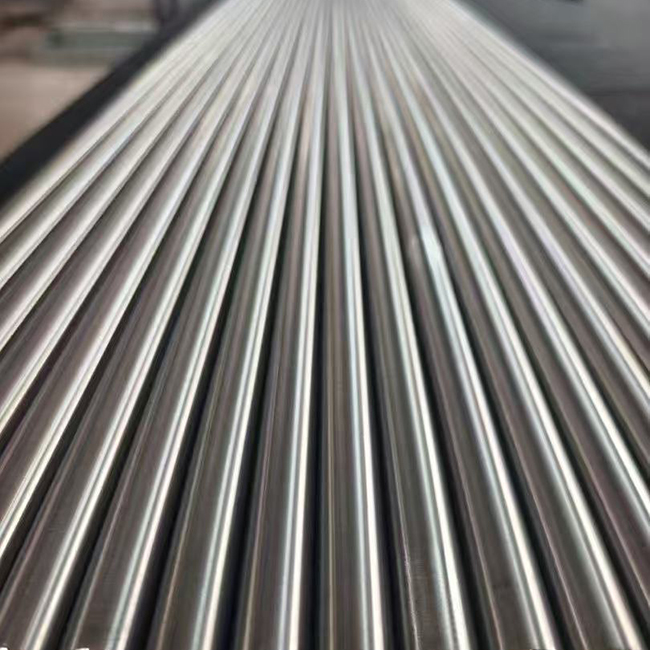
Gr2 titanium rod is a type of commercially pure titanium. It has general corrosion resistance and good formability. It works well for regular chemical environments. Gr12 titanium rod is titanium alloy with molybdenum and nickel additions. It delivers better resistance to pitting and crevice corrosion. It also performs excellently in reducing acid media and has higher strength. Gr12 fits harsh corrosive working conditions. The two materials differ greatly in chemical composition, mechanical properties, corrosion resistance and application scenarios. Equipment manufacturers can avoid material failure and cut full lifecycle costs by learning their essential differences. This also helps improve overall project quality for facilities that run long-term in chloride, sulfuric acid and seawater environments.
1 Differences in Composition and Alloy Design
1.1 Composition and Basic Properties of Gr2 Titanium Rod
Gr2 titanium rod is commercially pure titanium with UNS R50400. Its titanium content is high. Oxygen content stays below 0.25% and iron content below 0.30%. Other impurity elements are strictly controlled. This simple composition gives Gr2 excellent ductility and weldability. It has tensile strength around 345 MPa and elongation above 20% per ASTM B348 standards. Gr2 forms stable TiO₂ passive film quickly in oxidizing media such as nitric acid and wet chlorine gas for basic corrosion protection. Thanks to stable processing performance, manufacturers widely use Gr2 for chemical pipes, plate heat exchangers and general structural parts under normal corrosion conditions.
1.2 Alloy Design and Strengthening Mechanism of Gr12 Titanium Rod
Gr12 titanium rod has the designation Ti-0.3Mo-0.8Ni and UNS R53400. It adds 0.20% to 0.40% molybdenum and 0.60% to 0.90% on the basis of pure titanium. Molybdenum greatly improves resistance to reducing acids like dilute sulfuric acid and hydrochloric acid. It slows down hydrogen permeation. Nickel restricts acidification inside crevices and boosts resistance to pitting and crevice corrosion. This combined alloying technology makes Gr12 far more stable than pure titanium in high-temperature chloride environments, acid condensate and seawater. Its tensile strength reaches 483 MPa and yield strength hits 345 MPa. The strength rises by about 40% compared with Gr12. It still retains good ductility and weldability to meet load-bearing and heavy corrosion requirements. Per ASTM B348, Gr12 has elongation above 18%, while Gr2 has elongation above 20%. Please note this difference during material selection.
1.3 Influence of Composition Control on Batch Stability
Uniform composition guarantees consistent performance in mass production. Gr2 has simple ingredients. Factories control impurities easily, so performance fluctuation between batches remains small. Gr12 contains molybdenum and nickel. Manufacturers need multiple Vacuum Arc Remelting (VAR) runs to distribute alloy elements evenly. Uneven composition leads to inconsistent corrosion resistance. Titanium Valley adopts strict electrode production and three times of remelting. It keeps molybdenum content fluctuation within ±0.05% for the 0.20%~0.40% range. Every batch comes with Material Test Reports (MTC) for full composition traceability. Stable performance prevents rework and acceptance risks caused by batch differences.
2 Comprehensive Comparison of Mechanical and Corrosion Properties
| Performance Index | Gr2 Titanium Rod | Gr12 Titanium Rod | Performance Description |
|---|---|---|---|
| Tensile Strength (MPa) | 345 | 483 | Gr12 gains around 40% higher strength and suits load-bearing structures |
| Yield Strength (MPa) | 275 | 345 | Gr12 has stronger deformation resistance |
| Elongation (%) | ≥20 | ≥18 | Both have good ductility for cold working |
| Pitting Resistance | Fair | Excellent | Gr12 shows remarkable improvement in chloride environments (refer to ASTM G48) |
| Crevice Corrosion Resistance | Fair | Excellent | Gr12 service life is 2 to 3 times longer in seawater and acidic crevices (lab test data) |
| Resistance to Reducing Acids | Weak | Greatly improved | Gr12 has much lower corrosion rate in dilute sulfuric acid and hydrochloric acid |
2.1 Balance between Strength and Ductility
Gr2 has proper strength for ordinary structural parts and non-pressure equipment. Its high ductility supports cold bending, cold drawing and complex forming. Gr12 raises strength via alloying while keeping elongation above 18%. It balances load capacity and workability. Manufacturers use Gr12 for heat exchanger tube sheets and agitator shafts of reaction vessels. It allows thinner wall thickness, cuts overall weight and lowers equipment design costs.
2.2 Failure Mechanism of Pitting and Crevice Corrosion
The passive film on pure titanium easily breaks at crevices or scratched areas in neutral and weakly acidic chloride environments. Pitting holes expand quickly. Nickel in Gr12 stabilizes pH inside crevices. It stops chloride accumulation and acidification. The passive film repairs itself under harsh conditions. Lab tests per ASTM G78 and field cases prove Gr12 works 2 to 3 times longer than Gr2 in seawater desalination and chlor-alkali electrolyzers. It reduces unplanned shutdown and part replacement frequency.
2.3 Improved Performance in Reducing Acids
Pure titanium struggles to form or retain passive film in dilute sulfuric acid and hydrochloric acid. Its corrosion rate stays high. Molybdenum in Gr12 lowers hydrogen activity and reduces hydrogen embrittlement risks. Per ASTM G31 tests, Gr12 has a corrosion rate below 0.05 mm/year in 10% sulfuric acid below 80 ℃. The rate for Gr2 reaches 0.3 mm/year. Gr12 becomes the preferred material for pickling equipment, hydrometallurgical facilities and acid gas scrubbers.
3 Application Matching and Material Selection Principles
3.1 Typical Applications of Gr2 Titanium Rod
Gr2 fits facilities under normal temperature and general corrosion with no pressure load. It works for alkali liquid pipes in soda production and chlor-alkali industry, anode hangers for electroplating and purified water systems for pharmaceutical equipment. Gr2 has low cost and good general corrosion resistance, so it offers high cost performance for regular industrial projects. Do not use Gr2 in dry chlorine gas, even though it works for wet chlorine and alkali liquid. Its good cold forming property helps make pipes, flanges and welded parts with complex shapes. It maintains high production yield during mass production.
3.2 Irreplaceable Value of Gr12 in Harsh Conditions
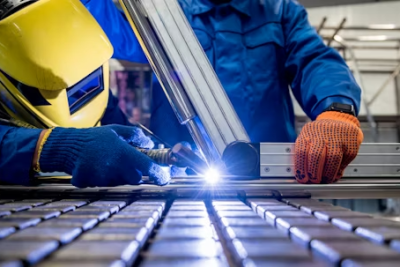
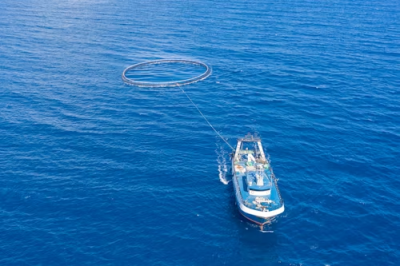
Choose Gr12 for facilities exposed to high-temperature chloride, reducing acids, seawater or medium load. Multi-stage flash units for seawater desalination, spray layers of flue gas desulfurization towers and extraction equipment for chloride hydrometallurgy all use Gr12. The material keeps stable performance for over 10 years under combined high chloride, sulfur and high temperature. It also works well for seawater condensers in nuclear power plants and mooring systems in marine engineering. Field data shows its service cycle extends 2 to 3 times and cuts maintenance and safety risks.
3.3 Cost-benefit Analysis for Material Selection
| Selection Factor | Gr2 Titanium Rod | Gr12 Titanium Rod | Selection Advice |
|---|---|---|---|
| Procurement Cost | Low | Medium (1.3 ~ 1.5 times of Gr2, depends on size and surface treatment) | Choose Gr2 with limited budget and mild working conditions |
| Full Lifecycle Cost | Medium (frequent replacement) | Low (long service life, little maintenance) | Prioritize Gr12 for harsh environments for better overall cost |
| Material Failure Risk | Medium to high (pitting, crevice corrosion) | Low | Select Gr12 for safety-critical projects such as nuclear power and marine engineering |
| Machinability & Weldability | Excellent | Good | Both suit complex structure production |
Evaluate medium composition, temperature, pressure and expected service life in the design phase. Gr2 delivers better cost performance if the equipment runs less than 5 years under mild conditions. Gr12 requires higher initial investment but avoids frequent replacement and production shutdown for facilities working over 10 years in heavy corrosion. Use Net Present Value (NPV) method for quantitative cost calculation.
4 Key Differences in Processing and Quality Control
4.1 Precision Requirements for Melting and Forging
Gr2 uses mature production processes. Single VAR melting meets composition requirements. It has a wide forging temperature range from 850 ℃ to 950 ℃ and low deformation resistance, ideal for mass continuous production. Gr12 contains molybdenum and nickel. It needs three VAR remelts for even element distribution. Workers control forging temperature and deformation strictly to prevent composition segregation. Titanium Valley uses Italian Danieli rolling lines. Multi-pass hot rolling and precise intermediate heat treatment ensure uniform structure. The diameter tolerance stays within ±0.05 mm.
4.2 Influence of Heat Treatment
Gr2 usually delivers in annealed condition. The annealing temperature ranges from 650 ℃ to 750 ℃. The process removes cold working stress and restores ductility. Gr12 needs heat treatment to unify alloy elements and stabilize microstructure. Its annealing temperature is 700 ℃ to 800 ℃. The holding time is 20% to 30% longer than Gr2. This ensures molybdenum and nickel fully dissolve without brittle phase precipitation. Improper heat treatment causes local hardening or poor toughness, and harms subsequent welding and forming.
4.3 Surface Quality and Non-destructive Testing Standards
Both materials need ultrasonic testing (UT) to check internal defects. Gr12 has higher alloy content. It is more sensitive to surface oxide and inclusions. Gr12 for medical implants and aerospace fasteners requires grinding or polishing, with surface roughness Ra ≤ 0.8 μm. This standard applies to medical and aerospace products only. Titanium Valley conducts 100% non-destructive testing for every batch of Gr12. It provides complete MTC and third-party inspection reports to prevent rework caused by quality issues.
5 Comprehensive Value of Cost and Project Execution
5.1 Balance between Initial Investment and Lifecycle Cost
The unit price of Gr12 is 1.3 to 1.5 times that of Gr2. Its service life reaches 2 to 3 times longer in harsh environments. Take heat exchange tubes for seawater desalination as an example. Gr2 needs replacement every 5 years, while Gr12 works over 15 years. Labor, shutdown and spare parts costs drop by more than 40% in total. Gr12 is the better choice for well-funded projects that require long stable operation, such as nuclear power and marine engineering. Calculate NPV or Return on Investment (ROI) for accurate assessment.
5.2 Processing Stability in Mass Production
Consistent material performance raises yield and shortens delivery for mass production of chemical pump shafts, electrode rods and fasteners. Gr2 has simple composition and small batch-to-batch variation. It works well for large-scale manufacturing. Poor composition control of Gr12 leads to uneven work hardening and faster tool wear. Titanium Valley adopts strict composition control and full-process traceability. Its Gr12 products keep stable performance across batches. Customers do not need to adjust process parameters frequently and gain higher production efficiency.
5.3 Compliance and Project Acceptance
Products sold to Europe, America, Japan and South Korea must follow ASTM B348, ISO 5832 and other international standards. Complete test documents and traceability records are mandatory. Gr12 has more composition test items due to alloy elements. Titanium Valley issues MTC certificates complying with EN 10204 3.1 for every batch. Full records of composition, mechanical properties and non-destructive testing help clients pass third-party audits and project acceptance without delays.
Conclusion
Gr2 and Gr12 titanium rods have their own strengths in composition and performance. Gr2 features general corrosion resistance, low cost and good workability. It fits regular chemical facilities and oxidizing environments. Gr12 uses molybdenum and nickel alloying. It gains better pitting resistance, crevice corrosion resistance and performance in reducing acids. Its strength rises by 40% and becomes the top pick for heavy corrosion and load-bearing working conditions. Evaluate medium type, service life, budget and safety risks before selection. Gr12 brings higher comprehensive value for projects with long service life and complex corrosion environments. This conclusion bases on full lifecycle cost analysis. Actual figures change with project parameters.
FAQ
1. How much longer does Gr12 titanium rod last than Gr2 in seawater?
Gr12 has much better pitting and crevice corrosion resistance in chloride-rich seawater. Field applications show its service life reaches 2 to 3 times that of Gr2. Overall maintenance costs drop by over 40%. The exact gap changes with seawater temperature, flow rate and sand content.
2. Do we need special tools or parameters to machine Gr12 titanium rod?
Gr12 has about 40% higher strength than Gr2. Use cemented carbide tools for cutting. Reduce cutting speed by 15% to 20% and increase coolant flow to avoid work hardening. Titanium Valley can provide detailed processing guidance for stable mass production.
3. Can Gr12 titanium rod be used for medical implants and aerospace fasteners?
Gr12 meets ASTM F1295 for medical use and AMS 4928 for aerospace use. It has good biocompatibility and fatigue strength. It works for orthopedic implants, dental implants and aerospace fasteners. Keep surface roughness Ra ≤ 0.8 μm and ensure strict composition control.
Get Professional Solutions from Titanium Valley
Baoji Titanium Valley Titanium Nickel Zirconium Material Processing Co., Ltd. is a leading manufacturer and supplier of Gr12 and Gr2 titanium rods in China. We have complete production lines and strict quality management systems. We supply high-quality titanium products that follow ASTM and ISO standards, and provide customized processing and technical support. Contact our technical team for project solutions: sales@titaniumvalleys.com
References
- Wang Xiangdong, Jiang Youfu, Jia Qiang. Application and Development of Titanium and Titanium Alloys in Chemical Equipment[J]. Chemical Equipment and Piping, 2018, 55(6): 1-6.
- Li Jingui, Ma Jianghong. Corrosion and Protection of Titanium Alloys [M]. Beijing: Chemical Industry Press, 2012.
- Zhang Xiaoming, Hong Quan, Zhao Yongqing. Research on Corrosion Behavior and Application of Titanium Alloys in Marine Engineering[J]. Corrosion Science and Protection Technology, 2019, 31(3): 289-295.
- Wu Jianzhong, Geng Hui, Chen Jun. Processing Technology and Microstructure Control of Titanium Alloys [M]. Beijing: Metallurgical Industry Press, 2015.
- Zhao Yongqing, Hong Quan, Zhang Xiaoming. Research Progress of Titanium Alloys in Aerospace and Energy Industries[J]. Progress in Materials Science, 2017, 36(7): 481-488.