
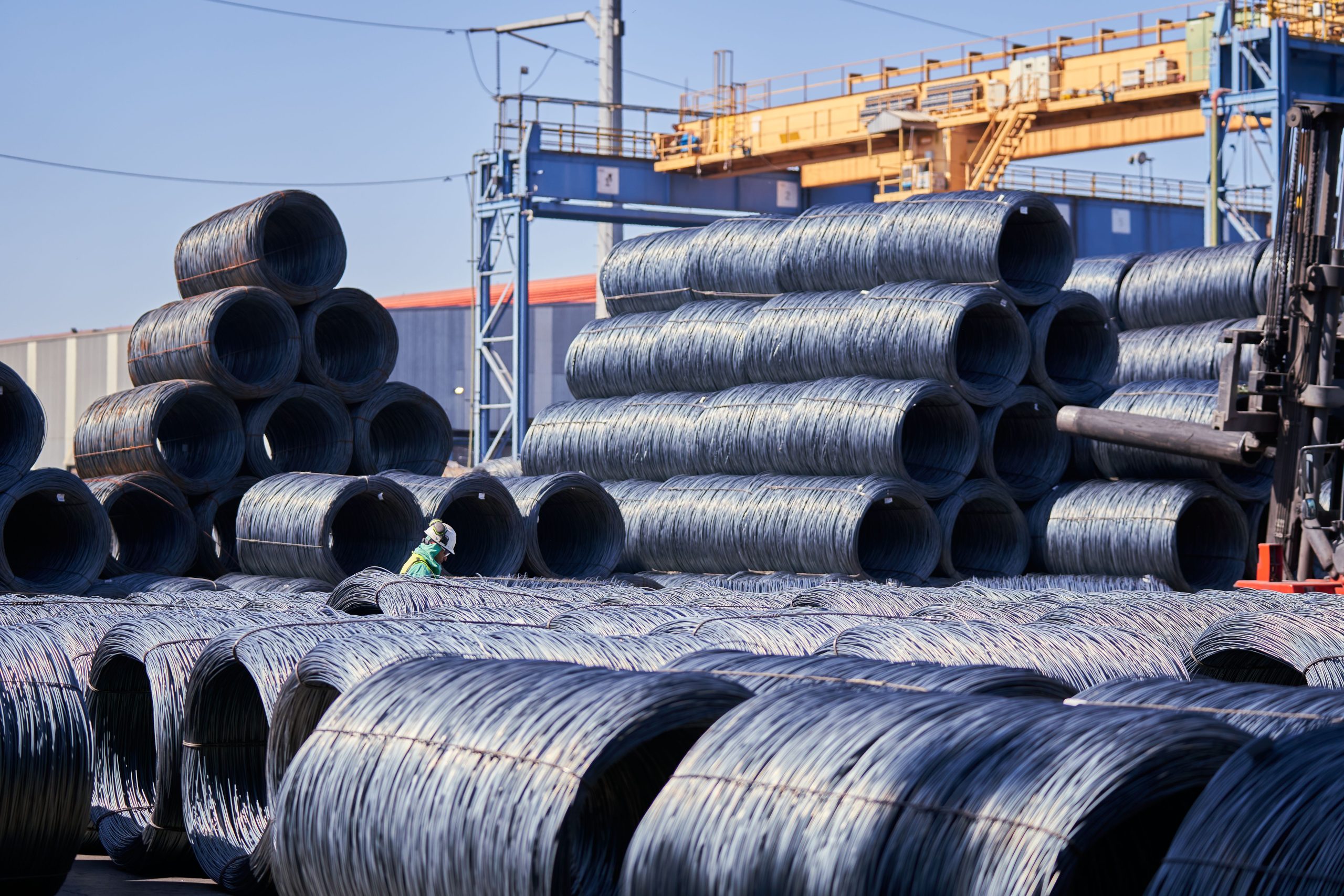
When designing high-load medical implants or aerospace fasteners, engineers need materials that combine high mechanical strength, excellent biocompatibility and superior corrosion resistance. As a commercially pure titanium grade with relatively high strength in the annealed condition, Grade 4 titanium wire features a typical ultimate tensile strength of approximately 550 MPa and a minimum yield strength of 485 MPa, outperforming Grade 1 and Grade 2 pure titanium. Meanwhile, it retains the outstanding corrosion resistance and biocompatibility inherent to pure titanium. With a density of 4.51 g/cm³, equivalent to roughly 60% of stainless steel, and non-magnetic properties, this material is well-suited for precision electronics and medical applications. It complies with ASTM B863 (Standard Specification for Titanium and Titanium Alloy Wire) and AMS 4928 (Pure Titanium Wire for Aerospace Applications). Its microstructure is precisely controlled via Vacuum Arc Remelting (VAR) and multi-pass cold drawing processes.
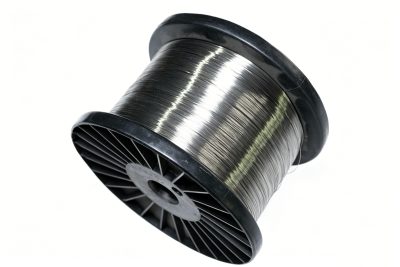
1. Material Properties of Grade 4 Titanium Wire: Technical Foundations for Strength and Safety
1.1 High-Strength Grade among Commercially Pure Titanium
Grade 4 titanium wire is single-phase alpha commercially pure titanium, not a titanium alloy. Its chemical composition is strictly controlled: oxygen content ≤ 0.40%, carbon content ≤ 0.08%, and iron content ≤ 0.50%. This tailored chemical composition facilitates the formation of dense and uniform grain structures. Vickers Hardness (HV) is adopted for fine-diameter titanium wire, with a typical hardness range of 200~240 HV. Brinell Hardness specified in ASTM E10 is only applicable to large-diameter bars and plates, not fine titanium wire.
Compared with Grade 1 (typical ultimate tensile strength: 240 MPa) and Grade 2 (typical ultimate tensile strength: 345 MPa), Grade 4 delivers a strength increase of over 60%, enabling it to withstand higher cyclic stress and impact loads. For welding applications in chemical equipment, Grade 4 titanium wire can be used for TIG/MIG welding and MIG welding without significant reduction in joint strength. The porosity rate is typically kept below 0.5%, ensuring weld performance meets service requirements.
1.2 Physical Basis for Biocompatibility
The excellent biocompatibility of titanium derives from a dense native titanium dioxide (TiO₂) passive film naturally formed on its surface, with a thickness ranging from 2 to 10 nanometers. This film effectively suppresses metal ion release. The hydrogen content of Grade 4 titanium wire is controlled at ≤ 0.015% to mitigate hydrogen embrittlement risks. According to published literature, the incidence of allergic reactions to titanium materials is lower than 0.6%, far below the 15~20% rate for nickel-chromium alloys. Its non-magnetic characteristic (magnetic susceptibility < 1.5 × 10⁻⁶ emu/g) allows patients to undergo Magnetic Resonance Imaging (MRI) examinations after implantation.
1.3 Microstructure Control Processes
Through multi-pass cold drawing and intermediate annealing processes, the alpha-phase grain size of Grade 4 titanium wire is controlled within 10~30 micrometers with relatively uniform grain orientation. This microstructure maintains favorable fatigue strength and ductility, with an elongation of over 15%. Microscopic examination reveals minimal inclusions and pores inside the wire, alongside a uniformly distributed surface oxide film.
In corrosion testing, Grade 4 titanium wire sustains no obvious corrosion after 1000 hours of exposure to ASTM B117 neutral salt spray. Given the excellent inherent corrosion resistance of pure titanium, ASTM B117 has limited differentiating capability; ASTM G85 modified salt spray testing is recommended for evaluating performance in harsh service environments. The material is widely used in marine engineering and chemical anti-corrosion applications.
2. Key Performance Under High-Load Service Conditions
2.1 Quantitative Comparison of Mechanical Properties
Table 1: Mechanical Property Comparison Between Grade 4 Titanium Wire and Common Industrial Wires (Room Temperature, Annealed Condition, Standard Specimens)
| Material Grade | Ultimate Tensile Strength (MPa) | Yield Strength (MPa) | Elongation (%) | Hardness |
|---|---|---|---|---|
| Annealed Grade 1 Pure Titanium Wire | 240 | 170 | 24 | 120 HV |
| Annealed Grade 2 Pure Titanium Wire | 345 | 275 | 20 | 160 HV |
| Annealed Grade 4 Pure Titanium Wire | ≥550 | ≥485 | ≥15 | 200~240 HV |
| Annealed 316 Stainless Steel Wire ¹ | 515 | ≥205 | 40 | 217 HB (Converted Value) |
Notes:
¹ Typical properties of annealed 316 stainless steel wire; minimum yield strength is 205 MPa per ASTM A313. Cold-drawn 316 stainless steel wire exhibits substantially higher strength and hardness but lower elongation. All materials in this table are in the annealed condition for consistent comparison.
All mechanical data are measured at room temperature using standard specimens with wire diameter ≥ 2 mm and a gage length of 50 mm.
Density reference: Grade 4 titanium wire has a density of 4.43 g/cm³, approximately 55.8% of 316 stainless steel (7.93 g/cm³).
Industry application data: Replacing traditional fasteners with Grade 4 titanium wire on aircraft achieves a weight reduction of 15~25 kg per unit and a fuel efficiency improvement of roughly 0.8%. Actual performance varies by aircraft model, structural design and load conditions, and shall not be regarded as a universal performance guarantee. When comparing with cold-drawn titanium wire, property differences caused by material temper of 316 stainless steel shall be noted. The density of Grade 4 titanium wire is approximately 57% of stainless steel.
2.2 Corrosion Resistance
The annual corrosion rate of Grade 4 titanium wire is typically below 0.01 mm when exposed to 10% sulfuric acid at 60 °C, 5% hydrochloric acid at ambient temperature, and seawater environments. Its passive film features self-healing capability and can regenerate spontaneously in oxygen-containing environments after surface abrasion.
Field data from a marine engineering project shows that Grade 4 titanium wire deep-sea cage nets experienced a corrosion thinning of less than 0.03 mm after 5 years of service, while hot-dip galvanized steel wire nets showed a corrosion depth of 1.2 mm over the same period (Source: Internal project report).
2.3 Fatigue Life and Operational Reliability
In cyclic stress testing, Grade 4 titanium wire withstands more than 10⁷ load cycles without fracture at a stress amplitude of 350 MPa, with a fatigue strength ratio (fatigue limit / ultimate tensile strength) of 0.55~0.65. This property makes it ideal for springs, clamps and vibrating screen meshes.
An automotive manufacturer adopted Grade 4 titanium wire for exhaust system springs, cutting the failure rate from 2.3% to 0.1% and extending the service interval from 8,000 km to 50,000 km (Statistical field data).
3. Precision Manufacturing Processes for Performance Assurance
3.1 Core Production Procedures from Titanium Sponge to Finished Wire
Table 2: Key Manufacturing Processes and Quality Control Points for Grade 4 Titanium Wire (Industrial Engineering Reference Values)
| Process Stage | Core Equipment | Quality Control Points | Impact on Material Performance |
|---|---|---|---|
| Vacuum Melting | VAR Furnace (Vacuum Degree ≤ 5×10⁻³Pa) | Oxygen Content, Impurity Elements | Determines base material purity |
| Hot Forging for Billet Preparation | Hydraulic Press (Forging Ratio ≥ 6, Temperature: 850~920℃) | Break down cast microstructure | Optimize microstructure; prevent high-temperature oxidation and grain coarsening |
| Multi-Pass Cold Drawing | Wire Drawing Line | Single-pass reduction: 12~18% | Control grain orientation |
| Intermediate Annealing | Vacuum Annealing Furnace (650℃, Holding Time: 15~60 min, adjusted by wire diameter) | Stress relief, recrystallization | Restore ductility; avoid abnormal grain growth |
| Precision Straightening | Multi-Roll Straightening Machine | Straightness Tolerance ≤ 2/1000 | Ensure dimensional accuracy |
Some production lines are equipped with closed-loop control continuous rolling mills, which monitor drawing speed (15~30 m/min) and tension (fluctuation within ± 2%). For φ5 mm wire, the out-of-roundness is controlled within 0.002 mm.
3.2 Surface Treatment and Performance Customization
Pickling is performed using a mixed solution of nitric acid and hydrofluoric acid at a volume ratio of 3:1 to remove surface scale, producing a matte silver-gray finish with surface roughness Ra ≤ 0.6 μm. This surface condition facilitates welding and subsequent coating adhesion.
Electropolishing reduces surface roughness to Ra ≤ 0.1 μm and cuts the friction coefficient by approximately 50%, making it suitable for precision guidewires and puncture needles used in medical devices.
3.3 Non-Destructive Testing and Batch Traceability
Each production batch undergoes eddy current testing (detection depth: 0.5 mm) and ultrasonic testing (frequency: 5 MHz) to eliminate internal cracks, inclusions and delaminations. Inductively Coupled Plasma (ICP) spectroscopy is used to analyze 23 chemical elements with high precision. Each product batch is accompanied by material certificates including melting batch numbers, heat treatment parameters and mechanical property data, enabling full traceability back to the original titanium sponge production date. This system meets the strict audit requirements of the aerospace and medical device industries.
4. Practical Value in Diverse Industrial Applications
4.1 Medical Devices: Orthopedic Implants to Minimally Invasive Instruments

Grade 4 titanium wire is widely used for Kirschner wires, locking screws for intramedullary nails and spinal fixation systems in orthopedic surgery. Its yield strength supports a lumbar bearing load of approximately 4000 N. With a modulus of elasticity of 110 GPa, much closer to human bone (15~30 GPa) than conventional metals, it minimizes stress shielding effects and promotes osseointegration.
Clinical follow-up data from a hospital shows a 92% bone healing rate within 12 weeks post-operation for fracture patients treated with Grade 4 titanium wire internal fixation (limited sample size), with a lower complication rate compared to steel fixation groups.
Ultra-fine Grade 4 titanium wire with a diameter of φ0.2~0.4 mm is fabricated into guidewires and stent delivery systems for minimally invasive interventional procedures. Its superior flexibility and resilience allow medical devices to navigate tortuous blood vessels. The non-magnetic property enables post-operative MRI examinations for treatment evaluation.
4.2 Chemical Corrosion Protection: Extended Total Service Life of Equipment
Table 3: Application Performance Comparison of Grade 4 Titanium Wire in Chemical Corrosion Protection (Engineering Statistical Data for Reference)
| Application Scenario | Traditional Material | Service Life | Grade 4 Titanium Wire | Service Life | Full-Life Cycle Cost Savings |
|---|---|---|---|---|---|
| Anode for Chlor-Alkali Industry | DSA Titanium-Based Coating | 3~5 years | Grade 4 Titanium Woven Mesh | 8~12 years | Approximately 40% |
| Seawater Desalination Screen Mesh | Nickel-Copper Alloy | 2~3 years | Grade 4 Titanium Wire | 7~10 years | Approximately 55% |
| Hangers for Pickling Tanks | 316L Stainless Steel | 1~2 years | Grade 4 Titanium Wire | 5~8 years | Approximately 60% |
A petrochemical enterprise adopted Grade 4 titanium wire for tube bundle fasteners in sulfuric acid alkylation units. Operating under extreme conditions of 120 °C and 98% sulfuric acid concentration, the components remained intact with no corrosion penetration after 6 years of continuous service. By contrast, Hastelloy components previously used required replacement every 18 months on average. The annual total operating cost decreased from 850,000 RMB to 320,000 RMB, and annual downtime for maintenance dropped from 6 times to 1 time.
4.3 Aerospace and Marine Engineering

In the aerospace sector, Grade 4 titanium wire is applied for lock wires of engine blades, fuselage skin rivets and hydraulic pipeline clamps. It withstands thermal shock across a temperature range from -55 °C to +300 °C, with a coefficient of thermal expansion of 8.6 × 10⁻⁶/K, which is well-matched to aluminum alloys.
After adopting Grade 4 titanium wire fasteners on a fighter jet, the structural weight was reduced by 18 kg per unit, thrust-to-weight ratio increased by 0.12, and combat radius extended by roughly 40 km (Engineering design values).
Grade 4 titanium wire ropes and nets (φ3.0 mm wire) for deep-sea aquaculture cages resist impact from gale-force winds up to Force 8 and erosion from marine organisms. The wire retains over 95% of its original strength after 10 years of service. Compared with hot-dip galvanized steel wire nets that require replacement every 2 years, titanium nets deliver a full-life cycle cost reduction of about 45% and maintain a mesh integrity rate of 98%.
5. Selection and Customization of Grade 4 Titanium Wire Specifications
5.1 Diameter and Form Matching for Specific Applications
Spooled wire with continuous lengths of 500~3000 m and diameters of φ1.0~3.0 mm is recommended for welding applications and compatible with automatic TIG welding machines. Straight cut wire with fixed lengths of 500~3000 mm and straightness tolerance ≤ 2/1000 is preferred for structural component machining.
Ultra-fine wire (φ0.1~0.4 mm) is used for woven screen meshes and precision springs. Cold-worked (Y temper) is selected to achieve higher hardness and elastic recovery performance.
5.2 Performance Trade-offs for Different Heat Treatment Tempers
Annealed (M temper) wire features an elongation of 20~25%, suitable for complex components requiring extensive forming. Cold-worked (Y temper) wire reaches an ultimate tensile strength of 650 MPa, while elongation decreases to 10~12%, ideal for load-bearing fasteners and elastic fixtures.
For vascular stent applications, specially customized homogenized (ST temper) Grade 4 titanium wire maintains a tensile strength of 550 MPa with an improved elongation of 18%.
5.3 Surface Finishes for Functional Requirements
Pickled surfaces (Ra 0.4~0.6 μm) have moderate micro-roughness to enhance weld wetting and coating adhesion. Bright polished surfaces (Ra ≤ 0.1 μm) reduce the friction coefficient to approximately 0.15, which is used for guidewires and sliding bushings and cuts wear rate by around 60%.
Blasted surfaces (Ra 1.5~3.0 μm) improve surface bonding strength and serve as base layers for plasma spraying. Drawn textures are applied to decorative components for enhanced fingerprint resistance.
Conclusion
Grade 4 titanium wire delivers a minimum ultimate tensile strength of 550 MPa, combined with the inherent biocompatibility and superior corrosion resistance of commercially pure titanium. Its cost advantages and reliable performance in extreme environments have been proven across numerous industries, including orthopedic implants, deep-sea aquaculture, aerospace fasteners and chemical anti-corrosion equipment.
Advanced precision manufacturing processes ensure dimensional accuracy within ± 0.01 mm and uniform microstructure. All products are supported by full material traceability and third-party inspection reports, complying with ASTM B863 and RoHS directives.
FAQ:
Q1: How to choose between Grade 4 Titanium Wire and Ti-6Al-4V (TC4) Titanium Alloy Wire for high-strength applications?
Grade 4 is commercially pure titanium with superior biocompatibility and corrosion resistance but lower mechanical strength (minimum tensile strength: 550 MPa) compared to Ti-6Al-4V (minimum tensile strength: 895 MPa). Grade 4 is the preferred choice for medical implants and chemical corrosion-resistant equipment, while Ti-6Al-4V is selected for aerospace structural components requiring higher strength. In terms of material cost, Grade 4 titanium wire is generally 25~30% lower in price than Ti-6Al-4V. With a simpler chemical composition, Grade 4 also exhibits better cold workability.
Q2: Can φ0.2 mm ultra-fine Grade 4 titanium wire be used for weaving vascular stents?
Yes. Ultra-fine wire is produced via precision roller die drawing with a diameter tolerance of ± 0.005 mm. Annealed (M temper) material is required to ensure an elongation above 18%, paired with laser welding for mesh structure fabrication. It is recommended to conduct NACE MR0175 testing to verify stability in body fluid environments.
Q3: How to verify the actual chemical composition and mechanical properties of Grade 4 titanium wire?
Request material certificates including ICP spectroscopic analysis reports and tensile test reports with specified specimen diameter and gage length from suppliers. Third-party independent testing is also available. Key inspection items include oxygen content (≤ 0.40%) and ultimate tensile strength (≥ 550 MPa). Qualified manufacturers provide 3.1 inspection certificates with traceable melting batch numbers for each lot.
Contact Us
Baoji Titanium Valley Titanium Nickel Zirconium Material Processing Co., Ltd. (Titanium Valley) is a professional manufacturer and supplier of Grade 4 titanium wire. Equipped with Danieli continuous rolling production lines imported from Italy, the company achieves an annual production capacity of over 20,000 metric tons. We supply Grade 4 titanium wire covering a full diameter range from φ0.1 mm to 6.5 mm, available in annealed, cold-worked and hot-worked tempers, with pickled, bright finished and passivated surface treatments. For inquiries, please contact: sales@titaniumvalleys.com
References
- Titanium and Titanium Alloys, Non-Ferrous Metals and Heat Treatment Editorial Group, Metallurgical Industry Press, 2008.
- Biomedical Titanium Materials and Their Surface Modification, Chemical Industry Press, 2020.
- Handbook of Metal Corrosion, Chemical Industry Press, 2016.
- Aerospace Titanium Alloys, National Defense Industry Press, 2015.
- ASTM B863-14(2020) Standard Specification for Titanium and Titanium Alloy Wire.
- ASTM E10-18 Standard Test Method for Brinell Hardness of Metallic Materials.
- ASTM G85-19 Standard Practice for Modified Salt Spray (Fog) Testing.