
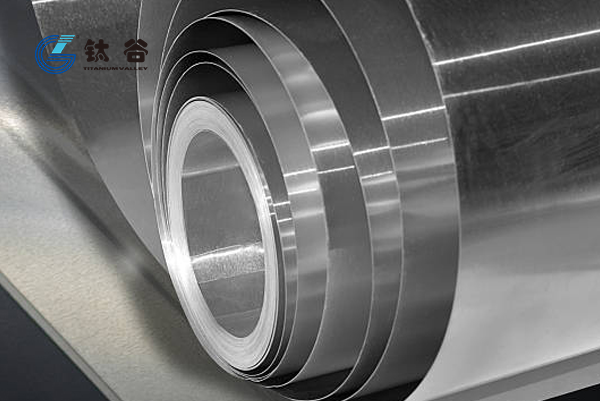
Zr702 zirconium foil plays a critical role in ensuring reactor safety in chemical manufacturing, where operational integrity directly impacts personnel safety, equipment durability, and continuous production stability. This commercially pure zirconium material, compliant with ASTM B551 Grade Zr702 and containing ≥99.2% zirconium plus hafnium, delivers exceptional corrosion resistance and long-term dimensional stability in highly aggressive media such as hydrochloric acid, dilute sulfuric acid, and organic acids. It maintains an extremely low corrosion rate in non-oxidizing acid environments, where conventional titanium and stainless steel are more vulnerable to degradation. By effectively preventing equipment perforation and fluid leakage, Zr702 zirconium foil significantly reduces operational risks in chemical reactors. Manufactured with precise thickness control from 0.02 mm to 0.8 mm and excellent formability, it is widely used in sealing gaskets, lining systems, and other critical protective components, providing durable and reliable material protection throughout long-term chemical processing operations.
1. Corrosion-Related Safety Hazards Faced by Chemical Reactors
1.1 Rapid Equipment Degradation Triggered by Strong Acid Media
Chemical reactors operate under prolonged exposure to highly corrosive media such as hydrochloric acid, sulfuric acid, and mixed acid blends. Conventional metallic materials suffer severe uniform or localized corrosion under these conditions, with corrosion rates reaching several millimeters per year. Stainless steel readily develops pitting and crevice corrosion in acidic environments containing chloride ions, leading to rapid through-wall perforation. While titanium performs well in oxidizing media, its passive oxide film readily breaks down in reducing non-oxidizing acids, resulting in sharply accelerated corrosion and premature component failure in media such as hydrochloric acid. Material limitations of conventional alloys drive frequent equipment maintenance and elevated risks of unplanned production shutdowns.
1.2 Synergistic Degradation from Elevated Temperature and Corrosion
Numerous chemical reactions require high-temperature operating conditions, which drastically accelerate corrosion kinetics. Traditional corrosion-resistant alloys may deliver acceptable performance at ambient temperatures, yet their corrosion rates rise exponentially at operating temperatures between 100 °C and 300 °C. High temperatures induce microstructural alterations in base metals while simultaneously degrading mechanical properties and corrosion resistance. This combined thermal and corrosive loading imposes stringent performance requirements on reactor structural materials.
1.3 Vulnerabilities of Sealing Assemblies
Sealing systems represent critical safety barriers within reactors, including flange gaskets, sight window seals, and agitator shaft packing. These components must withstand direct exposure to corrosive media while maintaining consistent sealing integrity. Conventional sealing materials degrade, deform, or erode rapidly in aggressive chemical environments, causing fluid leakage. Minor leaks trigger raw material loss and may escalate into catastrophic safety incidents and environmental contamination. Seal degradation is a leading root cause of reactor safety failures.
2. Core Safety Performance Advantages of Zr702 Zirconium Foil
2.1 Exceptional Corrosion Resistance in Strong Acid Environments
Zr702 zirconium foil demonstrates near-inert corrosion resistance in hydrochloric acid, with annual corrosion rates controlled below 0.1 mm/year even in boiling hydrochloric acid environments. This superior performance stems from the rapid formation of a dense ZrO₂ passive film across zirconium surfaces, which exhibits exceptional chemical stability in non-oxidizing strong acids and self-repairs upon mechanical damage. Zr702 also maintains outstanding corrosion resistance in dilute sulfuric acid, acetic acid, formic acid, and mixed acid systems, outperforming titanium alloys and premium stainless steel grades by significant margins.
2.2 Resistance to Pitting and Crevice Corrosion
Pitting and crevice corrosion are the primary mechanisms behind sudden, unforeseen reactor leaks, characterized by hidden propagation and severe structural damage. Zr702 zirconium foil possesses inherent resistance to both forms of localized corrosion. The uniform, stable surface oxide film prevents chloride ions and other aggressive species from accumulating at localized sites to breach the passive layer. Stainless steel grades develop penetrating pitting within weeks under chloride-containing acidic service conditions, while Zr702 remains structurally sound for multiple years or decades of continuous operation.
2.3 High-Temperature Stability and Long-Term Service Reliability
Zr702 zirconium foil has a melting point of 1852 °C, retaining consistent microstructural and mechanical properties across standard reactor operating temperatures below 300 °C. Test data confirms that after 1,000 hours of continuous exposure at 300 °C, annealed Zr702 maintains tensile strength above 380 MPa with negligible elongation loss. Long-duration high-temperature exposure does not induce abnormal grain growth or phase transformation, preserving ductility and fracture toughness. This thermal stability prevents seal failure induced by cyclic thermal loading and material property degradation. Vacuum annealing or inert atmosphere annealing further optimizes internal microstructure, eliminates stress concentration sites, and extends fatigue service life.
3. Zr702 Zirconium Foil Applications in Critical Reactor Components
3.1 Sealing Gaskets and Flange Joint Assemblies
Flange joints constitute the most common and safety-critical sealing interfaces within reactors. Leveraging excellent ductility and elastic recovery, Zr702 zirconium foil can be fabricated into custom-sized sealing gaskets. Gaskets manufactured from 0.1 mm to 0.5 mm Zr702 conform to microscale surface irregularities on flange faces under clamping loads, forming robust leak-tight sealing interfaces. These gaskets retain reliable sealing performance over extended service under combined high-temperature, high-pressure, and corrosive media exposure without fluid permeation. Field data from chemical processing facilities confirms Zr702 gaskets deliver 3 to 5 times longer service life compared to graphite and PTFE gaskets.
Table 1 Comparison of Temperature Resistance, Corrosion Performance, and Service Life Across Sealing Materials
| Sealing Material | Temperature Range (°C) | Hydrochloric Acid Corrosion Resistance | Service Life (Years) | Maintenance Frequency |
|---|---|---|---|---|
| Graphite Gasket | ≤ 550 | Moderate | 1–2 | Frequent |
| PTFE Gasket | ≤ 260 | Good | 2–3 | Periodic |
| 316L Stainless Steel | ≤ 600 | Poor | 0.5–1 | Very Frequent |
| Zr702 Zirconium Foil | ≤ 300 | Excellent | 5–10 | Rare |
3.2 Reactor Liners and Protective Cladding
Reactor vessel interiors directly exposed to corrosive media experience the most severe material degradation. Zr702 zirconium foil applied as internal liners or protective cladding acts as a barrier isolating corrosive fluids from carbon steel or stainless steel base substrates. Liners ranging from 0.3 mm to 0.8 mm thick are bonded to structural substrates via spot welding, gas tungsten arc welding (GTAW/TIG), or mechanical fastening. This composite design combines zirconium’s corrosion resistance with the structural strength of base metals, balancing cost efficiency and operational reliability. Such composite lining systems are widely deployed in chlor-alkali and pharmaceutical reaction vessels.
3.3 Sight Windows and Instrument Port Seals
Sight glasses, thermowell penetrations, pressure gauge ports, and other instrumentation connections require leak-tight sealing without compromising measurement or visual inspection functionality. Zr702 zirconium foil can be formed into custom contoured sealing components compatible with diverse port geometries. Its non-magnetic property eliminates signal interference with electromagnetic precision instrumentation. Ultra-thin Zr702 foil (0.02 mm to 0.05 mm) is also manufactured as sensing diaphragms for pressure transmitters, enabling stable long-term pressure measurement in corrosive process fluids.
4. Precision Manufacturing and Quality Assurance for Zr702 Zirconium Foil
4.1 20-High Mill Precision Rolling Enables Stable Ultra-Thin Mass Production
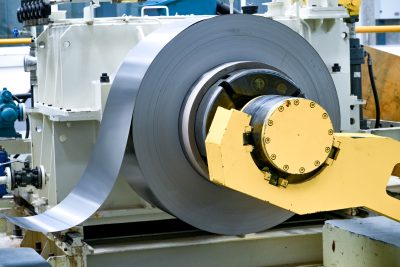
Manufacturing high-performance Zr702 zirconium foil presents strict technical challenges regarding thickness tolerance, surface finish, and microstructural uniformity, which demand precision processing equipment. Equipped with a 750 mm wide 20-high precision cold rolling mill, production lines maintain thickness tolerances of ±0.001 mm. A multi-pass cold rolling schedule interspersed with intermediate annealing preserves dimensional accuracy while restoring ductility lost during work hardening. Precision manufacturing ensures consistent mechanical and corrosion performance across all foil coils.
Table 2 Core Zr702 Zirconium Foil Manufacturing Parameters and Corresponding Safety Benefits
| Manufacturing Parameter | Technical Specification | Safety Contribution |
|---|---|---|
| Thickness Tolerance | ± 0.001 mm | Uniform stress distribution across sealing components, eliminating stress concentration points |
| Width Range | 350–670 mm | Reduced weld count, minimizing potential leakage pathways |
| Surface Dyne Level | 44 dyn/cm | Enhanced adhesion and sealing integrity for bonded assemblies |
| Annealing Temperature Control | ± 2 °C | Consistent microstructure and uniform mechanical performance coil-to-coil |
| Oxygen Content | ≤ 0.16 wt% | Preserved high ductility and resistance to cracking under forming and service loads |
4.2 Vacuum Annealing and Controlled Surface Cleanliness
Zirconium is highly susceptible to oxygen and hydrogen pickup at elevated temperatures, which causes embrittlement. Conventional air-atmosphere annealing generates excessive surface oxidation, inconsistent surface appearance, and degraded forming and corrosion performance. Vacuum or inert gas shielded annealing eliminates oxidation and maintains uniform surface finish. Continuous annealing furnaces regulate temperature uniformity within ±2 °C to guarantee consistent microstructure across full coil lengths. Post-annealing Zr702 achieves minimum tensile strength of 380 MPa and minimum elongation of 20%, delivering superior stamping and bend formability. A combined cleaning process utilizing 40 kHz ultrasonic treatment for 5 minutes and 60 °C alkaline washing with 10 wt% NaOH solution removes surface oils and particulate contaminants, meeting stringent surface purity requirements for high-purity chemical and pharmaceutical manufacturing applications.+
4.3 Full-Lifecycle Quality Inspection Framework
Comprehensive quality control is enforced at every production stage from raw material receipt to finished product shipment. Chemical composition verification is performed via optical emission spectroscopy and ICP analysis to confirm Zr+Hf ≥99.2% while limiting impurity elements including Fe, Cr, O, N, and C to ASTM B551 specification limits. Laser thickness gauges and inline dimensional monitoring continuously track strip thickness and width, with full dimensional distribution records archived for each coil. Standard tensile testing procedures characterize tensile strength, yield strength, and elongation for mechanical property validation. Visual and microscopic surface inspections screen for defects including porosity, cracking, and non-metallic inclusions. Material test certificates and full inspection reports accompany every production batch to enable complete traceability.
5. Safety and Economic Benefits of Specifying Zr702 Zirconium Foil
5.1 Substantial Reduction in Safety Incident Probability
Field data from a two-year reactor lining retrofit project at a pharmaceutical manufacturing facility confirms that replacing conventional materials with Zr702 zirconium foil reduces reactor leakage risk by 80%. Seal service life extends from 1–2 years to 5–10 years, drastically cutting unplanned leak events originating from degraded sealing components. Internal lining applications eliminate the risk of through-wall vessel corrosion perforation, maintaining equipment structural integrity even under extreme operating conditions. This material-level safety barrier is critical for reactors processing highly toxic, flammable, and explosive media, delivering robust protection for plant personnel and surrounding environments.
5.2 Lower Maintenance Expenses and Minimized Production Downtime
Unplanned reactor shutdowns incur significant economic losses. Frequent seal replacement and corrosion repair generate direct material and labor costs while disrupting continuous production workflows. The extended service life of Zr702 zirconium foil stretches maintenance intervals from 3–4 annual service events to one overhaul every 2–3 years. Reduced downtime improves equipment utilization and stabilizes product supply chains. For continuous chemical processing plants, capital investment in Zr702 foil typically delivers full cost recovery within 1–2 years of operation.
5.3 Compliance with High-Purity Process and Environmental Standards
Pharmaceutical and electronic chemical manufacturing enforce strict product purity requirements, where trace metal ion leaching compromises final product quality. Zr702 zirconium foil exhibits extremely low dissolution rates in process media, eliminating metallic contamination of finished products. Its non-magnetic characteristic prevents interference with precision electromagnetic instrumentation. Amid increasingly stringent environmental regulatory frameworks, minimizing fluid leakage mitigates environmental contamination risks. Zr702 zirconium foil enables facilities to meet strict discharge standards, avoiding financial penalties and reputational damage associated with spill incidents. Long-term stable service aligns with sustainable manufacturing and green chemical industry operational objectives.
Conclusion
With exceptional resistance to strong acid corrosion and reliable high-temperature performance, Zr702 zirconium foil serves as a core protective material for chemical reactor safety. Supported by 20-high precision cold rolling, vacuum annealing processing, and comprehensive quality control protocols, the material delivers consistent, predictable performance. Implementation of Zr702 zirconium foil drastically reduces leakage hazards, extends maintenance intervals, and delivers combined safety, economic, and environmental advantages.
FAQ
Q1: How significant is the corrosion resistance advantage of Zr702 zirconium foil over titanium alloys in hydrochloric acid environments?
Titanium alloys maintain low corrosion rates in dilute hydrochloric acid at ambient temperature, yet exhibit pronounced corrosion at concentrations exceeding 5% or in media containing oxidizing ions. In contrast, Zr702 maintains annual corrosion rates below 0.1 mm/year under identical conditions. Under extreme service conditions such as boiling hydrochloric acid, Zr702 represents one of the few metallic materials capable of long-duration stable operation, with service life exceeding titanium alloys by a factor of 10 or greater.
Q2: What reactor applications correspond to each thickness range of 0.02–0.8 mm Zr702 zirconium foil?
Ultra-thin foil (0.02–0.1 mm) is designated for precision components including pressure-sensing diaphragms. Medium-thickness foil (0.1–0.3 mm) is used for sealing gaskets and flexible expansion joints. Thicker foil (0.3–0.8 mm) is specified for vessel liners and load-bearing structural protective layers. Final thickness selection requires comprehensive evaluation of sealing pressure, media corrosivity, and structural load requirements.
Q3: What is the weldability of Zr702 zirconium foil, and does it satisfy reactor fabrication requirements?
Zr702 exhibits excellent weldability, compatible with gas tungsten arc welding (GTAW/TIG) and resistance spot welding processes. Welding operations require full high-purity argon shielding to prevent embrittlement from weld zone oxidation. Post-weld thermal treatment restores corrosion resistance matching base metal performance. For lining assemblies, rigorous weld quality control is essential to guarantee uniform protective barrier performance across the entire vessel interior.
Contact Us
Baoji Titanium Valley Titanium Nickel Zirconium Material Processing Co., Ltd. is a leading Chinese manufacturer and supplier of Zr702 zirconium foil with an annual production capacity of 3,000 metric tons, supplying high-grade zirconium products to chemical, pharmaceutical, electronics, and other industrial sectors worldwide. Our engineering team develops custom material solutions tailored to unique process operating conditions. For inquiries, contact sales@titaniumvalleys.com
References
1.Wang J G, Li M H. Applications and Development of Zirconium and Zirconium Alloys in Chemical Industry[J]. Rare Metal Materials and Engineering, 2021, 50(3): 1125-1132.
2.Liu M, Wang X D. Research on Corrosion Resistance of Zirconium Alloys in Chemical Equipment[J]. Materials Protection, 2019, 52(6): 45-50.
3.Zhang W, Liu Q. Research on Ultra-Thin Zirconium Foil Fabrication Technology and Its Application in Sealing Systems[J]. The Chinese Journal of Nonferrous Metals, 2022, 32(8): 2456-2468.
4.Li H. Safety Assessment and Industrial Application of Zirconium Materials in Chemical Reactors[J]. Corrosion Science and Protection Technology, 2020, 32(4): 389-396.