
Why Is Gr2 Titanium Rod Preferred for Corrosion Resistance and Lightweight Precision Manufacturing?
- Gr2 Titanium Rod
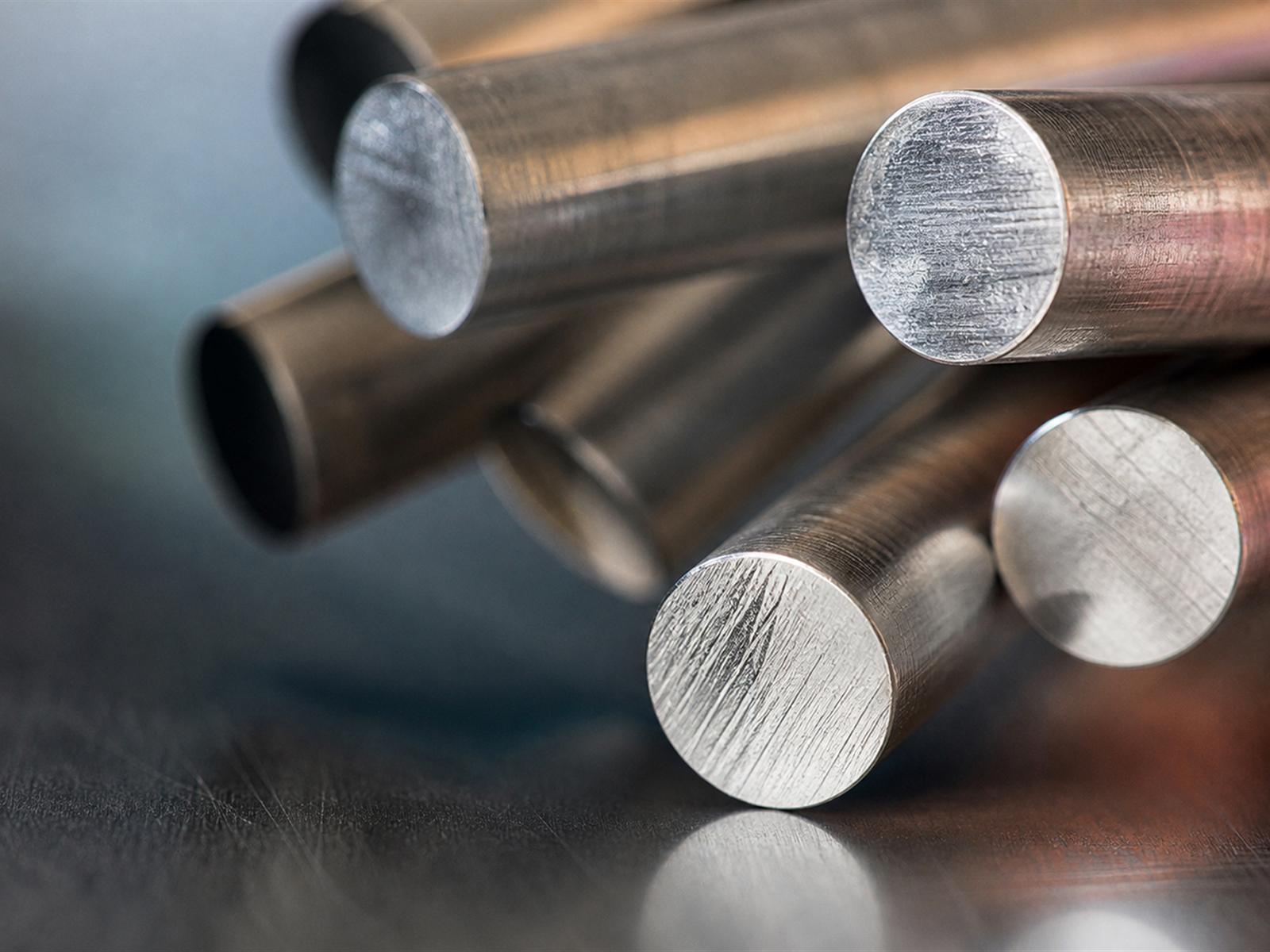
In the context of global industrial upgrading and high-end manufacturing transformation, material selection directly affects equipment performance and life cycle costs. As the most widely used commercial pure titanium material, Gr2 Titanium Rod has become the preferred material in chemical industry, marine engineering, medical equipment and other fields with its excellent corrosion resistance, good processing performance and moderate mechanical strength. Compared with Gr1, the tensile strength of Gr2 Titanium Rods is increased by more than 20%, reaching ?340 MPa, while maintaining excellent plasticity and welding properties. This balanced performance combination enables it to handle moderate load conditions while meeting stringent corrosion resistance requirements. The Gr2 Titanium Rods produced by Baoji Titanium Valley adopt vacuum melting, multi-pass forging and precision heat treatment processes, and are equipped with Italian Danieli rolling production lines. The annual production capacity exceeds 20,000 tons (data source: company official website). The products comply with ASTM B348 and AMS 4902 standards, providing stable and reliable material supply for global precision manufacturing customers.
1. Why Gr2 titanium rod has become a common material standard in the industrial field
(1) Industrial significance of material composition and purity control
The core competitiveness of Gr2 Titanium Rods comes from its precise composition control system. The titanium content ?99.2% ensures the purity of the matrix, while controlling the oxygen content within the range of 0.15~0.25% is the key to strength control. As a gap strengthening element, oxygen increases the tensile strength by approximately 70 to 100 MPa for every 0.1% increase in oxygen content. This balanced design of “purity and strength” enables Gr2 Titanium Rods to avoid the problem of insufficient strength of Gr1 while maintaining good plasticity and welding properties.
(2) Practical application value of mechanical performance parameters
This set of data reveals the unique positioning of Gr2 Titanium Rods: Although the absolute strength is lower than stainless steel, the yield strength advantage is obvious. With a density of only 57% of stainless steel, the overall performance significantly exceeds traditional materials in weight-sensitive applications such as aerospace and medical equipment.
(3) Compliance guarantee of global standard certification system
The UNS number R50400 corresponding to Gr2 Titanium Rod has become a common identifier for international trade. The American ASTM B348 standard specifies the chemical composition, mechanical properties and dimensional tolerance requirements of rods, while AMS 4902 adds grain size and ultrasonic testing specifications for aerospace applications. The EN standard followed by the European market is highly compatible with the ASTM system, while the two types of pure titanium in the Japanese JIS standard correspond to the performance category of Gr2. This multi-standard mutual recognition mechanism allows Gr2 Titanium Rods to enter the global high-end manufacturing supply chain without any barriers.
2. How can Gr2 Titanium Rods replace traditional materials and reduce the total cost of the enterprise?
(1) Full life cycle economic account of corrosion resistance
In a seawater environment, the pitting corrosion potential of 316L stainless steel is about +200mV (SCE), while the Gr2 Titanium Rod can reach more than +600mV, which means that titanium has higher thermodynamic stability in media containing chloride ions. Actual data from seawater desalination projects show that the average service life of stainless steel heat exchangers is 5 to 7 years, while Gr2 Titanium Rod heat exchangers can operate stably for 15 to 20 years. Although the initial investment increases by 30%, the annual use cost is only 40% of that of stainless steel.
(2) Systemic benefits brought by lightweight design
The “weight reduction dividend” calculation model in the aerospace field shows that for every 1 kilogram of structural weight reduction, approximately $500 to $1,000 in fuel costs can be saved (calculated based on a 20-year flight cycle). A Boeing 787 uses about 15% titanium alloy structural parts, of which Gr2 Titanium Rods are mainly used for non-load-bearing parts such as hydraulic systems and environmental control pipelines. Although the cost increases compared with aluminum alloys, the overall value brought by the weight reduction effect and corrosion resistance is significant.
(3) Processing performance advantages shorten production cycle
The elongation of Gr2 Titanium Rod is ?20%, and its cold forming performance is better than that of most titanium alloys. In the processing of precision parts in the electronics industry, the processing time of a single piece is shortened by 15~20%. With appropriate annealing treatment, components with complex shapes can be formed in one step, avoiding the loss of precision and increase in cost caused by multi-pass processing.
3. Application scenarios and selection logic of Gr2 Titanium Rods of different specifications
(1) Precision processing advantages of small diameter cold drawn polishing rods
Cold-drawn and polished Gr2 Titanium Rods of ?4~?30 mm have a surface roughness of up to Ra0.4~0.8 ?m through multi-pass cold drawing and surface grinding processes, and the dimensional tolerance is controlled within h9 level. This type of specifications mainly serves:
Medical implant processing: Orthopedic screws and dental implants require extremely high surface quality and dimensional consistency. The biocompatibility of Gr2 Titanium Rods has been certified by ISO 10993. It does not release harmful metal ions and can form a stable osseointegration interface with bone tissue after implantation in the human body. Testing data from a German medical device manufacturer shows that the bacterial adhesion rate on the surface of implants processed using cold-drawn and polished Gr2 Titanium Rods is 40% lower than that of ordinary machined parts.
Precision shaft parts of electronic components: vibration motor shafts of smartphones and rotating shaft structures of laptops require materials that simultaneously meet lightweight, corrosion-resistant and non-magnetic requirements. With a relative magnetic permeability of only 1.0008, it will not produce magnetic interference when used around magnetic resonance imaging (MRI) equipment and precision sensors.
(2) General industrial applications of medium diameter hot rolled rods
Hot-rolled annealed Gr2 Titanium Rods with ?30~?100 mm are the specifications with the largest market demand, accounting for more than 60% of the overall market share. The material characteristics of this type of specifications are:
Chemical equipment parts manufacturing: Mixing shafts, pump body flanges, valve stems and other components need to withstand the double test of moderate mechanical loads and strong corrosive media. The electrolytic cell anode hanger made of Gr2 Titanium Rods in the chlor-alkali plant has no obvious corrosion in the acidic electrolyte with pH ? 2 for 5 years, while the nickel-based alloy hanger needs to be replaced in 18 months under the same working conditions.
Marine engineering fasteners and connectors: pipeline connections for seawater desalination devices and offshore drilling platforms. Traditional stainless steel bolts are prone to stress corrosion cracking. Fasteners processed with Gr2 Titanium Rods have a corrosion depth of
(3) Customized heavy-duty applications of large diameter forged rods
Large-sized forged Gr2 Titanium Rods of ?100~?300 mm are mainly produced through customer customization. The forging process ensures the compactness and isotropy of the internal structure and is suitable for:
Large chemical reactor components: large structural parts such as reactor stirrers and tower internals, the weight of a single piece can reach hundreds of kilograms. The terephthalic acid (PTA) production unit of a petrochemical enterprise uses hydrogenation reactor internals made of Gr2 Titanium Rod forgings and has been operating stably for 12 years in a hydrogen environment of 200?C and 6 MPa. During this period, only routine cleaning and maintenance were performed.
Seawater desalination high-pressure pump shaft: The high-pressure pump of the reverse osmosis seawater desalination system needs to withstand 6~8 MPa pressure and high-flow seawater erosion. The pump shaft forged from large-diameter Gr2 Titanium Rods has an internal defect rate of less than 0.5% after ultrasonic flaw detection. With precision turning processing, the shaft diameter runout is controlled within 0.02 mm, ensuring efficient and stable operation of the pump unit.
4. How does modern production technology ensure the stable quality of Gr2 Titanium Rods?
(1) Purification control of vacuum melting technology
Titanium has extremely high chemical activity and can easily absorb interstitial elements such as oxygen, nitrogen, and hydrogen during the smelting process, causing the material to embrittle. The vacuum consumable electric arc furnace (VAR) smelting process used by Baoji Titanium Valley ensures stable composition through the following technologies:
Multiple remelting and purification: High-purity titanium sponge is used as raw material and undergoes at least two vacuum remeltings. Samples are taken and analyzed after each melting to ensure that the oxygen content fluctuation range is <0.02%. The vacuum degree of the smelting chamber is maintained below 1?10?? Pa, effectively blocking atmospheric pollution.
Continuous monitoring system: Real-time collection of molten pool temperature, arc current, melting speed and other parameters to establish a process database. The machine learning algorithm analyzes historical data, predicts the optimal combination of process parameters, and controls the deviation of the ingot composition within ?30% of the standard range.
(2) Structural optimization of hot working deformation process
Hot rolling and forging are key links in converting ingots into bars. Process parameters directly affect the grain size and mechanical properties of the material:
The Italian Danieli rolling production line is equipped with automatic diameter gauges and infrared temperature measurement systems to achieve closed-loop control of the rolling process. When it detects that the temperature deviates from the set value by ?15?C, the system automatically adjusts the rolling speed and cooling intensity to ensure the structural uniformity of the entire bar.
(3) Performance stabilization by annealing treatment
There are residual stresses and work-hardened structures inside the Gr2 Titanium Rod after hot processing, and annealing treatment is required to restore plasticity and reduce strength fluctuations. The continuous annealing furnace used by Baoji Titanium Valley has the following characteristics:
Atmosphere protected annealing: The furnace is filled with argon gas with a purity of 99.99% to avoid oxidation of the titanium surface at high temperatures. The annealing temperature is controlled at 650 ~ 750 ?, and the holding time is adjusted according to the diameter of the rod (1 hour for every 25 mm thickness) to ensure temperature uniformity of ?5 ?.
Rapid cooling process: After annealing, air cooling or mist cooling is used, and the cooling rate is controlled at 50~100 ?/h to prevent new internal stress due to excessive cooling and avoid performance degradation caused by grain coarsening.
(4) Surface treatment and size finishing technology
The surface quality of the rod directly affects subsequent processing efficiency and end product performance:
Pickling and descaling: Use HF-HNO? mixed acid solution to remove surface oxide scale. The pickling depth is controlled at 0.1~0.3 mm to ensure surface cleanliness and avoid excessive diameter reduction. The surface roughness after pickling is Ra?3.2 ?m, which meets most machining requirements.
Precision turning and grinding: For high-precision applications, CNC lathes and cylindrical grinders are equipped for finishing. The dimensional tolerance after turning can reach h7~h9 level, the grinding process is further improved to h6 level, and the surface roughness is better than Ra0.8 ?m.
Ultrasonic flaw detection: The pulse reflection method is used to conduct 100% ultrasonic testing on the entire length. The detection sensitivity reaches the equivalent of a ?1 mm flat-bottomed hole to ensure that there are no internal defects such as cracks, shrinkage holes, inclusions, etc., and the pass rate is ?99.5%.
5. Five key evaluation dimensions for selecting reliable suppliers
(1) Production scale and technical equipment level
Titanium processing companies with an annual production capacity of more than 10,000 tons usually have a complete industrial chain and stable quality control capabilities. Baoji Titanium Valley invested 521 million yuan (approximately $68.2M) (data source: company annual report) to build a titanium-nickel-zirconium precision processing production line, including:
3 vacuum melting production lines, with a single heat melting capacity of 6 tons and an annual production of 25,000 tons of ingots
Danieli 20-roll rolling production line in Italy, rolling speed 0.5-3m/s, annual output of 20,000 tons of bars (data source: company official website)
5 continuous annealing furnaces with a daily processing capacity of 80 tons, achieving 24-hour continuous production
This large-scale production capability not only ensures the stability of the delivery cycle (7 to 15 days for regular specifications), but more importantly, dilutes fixed costs through mass production, improving price competitiveness by 10-15%.
(2) International certification of quality management systems
ISO 9001 quality management system is the basic threshold, and high-end customers pay more attention to industry-specific certifications:
Aerospace certification: AS9100D certification requires the establishment of strict process control and traceability systems. The entire process data of each batch of materials from smelting to finished products (including raw material batch numbers, smelting parameters, forging and rolling temperatures, annealing curves, and test reports) are permanently archived with a retention period of ?15 years.
Medical device certification: The ISO 13485 system emphasizes the biological safety and batch stability of materials. Baoji Titanium Valley’s medical-grade Gr2 Titanium Rods have additionally undergone cytotoxicity tests, sensitization tests and implantation tests, and the test reports can be traced to third-party authoritative testing agencies.
Pressure equipment certification: The EU PED directive and the US ASME certification require material suppliers to provide a complete material quality certificate (MTC 3.1 or 3.2), including chemical composition, mechanical properties, non-destructive testing results and heat treatment process parameters.
(3) Technical services and customized development capabilities
Excellent titanium material suppliers not only provide standard products, but also provide material selection suggestions and process optimization solutions based on customer working conditions:
Analysis of application conditions: A Korean battery manufacturer plans to use titanium materials to manufacture electrolytic cell electrodes, and requires the material to be corrosion-resistant in a strong alkaline solution with a pH of 12-14. The Baoji Titanium Valley technical team compared the polarization curves of Gr2 and Gr7 (titanium-palladium alloy) through electrochemical tests, proving that the corrosion current density of Gr2 under this working condition is only 0.5 ?A/cm?, and its cost performance is far better than that of titanium-palladium alloy, helping customers save 40% of material costs.
Customization of non-standard specifications: A Japanese precision instrument manufacturer requires an extra-long cold-drawn rod of ?6.5 mm ? 3500 mm, which cannot be met by market standard products. Baoji Titanium Valley adjusted the cold drawing mold and annealing process to achieve stable supply of this specification. The straightness is controlled at ?1.5 mm/m, meeting the customer’s automated assembly requirements.
(4) Supply chain response speed and inventory management
In the context of globalized supply chains, delivery cycle and inventory flexibility have become key competitive factors:
Strategic inventory layout: Baoji Titanium Valley maintains 3,000 tons of regular specification finished product inventory at its Baoji headquarters, covering a total of 50 specifications from ?8 to ?100 mm, and can achieve 72-hour delivery. For major markets such as the United States, Germany, and Japan, we have established a VMI (Vendor Managed Inventory) cooperation model with local dealers to shorten customer order response time to 5 working days.
Flexible production scheduling: MES (Manufacturing Execution System) is used to monitor production progress in real time. Emergency orders can be inserted without affecting regular production, and the delivery cycle can be compressed by 30% through night shift processing and priority scheduling mechanisms.
(5) Price competitiveness and long-term cooperation stability
The price of titanium materials is greatly affected by the fluctuation in the cost of raw material titanium sponge. Between 2020 and 2023, the price of titanium sponge rose from 70,000 yuan/ton to 120,000 yuan/ton, causing the price of Gr2 Titanium Rods to fluctuate by 30%. Stable supplier relationships require:
Price locking mechanism: For long-term customers with annual purchasing volume >10 tons, Baoji Titanium Valley provides quarterly or semi-annual price locking contracts to resist the risk of short-term fluctuations in raw material prices. During the skyrocketing price of titanium sponge in 2022, the supply price of contracted customers will only increase by 5%, which is far lower than the increase in the spot market.
Technology upgrading and cost reduction: Continuously reduce production costs through process optimization. The continuous annealing production line that will be put into operation in 2023 will reduce annealing energy consumption by 25%, indirectly reducing product costs, creating value for customers while maintaining the company’s profitability.
Conclusion
As a representative material of commercial pure titanium, Gr2 Titanium Rod has become an indispensable key material in modern industry with its balanced performance combination and wide application adaptability. From chemical anti-corrosion to medical implants, from marine engineering to precision electronics, Gr2 Titanium Rods continue to provide reliable material support for the global manufacturing industry. Choosing suppliers with advanced production equipment, perfect quality systems and quick response capabilities is the key to ensuring project success and reducing total costs.
FAQ
Q1: What are the differences in application between Gr2 Titanium Rods and Gr1 and Gr5 titanium alloys?
Gr1 has higher purity but lower strength (?240 MPa), which is suitable for extremely corrosion-resistant but low-load scenarios; Gr2 has a 20% increase in strength (?340 MPa) and maintains good plasticity, making it a universal choice with the best cost performance; Gr5 titanium alloy has a strength of 895 MPa and is used for high-load aerospace components, but the price is 2-3 times that of Gr2 and its welding performance is poor.
Q2: How to verify the material authenticity and quality compliance of Gr2 Titanium Rods?
Suppliers are required to provide MTC 3.1 material certificates (including chemical composition spectrum analysis, tensile test data, and ultrasonic flaw detection reports); use portable alloy analyzers to detect titanium content and major impurity elements on-site; send samples to third-party testing agencies for full performance verification; check the original ISO certification and industry-specific qualification certificates of suppliers.
Q3: How to choose between cold drawn polished rods and hot rolled annealed rods in practical applications?
Cold-drawn polished rods have high surface quality (Ra ? 0.8 ?m) and strict dimensional accuracy (h9 level), and are suitable for direct machining of precision parts, but the price is 15-20% higher than hot-rolled rods; hot-rolled annealed rods have uniform structure and lower cost, and are suitable for general scenarios that require secondary processing or do not have strict surface requirements. If the parts require deep processing (such as cold heading, drawing), hot rolling and annealing are preferred to obtain the best plasticity.
Get a professional Gr2 Titanium Rod supply solution now
Baoji Baoji Titanium Valley Titanium Nickel Zirconium Material Processing Co., Ltd. As China’s leading titanium manufacturer and supplier, our Italian Danieli production line has an annual output of 20,000 tons of high-quality Gr2 Titanium Rods, and our products have passed international certifications such as ASTM B348, ISO 9001, and AS9100D. Whether you need small batch customization or large-scale stable supply, our technical team is ready to provide you with professional material selection and process optimization suggestions. Contact us: sales@titaniumvalleys.com to obtain detailed product specifications and competitive quotations.
References
Zhao Yongqing, Wu Zhengping, Qu Hennglei. Titanium alloys and titanium-based composite materials[M]. Changsha: Central South University Press, 2018.
Li Xianjun, Wang Hao. Corrosion and protection of titanium[M]. Beijing: Chemical Industry Press, 2020.
Zhang Lei, Li Jinshan. Titanium alloy material processing technology[M]. Beijing: Science Press, 2019.
Wang Jinyou, Ma Jimin. Titanium alloys for aviation[M]. Beijing: National Defense Industry Press, 2017.