
Why Is Gr2 Titanium Rod a Cost-Effective Corrosion-Resistant Material for Industrial Applications?
- Gr2 Titanium Rod
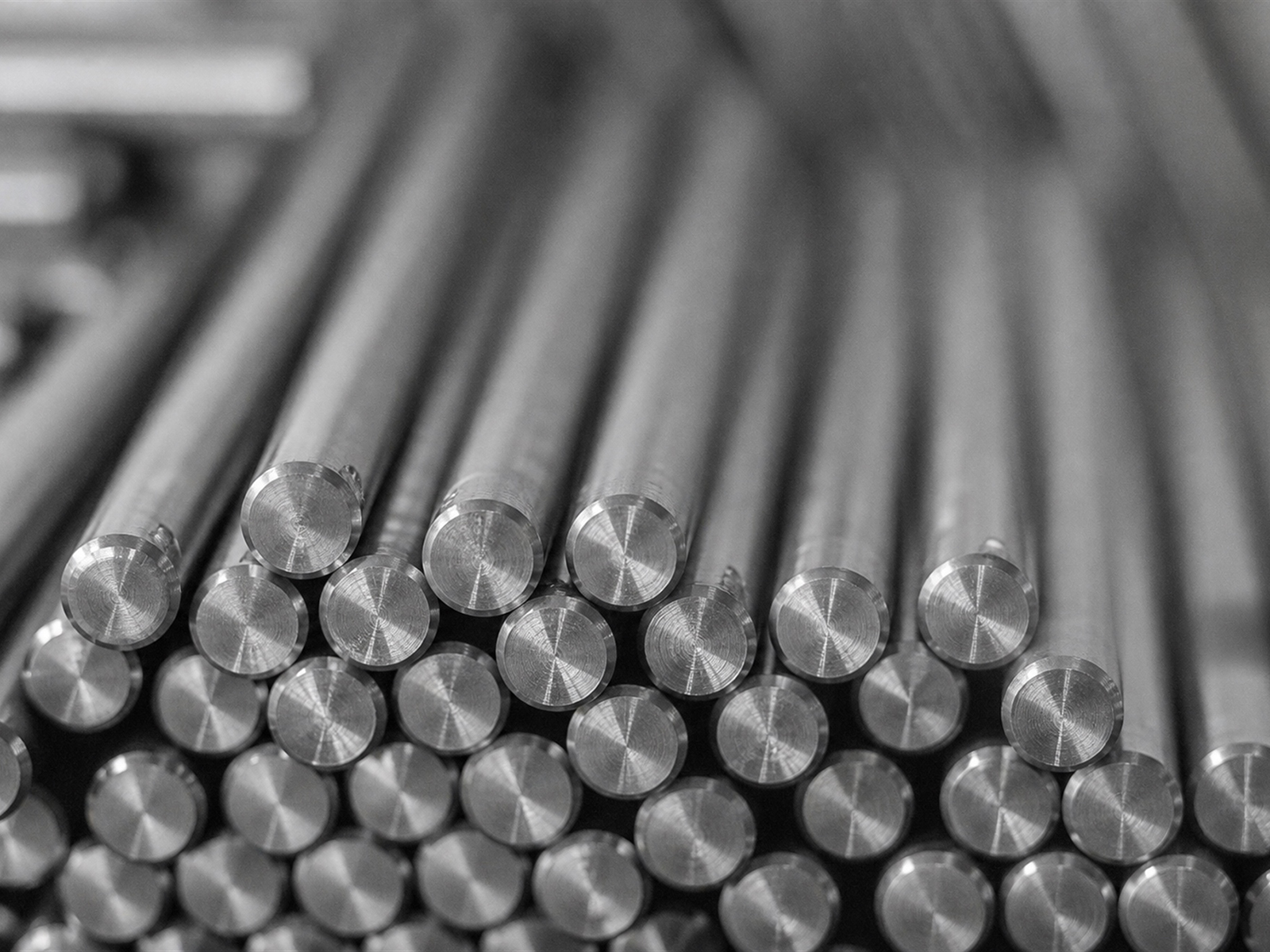
Gr2 Titanium Rod is the most widely used grade among commercial pure titanium. With its perfect balance of purity and strength, it has become the material of choice in chemical industry, marine engineering, medical equipment and other fields. The titanium content of this grade (UNS R50400) is ?99.2%, and the tensile strength is ?345 MPa, which is more than 20% higher than Gr1, but it maintains excellent processing performance. In complex media such as seawater, dilute acids and alkalis, and chlorides, the dense oxide film formed on the surface of the Gr2 Titanium Rod can provide a corrosion resistance life that is 3 to 5 times that of 304 stainless steel (comparison conditions: pH=7, 25 ?, 3.5% NaCl solution). The density is only 4.51 g/cm?, which is about 57% of the weight of stainless steel, making the overall weight reduction of the equipment significant. Gr2 Titanium Rods made through vacuum melting, multi-directional forging, precision annealing and other processes have uniform internal structure and high dimensional accuracy, and are widely used in high-demand application scenarios such as precision machining, electrolysis electrodes, and heat exchange equipment.
1. Material characteristics and technical advantages of Gr2 titanium rods
(1) Purity control and mechanical property balance
Gr2 Titanium Rod achieves strength improvement by precisely controlling the oxygen content (?0.25%), and the titanium purity remains above 99.2%. This composition design allows the material to maintain good plasticity while achieving a tensile strength of 345~550 MPa, a yield strength of ?275 MPa, and an elongation of more than 20%. Compared with Gr1 pure titanium, Gr2 is less likely to deform when subjected to moderate loads and is suitable for more structural applications. Strict control of interstitial elements such as nitrogen, carbon, and hydrogen (N?0.03%, C?0.08%, H?0.015%) ensures that the material will not crack due to embrittlement during welding and cold working, and reserves sufficient process windows for subsequent deep processing.
(2) Self-healing and corrosion-resistant mechanism of surface oxide film
A dense TiO? passivation film with a thickness of 2~5nm is formed on the surface of the Gr2 Titanium Rod in a natural state. This oxide film has the ability to self-repair. When the surface layer is slightly scratched or partially damaged, the exposed fresh titanium matrix will be quickly re-passivated in the presence of oxygen or moisture. This dynamic protection mechanism enables Gr2 Titanium Rods to resist continuous erosion from seawater, 10% sulfuric acid, 30% nitric acid and other media. In a salt spray environment with a chloride ion concentration as high as 20,000 ppm, the corrosion rate is less than 0.005 mm/year, which is much better than the 0.02~0.05 mm/year of 316L stainless steel. The stability of the oxide film is not affected within the pH range of 2 to 12, allowing the material to adapt to a variety of acidic, alkaline, and neutral working conditions at the same time.
(3) Processing adaptability and forming process compatibility
Gr2 Titanium Rods have good plastic deformation ability in the cold working state and can be processed into precision rods (tolerances up to ?0.03 mm).. The annealed material has excellent bending properties, with a minimum bending radius of up to 3 times the diameter of the rod, and is suitable for manufacturing complex-shaped pipe fittings and elbow joints. In terms of welding performance, Gr2 Titanium Rods can obtain high-quality welds using conventional welding methods such as TIG and MIG, and the joint strength can be equivalent to that of the base material (nearly 100%). When cutting, it is recommended to use carbide tools. The cutting speed should be controlled at 30-50m/min. A surface finish above Ra1.6 can be obtained to meet the sanitary requirements of medical devices and food equipment.
2. Application scenario adaptation of Gr2 Titanium Rods of different specifications
(1) Precision application of small diameter cold drawn polishing rods (?4~?30 mm)
Small-diameter Gr2 Titanium Rods are mainly produced through the cold drawing process. After multiple passes of drawing, the internal grains of the material are refined, and the surface roughness can reach Ra0.4~0.8 ?m. This type of specification is widely used in bone plate fixation screws for medical implants. The diameter tolerance is controlled within ?0.02 mm, the surface has no scratches or cracks, and the biocompatibility complies with ISO 5832-2 standards. In the electronics industry, Gr2 Titanium Rods are used to make non-magnetic connector shells and shield support columns. The magnetic permeability is
(2) Versatility of medium-diameter conventional rods (?30~?100 mm)
Medium-diameter Gr2 Titanium Rods account for more than 60% of market demand. They are formed by hot rolling or forging and have good dimensional stability after annealing. ?40~?60 mm specifications are commonly used in the processing of heat exchanger tube plates in the chemical industry. After turning, they are welded with titanium tubes to form a tube-and-tube heat exchanger that is resistant to seawater corrosion. In the field of marine engineering, ?50~?80 mm titanium rods are processed into high-pressure pump shafts for seawater desalination devices, which have been continuously operated in 3.5% NaCl solution for more than 5 years without obvious wear. The electrolysis industry uses ?60~?80 mm rods to manufacture anode hooks and cathode conductive rods. When a current of more than 10,000A passes through the chlor-alkali electrolytic cell, the material resistivity is stable at 55 ???cm and will not fail due to electrochemical corrosion.
(3) Customized requirements for large diameter forged rods (?100~?300 mm)
The large-diameter Gr2 Titanium Rod adopts a multi-directional forging process, and the as-cast structure is eliminated through repeated upsetting and lengthening operations. When the forging ratio reaches more than 5:1, the internal grain size will be uniform without coarse dendrites and segregation. ?For stirring shafts subjected to low to medium torque and high corrosive environments, or the outer layer of the shaft protection using a titanium steel composite structure?can avoid weld weak links. The offshore platform uses ?200~?250 mm titanium rod forgings as key connecting flanges. After ultrasonic flaw detection and no defects, it can maintain structural integrity under the temperature cycle conditions of -40 ? to 80 ?. In the aerospace field, although Gr2 is not used as the main load-bearing material, rods with a diameter of 150 mm or more can be processed into non-load-bearing structural parts and tooling fixtures, and their non-magnetic characteristics can be used to avoid interference with precision testing equipment.
3. Performance of Gr2 Titanium Rods in key industries
(1) Long-term service capability in the field of chemical anti-corrosion
In chemical plants, tower internals (packing support grids, redistributors) made of Gr2 Titanium Rods have a service life of more than 15 years in a mixed acid environment of sulfuric acid and hydrochloric acid. The anode hooks of electrolytic cells in the chlor-alkali industry are made of ?40~?60 mm Gr2 Titanium Rods. Under the working conditions of saturated sodium chloride solution + 70 ? + 5000 A/m? current density, there is no need to replace them within 10 years. When the reaction kettle stirring shaft (?80~?120 mm) in the pharmaceutical industry comes into contact with organic solvents and strong oxidants, the surface passivation film remains stable and metal ions will not be produced to contaminate the pharmaceutical ingredients. The desulfurization and denitrification device uses Gr2 Titanium Rods to manufacture the spray piping system. In the scouring environment of sulfur-containing flue gas + limestone slurry, the corrosion rate is
(2) Harsh environmental adaptability of marine engineering
The multi-effect evaporator of the seawater desalination system uses Gr2 Titanium Rods to manufacture tube sheets and distributors. In high salinity (TDS>45000 ppm) and temperature fluctuation environments, the thermal expansion coefficient (8.6?10??/?) matches well with the overall equipment. The flange connectors of submarine oil pipelines are made of ?100~?150 mm titanium rod forgings. Under the conditions of high pressure (30 MPa) and low temperature (2~4?C) at a water depth of 3000 meters, the impact toughness of the material remains above 40J, and cold brittle fracture will not occur. The cathodic protection system of the offshore platform uses Gr2 Titanium Rods as the auxiliary anode, and uses its low potential characteristics (-0.5V vs SCE) to work with the sacrificial anode to extend the overall anti-corrosion life of the platform.
(3) Biosafety verification of medical devices
Medical Gr2 Titanium Rods (medical grade) need to pass the ISO 10993 series of biological evaluations, and the cytotoxicity test, sensitization test, and implantation test all meet Level 0 standards. Orthopedic implants use ?8~?20 mm titanium rods that are precision processed into intramedullary nails and bone plates, with surface roughness Ra?0.8 ?m to avoid bacterial adhesion. The elastic modulus of titanium rods (102~110 GPa) is close to that of human bones (10~30 GPa). Compared with stainless steel (200 GPa), it can reduce the stress shielding effect and promote osseointegration. The dental implant abutment uses ?4~?6 mm cold-drawn titanium rods. After anodization, a porous TiO? layer is formed on the surface. The osseointegration rate reaches more than 85% after 3 months of implantation. The non-magnetic requirements of surgical instruments make Gr2 Titanium Rods an ideal material for MRI-compatible tools, which will not produce artifact interference in magnetic fields of 1.5T~3.0T.
4. Selection strategy and full life cycle cost analysis of Gr2 Titanium Rods
(1) Material substitution logic for multi-working condition adaptation
When equipment faces multiple requirements of corrosion, lightweight, and non-magnetic properties at the same time, Gr2 Titanium Rods have comprehensive advantages over stainless steel and nickel-based alloys. In chloride ion-enriched environments such as chlor-alkali and soda ash, pitting corrosion and perforation will occur in 316L stainless steel, but the critical pitting temperature (CPT) of Gr2 Titanium Rods is >100?C, which can completely eliminate the risk of local corrosion. If titanium alloy is used instead of carbon steel for offshore platform equipment, although the initial purchase cost will increase by 10 to 15%, anti-corrosion coating maintenance will not be required during the 25-year life cycle, and the overall cost will be reduced by more than 30%. If the non-magnetic bracket in the electronics industry uses aluminum alloy and requires anodizing protection, natural passivation of Gr2 Titanium Rods can meet the requirements and reduce the surface treatment process.
(2) Inventory management and specification standardization benefits
As a general grade, Gr2 Titanium Rods are commonly available in the market with standard specifications such as ?10, ?16, ?20, ?25, ?32, ?40, ?50, and ?60, and the procurement cycle is as short as 3-7 days. By using Gr2 as the main material, the company can reduce the number of titanium inventory SKUs from 15 to 5, increase the inventory turnover rate by 40%, and reduce capital occupation. When designing non-standard equipment, priority is given to standard diameter titanium rods, which are turned and milled into the required shape to avoid the long delivery time (60~90 days) and high mold costs of customized forgings. The cross-industry versatility enhances the purchasing bargaining power of Gr2 Titanium Rods. The price of bulk orders (>5 tons) is 8~12% lower than that of small batches. The annual framework agreement can lock in the purchase price and stabilize the risk of raw material market fluctuations. This standardization strategy is closely connected with the selection logic and effectively reduces the complexity of the entire life cycle procurement by reducing special specifications.
(3) Maintenance cost and failure risk control
Note: The baseline value corresponds to the single cost of a replacement Gr2 Titanium Rod.
After a chemical company used Gr2 Titanium Rods to replace stainless steel mixing shafts, the number of unplanned shutdowns dropped from an average of 3 times to 0.5 times per year. The loss of a single shutdown (output loss + labor cost) was about 150,000 yuan, and the annual cost savings was 375,000 yuan. After the seawater pipeline system uses titanium, there is no need to regularly replace sacrificial anodes (the carbon steel system consumes 3 to 5 anodes per year), and the electricity expense of the cathodic protection power supply (about 2,000 kilowatt hours per year) is also avoided. The Gr2 Titanium Rod parts of food equipment do not require special cleaning agents. They can be washed with ordinary water to meet hygienic standards, reducing the cost of chemical procurement and waste liquid treatment. When the equipment is scrapped, the recycling value of titanium materials is about 60~70% of the original price, while that of stainless steel is only 20~30%. The residual value recycling has obvious advantages.
5. Quality control and supply chain guarantee of Gr2 Titanium Rods
(1) Critical quality nodes of the production process
Vacuum consumable arc melting (VAR) requires at least two remeltings to ensure the uniformity of the titanium ingot composition and the oxygen content deviation is controlled within ?0.02%. The forging process uses 1000?C preheating + multi-directional upsetting, the cumulative deformation reaches more than 70%, and the grain size reaches ASTM grade 7-9. The hot rolling temperature is controlled at 850 ~ 920 ?, and the rolling speed is 1.5 ~ 2.5m/s to avoid surface oxide scale embedding. The annealing process uses a vacuum furnace or protective atmosphere (argon) at a temperature of 650~750 ? ??for 2~4 hours (the specific holding time is adjusted according to the diameter of the rod, 2 h for ?50 mm and below, 3 h for ?50-100 mm, and 4 h for ?100 mm and above). The cooling rate is ?50 ?/h, eliminating internal stress while maintaining moderate hardness (HV 140~180). For pickling, use HF (3~5%) + HNO? (15~25%) mixed solution to remove the oxide layer with a thickness of 0.05~0.1 mm, and the surface will show a uniform silver-gray metallic luster.
(2) Dimensional accuracy and surface quality inspection
The diameter tolerance of Gr2 Titanium Rods after precision turning or grinding can reach level h9~h11 (?0.03~?0.10 mm), the straightness is ?1 mm/m, and the surface roughness Ra0.8~3.2 ?m is optional. Ultrasonic flaw detection is performed in accordance with AMS 2631 standards, and 100% inspection is performed on rods with ??50 mm, and defects with equivalent diameter >?1.5 mm are rejected. Eddy current flaw detection detects surface cracks with a sensitivity of 0.3 mm deep ? 0.05 mm wide. Impurity elements are precisely measured using ICP-OES spectrometer and high-frequency infrared carbon and sulfur meter, and the content of the main element Ti is calculated using the difference subtraction method to ensure that the ingredients are fully compliant., impurity element accuracy ?0.01%. For mechanical property testing, 3 groups of samples are taken from each batch (?5 tons). The tensile test, impact test, and hardness test results must meet the requirements of ASTM B348 standards at the same time, with a pass rate of ?99.5%.
(3) Global supply network and rapid response capabilities
China’s Baoji titanium industry cluster produces more than 20,000 tons of Gr2 Titanium Rods annually, accounting for 40% of global commercial pure titanium production. The stock depth of conventional specifications can meet prompt delivery of more than 500 tons. North America and Europe achieve local delivery within 7-10 days through bonded warehousing (Houston, USA, Frankfurt, Germany), reducing cross-border logistics time. A technical service center has been established in the Asia-Pacific market (Japan, South Korea, and India) to provide value-added services such as material selection, processing guidance, and failure analysis. The response time is
in conclusion
Gr2 Titanium Rod has become the most widely used titanium grade in the industrial field through the optimized balance of purity and strength. Its excellent corrosion resistance, good processing adaptability, and stable quality control system enable it to simultaneously meet the needs of diversified scenarios such as chemical industry, marine, and medical care. Compared with other metal materials, Gr2 Titanium Rods show significant advantages in life cycle costs, maintenance convenience, and environmental adaptability. They are an ideal choice for enterprises to standardize materials and reduce operation and maintenance costs.
FAQ
Q1: How to choose between Gr2 Titanium Rod and Gr1 titanium rod in practical applications?
Compared with Gr1, the strength of Gr2 is increased by more than 20% (345 MPa vs 240 MPa), and it is suitable for structural parts that bear medium loads, such as pump shafts and stirring rods. Gr1 has higher purity but lower strength, and is suitable for deep drawing, flaring and other processes that require extremely high formability. Gr2 is preferred for chemical equipment, and Gr1 is considered for precision thin-walled parts.
Q2: How many years can the actual service life of Gr2 Titanium Rods be in a seawater environment?
In the seawater full immersion or splash zone, the corrosion rate of Gr2 Titanium Rod is 200 years. In practical applications, considering factors such as mechanical wear and biological adhesion, the design life is usually 20 to 30 years. The titanium components of seawater desalination units that have been verified have been in service for more than 25 years and are still in normal use.
Q3: Is it feasible to purchase Gr2 Titanium Rods in small quantities? What is the minimum order quantity and delivery time?
Small batch customization is supported. The minimum order quantity for a single specification is 5 pieces (minimum order is about 50kg). Regular stock specifications (?10~?60 mm) are available from stock and shipped within 3~7 days. Non-standard sizes or special surface treatments require a 30 to 45-day production cycle. Rapid prototypes (3 to 5 pieces) can be used to verify the material performance in advance, and then mass production can be carried out after confirmation.
Get professional Gr2 Titanium Rod supply now
Baoji Baoji Titanium Valley Titanium Nickel Zirconium Material Processing Co., Ltd., as a professional manufacturer and supplier of Gr2 Titanium Rods, has an annual precision processing capacity of 20,000 tons, providing ?4~?300 mm full specification products and customized services. Our Italian Danieli rolling production line ensures uniformity of material structure, and the whole-process quality system complies with international standards such as ASTM and ISO. Sufficient stock in stock, fast delivery, and the technical team provides selection guidance and application support. Welcome to contact us for detailed technical parameters, quotation plan and sample testing: sales@titaniumvalleys.com.
References
Zhao Yongqing. “Titanium Alloy Material Processing Technology and Application”. Metallurgical Industry Press, 2019.
Li Xingwu, Qu Hennglei. Research on the application and corrosion behavior of commercial pure titanium in marine engineering [J]. Chinese Journal of Corrosion and Protection, 2021, 41(3): 345-352.
Wang Jinyou, Ren Qiuping. Application of titanium and titanium alloys in chemical equipment [J]. Chemical Equipment and Piping, 2018, 55(2): 1-7.
Zhang Xiaoming, Liu Kui. Research on mechanical properties and processing technology of commercial pure titanium [J]. Rare Metal Materials and Engineering, 2020, 49(8): 2785-2790.