
What Role Does Ti-15V-3Al-3Cr-3Sn Titanium Foil Play in High-End Satellite and Spacecraft Manufacturing?
- Ti-15V-3Al-3Cr-3Sn Titanium Foil
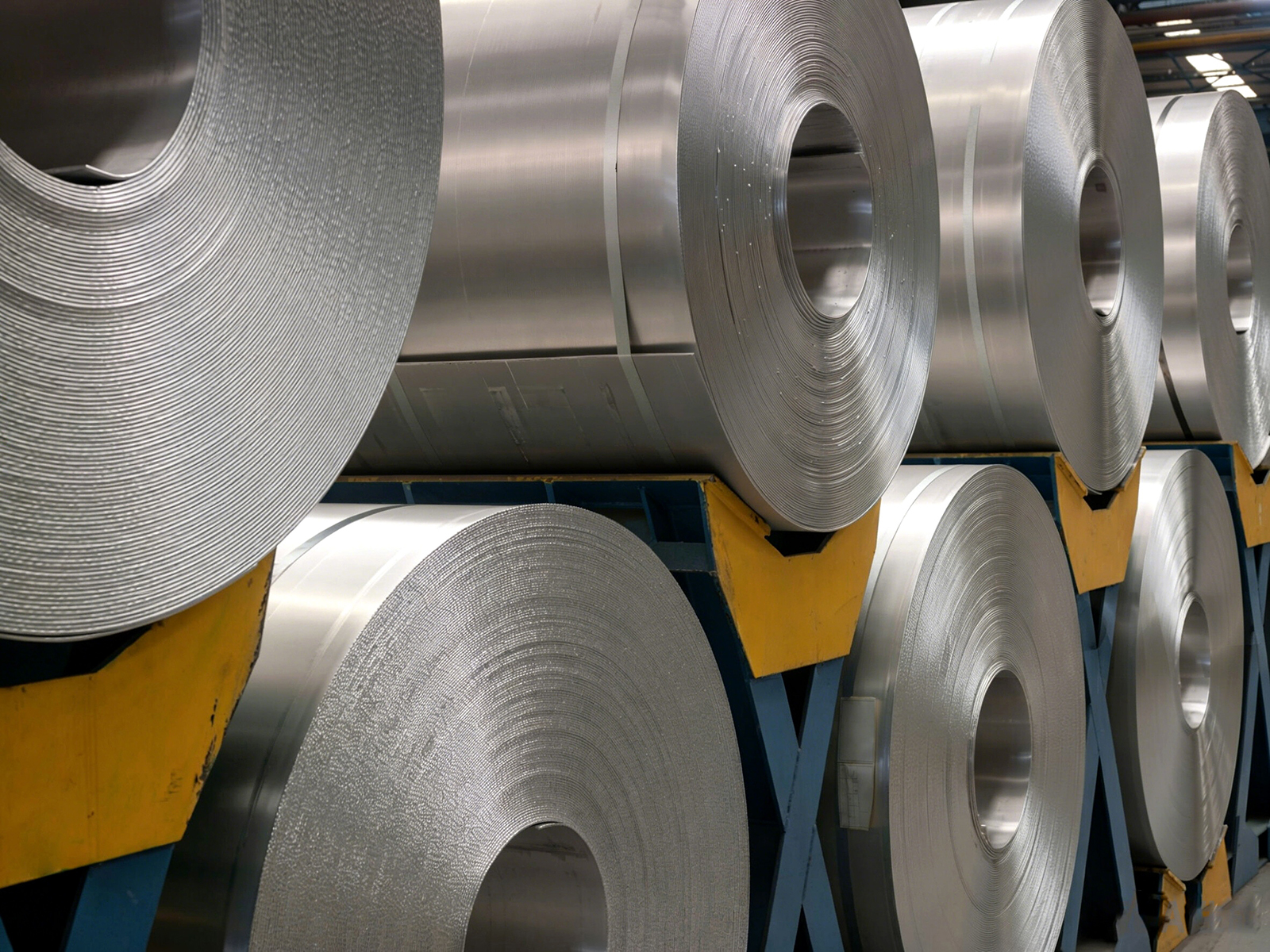
Ti-15V-3Al-3Cr-3Sn Titanium Foil is gaining prominence in satellite and spacecraft manufacturing due to its unique combination of high specific strength, excellent formability, radiation resistance, and stable performance across extreme temperature ranges. As space missions demand lighter, more reliable, and longer-lasting structural and functional components, Ti-15V-3Al-3Cr-3Sn titanium foil addresses critical requirements in spacecraft structural panels, solar array supports, antenna reflectors, thermal management systems, and radiation shielding applications.
1. Material Properties Relevant to Space Applications
(1) High Specific Strength for Mass-Constrained Designs
Ti-15V-3Al-3Cr-3Sn titanium foil exhibits tensile strengths of 950-1100 MPa in the cold-worked condition with a density of 4.48 g/cm3, yielding a specific strength exceeding 210 kN·m/kg. This enables significant mass reduction compared to aluminum alloys (e.g., 7075-Al at 160 kN·m/kg specific strength) while maintaining comparable stiffness. In satellite structures, every kilogram saved translates to significant launch cost reduction, making high-specific-strength materials economically compelling even at premium material costs.
(2) Thermal Stability Across Extreme Temperature Cycles
Spacecraft experience temperature swings from -150°C in eclipse to +120°C in direct sunlight. Ti-15V-3Al-3Cr-3Sn foil maintains mechanical properties across this range, with tensile strength increasing by 15% at -100°C and retaining over 80% of room-temperature strength at 200°C. The coefficient of thermal expansion (9.5 ×10⁻⁶/K) is intermediate between aluminum alloys and titanium alloys, providing favorable thermal stress matching with both composite structures and titanium fasteners.
(3) Radiation Resistance and Outgassing Performance
Ti-15V-3Al-3Cr-3Sn titanium foil exhibits excellent resistance to atomic oxygen erosion in low Earth orbit and minimal property degradation after exposure to proton and electron radiation doses exceeding 1015 particles/cm2. Outgassing rates measured per ASTM E595 show total mass loss (TML) <0.01% and collected volatile condensable material (CVCM) <0.001%, well below the NASA requirement of TML <1.0% and CVCM <0.10%. These characteristics ensure that titanium foil components do not contaminate sensitive optical surfaces or degrade nearby electronic components.
2. Key Applications in Spacecraft Manufacturing
(1) Structural Panels and Fairing Components
Ti-15V-3Al-3Cr-3Sn titanium foil is formed into structural panels, bulkheads, and fairing components that provide rigid mounting platforms for avionics, propulsion systems, and scientific instruments. The material’s high fatigue resistance (endurance ratio of 0.50-0.55) withstands the intense vibration and acoustic loads during launch. Hydroformed titanium foil panels achieve weight reductions of 20-30% compared to conventional aluminum honeycomb sandwich structures while providing superior fire resistance and dimensional stability.
(2) Solar Array Support Structures
Solar panel deployment mechanisms and boom structures utilize Ti-15V-3Al-3Cr-3Sn titanium foil for its high stiffness-to-weight ratio and low thermal expansion. Thin foil hinges (0.1-0.3 mm) formed from this alloy withstand millions of deployment cycles without fatigue failure. The material’s compatibility with electron beam and laser welding enables precision fabrication of complex hinge geometries and deployable mechanism components critical to solar array functionality.
(3) Antenna Reflectors and Radio Frequency Components
Deployable antenna reflectors for communications and Earth observation satellites benefit from the formability and dimensional stability of Ti-15V-3Al-3Cr-3Sn foil. Electroformed nickel mandrels coated with titanium foil achieve surface accuracies better than RMS 25 μm, enabling Ku-band and Ka-band antenna operation. The non-magnetic nature of titanium foil ensures no interference with sensitive magnetometer instruments on scientific satellites.
(4) Thermal Control Systems
Radiators, heat pipes, and thermal interface components fabricated from Ti-15V-3Al-3Cr-3Sn foil manage heat rejection from high-power electronics and payloads. The foil’s compatibility with thermal control coatings (white paints, black anodizing, and multilayer insulation attachments) enables customized emissivity and absorptivity ratios. In vacuum environment testing, titanium foil thermal radiators demonstrate no property degradation after 10,000 thermal cycles between -180°C and +150°C.
3. Manufacturing and Processing for Space-Quality Foil
(1) Precision Rolling and Annealing
Space-grade Ti-15V-3Al-3Cr-3Sn titanium foil is produced through multi-pass precision rolling with intermediate vacuum annealing at 750-850°C. Thickness control within ±1 μm for foils below 0.5 mm ensures uniform stress distribution in formed structures. Grain size control to ASTM 7-9 grade prevents anisotropic mechanical behavior and ensures consistent forming response across the foil width.
(2) Surface Preparation and Cleanliness
Space applications require exceptionally clean foil surfaces free of oil, particulate, and oxide contaminants. Electropolishing to Ra ≤0.1 μm removes mechanically worked surface layers and eliminates nucleation sites for corrosion or fatigue cracking. Foil is packaged in clean-room conditions with moisture-barrier bags and desiccant packets to maintain surface integrity through transportation and storage.
(3) Qualification and Documentation
Space-qualified Ti-15V-3Al-3Cr-3Sn foil is supplied with comprehensive documentation including EN 10204 3.1 material certificates, full mechanical property test reports, chemical composition analysis, non-destructive examination records, and outgassing test data per ASTM E595. Batch traceability extends from raw titanium sponge through final inspection, enabling full material history reconstruction for flight hardware accountability.
Conclusion
Ti-15V-3Al-3Cr-3Sn titanium foil is establishing itself as an enabling material for next-generation satellite and spacecraft manufacturing. Its combination of high specific strength, thermal stability, radiation resistance, and ultra-low outgassing addresses the multifaceted requirements of spaceborne structural and functional components. As mission durations extend, payload masses increase, and launch costs remain a primary constraint, the adoption of high-performance titanium foil in spacecraft design will continue to grow, supporting the expanding frontier of space exploration and utilization.
FAQ
Q1: Why choose Ti-15V-3Al-3Cr-3Sn over Ti-6Al-4V for spacecraft foil applications?
Ti-15V-3Al-3Cr-3Sn offers superior formability and more uniform mechanical properties in thin foil gauges compared to Ti-6Al-4V. Its lower alpha-case sensitivity enables deeper forming without cracking, and its fatigue performance in the annealed condition exceeds that of Ti-6Al-4V. For complex-shaped spacecraft components requiring extensive forming, Ti-15V-3Al-3Cr-3Sn provides better manufacturability and more predictable performance.
Q2: What thickness range is available for space-grade Ti-15V-3Al-3Cr-3Sn foil?
Space-qualified Ti-15V-3Al-3Cr-3Sn foil is available in thicknesses from 0.05-2.0 mm. Ultra-thin foil (0.05-0.2 mm) is used for flexible circuit substrates and thermal control blankets, while thicker foil (0.5-2.0 mm) serves structural panel and bracket applications.
Q3: How does Ti-15V-3Al-3Cr-3Sn foil perform in atomic oxygen environments?
Titanium alloys exhibit excellent resistance to atomic oxygen erosion in low Earth orbit, with erosion rates below 1 ×10⁻⁷ cm/cycle compared to 2-5 ×10⁻⁵ cm/cycle for polymer composites. The naturally formed TiO2 surface layer protects the underlying metal from continued AO attack, making Ti-15V-3Al-3Cr-3Sn foil suitable for external spacecraft surfaces without additional protective coatings.
Contact Titanium Valley
Baoji Titanium Valley Titanium Nickel Zirconium Material Processing Co., Ltd. supplies space-grade Ti-15V-3Al-3Cr-3Sn titanium foil with EN 10204 3.1 certification, full material traceability, and outgassing test data per ASTM E595. Custom thicknesses, widths, and surface finishes available. Contact us for technical data and quotations:
References
Callahan, G., et al. Titanium Alloy Selection Guide for Spacecraft Structural Applications [R]. NASA Technical Paper 21856, 2020.
Liu, Y., Zhang, H. Mechanical Properties of Ti-15V-3Al-3Cr-3Sn Alloy at Cryogenic and Elevated Temperatures [J]. Materials Science and Engineering A, 2021, 805: 140789.
Wang, X., et al. Outgassing Characteristics of Titanium Alloys for Space Applications [J]. Vacuum, 2022, 201: 111089.
ASTM International. ASTM B265-20 Standard Specification for Titanium and Titanium Alloy Sheet and Plate [S]. 2020.