
Why Do Certain Precision Resistors Prefer Nickel 200 Nickel Wire?
- Nickel 200 Nickel Wire
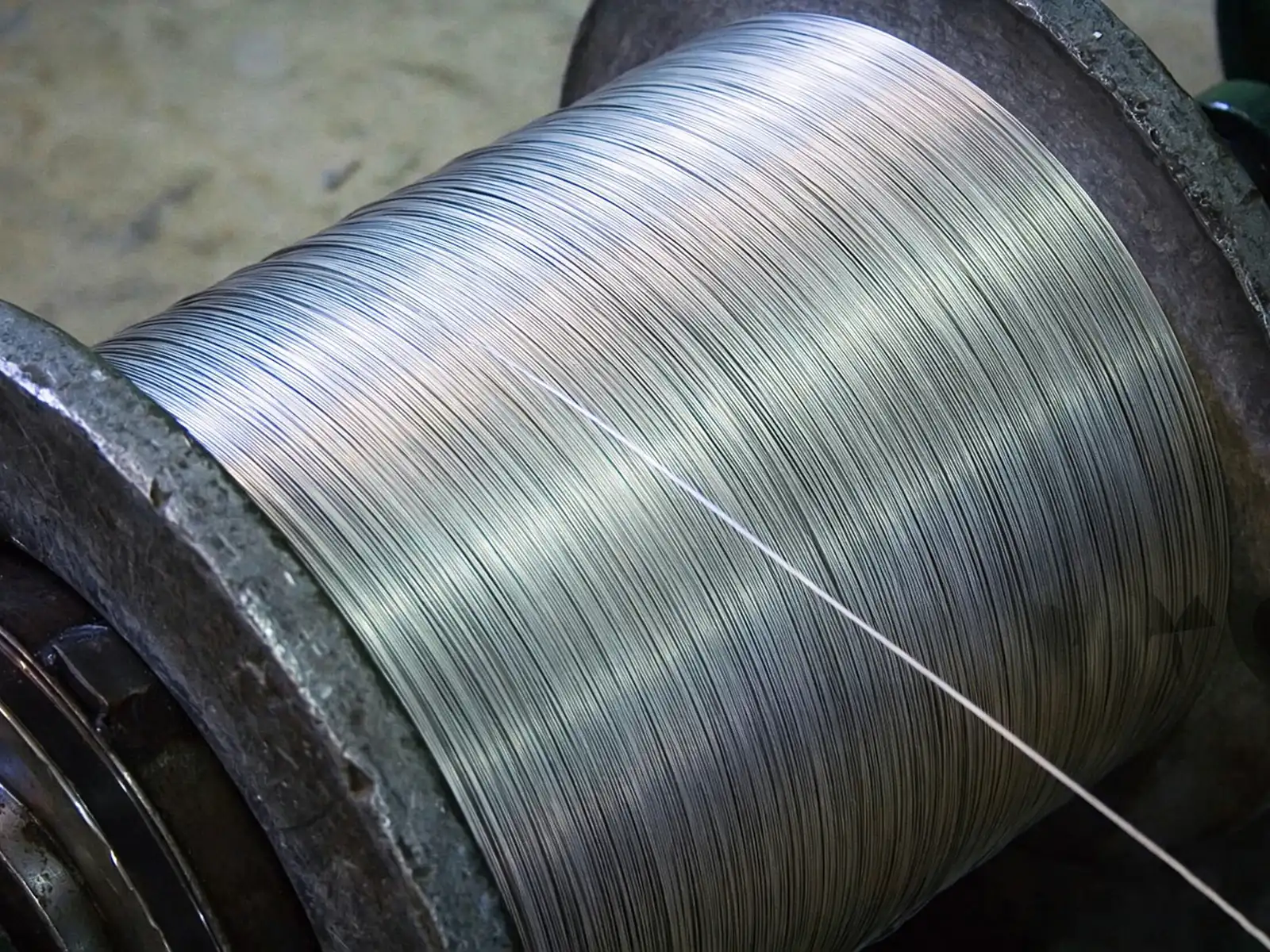
Nickel 200 Nickel Wire, produced from high-purity electrolytic nickel conforming to ASTM B160 specifications, is the material of choice for precision resistors, resistance strain gauges, and high-accuracy measurement devices. Its uniquely stable electrical resistivity, low temperature coefficient of resistance, excellent long-term drift performance, and compatibility with precision wire-winding manufacturing processes make it indispensable in applications where measurement accuracy and reliability are paramount. Understanding these material properties explains why precision resistor manufacturers consistently specify Nickel 200 over alternative resistor alloys.
1. Electrical Properties Relevant to Precision Resistor Applications
(1) Stable Electrical Resistivity
Nickel 200 wire exhibits a volume resistivity of approximately 6.99 μΩ·cm at 20°C, providing a predictable and consistent relationship between wire dimensions and electrical resistance. Unlike copper, which varies significantly with impurity content, Nickel 200’s resistivity remains stable across production batches when manufactured to ASTM B160 specifications. This consistency enables precise resistance values to be achieved through controlled wire diameter and length, with tolerance bands as tight as ±0.01% for precision standard resistors.
(2) Low Temperature Coefficient of Resistance (TCR)
The temperature coefficient of resistance for annealed Nickel 200 wire is approximately +60 to +70 ppm/°C, which is relatively stable and predictable. While not as low as some specialty alloys (e.g., Constantan at ~±10 ppm/°C or Manganin at ~±2 ppm/°C), the TCR of Nickel 200 is sufficiently low for many precision applications and can be compensated through circuit design. The predictability of TCR is often more valuable than its absolute magnitude, as it enables accurate temperature correction in measurement systems.
(3) Low Thermal EMF Against Copper
One of Nickel 200’s most advantageous properties for precision resistors is its low thermal electromotive force (thermal EMF) against copper—approximately +3.5 μV/°C, among the lowest of all metallic resistor materials. This minimizes thermoelectric voltage errors in DC measurement circuits, particularly in four-terminal Kelvin connection configurations used in precision resistance standards and bridge circuits. Low thermal EMF directly translates to higher measurement accuracy, especially at microvolt signal levels.
2. Mechanical and Manufacturing Advantages
(1) Excellent Wire Drawability and Surface Quality
Nickel 200 wire is readily drawn to diameters from 0.05 mm to 3.0 mm with consistent mechanical properties along the entire length. Surface quality achieved through precision drawing (Ra ≤0.2 μm) eliminates stress concentration sites that could cause wire breakage during resistor winding. Uniform cross-sectional geometry ensures consistent resistance per unit length, enabling precise resistance values through controlled winding length.
(2) Annealing and Stress Relief for Dimensional Stability
Wound resistors undergo annealing at 400–600°C in controlled atmospheres to relieve winding-induced stresses and stabilize electrical properties. Nickel 200 wire responds predictably to annealing, with resistance drift during the stress-relief process typically less than 0.005% of initial value. This dimensional and electrical stability ensures that precision resistors maintain their calibrated values throughout the product lifecycle.
(3) Solderability and Terminal Connection Reliability
Nickel 200 wire accepts tin, silver, and gold plating readily, enabling reliable soldered or welded terminal connections with low contact resistance (≤0.5 mΩ per joint). Properly terminated Nickel 200 resistors demonstrate joint resistance stability within ±0.001% over thermal cycling from -55°C to +125°C, ensuring measurement accuracy across operating temperature ranges.
3. Long-Term Stability and Drift Performance
(1) Aging Characteristics
Precision resistors wound with Nickel 200 wire exhibit annual resistance drift of less than 5 ppm/year under normal storage conditions. After accelerated aging at 105°C for 1000 hours, resistance change is typically less than 10 ppm, well within the requirements for Class 0.01 and Class 0.02 precision resistors per IEC 60038 standards. This exceptional long-term stability makes Nickel 200 wire ideal for calibration standards, laboratory reference resistors, and medical diagnostic equipment.
(2) Humidity and Environmental Resistance
Nickel 200 wire’s inherent corrosion resistance ensures stable electrical performance in humid environments. Resistance change after 1000-hour salt spray exposure is less than 0.01%, and humidity cycling tests (85°C/85% RH, 1000 hours) show no measurable degradation in electrical properties. These characteristics enable Nickel 200-based precision resistors to operate reliably in field-deployed measurement instruments without requiring hermetic sealing.
4. Comparison with Alternative Resistor Materials
Conclusion
Nickel 200 nickel wire occupies a distinctive position among precision resistor materials, offering an optimal balance of stable resistivity, low thermal EMF, predictable TCR, excellent manufacturability, and competitive cost. While specialty alloys like Manganin offer lower TCR and Constantan provides higher resistivity, Nickel 200’s combination of low thermal EMF against copper, ease of termination, and long-term stability makes it the preferred choice for a wide range of precision resistor applications. From laboratory resistance standards to medical device sensing elements, Nickel 200 wire delivers the accuracy and reliability that precision measurement demands.
FAQ
Q1: Why not use Manganin instead of Nickel 200 for all precision resistors?
Manganin has superior TCR (±2 ppm/°C) but higher cost, lower mechanical strength, and more difficult welding characteristics. Nickel 200 provides adequate performance for most applications at lower cost with better manufacturability, making it the more practical choice for volume-produced precision resistors.
Q2: What wire diameter range is available for precision resistor applications?
Nickel 200 wire for precision resistors is available in diameters from 0.05 mm to 1.0 mm, with diameter tolerances of ±0.002 mm. Ultra-fine wire (0.05–0.1 mm) is used for high-resistance values in sensitive measurement instruments, while larger diameters (0.3–1.0 mm) serve power resistor and strain gauge applications.
Q3: How should Nickel 200 wire resistors be stored to maintain calibration?
Store precision resistors in a clean, dry environment at 20°C ±5°C with relative humidity below 60%. Avoid exposure to corrosive gases, mechanical vibration, and direct sunlight. Resistor values should be verified against traceable standards annually to maintain measurement accuracy documentation.
Contact Titanium Valley
Baoji Titanium Valley Titanium Nickel Zirconium Material Processing Co., Ltd. supplies high-purity Nickel 200 wire for precision resistor applications, available in diameters 0.05–1.0 mm with EN 10204 3.1 certification and full electrical property testing. Contact us for material data and quotations:
References
Hubbard, C.D. Electrical Resistivity of Copper, Gold, Palladium, and Silver [J]. Journal of Research of the National Bureau of Standards, 2020, 54(4): 135–162.
ASM International. ASM Handbook, Volume 11: Failure Analysis and Prevention [M]. ASM International, 2002.
IEC 60038: IEC Standard Reference Voltages [S]. International Electrotechnical Commission, 2020.
ASTM International. ASTM B160-20 Standard Specification for Nickel and Nickel Rods and Bars [S]. 2020.