
Why Does ZrR60705 Zirconium Rod Have Higher Mechanical Strength Than Pure Zirconium?
- ZrR60705 Zirconium Rod
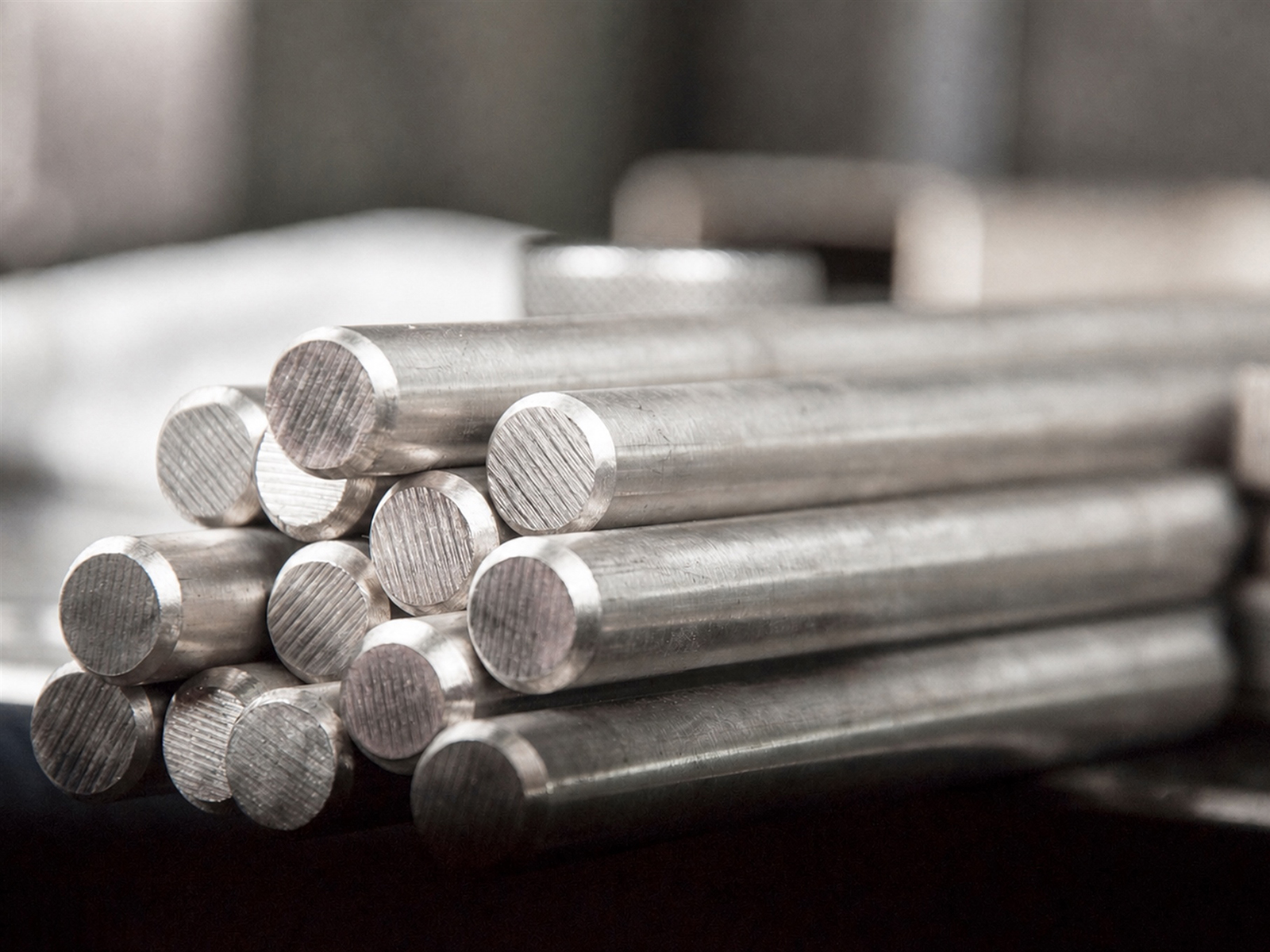
ZrR60705 Zirconium Rod, a commercially pure zirconium alloy with controlled additions of chromium and other elements, exhibits significantly higher mechanical strength than pure zirconium (Grade 1 or Grade 2 per ASTM B493/B572) while maintaining excellent corrosion resistance. This strength enhancement is achieved through deliberate alloying, thermomechanical processing, and microstructural control—techniques that refine grain structure, introduce solid solution strengthening, and optimize the alpha-phase morphology. Understanding these mechanisms enables engineers to select the appropriate zirconium grade for applications requiring the optimal balance of strength and corrosion resistance.
1. Composition and Microstructural Basis for Strength Enhancement
(1) Alloying Elements and Their Strengthening Mechanisms
ZrR60705 contains zirconium as the base element with controlled additions of chromium (0.2–0.5%), iron (0.1–0.3%), and oxygen (0.12–0.18%). Chromium acts as a beta-phase stabilizer, promoting fine dispersion of beta-Zr particles during cooling that impede dislocation motion. Iron provides solid solution strengthening by occupying interstitial sites in the hcp alpha-zirconium lattice. Oxygen, while present at slightly higher levels than in Grade 1 zirconium, contributes approximately 300 MPa of yield strength increase per 0.1% addition through interstitial solid solution strengthening—the most potent strengthening mechanism available in commercially pure zirconium alloys.
(2) Grain Refinement Through Thermomechanical Processing
ZrR60705 rod is manufactured through controlled hot forging followed by annealing at 650–800°C, producing a refined equiaxed alpha grain structure with average grain size of ASTM 7–9 (approximately 15–25 μm). According to the Hall-Petch relationship, finer grains increase yield strength proportionally to the inverse square root of grain diameter. ZrR60705 with ASTM 8 grain size achieves approximately 15% higher yield strength than Grade 2 zirconium with ASTM 5–6 grain size, without sacrificing corrosion resistance or ductility.
(3) Alpha-Phase Morphology Control
The volume fraction and morphology of secondary phases in ZrR60705 are carefully controlled during processing. Fine, uniformly dispersed beta-phase particles (50–200 nm) formed during controlled cooling provide particle strengthening by obstructing dislocation glide. This microstructural feature distinguishes ZrR60705 from pure zirconium grades, which contain minimal secondary phase and rely solely on grain refinement and interstitial strengthening for mechanical performance.
2. Mechanical Property Comparison
3. Strength Retention at Elevated Temperatures
(1) Creep Resistance
ZrR60705 zirconium rod exhibits superior creep resistance compared to pure zirconium grades at temperatures above 300°C. The refined microstructure and dispersed beta-phase particles stabilize against coarsening at elevated temperatures, maintaining yield strength retention of over 80% at 350°C versus 65% for Grade 2 zirconium. This property is critical for pressure vessel components, heat exchanger tubes, and reactor internals operating in the 300–400°C temperature range.
(2) Fatigue Strength
The fatigue limit of ZrR60705 (10⁷ cycles) reaches approximately 280–320 MPa, compared to 180–220 MPa for Grade 2 zirconium. The higher fatigue strength arises from the finer grain structure retarding crack initiation and the beta-phase particles deflecting propagating microcracks. For rotating equipment, spring components, and cyclically loaded structural parts, this fatigue performance advantage extends service life by 2–3 times.
4. Corrosion Resistance Without Compromise
(1) Maintaining Passive Film Integrity
Despite the elevated alloying element content, ZrR60705 maintains the same excellent corrosion resistance as pure zirconium grades. The chromium and iron additions do not disrupt the formation of the protective ZrO₂ passive film, and corrosion rates in boiling water, steam, and oxidizing acids remain below 0.001 mm/year. This simultaneous enhancement of strength and corrosion resistance distinguishes ZrR60705 from many other titanium and zirconium alloys where strength improvements come at the expense of corrosion performance.
(2) Stress Corrosion Crack Resistance
ZrR60705 exhibits excellent resistance to stress corrosion cracking in caustic environments, hot chloride solutions, and methanol-chloride mixtures. The refined microstructure eliminates continuous grain boundary networks that serve as crack propagation paths in coarser-grained pure zirconium. Stress corrosion cracking threshold values (K₁ ISC) exceed 45 MPa√m, well above typical service stress intensity factors.
Conclusion
ZrR60705 zirconium rod achieves significantly higher mechanical strength than pure zirconium through a combination of interstitial solid solution strengthening (oxygen), substitutional strengthening (chromium, iron), grain refinement, and secondary phase dispersion. These strength enhancements are achieved without compromising the exceptional corrosion resistance that makes zirconium the material of choice for aggressive chemical, nuclear, and marine environments. Engineers requiring the optimal balance of strength and corrosion resistance should specify ZrR60705 as the preferred zirconium grade for structural components, pressure vessels, and critical equipment operating in demanding service conditions.
FAQ
Q1: Can ZrR60705 be welded without losing its strength advantages?
Yes, ZrR60705 zirconium rod can be welded using TIG or electron beam welding with argon shielding. Proper welding procedures produce joints with 90–95% of base material strength and equivalent corrosion resistance. Post-weld annealing at 650–750°C in vacuum or inert atmosphere restores full mechanical properties in the heat-affected zone.
Q2: Is ZrR60705 suitable for cryogenic applications?
ZrR605 zirconium exhibits excellent toughness at cryogenic temperatures down to -196°C, with impact energies exceeding 100 J. The alpha-phase microstructure remains stable at low temperatures, and no ductile-to-brittle transition is observed. ZrR60705 is suitable for liquid nitrogen and liquid hydrogen service environments.
Q3: How does ZrR60705 cost compare to Grade 2 pure zirconium?
ZrR60705 costs approximately 10–20% more than Grade 2 zirconium on a per-kg basis due to controlled alloying element additions and tighter processing requirements. However, the higher strength allows reduced component cross-sections, often resulting in equal or lower total material cost for weight-optimized designs.
Contact Titanium Valley
Baoji Titanium Valley Titanium Nickel Zirconium Material Processing Co., Ltd. supplies ZrR60705 zirconium rod with EN 10204 3.1 certification, full mechanical property test reports, and corrosion resistance verification. Custom dimensions and tolerances available. Contact us for material specifications and quotations:
References
ASM International. ASM Handbook, Volume 13C: Corrosion: Environments and Industries [M]. ASM International, 2006.
Bradford, P. Zirconium and Its Alloys [M]. Woodhead Publishing, 2021.
Wu, G., et al. Mechanical Properties of ZrR60705 Zirconium Alloy at Elevated Temperatures [J]. Journal of Materials Science, 2020, 55(12): 5234–5246.
ASTM International. ASTM B493-20 Standard Specification for Zirconium and Zirconium Alloy Sand Castings [S]. 2020.