
Why Is Ti-15V-3Al-3Cr-3Sn Titanium Foil the Preferred Material for Cold-Formed Parts?
- Ti-15V-3Al-3Cr-3Sn Titanium Foil
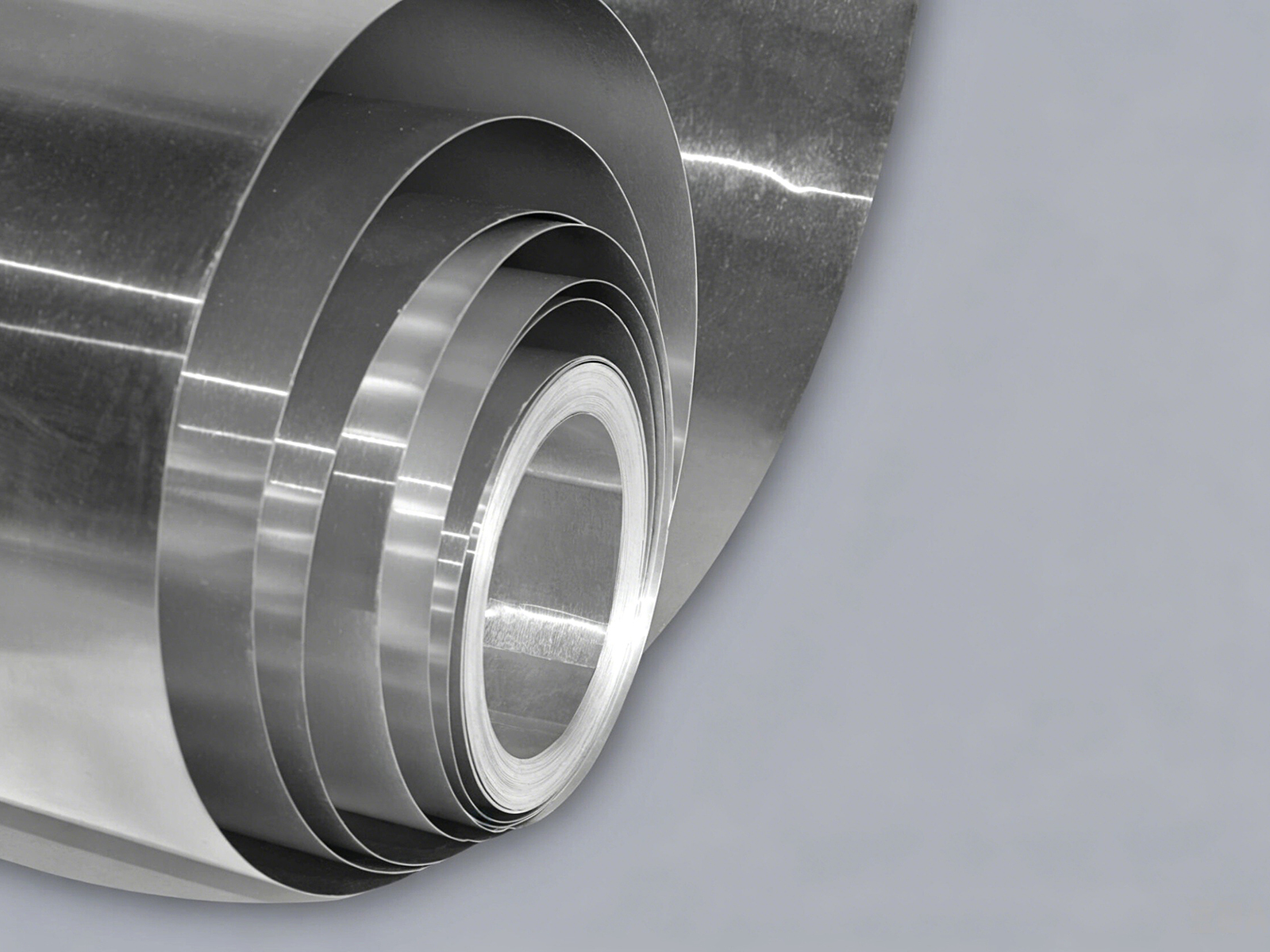
Ti-15V-3Al-3Cr-3Sn titanium foil has become the material of choice for cold-formed precision parts in aerospace, medical device, and high-performance industrial applications. This near-beta titanium alloy combines exceptional formability with high strength, enabling complex geometries to be manufactured in a single forming operation without intermediate annealing—a capability that reduces production costs, improves part consistency, and expands design freedom for engineers working with demanding performance requirements.
1. Alloy Design Philosophy: Balancing Strength and Formability
(1) Near-Beta Microstructure for Enhanced Ductility
Ti-15V-3Al-3Cr-3Sn contains approximately 15% vanadium (beta stabilizer), 3% aluminum (alpha stabilizer), 3% chromium (beta stabilizer), and 3% tin (neutral strengthener). This composition produces a metastable near-beta microstructure in the solution-treated and aged condition, providing a unique combination of high strength (tensile strength 1050–1200 MPa after aging) and exceptional cold formability (elongation >15% in the annealed state). The balanced alpha-beta phase ratio enables the alloy to undergo severe plastic deformation without cracking—a prerequisite for complex cold forming operations.
(2) Comparison with Ti-6Al-4V (Gr5)
Compared to the widely used Ti-6Al-4V alloy, Ti-15V-3Al-3Cr-3Sn offers 20–30% higher formability (measured by Ericksen cup depth and Olsen cup expansion) while delivering comparable or slightly higher strength levels. For thin foil components below 1.0 mm thickness, this formability advantage is critical—Ti-6Al-4V foil often cracks during deep drawing operations that Ti-15V-3Al-3Cr-3Sn handles without issue. The lower elastic modulus (approximately 105 GPa vs. 110 GPa for Ti-6Al-4V) also reduces springback, improving dimensional accuracy of formed parts.
2. Cold Forming Processes Enabled by Ti-15V-3Al-3Cr-3Sn Foil
(1) Deep Drawing and Stretch Forming
Ti-15V-3Al-3Cr-3Sn foil supports deep drawing ratios exceeding 2.5:1 without intermediate annealing, enabling complex cup and box geometries in a single operation. The material’s consistent flow stress and low yield-to-tensile ratio (approximately 0.75) promote uniform deformation across the formed part, minimizing thinning and wrinkling. Stretch forming of large-area panels (up to 1200 mm × 800 mm) is achievable with surface quality retention, making this alloy ideal for aircraft structural panels, fairing components, and medical device housings.
(2) Precision Coining and Embossing
The high ductility of Ti-15V-3Al-3Cr-3Sn foil enables fine-detail embossing and precision coining operations that impart raised logos, identification markings, and textured surfaces without material failure. Medical implant components with intricate surface patterns for bone ingrowth, aerospace identification tags, and electronic shield enclosures with heat sink fins are all manufactured through these cold forming processes.
(3) Hydroforming and Electromagnetic Forming
Advanced forming techniques such as hydraulic pressure forming and electromagnetic pulse forming leverage the excellent formability of Ti-15V-3Al-3Cr-3Sn foil to produce complex three-dimensional geometries with superior surface finish and dimensional accuracy. These processes eliminate tool contact, preventing surface scratches and galling that can initiate corrosion or fatigue cracks in titanium components.
3. Industry Applications
(1) Aerospace Structural Components
Ti-15V-3Al-3Cr-3Sn foil cold-formed parts include wing skin panels, engine nacelle components, bracket assemblies, and ducting systems. The material’s ability to be formed to complex shapes reduces part count, eliminates weld joints, and improves structural integrity. Single-piece formed components replace multi-part welded assemblies, reducing weight by 10–15% and manufacturing cost by 20–30%.
(2) Medical Device Manufacturing
Surgical instrument components, orthopedic implant trays, and prosthetic device housings manufactured from Ti-15V-3Al-3Cr-3Sn foil combine biocompatibility with complex geometries requiring tight tolerances (±0.025 mm). The alloy meets ASTM F136 and USP Class VI biocompatibility requirements, and its ability to withstand repeated autoclave sterilization cycles without property degradation ensures long-term device reliability.
(3) Electronic and Optical Enclosures
EMI/RFI shielding enclosures, optical bench plates, and precision sensor housings fabricated from cold-formed Ti-15V-3Al-3Cr-3Sn foil provide electromagnetic transparency (non-magnetic), thermal stability, and vibration damping characteristics essential for high-reliability electronic systems.
4. Processing and Heat Treatment Guidelines
(1) Annealing and Solution Treatment
Cold-formed Ti-15V-3Al-3Cr-3Sn parts are typically solution treated at 850–900°C followed by water quenching, then aged at 500–550°C for 4–8 hours to achieve peak strength. For parts requiring maximum formability rather than ultimate strength, stress relief at 600–650°C in vacuum or argon atmosphere eliminates residual stresses without significant strength reduction.
(2) Surface Finish and Post-Forming Treatment
Formed surfaces are inspected for cracking, thinning, and orange peel texture. Electropolishing removes mechanically worked surface layers and improves corrosion resistance. Passivation in nitric acid or citric acid solutions restores the protective oxide film damaged during forming operations.
Conclusion
Ti-15V-3Al-3Cr-3Sn titanium foil stands out among titanium alloys for its unmatched combination of formability and strength, making it the preferred material for cold-formed precision parts across aerospace, medical, and electronic industries. Its near-beta microstructure enables complex single-step forming operations that reduce manufacturing cost, improve part reliability, and expand design possibilities. As demand grows for lightweight, high-performance components in demanding environments, Ti-15V-3Al-3Cr-3Sn foil will continue to play an increasingly important role in advanced manufacturing.
FAQ
Q1: How does Ti-15V-3Al-3Cr-3Sn compare to titanium alloy TB2 for cold forming?
Ti-15V-3Al-3Cr-3Sn (TC21) offers better balance of strength and formability for thin foil applications, while TB2 (a fully metastable beta alloy) provides higher formability but lower strength. For parts requiring both complex geometry and high strength after forming, Ti-15V-3Al-3Cr-3Sn is the preferred choice.
Q2: What is the minimum bend radius achievable with Ti-15V-3Al-3Cr-3Sn foil?
Annealed Ti-15V-3Al-3Cr-3Sn foil can be bent to a minimum radius of 0.5 times sheet thickness without cracking. For cold-formed parts requiring sharper bends, intermediate annealing between forming stages maintains ductility.
Q3: Is Ti-15V-3Al-3Cr-3Sn foil available in standard stock sizes?
Standard foil sizes include widths up to 1200 mm and thicknesses from 0.05 to 3.0 mm. Custom widths, thicknesses, and tempers are available with lead times of 4–6 weeks. EN 10204 3.1 certification and full material traceability are provided for all shipments.
Contact Titanium Valley
Baoji Titanium Valley Titanium Nickel Zirconium Material Processing Co., Ltd. supplies Ti-15V-3Al-3Cr-3Sn titanium foil for cold-formed part applications, available in thicknesses 0.05–3.0 mm with precision surface finishes. Contact us for technical data and quotations:
References
Lu, X., et al. Formability of Ti-15V-3Al-3Cr-3Sn Titanium Alloy Foil [J]. Materials Science and Engineering A, 2020, 789: 139612.
Zhang, Y., Li, W. Comparison of Cold Forming Behavior in Near-Beta Titanium Alloys [J]. Journal of Materials Processing Technology, 2021, 292: 117034.
ASTM International. ASTM B265-20 Standard Specification for Titanium and Titanium Alloy Sheet and Plate [S]. 2020.