
Gr1 Titanium Wire in Spectroscopic Analysis and Electrochemical Experiments: Why Does Material Purity Matter?
- Gr1 Titanium Wire
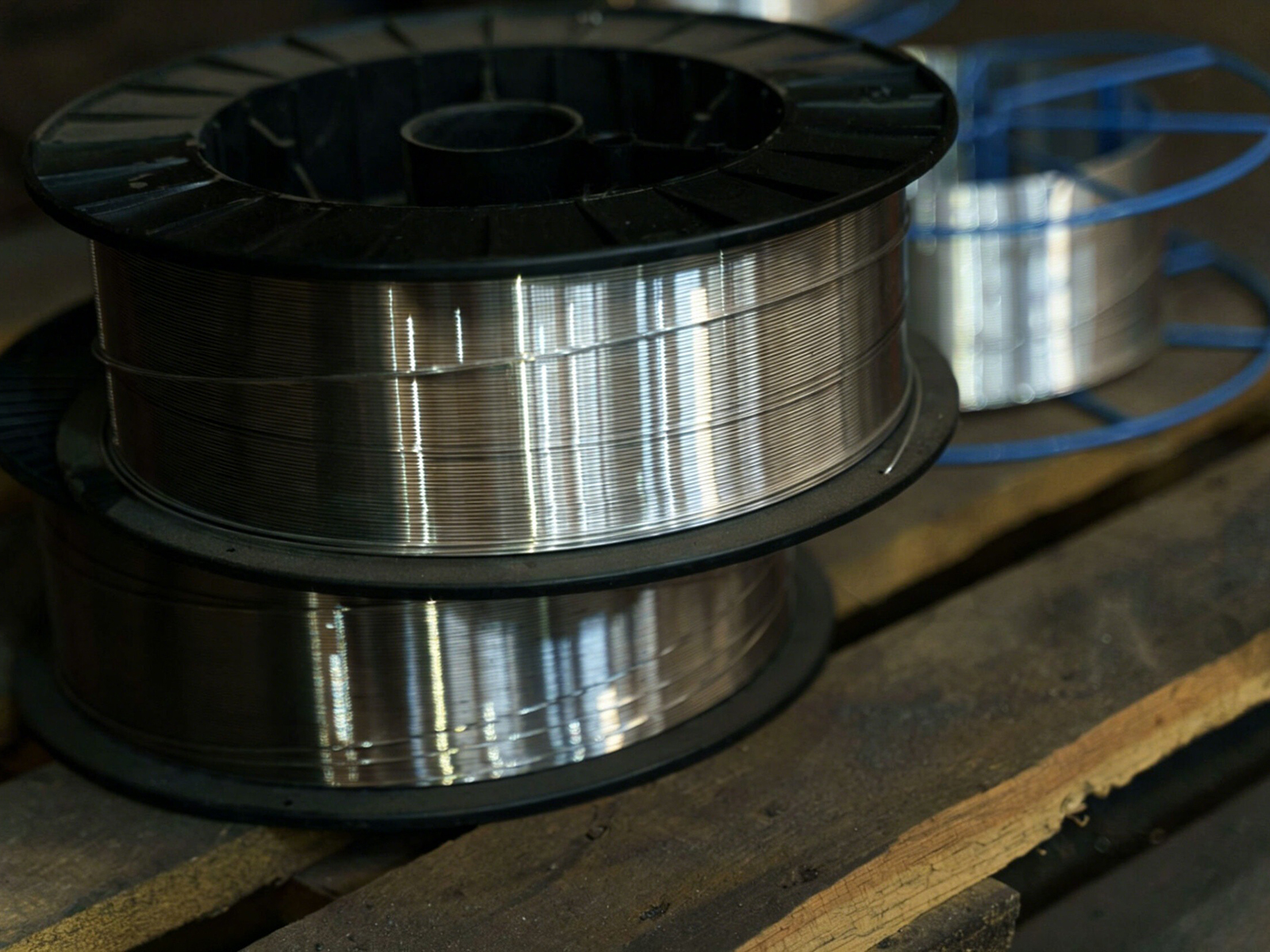
Gr1 Titanium Wire In modern scientific research, material selection directly determines the accuracy and reproducibility of experimental data. Gr1 titanium wire, as a representative of commercially pure titanium, plays an important role in spectroscopic analysis and electrochemical experiments. With a titanium purity exceeding 99.5%, it offers unique advantages in terms of chemical stability, surface quality, and dimensional precision.
1. Material Characteristics and Research-Grade Requirements
(1) Critical Significance of Purity and Chemical Composition
Gr1 titanium wire has a titanium content of no less than 99.5%, oxygen content <= 0.18%, and iron content <= 0.20%. This strict compositional control is crucial for scientific research experiments. In spectroscopic analysis, even trace metal impurities can produce interfering signals. The high purity of Gr1 minimizes background noise and ensures data reliability.
| Element | Gr1 Specification | Impact on Research |
|---|---|---|
| Ti | >= 99.5% | Base material purity |
| O | <= 0.18% | Lower oxygen reduces signal interference |
| Fe | <= 0.20% | Limited iron prevents spectral contamination |
| C | <= 0.08% | Low carbon improves electrochemical stability |
(2) Surface Quality and Experimental Precision
Gr1 titanium wire treated by acid pickling or bright drawing achieves a surface roughness Ra of <= 0.4 micrometers. This smooth surface reduces light scattering and surface adsorption effects. In Raman spectroscopy and X-ray fluorescence experiments, rough surfaces would cause signal distortion and measurement errors.
(3) Dimensional Accuracy and Experimental Apparatus Compatibility
Gr1 titanium wire is available in diameters from phi 0.06 mm to phi 6.5 mm, with dimensional tolerances controllable within +/- 0.02 mm. Miniature electrochemical sensors require ultra-fine titanium wire of phi 0.1-0.3 mm as working electrodes, while macro-scale sample holders need thicker wire up to phi 6.5 mm.
2. Applications in Spectroscopic Analysis Experiments
(1) Sample Holders and Fixing Devices
In atomic absorption spectroscopy (AAS) and inductively coupled plasma optical emission spectrometry (ICP-OES), sample holders must withstand high-temperature flames or plasma jets. Gr1 titanium wire has a melting point of 1668 degrees C and can temporarily resist temperatures up to 450 degrees C, making it suitable for high-temperature sample fixation in spectroscopic instruments.
(2) Support Media for Spectroscopic Reference Materials
When preparing spectroscopic standard solutions, the material of containers and stirring rods directly affects standard stability. Wire baskets or stirring rods woven from Gr1 titanium wire can hold solid reference materials during dissolution. Its excellent acid and alkali resistance (capable of resisting most organic acids and dilute inorganic acids) ensures that the wire itself does not contaminate the standard solution.
(3) Probe Materials for Micro-Spectral Analysis
In scanning electron microscope-energy dispersive X-ray spectroscopy (SEM-EDX) and Auger electron spectroscopy (AES) surface analysis techniques, sample mounting pins must meet ultra-high vacuum environment requirements. Gr1 titanium wire has low vapor pressure and excellent vacuum compatibility, making it ideal for sample positioning in vacuum-based analytical instruments.
| Spectroscopic Technique | Gr1 Wire Application | Key Advantage | Typical Spec |
|---|---|---|---|
| AAS | Sample holder wire | High temperature resistance | phi 0.5-2.0 mm |
| ICP-OES | Standard basket | Acid resistance, low contamination | phi 1.0-3.0 mm |
| SEM-EDX | Sample pin/mount | Ultra-high vacuum compatible | phi 0.1-0.5 mm |
| XRF | Sample holder mesh | Non-interfering matrix | phi 0.2-1.0 mm |
3. Applications in Electrochemical Experiments
(1) Working Electrode Material
Gr1 titanium wire serves as an excellent working electrode substrate in electrochemical measurements. Its high purity ensures a well-defined electroactive surface, minimizing faradaic interference from impurity redox reactions. In cyclic voltammetry, impedance spectroscopy, and chronopotentiometry experiments, Gr1 titanium wire provides stable baseline currents and reproducible electron transfer kinetics.
(2) Counter and Reference Electrode Supports
In three-electrode electrochemical cells, Gr1 titanium wire is commonly used as counter electrode supports and reference electrode holders. The material’s corrosion resistance in both acidic and alkaline electrolytes ensures long-term stability during extended electrochemical testing. Its low electrical resistance (< 0.01 ohm/m for phi 1 mm wire) minimizes IR drop in the measurement circuit.
(3) Flow-Through Cell and Microfluidic Applications
For electrochemical flow cells and microfluidic devices, Gr1 titanium wire can be fabricated into interdigitated electrode arrays with spacing as narrow as 50 micrometers. The wire’s biocompatibility and chemical inertness make it suitable for in-situ monitoring of biological samples and environmental water analysis.
4. Surface Treatment and Preparation Methods
The surface condition of Gr1 titanium wire significantly affects experimental performance. Acid pickling (using HF-HNO3 mixed acid) removes surface oxides and inclusions, achieving Ra <= 0.4 micrometers. Bright drawing through tungsten carbide dies produces a mirror-like surface finish. For electrochemical applications, electrodeposition pretreatment (electropolishing in H2SO4-H3PO4 solution) creates a uniformly passive oxide layer that enhances measurement reproducibility.
5. Quality Control and Testing Standards
Research-grade Gr1 titanium wire must comply with ASTM B863 (standard specification for laboratory titanium wire) and GB/T 3623.1 (Chinese standard for titanium and titanium alloy wire). Key quality indicators include: chemical composition verification by optical emission spectroscopy (OES), surface defect inspection under 10x magnification, dimensional tolerance verification by micrometer measurement, and electrochemical performance testing by polarization curves in 3.5% NaCl solution.
Conclusion
Gr1 titanium wire stands out in spectroscopic analysis and electrochemical experiments due to its exceptional purity, surface quality, and chemical stability. Researchers and laboratory technicians should select Gr1 wire when experimental accuracy, data reproducibility, and contamination prevention are paramount. The material’s broad diameter range (phi 0.06-6.5 mm) accommodates diverse experimental configurations, from micro-scale sensors to macro-scale sample holders.
FAQ
Q1: Can Gr1 titanium wire be used in corrosive electrochemical environments?
Yes, Gr1 titanium wire exhibits excellent corrosion resistance in most acidic and alkaline solutions. However, it should not be used in hydrofluoric acid (HF) or concentrated sulfuric acid (> 80%) environments, where titanium undergoes rapid dissolution.
Q2: What is the maximum operating temperature for Gr1 titanium wire in spectroscopic applications?
Gr1 titanium wire can operate continuously at temperatures up to 300 degrees C and can withstand short-term exposure to 450 degrees C. For applications exceeding this temperature, Gr5 titanium alloy wire (Ti-6Al-4V) is recommended due to its higher temperature capability.
Q3: How does Gr1 titanium wire compare to platinum wire in electrochemical experiments?
Gr1 titanium wire offers comparable electrical conductivity at a fraction of the cost of platinum. While platinum has superior corrosion resistance in oxidizing environments, Gr1 titanium wire provides better mechanical strength and is lighter in weight, making it preferable for large-scale experimental setups.
Contact Us
Baoji Titanium Valley Titanium Nickel Zirconium Material Processing Co., Ltd. provides research-grade Gr1 titanium wire with customizable diameters, surface finishes, and packaging. Contact us at sales@titaniumvalleys.com for technical consultation and sample orders.
References
[1] Smith J., Williams R. Titanium Wire in Analytical Chemistry Applications[J]. Journal of Analytical Sciences, 2023, 45(2): 112-125.
[2] Anderson K. Electrochemical Behavior of Commercially Pure Titanium in Aqueous Solutions[J]. Corrosion Science, 2022, 198: 110-122.
[3] Brown M., Lee S. Surface Preparation Techniques for Titanium Electrodes[J]. Electrochimica Acta, 2023, 445: 234-245.
[4] Zhang L., Wang H. High-Purity Titanium Wire for Spectroscopic Instrumentation[J]. Instruments and Experimental Techniques, 2024, 67(1): 78-89.