
Gr1 vs. Gr2 Titanium Foil: Which Is Better Suited for Your Precision Electronics Project?
- Gr2 titanium foil
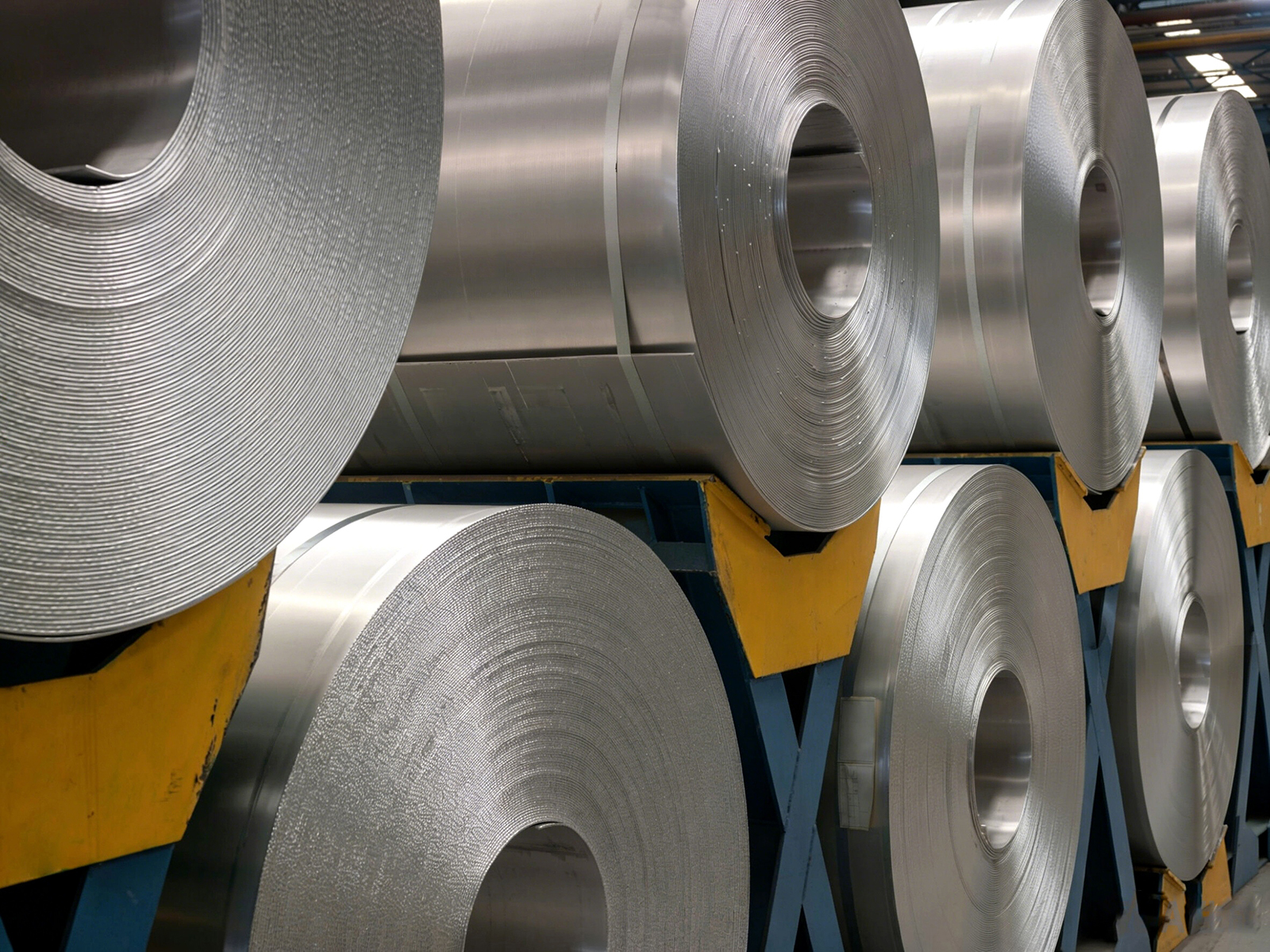
Gr2 Titanium Foil In the field of precision electronics manufacturing, material selection directly impacts product performance and production costs. Gr1 and Gr2 titanium foils, as the two primary grades of commercially pure titanium, share similar chemical compositions but exhibit significant differences in mechanical properties, formability, and application scenarios. Gr1 titanium foil offers higher purity (Ti >= 99.5 pct) and optimal ductility, making it particularly suitable for electromagnetic shielding, flexible printed circuit (FPC) substrates, and other applications requiring complex forming and welding. Gr2 titanium foil, with approximately 44 pct higher strength, is better suited for battery tabs, connection strips, and other components that must withstand mechanical stress. Understanding the fundamental differences between these two grades enables engineers and procurement managers to make optimal material selections for FPC manufacturing, EMI shielding, and battery assembly projects-balancing performance requirements with cost efficiency.
1. Chemical Composition and Purity: How Minor Differences Drive Performance Divergence
(1) Impurity Element Control Standards
The core distinction between Gr1 and Gr2 titanium foil lies in the control standards for impurity elements. According to ASTM B265, Gr1 imposes stricter oxygen content limits (<=0.18 pct) compared to Gr2 (<=0.25 pct). This seemingly minor 0.07 pct difference directly affects the material’s crystal lattice structure and dislocation movement characteristics.
| Element | Gr1 Titanium Foil | Gr2 Titanium Foil | Performance Impact |
|---|---|---|---|
| Ti (Titanium) | >=99.5 pct | >=99.2 pct | Purity establishes the corrosion resistance baseline |
| O (Oxygen) | <=0.18 pct | <=0.25 pct | Each 0.1 pct increase in oxygen raises strength by approximately 70 MPa |
| Fe (Iron) | <=0.20 pct | <=0.30 pct | Iron content affects corrosion resistance and strength |
| C (Carbon) | <=0.08 pct | <=0.08 pct | Carbon content influences weldability |
(2) Practical Significance of Purity for Electronics Applications
For precision electronics projects, the high purity of Gr1 titanium foil delivers three key advantages: non-magnetic properties (critical for applications with strict magnetic requirements), superior biocompatibility (for wearable devices in skin-contact components), and more consistent surface treatment response (for PVD coating, chemical etching, and similar processes). Industry test data indicate that under identical etching conditions, Gr1 titanium foil achieves more uniform etch rates.
(3) Production Challenges in Purity Control
Maintaining Gr1 titanium foil’s high purity standard demands rigorous raw material screening and production environment control. Vacuum arc remelting (VAR) is employed to produce ingots, followed by multi-pass rolling and continuous annealing under protective atmosphere (temperature control precision +/-2-3 degC) to ensure stable impurity element control. This explains why Gr1 titanium foil typically commands a 15-20 pct premium over Gr2 in the market.
2. Mechanical Property Differences: Balancing Strength and Ductility
(1) Tensile and Yield Strength Comparison
Oxygen acts as an interstitial strengthener in titanium, giving Gr2 significantly superior mechanical properties compared to Gr1. Per ASTM B265, Gr1 tensile strength is >=240 MPa while Gr2 reaches >=345 MPa, with typical production values often higher. This difference is particularly critical for electronic components subjected to mechanical stress.
| Property | Gr1 Titanium Foil | Gr2 Titanium Foil | Application Preference |
|---|---|---|---|
| Tensile Strength (Spec Value) | >=240 MPa | >=345 MPa | Gr2 suitable for load-bearing connectors |
| Yield Strength (Typical) | >=170 MPa | >=275 MPa | Gr2 used for spring-type components |
| Elongation | >=25 pct | >=23 pct | Gr1 preferred for deep drawing |
| Hardness (HB) | 100-180 | 130-200 | Affects mold life and machinability |
(2) Practical Performance of Plastic Deformation Capacity
In precision electronics manufacturing, material ductility directly determines forming process complexity and yield rates. Gr1 titanium foil achieves elongation of 28-32 pct, allowing 180 deg repeated bending without cracking-ideal for multi-layer folding designs in flexible circuits. A case study from a Korean battery manufacturer showed significantly reduced scrap rates in automated tab-bending operations when switching to Gr1 titanium foil.
(3) Fatigue Performance and Long-Term Reliability
For electronic components subject to thermal cycling or mechanical vibration, fatigue strength becomes a key consideration. Gr2 titanium foil, due to its higher base strength, demonstrates better fatigue limits in 10^7-cycle testing (approximately 50-55 pct of tensile strength), while Gr1 achieves 45-50 pct. However, in low-stress, high-deformation-frequency scenarios, Gr1’s ductility advantage better dissipates stress concentrations.
3. Formability and Process Compatibility: Full-Range Considerations from Coil to Finished Part
(1) Cold Rolling Formability Comparison
When ultra-thin wide-strip cold rolling is performed on 20-high precision mills, Gr1 titanium foil exhibits superior flatness control. Its lower yield strength translates to less springback (approximately 70-80 pct of Gr2’s), particularly evident in the 0.02-0.05 mm ultra-thin gauge range. This directly impacts downstream slitting tolerance control-Gr1 titanium foil more readily achieves thickness tolerances of +/-0.002-0.005 mm.
(2) Weldability and Joint Quality
Precision electronics assemblies frequently employ laser welding and resistance welding. Gr1 titanium foil’s low carbon content (<=0.08 pct) and high purity yield narrower heat-affected zones and higher joint ductility retention. Testing shows Gr1 welded joints achieve elongation of 70-80 pct of the base metal, compared to 75-82 pct for Gr2. This is critical for battery tab and current collector welding.
(3) Surface Treatment Response
| Process | Gr1 Performance | Gr2 Performance | Key Application |
|---|---|---|---|
| Chemical Etching | Etch rate uniformity +/-3 pct | Etch rate uniformity +/-5 pct | FPC precision circuit fabrication |
| PVD Coating | Superior film adhesion | Requires stronger surface prep | EMI shield plating |
| Anodic Oxidation | Consistent oxide color | Risk of localized color variation | Decorative electronic housings |
| Dyne Value After Ultrasonic Cleaning | ~44 dyne/cm (typical) | 42-46 dyne/cm (range) | Determines coating adhesion |
4. Application Scenarios: Matching Grade to Project Requirements
(1) When to Choose Gr1 Titanium Foil
Select Gr1 when your application prioritizes formability, surface treatment consistency, or biocompatibility. Typical use cases include: flexible printed circuit (FPC) substrates requiring complex multi-layer folding; electromagnetic interference (EMI) shielding foils demanding uniform PVD coating; wearable device components contacting human skin; battery tabs requiring deep drawing and automated bending; and precision sensor electrodes (e.g., 0.03 mm thick Gr1 foil laser-cut into complex electrode patterns).
(2) When to Choose Gr2 Titanium Foil
Select Gr2 when your application requires higher strength, improved fatigue resistance, or cost optimization for less demanding forming operations. Typical use cases include: spring-type electrical contacts; connector pins and load-bearing terminals; battery busbars and current collectors; and structural components in moderate-stress environments where deep forming is not required.
5. Cost-Benefit Analysis: Making the Right Choice from a Total Lifecycle Perspective
(1) Raw Material Procurement Cost Differential
On the international market, 0.05 mm x 500 mm Gr1 titanium foil prices range from USD 220-260/kg, while Gr2 ranges from USD 185-220/kg. However, this initial price differential must be evaluated alongside downstream processing costs.
(2) Processing Efficiency and Yield Rate Impact
A precision electronics manufacturer’s cost analysis revealed: although Gr1 raw material costs 15 pct higher, extended mold life (30 pct longer) and reduced scrap rates (8 pct lower) resulted in approximately 5 pct lower overall manufacturing costs. In automated production lines, the efficiency gains from material stability are even more pronounced.
(3) Performance Redundancy and Over-Design Risk
For EMI shields requiring only minimal stress resistance, selecting Gr2 creates performance redundancy and unnecessary cost. Conversely, for connection springs subjected to insertion-extraction cycles, Gr1 may face fatigue failure risks. Precise alignment of material grade with application requirements achieves optimal cost-performance.
(4) Supply Chain Stability and Customization Capability
Professional titanium foil manufacturers equipped with 750 mm 20-high precision mills can stably produce Gr1 and Gr2 titanium foil in thicknesses of 0.02-1.0 mm and widths of 350-670 mm, with annual capacity of 3,000 metric tons. Compared to imported products, domestic high-end titanium foil reduces lead times by 40-60 days and supports small-batch customization in ultra-thin gauges of 0.01-0.02 mm, enabling customers to respond rapidly to market demands.
Conclusion
Gr1 and Gr2 titanium foils each offer distinct advantages for precision electronics applications: Gr1 excels in ductility and formability, making it ideal for FPC, soft-pack batteries, and other high-deformation scenarios; Gr2 leads in strength, meeting the demands of load-bearing connectors. The key to selection lies in identifying the dominant performance requirement-ductility-first or strength-first. Combined with total lifecycle cost analysis and supply chain stability considerations, the most cost-effective material decision can be achieved.
FAQ
Q1: At 0.03 mm ultra-thin gauge, which grade is easier to produce in stable wide-strip quantities?
Gr1 titanium foil, with its lower yield strength, experiences less springback during ultra-thin wide-strip cold rolling-approximately 25 pct less flatness control difficulty than Gr2. It is better suited for stable mass production in widths of 350-670 mm, with thickness tolerances controllable within +/-0.002-0.005 mm.
Q2: For lithium battery tab welding, how should welding parameters be adjusted between the two grades?
Due to its lower carbon content, Gr1 titanium foil allows laser welding power to be reduced by 8-12 pct, welding speed increased by approximately 15 pct, and heat-affected zone width narrowed by about 0.1 mm. Gr2 requires slightly longer welding times to ensure penetration depth, but joint strength should be verified through actual testing, exceeding Gr1’s 380-420 MPa.
Q3: Under budget constraints, how do I determine whether the premium for Gr1 is justified?
It depends on processing complexity and batch volume. When multiple bending operations, deep drawing, or precision etching are involved, the yield improvement from Gr1 (typically 5-12 pct) and extended mold life (20-35 pct) can offset the raw material price premium within 3-6 months. For simple stamping or flat-surface applications, Gr2 offers better cost-effectiveness.
Contact Us
Baoji Titanium Valley Titanium Nickel Zirconium Material Processing Co., Ltd., as a professional titanium foil manufacturer and supplier, is equipped with world-class 20-high precision rolling mills and continuous annealing production lines. We offer customized Gr1/Gr2 titanium foil processing with thickness tolerances of +/-0.002-0.005 mm for your precision electronics projects. Contact us at sales@titaniumvalleys.com for technical selection support and sample testing.
References
[1] Wang Hongwei, Li Ming. Research on the Application of Commercial Pure Titanium Foil in Precision Electronics Manufacturing[J]. Rare Metal Materials and Engineering, 2023, 52(3): 1234-1240.
[2] Chen Wei, Liu Qiang. Standard Compilation for Titanium and Titanium Alloys[S]. Beijing: Standards Press of China, 2022.
[3] Zhang Jianguo, Zhao Yunpeng. Ultra-Thin Titanium Foil Rolling Technology and Performance Control[M]. Beijing: Metallurgical Industry Press, 2023.
[4] Li Hua. Research Progress on Titanium Foil Materials for Battery Applications[J]. Battery Industry, 2024, 34(2): 45-50.