
How Does Gr1 Titanium Foil Play a Critical Role in Plate Heat Exchangers?
- Gr1 Titanium Foil
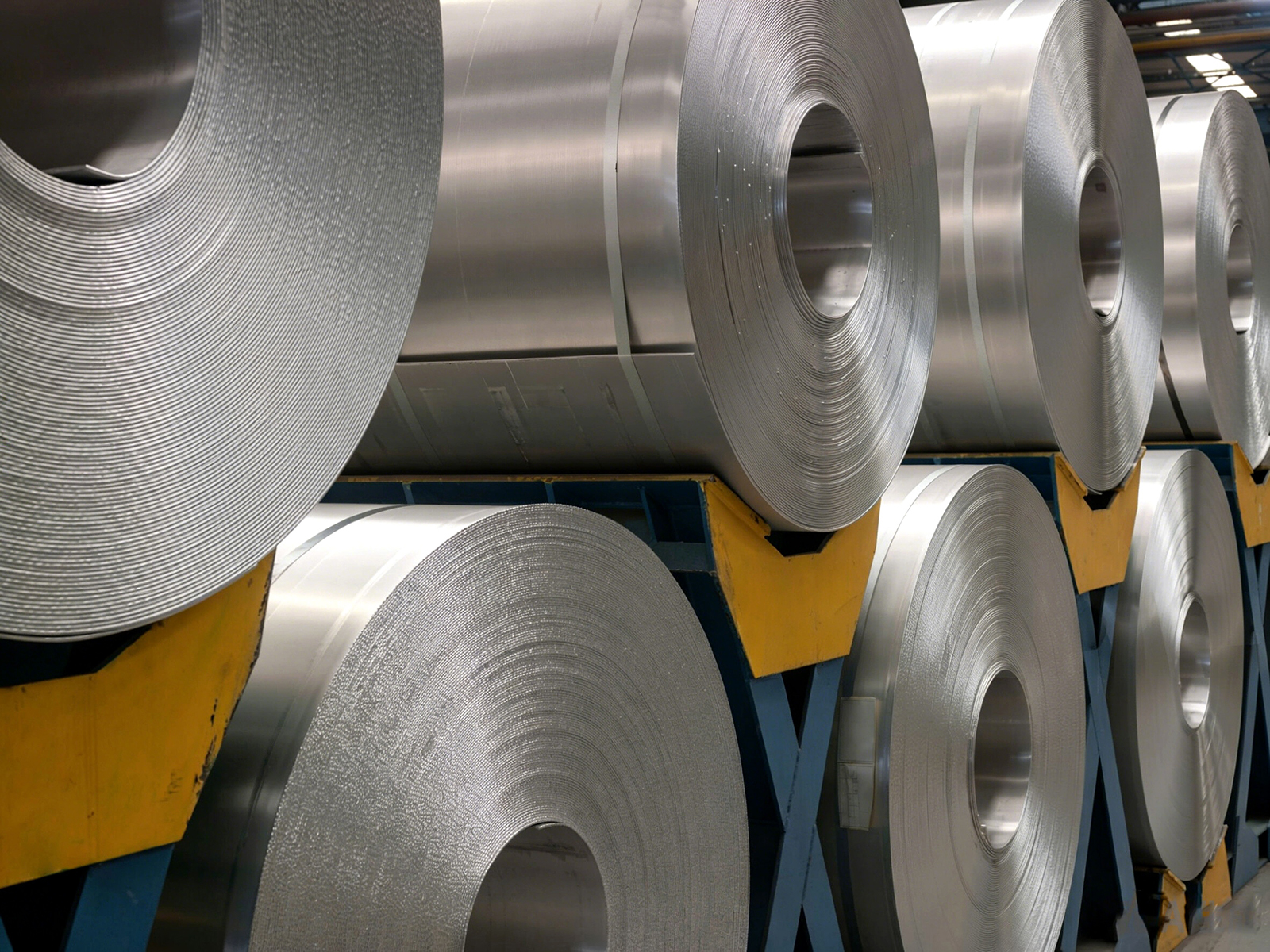
Gr1 Titanium Foil Gr1 titanium foil,relying on its high purity (99.5%+), exceptional corrosion resistance, lightweight characteristics, and thermal stability, has become an ideal material for plate heat exchanger manufacturing. Compared to stainless steel or copper alloys, Gr1 titanium foil maintains long-term stable operation in highly corrosive media environments, significantly extending equipment service life while reducing maintenance costs. With thickness precisely controllable within 0.02-1.0 mm and widths up to 670 mm, it meets the integrated manufacturing requirements for large-area heat exchange plates, eliminating structural weak points caused by welds. This material is particularly suited for industries with stringent cleanliness and durability requirements-including chemical processing, seawater desalination, pharmaceutical manufacturing, and food production-providing reliable material support for modern industrial heat exchange systems.
How Do Plate Heat Exchangers Require High-Performance Materials Like Gr1 Titanium Foil?
1. Severe Challenges Faced by Traditional Heat Exchanger Materials
Stainless steel plates are prone to pitting and stress corrosion cracking in environments with high chloride ion concentrations, especially in seawater or brine wastewater treatment systems, where equipment lifespan is often reduced to 3-5 years. Copper alloys, while offering excellent thermal conductivity, fail rapidly in acidic or ammonia-containing media. These material limitations force companies to frequently replace heat exchanger plates, and the production losses from downtime far exceed the cost of the materials themselves.
2. Strict Purity Requirements in High-Corrosion Operating Conditions
Mixed acid environments in chemical processes, high-temperature steam sterilization in the pharmaceutical industry, and long-term salt fog erosion in seawater desalination plants all impose extremely high demands on heat exchange plate materials. Excessive impurity content creates micro-battery effects on the material surface, accelerating localized corrosion. Gr1 titanium foil controls iron content below 0.20% and oxygen content no more than 0.18%, ensuring stable performance in complex media.
3. Large-Size Integrated Manufacturing Reduces System Risk
Traditional small-size plates require multiple weld joints to form large heat exchange surfaces, with each weld representing a potential leak point and corrosion weak spot. Wide-format titanium foil enables continuous supply at 670 mm width, combined with precision stamping technology, to produce large integrated plates, reducing weld count by over 60% and significantly improving system sealing reliability and overall durability.
How Does the Unique Material Properties of Gr1 Titanium Foil Improve Heat Exchange Efficiency?
1. Ultra-Thin Specifications Enable Compact Design
The 0.02-1.0 mm thickness range provides flexibility for heat exchanger design. Ultra-thin plates allow more heat exchange layers within the same volume, effectively increasing heat exchange area density. The 20-high mill process controls thickness tolerance within ±0.001 mm, ensuring uniform channel gaps after plate corrugation forming, more balanced fluid distribution, and avoidance of local overheating or flow dead zones.
2. Thermal Conductivity Characteristics of High-Purity Titanium
Although titanium’s thermal conductivity (21.9 W/(m·K)) is lower than copper and aluminum, in thin-wall structures, material thickness has a far greater impact on thermal resistance than thermal conductivity itself. Titanium foil at 0.05 mm thickness has only one-third the thermal conduction resistance of a 0.4 mm stainless steel plate. The high purity of Gr1 titanium foil reduces grain boundary impurities that hinder heat transfer, achieving stable thermal performance in practical applications.
3. Lightweight Design Reduces System Load
Titanium has a density of only 57% that of stainless steel. Heat exchanger assemblies manufactured with titanium foil can achieve 40-50% weight reduction. This is significant for offshore platforms, mobile chemical installations, and space-constrained retrofit projects. Lightweight design not only reduces installation difficulty and support structure costs but also decreases seismic design burdens in earthquake-prone regions.
How Do Precision Manufacturing Processes Ensure Performance Stability of Titanium Foil in Heat Exchangers?
1. 20-High Mill Technology Ensures Plate Flatness
Traditional 4-high or 6-high mills struggle to control the flatness of ultra-thin wide materials, prone to edge waviness and center buckle. The 750 mm wide 20-high precision mill distributes pressure through multiple backup rolls, achieving flat rolling of 0.02 mm ultra-thin foil. Flatness tolerance is controlled within 1 mm/m, ensuring consistent corrugation depth during plate stamping and precise alignment of sealing grooves.
2. Continuous Argon Annealing Eliminates Residual Stress
Cold rolling accumulates residual stress within the material. If not adequately relieved, plates may deform during welding or high-temperature operation. Continuous argon annealing furnaces control temperature within ±2 ?, with protective atmosphere preventing surface oxidation. Post-annealing elongation exceeds 25%, maintaining sufficient strength (tensile strength ?370 MPa) while providing good cold formability.
3. Surface Treatment Improves Welding and Coating Performance
Ultrasonic cleaning combined with alkaline solution treatment stabilizes surface dyne value at 44 dyne/cm, removing rolling oil films and microscopic particle contamination. Clean surfaces ensure weld quality for TIG or laser welding, and provide an ideal substrate for subsequent vacuum brazing or protective coatings. Specialized degreasers prevent residue contamination of heat exchange media.
What Are the Industrial Application Scenarios and Value Propositions?
1. Long-Term Operation Guarantee for Seawater Desalination Plants
Seawater desalination heat exchangers operate in extreme corrosive environments with chloride ion concentrations exceeding 19,000 ppm. Traditional titanium heat exchangers require replacement every 3-5 years. After adopting titanium foil heat exchangers in a Middle East desalination project, maintenance costs decreased by 70%.
2. Clean-Level Heat Exchange Requirements in Pharmaceutical Industry
Water for Injection (WFI) preparation systems require heat exchanger materials that do not leach harmful ions, with surface roughness reaching Ra ?0.4 µm. Gr1 titanium foil, after polishing and electrochemical passivation, forms a stable oxide film that produces no particles under repeated 121 ? pure steam exposure. Its non-magnetic characteristic avoids interference with precision detection equipment.
3. Multi-Media Adaptability in Chemical Industrial Parks
A heat exchange network may need to handle alkaline solutions, acidic wastewater, organic solvents, and other media. Titanium foil plate heat exchangers with zoned design, by replacing plate combinations in different zones, can adapt to process changes without complete equipment replacement. A chemical park that switched to titanium foil heat exchangers reduced annual equipment procurement costs by 45% while improving production flexibility.
4. Lightweight Solutions for Fuel Cell Thermal Management Systems
Hydrogen fuel cell stacks require precise temperature control. Cooling plates must conduct heat efficiently while resisting trace corrosive additives in coolant. 0.1 mm thick Gr1 titanium foil cooling plates weigh only 60% of aluminum plates but offer 3x durability. Vehicle range increased by 8% after adopting titanium foil heat exchangers in automotive fuel cell systems due to weight reduction.
What Are the Titanium Foil Product Selection and Verification Guidelines?
1. Evaluation Standards for Key Technical Parameters
Thickness uniformity directly affects weld quality and fluid distribution. Suppliers should provide full-width thickness distribution maps, with thickness standard deviation less than 0.005 mm. Surface roughness relates to fouling deposition tendency; polished surface Ra values should be controlled below 0.6 µm. Mechanical properties require attention to both strength and plasticity; materials with post-elongation below 20% are prone to cracking during complex corrugation forming.
2. Batch Stability and Traceability Considerations
Large heat exchanger projects may require hundreds of plates. Performance fluctuations between material batches lead to assembly difficulties and operational instability. Suppliers with comprehensive quality management systems should be selected. Each coil of titanium foil should include chemical composition analysis reports, mechanical property test data, and surface quality inspection records, traceable to raw material sources and process parameters via batch number.
3. Matching Customization Processing Capabilities
Standard specification Gr1 titanium foil may not fully meet special heat exchanger designs. Width capability up to 670 mm reduces longitudinal splicing; thickness coverage from 0.02 mm to 1.0 mm adapts to different pressure ratings; surfaces can provide bright finish, matte, or functional coatings for different heat exchange media. Annual production capacity of 3,000 metric tons ensures timely delivery of large-volume orders.
4. Third-Party Certification and Industry Standard Compliance
ASTM B265 is the internationally recognized titanium material standard; products should provide certificates of compliance. ISO 9001 quality management system certification, ASME pressure vessel manufacturing permits, and other qualifications indicate stable quality assurance capability. For specific industries such as pharmaceuticals or food, sanitary permits or FDA-certified material proofs should also be obtained.
Conclusion
Gr1 titanium foil,relying on high purity, precise dimension control, exceptional corrosion resistance, and lightweight characteristics, is redefining performance standards for plate heat exchangers. From seawater desalination to pharmaceutical clean systems, from chemical multi-media processing to new energy thermal management, this material creates significant total lifecycle value for industrial users by extending equipment life, reducing maintenance frequency, and improving system reliability. Selecting suppliers with advanced rolling processes, strict quality control, and customization capabilities is key to ensuring heat exchanger project success.
FAQ
Q1: What is the cost difference between Gr1 titanium foil and 316 stainless steel plates in heat exchangers?
Titanium foil initial procurement cost is approximately 2-3 times that of 316 stainless steel, but in high-chloride or acidic environments, service life can reach 4-5 times that of stainless steel. Considering replacement frequency, downtime losses, and maintenance labor costs, the total lifecycle cost of titanium foil heat exchangers is typically 30-50% lower, with payback periods generally within 3-5 years.
Q2: Will ultra-thin titanium foil affect the pressure resistance of heat exchangers?
Titanium foil at 0.05-0.1 mm thickness, after corrugation forming, creates sine-wave or chevron structures with strong supporting stiffness. Gr1 titanium yields 250 MPa at room temperature. With reasonable corrugation design, it can withstand 1.6 MPa working pressure. In practice, thin-wall design reduces thermal stress,rather improving fatigue life under thermal shock cycling.
Q3: How to verify the weld quality of titanium foil heat exchanger plates?
Helium mass spectrometry leak detection should be used for 100% inspection, with leakage rate less than 1×10?? Pa·m³/s. Weld metallographic examination should show no cracks, lack of fusion, or other defects; heat-affected zone width controlled within 2 mm. Pressure test should be 1.5 times working pressure, with no leakage after 30-minute hold at temperature. Periodic penetrant inspection should be used to check in-service weld conditions.
Contact Us
Baoji Titanium Valley Titanium Nickel Zirconium Material Processing Co., Ltd., as a professional Gr1 titanium foil manufacturer, is equipped with advanced 20-high precision rolling production lines with annual capacity of 3,000 metric tons. We offer thickness 0.03-1.0 mm, width 15-680 mm high-precision titanium foil products and customization services. Welcome inquiries from global heat exchanger manufacturers, engineering companies, and end users: sales@titaniumvalleys.com
References
[1] Zhang Jianjun, Li Minghua. Research on the Application of Titanium and Titanium Alloys in Plate Heat Exchangers[J]. Chemical Equipment and Piping, 2021, 58(3): 45-52.
[2] Wang Yongqiang, Chen Xiaofeng. Precision Rolling Technology of Ultra-Thin Titanium Foil and Its Application in Heat Exchange Equipment[M]. Beijing: Metallurgical Industry Press, 2022: 112-135.
[3] Zhao Zhigang, Liu Wei. Corrosion Resistance Study of Titanium Foil for Plate Heat Exchangers[J]. Materials Protection, 2020, 53(7): 89-94.
[4] China Nonferrous Metals Industry Association. Technical Specification for Titanium and Titanium Alloy Plate Heat Exchangers: GB/T XXXX-2022[S]. Beijing: Standards Press of China, 2022.