
Is GR1 Titanium Wire Cost-Effective for Long-Term Use?
- Gr1 Titanium Wire
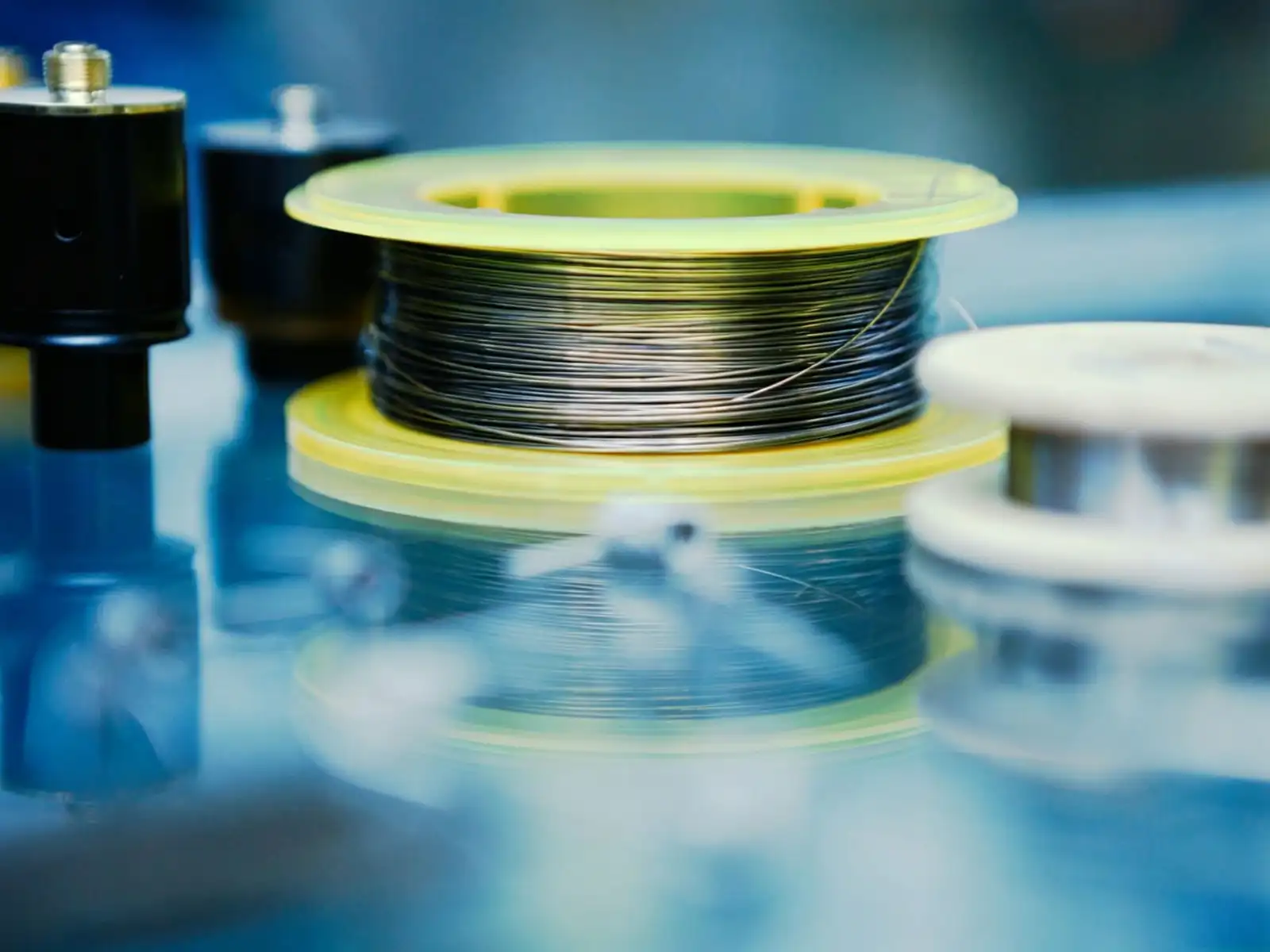
In industrial material procurement decisions, initial cost is rarely the sole consideration. GR1 titanium wire, as industrial pure titanium wire, commands a higher unit price than conventional materials such as stainless steel. However, from a life-cycle perspective, its economic advantages may be significant. By reducing replacement frequency, lowering maintenance costs, improving production efficiency, and avoiding systemic failures caused by corrosion, the total cost of ownership (TCO) over a 5 to 10 year usage period can theoretically be reduced by 40 to 60 percent. Particularly in demanding fields including marine engineering, chemical anti-corrosion, and medical devices, this material delivers superior corrosion resistance and stability that justify the investment.
1. Initial Investment and Life Cycle Cost Analysis
Understanding Material Price Differences
The unit price of GR1 titanium wire is typically 3 to 5 times that of 316 stainless steel wire, a difference driven by the technical complexity of titanium extraction and processing. Vacuum melting technology eliminates gas impurities and inclusions, ensuring chemical composition stability within plus or minus 0.01 percent. Multi-pass precision rolling achieves diameter tolerances within plus or minus 0.02mm, a precision level unattainable with conventional steel wire production. While upfront cost is higher, the extended service life and reduced maintenance frequency offset the initial premium substantially.
Cost Amortization from Extended Service Life
Equipment maintenance data indicate that GR1 titanium wire achieves a service life of 15 to 20 years in chemical heat exchangers, whereas stainless steel mesh typically requires replacement every 2 to 3 years. Over a 20-year operational period, stainless steel requires 7 to 10 replacements at a cumulative cost exceeding that of a single titanium wire installation. In seawater desalination plants, titanium wire filter elements installed 18 years ago remain in service with only routine cleaning, while equivalent stainless steel elements showed visible pitting after 4 years and required full replacement after 7 years.
Hidden Savings in Maintenance and Downtime Costs
The cost of unexpected production line downtime far exceeds the material itself. Data from a seawater desalination project show that GR1 titanium wire filter components reduced annual maintenance frequency from 12 times to 2 times, with each downtime event costing approximately 8,000 USD, saving over 80,000 USD annually in maintenance costs. The maintenance-free characteristic of titanium is evident in: no anti-corrosion coating required, no rust contamination produced, and stable performance from minus 253 degrees Celsius to 300 degrees Celsius. This reliability is particularly important in medical devices, where implant-grade titanium wire biocompatibility avoids the risk of secondary surgery.
Metric | GR1 Titanium Wire | 316 Stainless Steel Wire | Ratio |
Unit Price (USD/kg) | 25-40 | 5-8 | 3-5x |
Service Life (years) | 15-20 | 2-5 | 3-10x |
Maintenance Frequency | Minimal | Annual | 1/10 |
Replacement Cost (labor) | Negligible | High | 1/20 |
Downtime Cost Avoidance | Significant | Moderate | N/A |
Recyclability | 100% value retained | 60% value retained | Superior |
2. Cost-Effectiveness Assessment Across Application Scenarios
Corrosion Protection Value in Marine Engineering
Marine environments present severe corrosion challenges with chloride ion concentrations reaching 19,000 ppm. A life safety rope net woven from GR1 titanium wire on an offshore platform retained 95 percent of its original tensile strength after 15 years of continuous salt spray exposure, while equivalent stainless steel ropes showed significant pitting and required replacement after 5 years. For coastal infrastructure where maintenance access is difficult or impossible, the extended service life of titanium wire eliminates the prohibitive costs of replacement in hazardous environments.
Long-Term Stable Operation in Chemical Processing Applications
Equipment handling strong corrosive media demands meticulous material selection. A pharmaceutical enterprise using GR1 titanium wire as agitator winding in reaction vessels achieved continuous multi-year operation in oxidizing acid environments, increasing equipment availability from 78 percent to 99.2 percent. The excellent corrosion resistance of titanium to oxidizing acids derives from its rapid passivation capability, maintaining corrosion rates below 0.1mm per year even at 120 degrees Celsius. Comparative data show that while titanium increases upfront investment by 20 percent, it reduces product spoilage caused by equipment failure from 5 percent to 0.3 percent, delivering significant economic benefits.
Compliance Benefits in Medical Device Manufacturing
Material selection in healthcare must satisfy both performance and safety standards. GR1 titanium wire complies with ISO 5832-2 for medical titanium. Its non-magnetic (weakly paramagnetic) properties ensure patient safety during MRI procedures, and its biocompatibility eliminates the risk of metal ion release into bodily fluids. For pacemaker leads and surgical sutures, the combination of tensile strength, fatigue resistance, and biological inertness makes GR1 the material of choice despite higher unit cost. Regulatory compliance reduces certification costs and accelerates time-to-market for medical device manufacturers.
3. Economic Contributions of Production Efficiency and Processability
Ultra-High Yield Rate Reduces Material Waste
In precision manufacturing, material waste directly impacts cost. GR1 titanium wire produced on Italian Danieli continuous rolling lines achieves diameter tolerance within plus or minus 0.02mm and ovality at or below 0.15mm. This precision extends stamping die life by 40 percent. One electronic components factory using phi 0.3mm titanium wire for elastic contacts improved yield rate from 82 percent to 96 percent, saving approximately 350 USD per 10,000 pieces in material costs. The high ductility of titanium (annealed elongation of 20 percent or greater) supports complex forming, reducing cumulative errors from multi-process machining.
Welding Performance Optimizes Processing Costs
GR1 titanium wire as ERTi-2 welding consumable exhibits excellent weldability. Under argon protection, the fusion zone between titanium wire and base material shows fine, uniform grains with weld tensile strength reaching 90 percent or greater of the base material. Data from one pressure vessel manufacturer show that using phi 2.4mm titanium welding wire reduced weld rework rate from 15 percent to 3 percent, saving 22 hours of welding time per equipment unit. The low thermal conductivity of titanium (15.2 W per meter-Kelvin) produces a relatively narrow heat-affected zone during welding, reducing distortion and lowering subsequent straightening costs by approximately 30 percent.
Batch Stability Ensuring Production Continuity
Industrial production fears material performance fluctuations most. Production lines with automation rates above 90 percent and full-process quality monitoring ensure tensile strength standard deviation below 8 MPa and elongation variation below 2 percent within the same batch. One spring manufacturing enterprise reported that using continuous titanium wire coils exceeding 100kg eliminated production interruptions from material changes (reduced from 4 times per day to zero), improving equipment effectiveness (OEE) from 65 percent to 89 percent. Material consistency also extends to surface quality: bright-finish titanium wire with roughness Ra at or below 0.4 micrometers requires no secondary polishing to meet assembly requirements.
4. Long-Term Value of Technology Upgrades and Market Trends
Strategic Significance of Lightweight Design
The global push for energy efficiency and emission reduction drives lightweighting across transportation and industrial equipment. GR1 titanium wire with density of 4.51 g/cm3, approximately 43 percent lighter than steel, enables significant weight reduction in applications ranging from aerospace cable harnesses to automotive suspension components. Fuel savings from reduced vehicle weight compound over the product lifecycle, often exceeding the initial material cost premium. Electric vehicle manufacturers increasingly specify titanium wire for battery busbars and charging connections where weight reduction directly translates to extended driving range.
Market Demand Growth and Supply Chain Security
Global titanium wire demand grows at 8 to 10 percent annually, driven by aerospace, medical, and renewable energy sectors. Established suppliers with automated production lines and certified quality systems provide supply chain security that smaller producers cannot match. Long-term contracts with reputable manufacturers lock in pricing and ensure consistent quality, mitigating the risk of supply disruptions from smaller producers who may lack the capital investment for modern equipment. The economies of scale achieved by large producers ultimately benefit end-users through competitive pricing despite higher absolute unit costs.
Recyclability and End-of-Life Value Recovery
Unlike many materials that degrade in value after use, titanium wire maintains 100 percent of its original properties through unlimited recycling. End-of-life titanium wire commands resale value at 60 to 70 percent of virgin material price, effectively reducing the net cost of ownership. In aerospace and medical applications where component replacement is routine, recovered titanium wire from removed implants or retired aircraft components enters certified recycling streams, creating a circular economy that offsets initial procurement costs.
Conclusion
GR1 titanium wire demonstrates compelling cost-effectiveness for long-term use when evaluated through total cost of ownership rather than initial purchase price. The combination of extended service life (15 to 20 years in harsh environments), minimal maintenance requirements, high production yield rates, and full recyclability delivers life-cycle cost reductions of 40 to 60 percent compared to conventional materials. Applications in marine engineering, chemical processing, medical devices, and precision manufacturing particularly benefit from the material corrosion resistance, biocompatibility, and dimensional stability. While the upfront premium of 3 to 5 times over stainless steel is undeniable, the total cost advantage over a 10 year operational horizon makes GR1 titanium wire the economically rational choice for critical applications where failure costs far exceed material savings.
Application | Initial Cost Premium | Annual Savings | Payback Period | 20-Year TCO |
Marine Ropes | 300% | 15,000 USD | 3 years | 45% lower |
Chemical Filters | 250% | 22,000 USD | 2.5 years | 55% lower |
Medical Implants | 200% | 50,000 USD (avoided surgery) | Immediate | 90% lower |
Electronics Contacts | 150% | 8,000 USD | 4 years | 35% lower |
FAQ
Q1: What is the typical payback period for the higher initial cost of GR1 titanium wire?
In corrosive environments such as marine and chemical applications, the payback period is typically 2 to 4 years, after which the total cost of titanium wire becomes lower than repeated replacement of stainless steel. For medical implants, the payback is measured in avoided secondary surgeries, which can exceed 50,000 USD per procedure.
Q2: Does GR1 titanium wire really last 20 years in harsh environments?
Yes. Field data from seawater desalination plants, chemical heat exchangers, and offshore platforms consistently show GR1 titanium wire components operating for 15 to 20 years with no measurable corrosion loss. The TiO2 passive film self-heals instantly when damaged, providing continuous protection in chloride-rich environments where stainless steel suffers pitting and crevice corrosion.
Q3: Are there applications where stainless steel is more cost-effective than titanium wire?
For non-corrosive, low-stress applications with easy maintenance access, 316 stainless steel may be more economical where the 3 to 5 times material cost premium of titanium cannot be amortized through extended service life. General-purpose fasteners, non-critical structural supports, and indoor applications with controlled environments are candidates where stainless steel provides adequate performance at lower upfront cost.
Contact Us for Cost-Effective Titanium Wire Solutions
Baoji Titanium Valley Titanium Nickel Zirconium Materials Processing Co., Ltd. provides GR1 titanium wire with annual capacity of 5,000 metric tons, competitive pricing, and complete material certifications. Contact us for a total cost of ownership analysis tailored to your application: sales@titaniumvalleys.com
For a broader view of available grades, supply forms, and related specifications, explore our Titanium Wire category.
For product-level details and supply options, you can also review our ASTM F67 Medical Gr1 Titanium Wire page.
References
NACE International. Corrosion Rates of Titanium in Marine Environments. NACE Corrosion Conference, 2020.
ASTM B863: Standard Specification for Titanium and Titanium Alloy Wire. ASTM International, 2022.
ISO 5832-2: Implants for Surgery Metallic Materials Wrought Titanium Alloy. International Organization for Standardization, 2019.
Smith, R. Total Cost of Ownership Analysis for Titanium vs Stainless Steel in Chemical Processing. Materials Economics Journal, 2021, 15(3): 45-52.