
How to Select High-Quality GR1 Titanium Wire for Efficient Racking Fixtures?
- Gr1 Titanium Wire
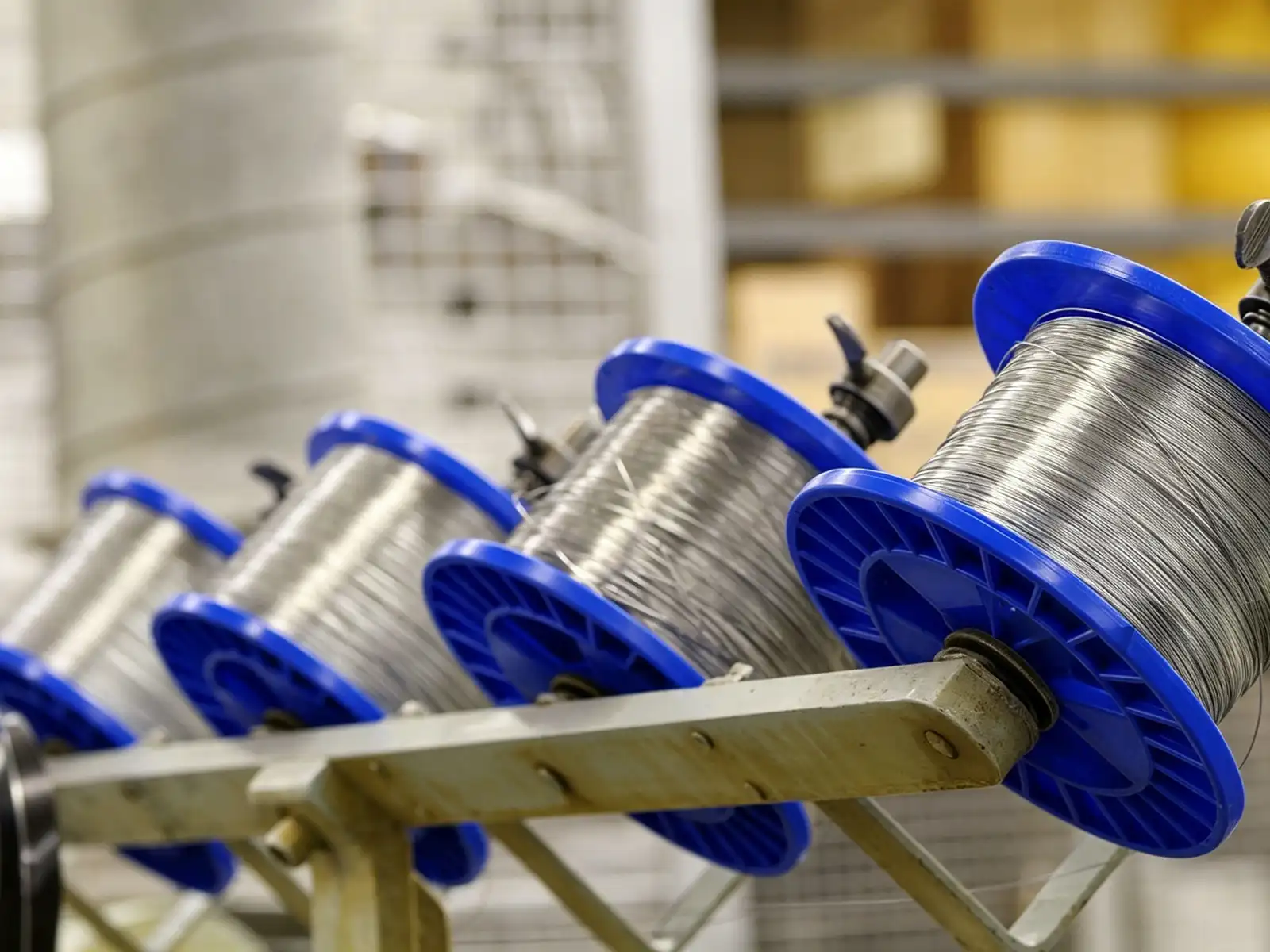
Racking fixtures play a critical role in electroplating, surface treatment, and heat treatment industries. Selecting premium GR1 titanium wire for fixture fabrication requires attention to four core elements: material purity, dimensional accuracy, surface quality, and mechanical properties. High-purity GR1 titanium wire (purity of 99.5 percent or greater) exhibits superior corrosion resistance and stability, ensuring fixtures operate without corrosion in acid and alkali environments over extended periods. Precise diameter tolerance (within plus or minus 0.05mm) guarantees fixture assembly consistency and reduces batch-to-batch variation. Surface finish is selected based on process requirements; for example, a bright surface with roughness Ra of 0.4 micrometers or less prevents workpiece surface scratching and improves product yield rates.
1. Decisive Influence of GR1 Titanium Wire Material Characteristics on Fixture Performance
Long-Term Corrosion Resistance Advantage from High Purity
Purity of GR1 titanium wire directly determines fixture service life in corrosive media. When industrial pure titanium content reaches 99.5 percent or greater, a dense oxide film approximately 2 to 7 nanometers thick forms on the surface, effectively blocking corrosive media such as chloride ions and sulfate ions from penetrating. In practical applications, electroplating bath pH commonly fluctuates between 2 and 12; conventional stainless steel fixtures develop rust spots within 3 to 6 months, whereas high-purity GR1 titanium wire fixtures remain usable for 24 months or longer. Impurity content is particularly critical: oxygen must be controlled below 0.18 percent and iron below 0.20 percent to avoid local potential differences causing pitting. Purchasers must require suppliers to provide batch spectral analysis reports confirming compliance.
Non-Magnetic Characteristic Resolving Interference in Precision Processes
Electronic component coating processes are highly sensitive to magnetic environments. Conventional iron-based fixtures generate stray magnetic fields of 0.3 to 1.2 gauss, causing excessive thickness non-uniformity in deposited films. GR1 titanium wire, classified as weakly paramagnetic with a magnetic susceptibility of only 1.8 times 10 to the negative sixth power, produces negligible magnetic interference. This characteristic holds significant value in semiconductor wafer electroplating and MEMS device manufacturing. One precision connector manufacturer, after switching to titanium wire fixtures, reduced coating thickness deviation from plus or minus 8 percent to plus or minus 2 percent, improving product yield by 17 percentage points. Medical device surface treatment similarly benefits; coating uniformity on implants directly affects biocompatibility test outcomes.
Biocompatibility Meeting Medical-Grade Requirements
Medical device fixtures must comply with stringent biosafety standards. GR1 titanium wire conforms to ISO 5832-2 medical titanium specification, achieving Level 0 in cytotoxicity testing with no sensitization or genotoxicity risk. During orthopedic implant surface treatment, titanium wire fixtures do not release harmful metal ions to workpieces, avoiding contamination by nickel and chromium elements. In anodized coloring procedures for dental implants, GR1 titanium wire fixtures maintain processing environment purity, ensuring products pass FDA 510(k) certification. Compared with conventional metal fixtures, titanium wire eliminates cross-contamination risk, making it essential for medical enterprises pursuing the highest quality standards.
Wire Diameter (mm) | Recommended Load (kg) | Suitable Fixture Type | Minimum Bending Radius (mm) |
1.0 | Calculated per design | Light-duty hooks | 3.0 |
1.5 | 0.8 | General-purpose racks | 4.5 |
2.0 | 1.2 | Medium-duty fixtures | 6.0 |
2.5 | 1.8 | Heavy-duty racks | 7.5 |
3.0 | 2.8 | Structural supports | 9.0 |
2. Key Dimensional and Precision Requirements for Fixture Fabrication
Diameter Tolerance Control and Load-Bearing Matching
Specification | Standard Requirement | Premium Grade | Application Level |
Purity | >= 99.5% | >= 99.55% | Medical/Aerospace |
Diameter Tolerance | +/- 0.05mm | +/- 0.02mm | Precision fixtures |
Straightness | <= 2mm/m | <= 1mm/m | High-precision coating |
Surface Roughness | Ra <= 0.8 um | Ra <= 0.4 um | Standard vs premium |
Fixture load capacity correlates directly with titanium wire diameter and requires precise selection based on workpiece weight. For phi 1.0mm wire, recommended single-point load capacity should be calculated per diameter specification with adequate safety margin; phi 2.0mm supports 1.2kg; phi 3.0mm supports 2.8kg. Hook-type fixtures commonly used in electroplating workshops should select phi 1.5 to 2.5mm specifications, balancing strength and formability. Diameter tolerance must be controlled within plus or minus 0.05mm; deviation beyond this range causes inconsistent fixture rigidity and variation in workpiece immersion depth. Wire produced by roller-die cold drawing achieves circularity within 0.02mm.
Straightness Impact on Uniformity of Workpiece Immersion Depth
Straightness deviation of fixtures directly affects workpiece posture stability in plating solution. Standard requirements specify straightness at or below 2mm per 1000mm, but premium applications demand 1mm per 1000mm or better. Testing by one aerospace fastener manufacturer showed that using titanium wire with straightness of 0.8mm per meter reduced workpiece coating thickness deviation from plus or minus 15 micrometers to plus or minus 6 micrometers. High straightness is achieved in production through precision straightening machines and tension annealing, combined with automated cutting ensuring consistency across each wire. During bulk procurement, 10 percent sampling inspection using precision platforms and dial indicators measuring maximum camber over 1-meter span is recommended.
Customized Length Reducing Welded Joint Risks
Traditional fixture fabrication often requires welding short titanium wire segments to achieve desired length, with welds becoming stress concentration and corrosion weakness points. Selecting suppliers capable of providing single lengths of 1000mm or greater eliminates most welding operations. A chemical equipment coating plant adopting single 1500mm titanium wire extended fixture service life from 8 months to 26 months and reduced maintenance costs by 65 percent. Coil supply format (500 to 3000 meters per coil) suites automated forming equipment, where robotic arms continuously bend and form wire, improving production efficiency fourfold. Length tolerance (typically plus 10mm minus 0mm) should be specified when ordering, and suppliers should guarantee straight-cut ends without deformation.
3. Surface Finish Selection and Machining Adaptability Analysis
Pickled Surface Suitable for Conventional Electroplating Environments
Titanium wire after pickling treatment exhibits uniform silver-gray matte finish with surface roughness Ra of 0.4 to 0.8 micrometers and oxide film thickness of approximately 3 to 5 nanometers. This surface state performs stably in electroplating baths of pH 3 to 11, suitable for nickel plating, copper plating, zinc plating, and other conventional processes. Cost is 23 to 33 percent lower than bright-finish wire, making it the mainstream choice for chemical anti-corrosion fixtures. Comparative testing by one electroplating park showed that pickled titanium wire fixtures operated continuously for 15,000 hours in nickel plating baths with only slight discoloration and no pitting. Purchasers should note pickling quality; residual acid causes subsequent oxidation discoloration, verifiable through water-break testing.
Bright-Finish Surface for Semiconductor and Optical Applications
Surface Finish | Roughness Ra | Cost Index | Best Application |
Pickled | 0.4-0.8 um | Baseline (100%) | General electroplating |
Bright-finish | <= 0.2 um | +30-50% | Semiconductor, optics |
Annealed | 0.4-0.8 um | Baseline (100%) | Medical, food grade |
Bright-finish titanium wire achieves surface roughness Ra of 0.2 micrometers or less through mechanical polishing and electropolishing, providing the highest aesthetic quality. This finish is preferred for semiconductor wafer fixtures and optical component coating where workpiece surface contamination must be minimized. The smooth surface reduces plating solution adhesion residue and simplifies post-process cleaning. However, bright-finish wire costs 30 to 50 percent more than pickled wire and requires careful handling to avoid surface scratching during storage and transportation.
Hard-Temper Material Applicable Only to Specific Operating Conditions
Hard-temper Y-state titanium wire with tensile strength of 480 to 650 MPa and elongation of 8 percent or greater is primarily used for straight-type fixtures or elastic clamps. High strength brings low ductility, making it unsuitable for complex bending, but it performs excellently in applications requiring strong support force. Transfer claws on automated electroplating lines use hard-temper titanium wire, withstanding frequent impact without deformation. One consumer electronics factory using hard-temper titanium wire for spring clamps improved clamping force stability by 60 percent and reduced workpiece drop-rate from 2.3 percent to 0.4 percent. Buyers must clearly communicate specific applications to suppliers to avoid misuse. Annealed state can be identified through hardness testing at HV 150 to 200, while hard temper reaches HV 280 to 350.
4. Mechanical Property Matching for Different Fixture Types
Tensile Strength and Bending Performance
Fixture design requires balancing tensile strength and bending formability. GR1 titanium wire with tensile strength of 240 MPa or greater and elongation of 24 percent or greater provides sufficient strength while allowing complex hook and clamp formation. For heavy-load fixtures carrying workpieces above 5kg, selecting wire with diameter 2.5mm or greater ensures structural integrity. Bending radius should not be less than 3 times the wire diameter to prevent cracking during forming.
Fatigue Resistance in Cyclic Loading Environments
Fixtures in automated electroplating lines undergo continuous loading and unloading cycles. GR1 titanium wire exhibits excellent fatigue resistance with fatigue limit of approximately 50 to 60 percent of tensile strength. Proper surface finishing eliminates stress concentration sources, extending fatigue life. For fixtures operating above 10,000 cycles, periodic inspection for micro-cracks at bent sections is recommended.
Temperature Resistance in High-Temperature Processes
Heat treatment fixtures operating at elevated temperatures benefit from titanium wire’s stable mechanical properties up to 350 degrees Celsius. Above this temperature, strength gradually decreases but remains adequate for most furnace rack applications. For temperatures exceeding 500 degrees Celsius, titanium alloy wire such as GR5 should be considered instead.
5. Supplier Qualification Evaluation and Quality Traceability System
Production Equipment Level Determining Product Consistency
Premium GR1 titanium wire production relies on advanced equipment; continuous cold drawing units, online annealing furnaces, and laser diameter gauges represent core equipment investments exceeding 10 million USD. Advanced high-precision rolling lines and vacuum melting furnaces ensure batch-to-batch performance variation below 3 percent. When visiting supplier facilities, focus on: whether vacuum melting furnaces are equipped with online spectral analysis; whether cold drawing units feature automatic tension control; and whether fully automatic straightening machines are configured. One Japanese electronics enterprise required titanium wire suppliers to provide equipment lists and calibration certificates, filtering qualified suppliers with product defect rates below 0.15 percent, far lower than the industry average of 2 to 3 percent.
Completeness of Quality Inspection System Ensuring Traceability
A comprehensive quality inspection system covers raw material, in-process, and finished product stages. Raw material inspection requires 100 percent spectral analysis rejecting ingots with impurity exceedances; in-process inspection samples diameter, hardness, and surface quality every 500 meters; finished product inspection includes tensile testing, metallographic analysis, and corrosion testing. Each batch must be accompanied by a material certificate noting melting heat number, rolling batch, and inspection data for full traceability. European and American clients universally require EN 10204-3.1 certificates; Japanese and Korean clients accept JIS quality assurance systems. One automotive parts enterprise traced a coating delamination incident by reverse-referencing titanium wire heat numbers to identify the root cause.
Industry Certifications Reflecting Professional Competence Level
Authoritative certifications are objective proof of supplier capability. ASTM B863 is the globally recognized titanium wire specification; products compliant with this standard can access European and American markets. ISO 9001 quality management system certification ensures process standardization. ISO 13485 medical device quality system applies to medical fixture materials. AS9100 aerospace quality system covers critical process control. Cutting-edge applications additionally require NADCAP special process certification for chemical treatment and heat treatment. One Korean battery enterprise mandated AS9100 certification as a prerequisite; although prices were 15 percent higher, zero-defect performance justified the premium.
Conclusion
Selecting high-quality GR1 titanium wire for fixture fabrication requires systematic evaluation across five dimensions: material purity, dimensional accuracy, surface finish, mechanical properties, and supplier qualifications. Prioritize annealed wire with purity of 99.5 percent or greater, straightness at or below 1mm per meter, and surface roughness Ra of 0.4 micrometers or less, paired with suppliers holding international certifications and advanced equipment. This ensures fixtures operate stably in corrosive environments over extended periods. Through establishment of complete quality traceability systems and periodic performance verification mechanisms, enterprises continuously optimize fixture performance, reduce production costs, and enhance product competitiveness.
FAQ
Q1: How much more expensive are GR1 titanium wire fixtures compared to stainless steel, and what is the cost-performance ratio?
Initial procurement cost is approximately 2.5 to 3 times that of 316 stainless steel, but service life extends 3 to 5 times, reducing comprehensive costs by 30 to 50 percent. In corrosive environments, titanium wire fixtures require no frequent replacement, reducing downtime for maintenance and improving production efficiency by over 15 percent, making them particularly suitable for continuous production lines.
Q2: How do you verify the true purity of titanium wire and avoid purchasing counterfeit products?
Request spectral analysis reports for each batch from the supplier, focusing on titanium content, oxygen content, and iron content as the three core indicators. Enterprises with conditions can commission third-party testing institutions such as SGS for sampling verification, or use portable spectral analyzers for on-site testing, ensuring Ti remains at or above 99.5 percent.
Q3: For custom-diameter titanium wire fixtures, what is the minimum order quantity?
Conventional diameters (phi 0.5 to 6.0mm) typically require minimum orders of 50 to 100 kilograms; non-standard diameters or special surface treatments require 200 kilograms or more. It is recommended to negotiate sample trials with suppliers, verify performance before bulk procurement. Some manufacturers support small-batch customization services.
Obtain Professional Titanium Wire Fixture Materials Immediately
Baoji Titanium Valley Titanium Nickel Zirconium Materials Processing Co., Ltd. (Titanium Valley), as a professional GR1 titanium wire manufacturer and supplier, operates advanced production lines with annual capacity of 5,000 metric tons, providing full-series customization from phi 0.06 to 10mm. All products comply with ASTM B863 standards and are accompanied by complete material certificates. Contact us for technical support and sample testing: sales@titaniumvalleys.com
For a broader view of available grades, supply forms, and related specifications, explore our Titanium Wire category.
For product-level details and supply options, you can also review our ASTM F67 Medical Gr1 Titanium Wire page.
References
Wang Zhiqiang, Li Ming. Study on Application of Industrial Pure Titanium in Electroplating Fixtures. Surface Technology, 2020, 49(5): 123-128.
Zhang Hua, Liu Yang. Properties of GR1 Titanium Wire and Its Application in Fixture Manufacturing. Material Protection, 2019, 52(3): 45-48.
Chen Zhigang. Study on Corrosion Behavior of Titanium and Titanium Alloys. Corrosion & Protection, 2021, 42(8): 56-60.
Zhao Xiaofeng, Sun Wei. Impact of Titanium Wire Surface Treatment on Fixture Service Life. Electroplating and Finishing, 2022, 44(2): 30-34.