
What Processing and Handling Practices Are Recommended for Zr702 Foil?
- Zr702 foil
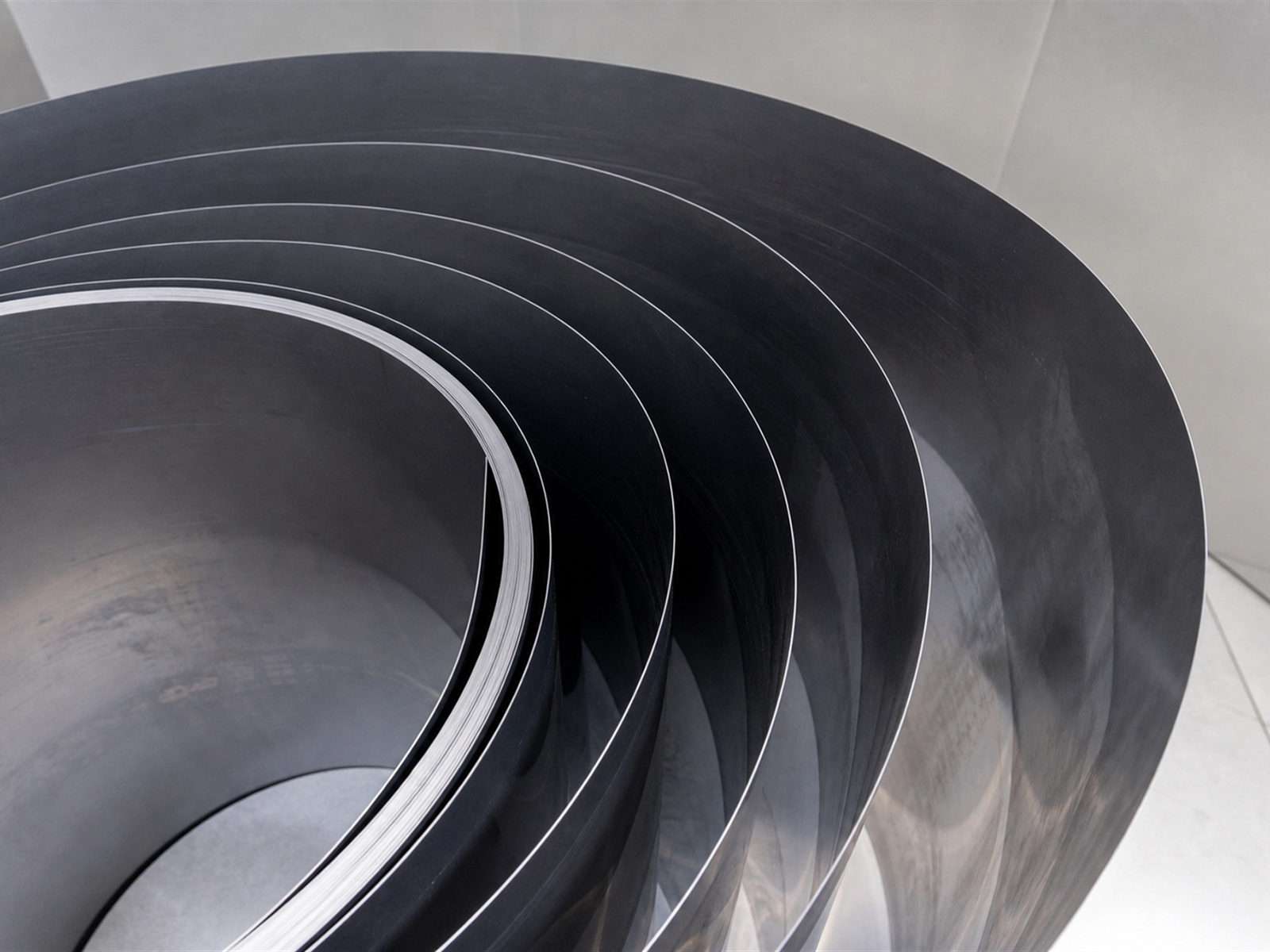
Successful processing of Zr702 foil depends on precise process control and disciplined operating procedures. This commercially pure zirconium material (Zr+Hf ≥99.2%) offers excellent corrosion resistance in strong acid service, but it also imposes strict requirements on temperature control, cleanliness, and mechanical processing parameters. Proper processing practice not only supports thickness control down to +/-0.001 mm for relevant gauges, but also helps preserve long-term stability in chemical corrosion control, electrochemical processing, and new energy applications. From cold rolling and annealing to surface treatment and final inspection, every process step affects end-use performance. This article outlines the key technical considerations involved in processing Zr702 foil so that engineers and procurement teams can better understand the manufacturing logic behind this high-performance material.
1. What Are the Critical Control Points in Cold Rolling Zr702 Foil?
(1) How Should the Multi-Pass Cold Rolling Schedule Be Designed?
Zr702 foil needs to go through 15-25 passes of precision cold rolling from the original ingot to ultra-thin specifications (0.02-0.8mm). The reduction rate of each pass must be controlled between 8% and 15%. Excessive reduction rate will cause edge cracking and surface microcracks of the material. The unique structure of the 20-roll finishing mill can provide more uniform pressure distribution, allowing the thickness tolerance to be stably maintained within the range of +/-0.001mm (for the 0.02-0.8mm specification, the actual tolerance is slightly relaxed as the thickness increases, but all specifications can be controlled within +/-0.002mm). The setting of the pass gap needs to be dynamically adjusted according to the current hardness state of the material to avoid forming difficulties caused by too rapid work hardening.
(2) How Should Rolling Temperature and Speed Be Matched?
During the cold rolling process, the surface temperature of the roll must be strictly controlled within the range of 25-35℃. If the temperature is too high, it will accelerate the oxidation of the material and form a dark oxide film, which will affect subsequent welding performance; if the temperature is too low, it will increase the deformation resistance and reduce the life of the equipment. The rolling speed is usually set at 12-18 meters/minute, and ultra-thin specifications (<0.05mm) need to be reduced to 6-10 meters/minute to ensure plate stability. The coordinated control of speed and tension is the key to preventing wrinkles and wavy edges. The real-time feedback system of the tension sensor can control the deviation within 0.5%.
(3) How Does the Lubrication System Affect Surface Quality?
Zr702 foil rolling requires special low-chlorine lubricating oil (chlorine content <5ppm) to avoid the risk of pitting corrosion caused by residual chloride ions. The kinematic viscosity of the lubricating oil (40℃) should be between 32-46 mm²/s. If it is too low, it will cause insufficient lubrication and cause scratches. If it is too high, it will be difficult to clean. The pressure of the spray system is set at 0.8-1.2MPa to ensure that the oil film thickness is evenly distributed. Roll cleaning is required every 500 meters of rolling to remove adhering metal particles and oxides, which directly determines the finish level of the finished product surface.
2. How Does Annealing Determine the Properties of Zr702 Foil?
(1) How Is the Vacuum Annealing Atmosphere Controlled?
Zr702 foil is vacuum annealed in the temperature range of 600-750℃. For regular thickness (0.1-0.8mm), the vacuum degree needs to be below 1×10⁻³Pa; for extremely thin specifications (<0.01mm), due to higher surface activity, ultra-high vacuum 1×10⁻⁵Pa is required to prevent the intrusion of oxygen and nitrogen elements. The residual oxygen content in the annealing furnace must be less than 10 ppm, which requires at least three vacuum-argon filling cycles before heating up. The temperature uniformity is controlled within +/-2℃ to avoid abnormal growth of grains caused by local overheating. The holding time is calculated based on the thickness. A thickness of 0.1mm usually requires holding for 45-60 minutes to ensure complete recrystallization.
(2) How Is Inert-Atmosphere Annealing Optimized?
When using high-purity argon (purity ≥99.999%) as the protective atmosphere, the gas flow rate needs to be maintained at 15-25L/min. The dew point of argon must be controlled below -60℃ to prevent the introduction of water vapor. The continuous annealing line adopts a segmented heating mode, and the temperature gradient design of the preheating zone, heat preservation zone, and slow cooling zone directly affects the elongation recovery of the material. Rapid cooling will cause residual internal stress. The ideal cooling rate should be controlled at 50-80℃/hour to stabilize the annealed tensile strength at ≤380MPa and the elongation ≥20%.
(3) How Is Microstructural Uniformity Verified After Annealing?
The annealing quality is verified through metallographic analysis. Qualified Zr702 foil should present uniform equiaxed grains with a grain size between grade 7-9. Local banded structures or coarse grains will reduce the formability and lead to cracks during subsequent stamping. Hardness testing needs to be conducted in multiple areas, and the Vickers hardness value should fluctuate no more than 8% in the range of HV 120-160. X-ray diffraction analysis can detect residual stress levels. The residual stress of qualified products should be less than 50MPa to ensure dimensional stability in long-term use.
3. What Are the Key Requirements for Surface Treatment and Cleanliness Control?
(1) How Should Ultrasonic Cleaning Parameters Be Optimized?
A multi-stage ultrasonic cleaning system is used to remove oil stains and particles on the surface of Zr702 foil. Use an alkaline degreasing agent (pH value 10-12) as the cleaning fluid, control the temperature at 55-65℃, and set the ultrasonic frequency to 28kHz or 40kHz dual-frequency mode. The cleaning time is adjusted according to the degree of surface contamination, generally 8-15 minutes. The ultrasonic power density needs to reach 0.8-1.2W/cm². If it is too low, particles cannot be effectively removed, and if it is too high, it may cause microscopic damage to the surface. Use deionized water (conductivity <5μS/cm) in the rinsing process, and perform countercurrent rinsing at least three times.
(2) How Should Chemical Pickling Be Controlled?
For stubborn oxide films, use HF-HNO3 mixed acid for mild pickling. The acid liquid ratio is HF: HNO3: H₂O=1: 3: 20 (volume ratio), and the processing time is strictly controlled at 30-90 seconds. The pickling temperature is maintained at room temperature (20-25℃) to avoid excessive corrosion leading to increased surface roughness. After pickling, it must be rinsed immediately with large amounts of water to neutralize the residual acid, and then neutralized with alkaline solution (Na₂CO₃ solution, concentration 5-8%). The surface dyne value detection should be stable at around 44 to ensure the adhesion of subsequent coating or bonding.
(3) What Packaging and Protection Measures Are Recommended?
The cleaned and dried Zr702 foil needs to be packaged in an environment with a cleanliness level of ≥100, 000. Drying uses a hot air circulation oven with a temperature of 80℃ and a relative humidity of <5% to ensure that the residual moisture is <100ppm. The packaging adopts a double-layer structure: the inner layer is sealed with anti-static PE film, and the outer layer is aluminum foil composite film to provide moisture-proof and oxygen-proof protection. Static elimination treatment is required before packaging, and the residual static voltage should be <100V. Each roll of foil must be accompanied by a desiccant package (silica gel or molecular sieve) and filled with high-purity nitrogen (purity ≥99.99%) to replace the air. The storage environment temperature is controlled at 15-25℃ and the relative humidity is <50% to avoid surface oxidation and discoloration caused by long-term storage.
Surface Treatment Process Parameter Comparison | |||
Process Step | Key Parameter | Control Range | Quality Target |
Ultrasonic cleaning | frequency/temperature/time | 28kHz/60℃/10min | Particles<50um |
Chemical Pickling | Acid solution ratio/time | 1: 3: 20 / 60 seconds | Complete removal of oxide film |
Surface dyne value detection | surface energy | 42-46 dyn/cm | Coating adhesion>5MPa |
Drying process | temperature/humidity | 80℃ / <5%RH | Residual moisture <100ppm |
4. How Are Precision Slitting and Dimensional Control Managed?
(1) What Should Be Considered When Selecting High-Precision Slitting Equipment?
The slitting of Zr702 ultra-thin foil (<0.1mm) requires an air-floating slitting machine to avoid surface indentations caused by traditional roller supports. The cutting tool is made of carbide disc cutter, the arc radius of the cutting edge is ≤0.05mm, and the sharpening accuracy reaches mirror level (Ra<0.1um). The tool clearance is set to 5%-8% of the material thickness. If it is too large, it will cause burrs, and if it is too small, it will cause increased tool wear. The slitting speed is controlled at 15-30 meters/minute, and the edge quality online detection system is used to monitor the straightness (≤0.1mm/m) and burr height (<5um) of the slitting edge in real time.
(2) How Is the Tension Control System Applied?
During the slitting process, the unwinding tension, slitting tension and rewinding tension need to be controlled at three points. The uncoiling tension is set at 8%-12% of the material’s yield strength to prevent the material from stretching and deforming. The tension in the slitting area needs to be controlled constantly, with a fluctuation range of <+/-2%, which is achieved through closed-loop feedback of the servo motor and tension sensor. The winding tension adopts a tapered tension curve, and the outer layer tension gradually decreases to avoid core indentation and inter-layer slippage. The response time of the automatic correction system is <0.5 seconds, ensuring slitting accuracy and edge quality.
(3) What Inspection Standards Apply to the Finished Product?
The slit Zr702 foil needs to pass full-size inspection, and the thickness is continuously scanned with an X-ray thickness gauge, with a sampling density of ≥100 points/meter. The width tolerance is controlled within +/-0.5mm, and the edge flatness is detected by a laser displacement sensor. Surface quality inspection includes visual inspection (illumination ≥1000lux) and automated visual identification system. Defect classification includes scratches, indentations, oxidation spots, edge cracks, etc. The area of a single defect should be <2mm², and the total defect rate should be <0.5%. Mechanical performance random inspections are performed in accordance with ASTM B551 standards, and tensile tests, bending tests and hardness tests ensure batch consistency.
Zr702 Foil Quality Inspection Standard | |||
Inspection Item | Inspection Method | Technical Requirement | Acceptance Basis |
Thickness tolerance | X-ray thickness measurement | +/-0.001mm (applicable to 0.02-0.8mm, the actual tolerance ratio is different for different thicknesses, please refer to the specific specifications) | ASTM B551 |
Width tolerance | Laser measurement | +/-0.5mm | Customer drawings |
tensile strength | Tensile test | ≤380MPa (annealed state) | ASTM B551 |
Elongation | Tensile test | ≥20% (annealed state) | ASTM B551 |
Surface Defects | Visual inspection | Defect rate <0.5% | Corporate standards |
Chemical Composition | Spectral analysis | Zr+Hf≥99.2% | ASTM B551 |
5. What Process Advances Support Customized and Special Specifications?
(1) What Are the Main Difficulties in Processing Ultrathin Gauges of 0.01-0.03 mm?
Zr702 foil processing with thickness less than 0.03mm faces the risk of plate shape control and strip breakage. The foil rolling mill is equipped with a special roll system with a work roll diameter of ≤80mm to reduce the contact arc length and rolling pressure. Rolling oil requires ultra-low viscosity oil (kinematic viscosity 22-28 mm²/s), and extreme pressure additives are added to improve lubrication performance. The tension control accuracy needs to be improved to +/-0.3%, and a magnetic powder clutch is used to achieve micro-tension adjustment. The reduction amount of each pass is controlled at 3%-6%, and the total number of passes is increased to 30-40 passes, which prolongs the processing cycle but ensures material integrity.
(2) How Are Ultra-Wide Widths of 600 mm and Above Optimized?
Zr702 foils with a width exceeding 600mm are prone to plate defects such as center waves and edge waves. The intermediate rolls and work rolls of the 20-high rolling mill adopt CVC (continuously variable crown) design, which compensates for uneven distribution of rolling force through the lateral movement of the roll system. Before rolling, finite element simulation analysis is required to predict the stress distribution and optimize the rolling schedule. The plate shape meter monitors the flatness of 30-50 horizontal measurement points online, and the feedback data drives the hydraulic roll bending system to adjust in real time. A gravity tensioning device is used during annealing to prevent uneven lateral shrinkage of wide-width materials during the heating process.
(3) How Are R&D-Grade Ultrathin Gauges of 0.005-0.01 mm Produced and Used?
Research-grade ultra-thin Zr702 foil is used in electrochemical sensors and high-sensitivity detection devices. The processing of such products needs to be carried out in a dust-free workshop (cleanliness level ≥ 1000) to prevent perforation defects caused by tiny particles. The last few rolling passes adopt a dry rolling process, which relies entirely on inter-metal friction to achieve plastic deformation. Annealing must be performed in an ultra-high vacuum furnace (vacuum degree <1×10⁻⁵Pa) to avoid any gas contamination. Finished product inspection uses transmission electron microscopy to observe the microstructure to ensure uniformity of grain size and reasonable distribution of dislocation density.
Comparison of Processing Parameters by Thickness Range | ||||
Thickness Range | Number of Passes | Annealing Temperature | Application Area | Technical Challenge |
0.02-0.05mm | 20-25 | 680-720℃ | Sealing gasket/chemical lining | Plate shape control/surface quality |
0.05-0.2mm | 15-20 | 650-700℃ | Electrolysis electrode/battery current collector | Thickness Uniformity/Mechanical Properties |
0.2-0.5mm | 12-18 | 620-680℃ | Structural parts/corrosion protection | Formability/Weldability |
0.5-0.8mm | 8-12 | 600-650℃ | Heavy chemical equipment lining | Balance of strength and toughness |
6. What Safety and Environmental Protection Measures Should Be Followed?
(1) What Personal Protection and Occupational Health Controls Are Required?
During the processing of Zr702 foil, the zirconium dust concentration needs to be strictly controlled at <5mg/m³ (8-hour time weighted average). Operators must wear N95 level dust masks, and protective clothing is made of anti-static material. A local exhaust system is set up in the rolling area, with a wind speed of ≥0.5m/s, and a high-efficiency filter (HEPA) to capture particles. Acid-proof masks and acid-resistant gloves are required for the pickling process, and eyewash stations and emergency sprinkler devices are set up on-site. Conduct regular occupational health examinations, monitor the lung function and blood indicators of operators, and establish health files.
(2) How Should Waste Be Managed and Valuable Materials Recovered?
The oily waste liquid generated during the rolling process needs to be separated from oil and water. The separated rolling oil is filtered and regenerated and then recycled. The recovery rate can reach more than 85%. The pickling waste liquid contains fluoride and nitrate and needs to be discharged up to standard after neutralization and precipitation treatment. The sediment is entrusted to a qualified unit for disposal as hazardous waste. The scraps and unqualified products are 100% recycled and returned to the smelting system after cleaning and crushing. The material utilization rate is increased to more than 98%. The exhaust gas from the annealing furnace is burned at high temperature (>800℃) to decompose organic matter, and then the acidic gas is removed by alkali spray.
(3) How Are Energy Use and Carbon Emissions Controlled?
The main energy consumption in Zr702 foil production is concentrated in the cold rolling and annealing links. Frequency conversion speed regulation technology is used to optimize motor operating efficiency and reduce overall energy consumption by 12%-18%. The annealing furnace uses high-efficiency insulation materials (thermal conductivity <0.08W/m·K), and the heat loss is controlled within 5%. The waste heat recovery system uses the high-temperature gas discharged from the annealing furnace to preheat cleaning water, increasing the heat energy utilization rate by 20%. The lighting system fully uses LED light sources and cooperates with the intelligent control system to achieve on-demand lighting. An energy management platform was established to monitor the energy consumption data of each process in real time and formulate continuous improvement plans. The carbon emissions per unit product were reduced year by year.
7. What Is the Conclusion?
The high-quality processing of Zr702 foil is a comprehensive reflection of precision equipment, strict technology and systematic management. From micron-level thickness control in cold rolling to grain structure optimization in annealing, from ensuring cleanliness in surface treatment to multi-dimensional control in strip inspection, each link directly affects the reliability performance of the final product in a highly corrosive environment. Only by mastering these core technical points can we realize the stable application of Zr702 foil in high-end fields such as chemical anti-corrosion, electrochemical processing, and new energy, and create long-term value for customers.
FAQ
Q1: How should the service life of Zr702 foil in strong acid service be evaluated?
The assessment needs to take into account specific media concentrations, temperatures and stress states. The annual corrosion rate in hydrochloric acid environment (concentration <38%, temperature <100℃) is usually <0.05mm, and the design thickness has a safety factor of 1.5-2 times to ensure a service life of more than 10 years. In practical applications, it is recommended to conduct accelerated corrosion test verification.
Q2: What precautions apply when welding ultrathin Zr702 foil below 0.05 mm?
Argon arc welding or spot welding must be used, and the purity of the protective gas is ≥99.99%. The welding current needs to be determined based on the material thickness and welding method. Usually the initial reference value can be taken as the material thickness (mm) × 100A, but it needs to be optimized through process testing. In particular, ultra-thin foil materials need to use a smaller current to avoid burn-through. The surface oxide film must be completely removed before welding. The welding speed should be fast (>20cm/min) to reduce the heat affected zone. After welding, stress relief annealing (550-600℃, 30 minutes) must be performed to prevent cracks.
Q3: What are the key processing differences between Zr702 foil and titanium foil?
The plastic deformation resistance of zirconium is about 30% higher than that of titanium, requiring more rolling passes and stricter annealing control. Zirconium is much more sensitive to oxygen than titanium, and the annealing atmosphere requires a higher degree of vacuum or the use of high-purity inert gas. The thermal conductivity of zirconium is high (about 22W/m·K), and that of titanium is about 17W/m·K. The annealing heating rate needs to be adjusted accordingly to avoid excessive temperature gradients.
How Can You Contact Us?
Baoji Titanium Valley Ti-Ni-Zr Materials Processing Co., Ltd. is a specialized manufacturer and supplier of Zr702 foil with advanced production lines and annual capacity of 3, 000 tons. The company can provide customized Zr702 foil across the 0.02-0.8 mm range. For technical details or a quotation for custom processing, please contact: sales@titaniumvalleys. com
References
- Wang Jianjun, Li Minghua. Research on cold rolling process technology of zirconium and zirconium alloy foils [J]. Rare Metal Materials and Engineering, 2021, 50(6): 2145-2152.
- Zhang Guodong, Zhao Yongqing, Qu Hennglei. Research on vacuum annealing process and microstructure properties of ultra-thin zirconium foil [J]. Chinese Journal of Nonferrous Metals, 2020, 30(8): 1876-1884.
- Liu Chengjun, Sun Wenru. Corrosion behavior and surface treatment technology of industrial pure zirconium [J]. Corrosion Science and Protection Technology, 2019, 31(4): 415-422.
- Chen Gang, Zhou Wei. Key technologies and quality control of high-precision zirconium alloy foil preparation [J]. Progress in Titanium Industry, 2022, 39(2): 28-35.