
What Is Nickel 201 Foil? Comprehensive Guide for Industrial Buyers?
- Nickel 201 Foil
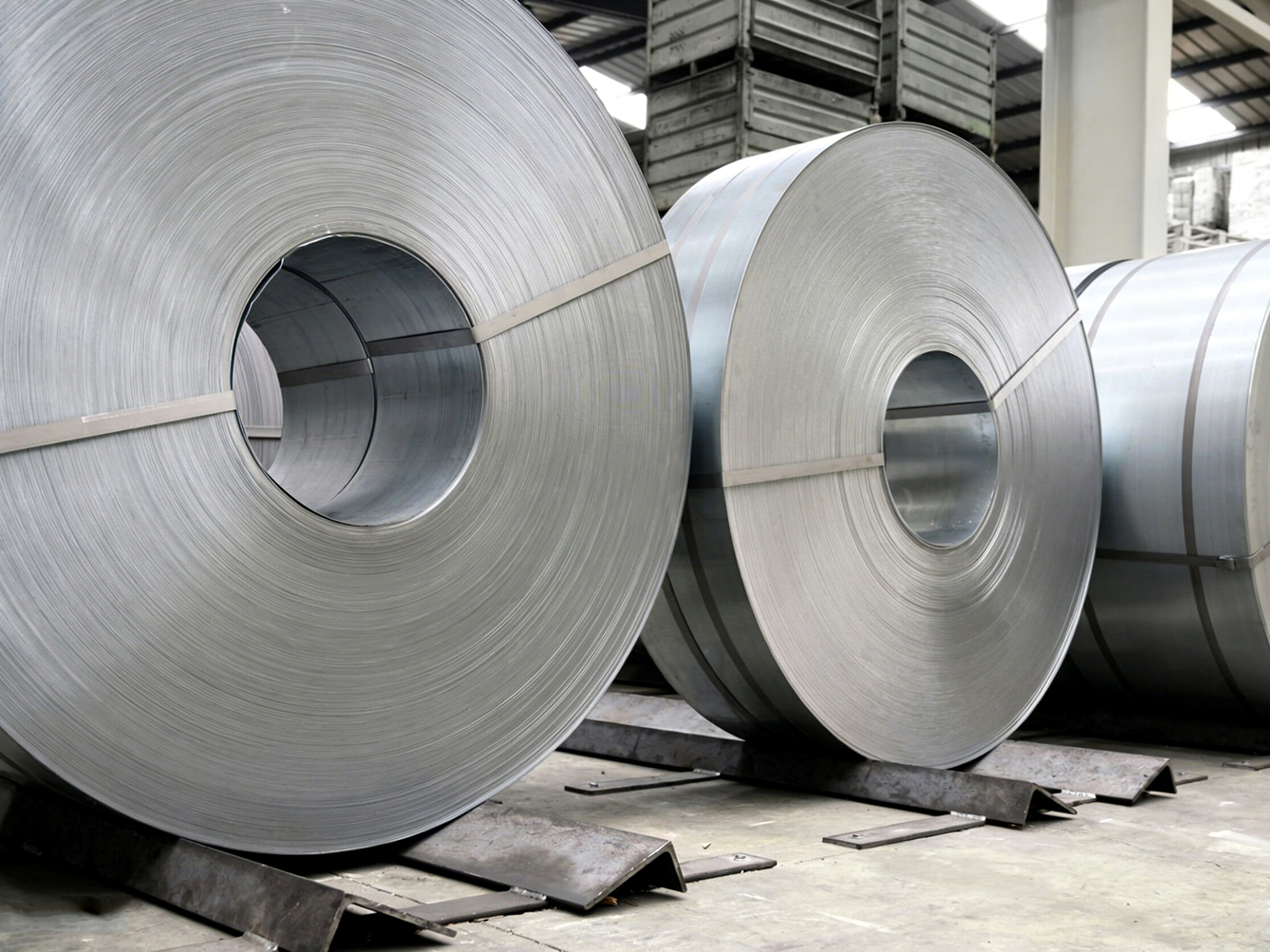
Nickel 201 foil is a low-carbon, high-purity nickel ultra-thin strip designed for high-end electronics, chemical and new energy applications. Its core feature is that the carbon content is strictly controlled below 0.02%, which gives the material excellent structural stability in high-temperature environments and effectively avoids the embrittlement problem caused by graphitization. The material is made through vacuum melting, multi-pass precision cold rolling and continuous annealing process control. The thickness range covers 0.005 to 0.8 mm, and the maximum width can reach 670 mm. Compared with traditional Nickel 200, Ni201 significantly improves thermal stability and long-term service reliability while maintaining excellent conductivity and corrosion resistance. It is especially suitable for use in battery tabs, electrolytic electrodes, electromagnetic shielding and high-temperature conductive structures. For buyers who pursue high performance and long life, it is particularly important to understand their technical characteristics and key selection points.
1. Why Is Material Properties and Technical Advantages of Nickel 201 Foil Important?
(1) What Should You Know About Low Carbon Design Improves High Temperature Stability?
The most significant technological innovation of Nickel 201 is to reduce the carbon content to less than 0.02%. This design directly solves the typical defects of pure nickel materials in high temperature environments. When the operating temperature exceeds 315℃, ordinary high-carbon nickel materials are prone to carbon precipitation and graphitization reactions, leading to grain boundary embrittlement and a sharp decline in mechanical properties. Through strict carbon control, Ni201 can operate stably for a long time in an environment below 600℃, and the grain structure remains uniform, avoiding unplanned downtime of equipment due to material failure. This is particularly critical for chemical reactors, vacuum furnace heating elements and high-temperature electrolysis systems. According to typical application data, it can extend the equipment maintenance cycle by more than 40%.
(2) What Should You Know About Excellent Electrical Conductivity and Electrochemical Stability?
The material maintains the inherent high conductivity characteristics of pure nickel, with a resistivity of approximately 6.84 μΩ·cm (20℃), which is only slightly higher than copper. In the field of new energy batteries, Ni201 foil is widely used to manufacture tabs and connectors. Its low contact resistance characteristics can reduce energy loss and improve the overall efficiency of the battery pack. More importantly, the material exhibits excellent inertness in the electrochemical environment and is not prone to oxidation or reaction with the electrolyte, making it an ideal choice for electrolytic hydrogen production and chlor-alkali industrial electrodes. Compared with stainless steel or nickel-plated materials, Ni201 has a significant effect on extending the service life in strong alkaline media.
(3) What Should You Know About Precision Processing Performance and Batch Consistency Guarantee?
By using a 20-roll precision rolling mill and a continuous annealing process, the material achieves a thickness tolerance control of ± 0.001 mm, which is a level of accuracy that far exceeds conventional industry standards. The stable production capacity of ultra-thin specifications (such as 0.005 to 0.03 mm) meets the stringent requirements for material uniformity of precision electronic devices. The annealing process adopts a ± 2℃ temperature control system to ensure microstructure uniformity and make the material less likely to crack or work harden during stamping, bending and welding. For automated production lines, this high degree of consistency can significantly reduce the scrap rate and increase equipment availability.
2. Why Is In-depth Analysis of Industrial Application Scenarios Important?
(1) What Should You Know About the Key Role in New Energy Battery Systems?
In lithium battery manufacturing, Ni201 foil plays the dual functions of current conduction and structural support. As the connection hub for the internal and external circuits of the battery, the tabs need to meet the requirements of low resistance, high strength and corrosion resistance at the same time. The material has a tensile strength of 350 to 420 MPa (annealed state), and with an elongation of more than 25%, it can not only withstand the impact of ultrasonic welding, but also adapt to minor deformations during battery cycle charge and discharge. Compared with aluminum foil or copper foil solutions, nickel foil shows better thermal stability in high-rate discharge scenarios, reducing safety hazards caused by overheating.
(2) What Should You Know About Corrosion Resistance Solutions for the Chemical and Electrolytic Industries?
Strongly alkaline environment is a severe test for material selection. In a sodium hydroxide solution with a concentration of up to 50%, the corrosion rate of Ni201 is less than 0.1 mm/year, which is much better than ordinary stainless steel materials. The use of this material for electrolytic cell anodes, alkali evaporator linings, caustic alkali transport pipelines and other components can reduce the maintenance cycle from twice a year to once every three years. The low-carbon characteristics also avoid contamination of high-purity products by carbon precipitation, which is crucial for the production of electronic-grade chemicals. The non-magnetic or weakly magnetic characteristics of the material also make it suitable for precision chemical equipment that needs to avoid magnetic field interference.
(3) Why Is Shielding and Connection Applications in Electronic Communications Important?
With the popularization of 5G communications and high-frequency electronic equipment, the demand for electromagnetic interference (EMI) shielding has surged. Ni201 foil is made into shielding covers, shielding gaskets and flexible connection belts due to its good conductivity and processability. Its thickness can be as thin as less than 0.01 mm, and with stamping or chemical etching processes, complex hollow patterns can be achieved to ensure shielding effect and control weight. In connector manufacturing, the material’s high ductility allows multiple plugging and unplugging without fatigue fracture. The contact resistance stability is better than that of gold-plated copper, but the cost is reduced by about 30%.
Application areas | Typical parts | Performance requirements | Advantages of Ni201 |
New energy battery | pole ear, busbar | Low resistance, high strength, corrosion resistance | High conductivity, good weldability and strong cycle stability |
Chemical Engineering and Electrolysis | Electrode, lining | Strong alkali resistance, high temperature resistance, no pollution | Low carbon content, strong graphitization resistance, long service life |
electronic communications | EMI shielding, connectors | High frequency shielding, stable conductivity, lightweight | Ultra-thin and processable, low contact resistance, high fatigue strength |
3. How Should Key Technical Parameters for Procurement Selection?
(1) How Should Thickness and Width Gauge Selection Guide?
Different application scenarios have clear requirements for material size. Battery tabs usually use a thickness of 0.05 to 0.1 mm to ensure conductive cross-sectional area and control weight; electrolytic electrodes require a thickness of 0.3 to 0.5 mm to provide sufficient mechanical strength and corrosion resistance. In terms of width, ultra-wide specifications of 350 to 670 mm can reduce the number of welds and reduce the risk of leakage, but the supplier’s plate shape control capabilities need to be evaluated. Ultra-thin specifications (0.005 to 0.03 mm) require extremely high rolling accuracy and annealing uniformity. Manufacturers with high-end equipment such as 20-roll mills should be selected to avoid batch performance differences caused by thickness fluctuations.
(2) What Should You Know About Surface Condition and Cleanliness Standards?
Surface treatment directly affects subsequent processing and performance. The glossy surface is suitable for electronic components that require appearance, with surface roughness Ra≤ 0.4 um and high reflectivity; the matte surface is lightly sandblasted to provide better coating adhesion. The surface dyne value after chemical cleaning should be stable above 44 mN/m, which ensures the reliability of the printed circuit or bonding process. For battery applications, residual oil or oxide layers may cause micro short circuits. It is necessary to confirm that the supplier adopts dual ultrasonic cleaning and alkali cleaning processes and provide a cleanliness test report.
(3) What Should You Know About Mechanical Properties Match Supply Status?
The elongation of the annealed (M) material is as high as 25%, which is suitable for complex forming such as deep stamping and bending. The tensile strength of the cold-worked (Y) material is increased to 500 to 600 MPa, but the elongation is reduced to 8%, making it suitable for structural parts that require stiffness. It is necessary to clarify the usage conditions when purchasing: if it needs to be bent multiple times in the future, the annealed state should be selected to avoid cracking; if it is used as a load-bearing component, the cold-processed state is more suitable. In addition, suppliers should be required to provide tensile test and metallographic inspection reports to confirm that the grain size and inclusion level comply with ASTM B162 standards to avoid batch quality accidents caused by material defects.
Performance indicators | Annealed state (M) | Cold working state (Y) | Test standards |
tensile strength | 350-420 MPa | 500-600 MPa | ASTM E8 |
Elongation | ≥ 25% | ≥ 8% | ASTM E8 |
hardness | HV 120-160 | HV 180-220 | ASTM E384 |
Grain size | ASTM Grade 5-7 | ASTM Grade 8-10 | ASTM E112 |
4. What Should You Know About Production Process and Quality Control System?
(1) What Should You Know About Vacuum Melting and Precise Control of Ingredients?
Raw material purity is the basis for determining final performance. Ni201 requires nickel content ≥ 99.6%, carbon ≤ 0.02%, and sulfur ≤ 0.01%. Vacuum induction melting technology uses a vacuum environment to reduce gas impurities, combines raw material purity and refining processes to control carbon and sulfur content, and uses spectral analysis to monitor melt composition in real time to ensure that the deviation of each heat is controlled within ± 0.005%. After the ingot is homogenized and annealed to eliminate segregation, it then enters the rolling process. During this process, strict restrictions on elements such as iron and manganese (Fe≤ 0.40%, Mn≤ 0.35%) prevent the formation of intermetallic compounds and maintain the single-phase austenite structure of the material, which is the microscopic basis for high ductility.
(2) What Should You Know About Multi-pass Finishing Rolling and Thickness Accuracy Control?
Rolling from a 6 mm ingot to a 0.03 mm ultra-thin strip requires more than 20 passes of cold rolling. The 20-high rolling mill uses the composite support of the intermediate roller and the back-up roller to evenly distribute the rolling pressure, avoiding the defects of edge thickening or middle thinning that are easily caused by the traditional 4-high rolling mill. The reduction rate of each pass is controlled at 15% to 20%, and the automatic tension adjustment system is used to make the flatness of the plate shape reach Class I standard (wavyness ≤ 3 mm/m). The online thickness gauge feeds back data in real time to the rolling parameter adjustment system to achieve closed-loop control of ± 0.001 mm. This accuracy allows the material to be directly used in precision applications without post-processing.
(3) What Should You Know About Continuous Annealing and Tissue Uniformity Guarantee?
The dislocation density introduced by cold rolling is as high as 10^12/cm², and work hardening must be eliminated by annealing. The continuous annealing furnace uses a hydrogen or argon protective atmosphere (which can effectively prevent surface oxidation), heats to 700 to 900℃ and keeps it warm for several minutes, and the temperature uniformity is controlled at ± 2℃. During this process, recrystallization forms fine and uniform equiaxed grains, and the average grain size is stable at ASTM levels 5 to 7, which not only ensures ductility but also avoids the surface orange peel phenomenon caused by excessively coarse grains. The rapid cooling stage prevents the precipitation of carbides and maintains the single-phase pure structure of the material. After annealing, the surface presents a uniform silver-white luster, and the oxide layer thickness is <0.5 um, which can meet most applications without pickling.
How Should Supplier Evaluation and Procurement Risk Management and Control?
What Should You Know About Production Scale and Delivery Capability Verification?
A production line with an annual capacity of 3, 000 tons means that a single batch can stably supply 50 to 100 tons, which is crucial for continuous production of large projects. When evaluating suppliers, you should conduct an on-site inspection of the operating status of their 750 mm wide rolling mill, continuous annealing line and precision slitting equipment to confirm that the automation rate is above 90%. Ask about the on-time delivery rate (should be ≥ 95%) and batch qualification rate (should be ≥ 98%) of historical orders, and require an ISO 9001 quality system certificate audited by a third party. For customized specifications, it is necessary to confirm that its technical team has rapid trial production capabilities. It is recommended that the cycle from prototype to mass production be controlled within 45 days.
What Should You Know About Testing Capabilities and Quality Traceability System?
Perfect quality control requires full-process testing. Raw materials entering the factory must undergo spectral analysis and chemical finished product analysis to verify their composition; the rolling process is equipped with online thickness measurement and plate shape detection; finished products must provide tensile testing, hardness testing, metallographic analysis and surface cleanliness testing reports. Each roll of material should have a unique code to record the melting furnace number, rolling batch, annealing parameters and other information to achieve full traceability. High-end applications also require material certification (MTC 3.1) issued by third-party organizations such as SGS and TÜV to ensure compliance with ASTM B162 or UNS N02201 standards. Requesting samples for third-party re-inspection is an effective way to avoid risks.
What Should You Know About Technical Services and Customized Processing Support?
Excellent suppliers not only provide standard products, but also provide technical advice for special working conditions. Ask whether it has surface treatment capabilities (such as passivation, coating), and whether it can provide deep processing services such as slitting and shearing. For new application scenarios, suppliers should be able to assist in completing preliminary development work such as welding process testing and forming performance evaluation. When signing a long-term supply agreement, the price adjustment mechanism, inventory preparation plan and technology upgrade terms should be clarified to establish a stable strategic cooperative relationship. Response speed is also a consideration: technical questions should be responded to within 24 hours, and whether emergency orders can start production within 72 hours.
Assessment Dimensions | core indicators | Qualification standards |
production capacity | Annual production capacity, equipment accuracy, automation level | ≥ 3000 tons/year, thickness tolerance ± 0.001 mm |
Quality system | Testing equipment, certification qualifications, traceability capabilities | ISO 9001 certified, providing MTC 3.1 report |
Delivery guaranteed | Inventory cycle, on-time rate, emergency response | Regular specifications are delivered within 15 days, with an on-time rate of ≥ 95%; emergency orders are launched within 72 hours |
Technical services | Customization capabilities, process support, sample cycle | Support OEM and provide welding/forming testing |
5. What Is the Conclusion?
To sum up, Nickel 201 foil has become a core material in the fields of new energy, chemical industry and electronics due to its low-carbon and high-purity design, excellent high-temperature stability and precision processing performance. Procurement decisions require a comprehensive assessment of thickness accuracy, mechanical properties, supplier qualifications and service capabilities to ensure that material properties accurately match application requirements. Through strict supplier review and quality traceability mechanisms, the risk of batch fluctuations can be significantly reduced and long-term stable supply can be achieved. Choosing a manufacturer with strong technical strength and sufficient production capacity is the key to ensuring project success and cost optimization.
FAQ
Q1: What is the essential difference between Nickel 201 and Nickel 200?
Nickel 201 reduces the carbon content to less than 0.02%, while Nickel 200 has a carbon content of up to 0.15%. This enables Ni201 to avoid the problem of graphitization and embrittlement in environments above 315℃, improves high-temperature structural stability by about 50%, and is more suitable for long-term high-temperature conditions.
Q2: How to verify the performance of Ni201 foil?
The supplier is required to provide a spectral analysis report to confirm that the carbon content is ≤ 0.02%, the tensile test verifies that the annealed elongation is ≥ 25%, and the metallographic test confirms that the grain size reaches ASTM 5 to 7 levels. If necessary, third-party organizations such as SGS can be entrusted to conduct re-inspections to ensure compliance with UNS N02201 standards.
Q3: What are the difficulties in processing ultra-thin specifications (below 0.01 mm)? ?
Ultra-thin rolling needs to overcome three major problems: out-of-control plate shape, thickness fluctuation and surface scratches. It is necessary to use a precision rolling mill with more than 20 rollers, with automatic tension control and online thickness measurement system. The uniformity of annealing temperature must reach ± 2℃. During the slitting process, circular knife shears are used to reduce burrs and deformation.
What Should You Know About Looking for a Reliable Nickel 201 Foil Supplier?
Baoji Titanium Valley Titanium Nickel Zirconium Material Processing Co., Ltd. has an automated production line with an annual output of 3, 000 tons and a precision control capability of ± 0.001 mm. It provides customized processing services in the thickness range of 0.005 to 0.8 mm. Complying with ASTM B162 standards, equipped with a complete testing system and fast delivery guarantee. Contact us now to obtain technical solutions and samples: sales@titaniumvalleys.com
References
- Zhao Zhiqiang, Li Minghua. (2018). “Handbook of Nickel-based Alloy Materials”. Beijing: Metallurgical Industry Press.
- Wang Jianping, Zhang Wei. (2015). “Study on the effect of carbon content on high temperature properties of pure nickel.” “Journal of Metal Heat Treatment”, Volume 36, Issue 4, Pages 78-84.
- Liu Jianguo, Chen Xiaofeng. (2020). “Corrosion behavior of nickel and nickel alloys in strong alkali environments.” “Corrosion Science and Protection Technology”, Volume 32, Issue 2, Pages 112-118.
- Baoti Group. (2019). “Nickel 201 Nickel Foil Technical Specification”. Baoji: Baoti Group Technology Center.