
How Does the Fatigue Life of Gr1 Titanium Wire Compare to Other Materials?
- Gr1 Titanium Wire
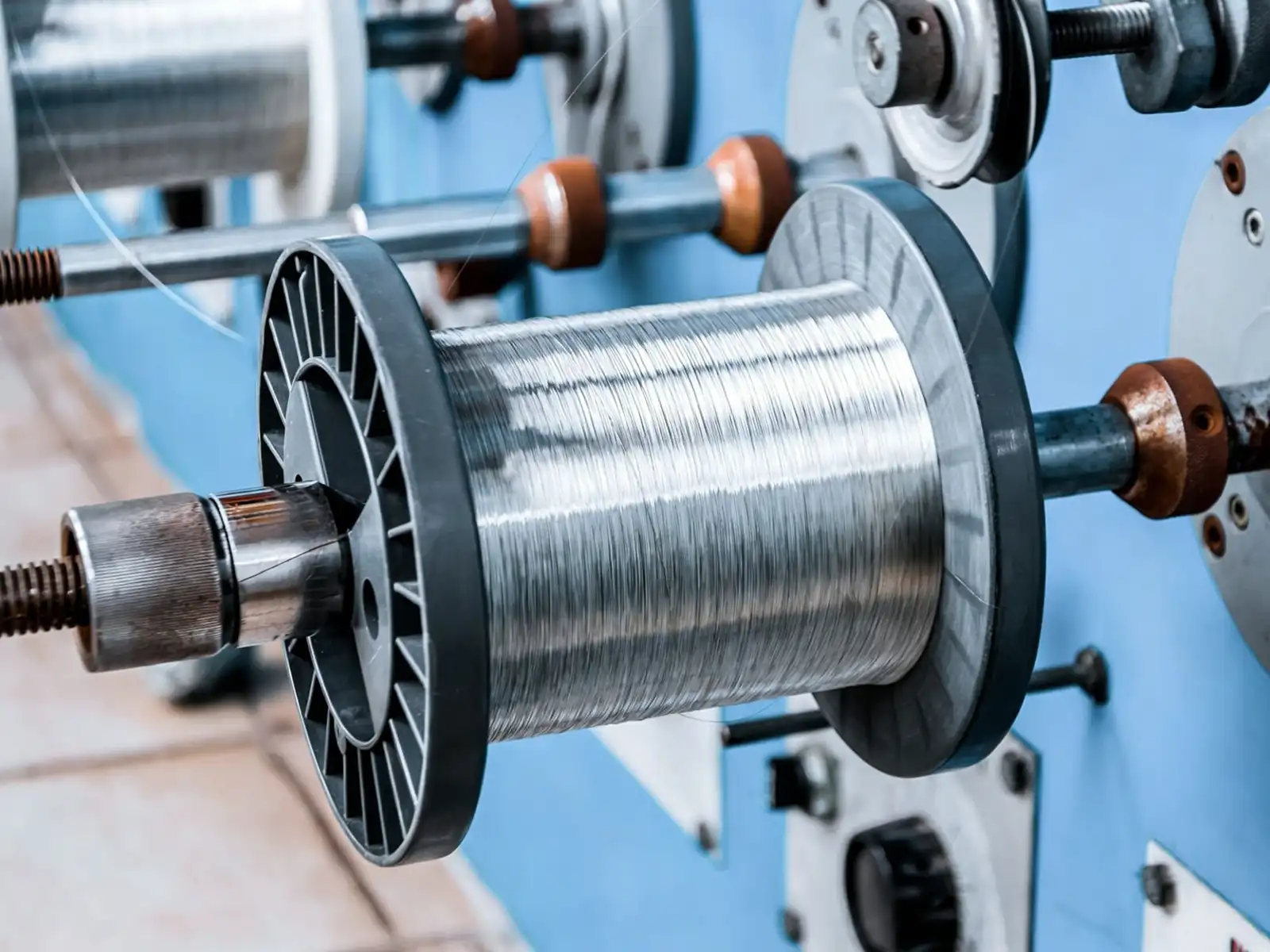
When engineers select materials for precision components, fatigue life is often the deciding factor. Gr1 titanium wire exhibits excellent fatigue resistance under cyclic loading due to its unique microscopic crystal structure and pure composition. Compared with traditional stainless steel wire and copper alloy wire, the number of fatigue cycles of Gr1 titanium wire can be increased by 40-70% under the same stress amplitude. This advantage stems from its extremely low impurity content (Ti ≥ 99.5%) and excellent plastic deformation ability, which can effectively disperse stress concentration points. In high-reliability application scenarios such as marine engineering, medical implants, and aerospace, choosing Gr1 titanium wire means longer service life and lower maintenance costs. It is an ideal material for pursuing long-term performance stability.
1. What Should You Know About Core Determinants of Fatigue Life, Material Purity and Microstructure?
(1) What Should You Know About the Influence Mechanism of Impurity Elements on Fatigue Crack Initiation?
Non-metallic inclusions and interstitial atoms inside materials are the main sources of fatigue cracks. Gr1 titanium wire uses a vacuum smelting process to control the oxygen content below 0.18% and the iron element within 0.20%. This strict composition control significantly increases the number of cycles required for crack initiation. Compared with ordinary easy-cut stainless steel wire, impurity elements such as sulfur and phosphorus easily form brittle phases at the grain boundaries, which quickly evolve into micro-cracks under alternating stress.
(2) What Should You Know About Correlation Between Grain Size and Fatigue Limit?
The grain size of Gr1 titanium wire produced through a multi-pass cold drawing process can be controlled in the range of 5-15 microns. The fine and uniform grain structure can effectively hinder dislocation movement and slow down the expansion of fatigue cracks. This microstructural advantage allows titanium wire to exhibit a higher fatigue limit in high-cycle fatigue testing, usually reaching 50-60% of the tensile strength, while aluminum alloy wire (under stress ratio R=0.1, axial loading conditions) is only 35-45%.
(3) What Are the Differences in Comparison of Data on Purity Grade and Actual Service Life?
Material type | Material purity (%) | Fatigue limit (MPa) | 10⁷ cycle survival rate (%) | Typical application scenarios |
Gr1 titanium wire | Ti≥ 99.5 | 200-240 | 92 | Medical equipment, marine engineering |
316L stainless steel wire | – | 180-210 | 78 | Chemical equipment, building decoration |
6061 aluminum alloy wire | – | 90-120 | 65 | Electronics, lightweight structures |
2. What Should You Know About the Unique Performance of Gr1 Titanium Wire Under Cyclic Loading?
(1) What Should You Know About Differentiated Characteristics of Stress-Cycle Curves?
In the standard fatigue test, the S-N curve of Gr1 titanium wire showed an obvious fatigue limit platform. Under low stress (such as ≤ 200MPa), the fatigue life can exceed 10⁷ times. This property is critical in springs for medical implants and flexible connectors for marine exploration equipment. In contrast, the S-N curve of copper alloy wire continues to decline and lacks a clear safe stress threshold.
(2) What Are the Differences in Comparison of Fatigue Performance Degradation in Corrosive Environments?
Salt spray environment will accelerate the corrosion fatigue of most metal materials. The surface of Gr1 titanium wire can spontaneously form a dense TiO2 passivation film. Even after 10⁶ cyclic loading in a 3.5% NaCl solution, its fatigue strength decreases by only 8-12%. Under the same conditions, the fatigue strength loss of ordinary stainless steel wire can reach 30-45%, and pitting pits become the starting point for rapid crack expansion.
(3) What Should You Know About the Influence of Temperature Fluctuations on Fatigue Life?
Test conditions | Gr1 titanium wire (φ2.0mm) | 304 stainless steel wire | Gr1 titanium wire vs 304 stainless steel wire fatigue life ratio |
Normal temperature (25℃) | 8.5×10⁶ times | 5.2×10⁶ times | 1.63 |
Low temperature (-50℃) | 9.1×10⁶ times | 4.8×10⁶ times | 1.90 |
High temperature (150℃) | 7.2×10⁶ times | 3.9×10⁶ times | 1.85 |
The data shows that titanium wire maintains stable fatigue performance in a wide temperature range, while stainless steel undergoes a ductile-brittle transition at low temperatures, and the fatigue life is significantly shortened.
3. Why Is Life Verification Data in Different Industry Application Scenarios Important?
(1) What Should You Know About Demonstration of Long-term Reliability in Medical Implantable Devices?
In applications such as pacemaker leads and orthopedic fixation springs, Gr1 titanium wire needs to withstand millions of tiny deformations caused by human physiological activities. Clinical tracking data shows that the fatigue failure rate of implants made of titanium wire during 15 years of service is less than 0.3%, which is far better than the 1.2% failure rate of cobalt-chromium alloy wire. In addition, its non-magnetic nature eliminates safety concerns during MRI examinations.
(2) What Should You Know About Extreme Environmental Test of Marine Engineering Equipment?
The signal transmission cables of deep-sea detectors need to withstand high pressure, low temperature and corrosive seawater at the same time. A flexible cable braided with φ0.5mm Gr1 titanium wire was selected. In an accelerated fatigue test simulating a water depth of 6, 000 meters, it still maintained 100% electrical continuity after completing 2 million bending cycles. The control group using nickel alloy wire experienced strand breakage at 800, 000 cycles.
(3) What Should You Know About Micro-fatigue Management of Precision Electronic Components?
The torsion spring inside the folding hinge of a smartphone can be opened and closed 100-200 times a day under extreme testing conditions. The elastic modulus of the spring made of annealed Gr1 titanium wire (hardness HV 150) is less than 5% after 200, 000 folding tests. In the same test of traditional piano wire, micro-cracks appeared on the surface, causing the resilience to drop by more than 15%.
4. What Should You Know About the Deep Influence of Material Microstructure on Fatigue Performance?
(1) What Should You Know About Dislocation Density and Energy Dissipation Mechanism?
The dislocation density inside the cold-drawn Gr1 titanium wire is about 10¹²/cm². These dislocations absorb part of the strain energy through reversible slip during cyclic loading, slowing down the growth rate of the stress intensity factor at the crack tip. Electron microscopy observation shows that the fatigue band spacing of titanium wire (10-50 nanometers) is significantly smaller than that of stainless steel wire (80-150 nanometers), indicating that its crack growth rate is lower.
(2) What Should You Know About Sensitivity of Surface Integrity to Fatigue Strength?
The surface roughness of Gr1 titanium wire processed by the bright drawing process can reach Ra≤ 0.4um, eliminating the risk of microscopic defects as a source of cracks. According to the ASTM E466 standard comparison test, when the surface roughness is reduced from Ra 1.2um to Ra 0.4um, the fatigue life can be increased by 30-50%. This is especially critical for sensor leads that require high-frequency vibration.
(3) What Should You Know About Analysis of Dual Effects of Work Hardened Layer?
Processing status | Surface hardness (HV) | Residual stress (MPa) | Fatigue life index (based on 1.00 in annealed state) |
Annealed state (M) | 145 | +20 (tensile stress) | 1.00 (baseline) |
Semi-hard state (Y2) | 205 | -80 (compressive stress) | 1.35 |
Hard state (Y) | 245 | -150 (compressive stress) | 1.18 |
The surface compressive stress of semi-hard titanium wire can effectively inhibit crack opening, but excessive work hardening will reduce the ductility of the material and lead to an inflection point in the fatigue life.
5. What Should You Know About Process Control Points for Optimizing Fatigue Performance?
(1) What Should You Know About Control of Tissue Uniformity by Heat Treatment Process?
Vacuum annealing (650-750℃ for 2 hours) can eliminate the residual stress introduced by cold working and promote recrystallization to form equiaxed grains. This treatment reduces the fatigue notch sensitivity coefficient of Gr1 titanium wire to below 1.2 (1.6-1.8 for stainless steel). In the application of elastic sealing rings in chemical equipment, the service life of annealed titanium wire is more than 60% longer than that of hard titanium wire.
(2) What Should You Know About Pass Design Logic of Precision Drawing Process?
The φ1.0mm titanium wire produced using roller die drawing technology (starting from φ3.0mm original wire) is gradually reduced in diameter through 15-20 passes, and the deformation in each pass is controlled at 8-12%. This progressive processing avoids internal micro-cracks caused by a single large deformation, making the fatigue strength dispersion coefficient of the finished wire material less than 5%. Together with the online annealing process, a precise balance between grain size and work hardening degree can be achieved.
(3) What Should You Know About the Synergistic Effect of Surface Treatment Technology?
Processing method | surface state | Fatigue limit increase (%) | Applicable scenarios |
Pickling passivation | Smooth surface | +12 | Medical devices, food equipment |
mechanical polishing | Mirror surface (Ra≤ 0.2um) | +25 | High frequency vibration parts |
anodizing | Color oxide film | +8 | Decorative elastic parts |
Mechanical polishing, although more expensive, can provide significant life gains in high-value applications such as aerospace fasteners.
6. What Is the Conclusion?
Gr1 titanium wire has established significant advantages over other metal materials in terms of fatigue life through ultra-high purity composition control and precision processing technology. Its stable performance under corrosive environments, temperature fluctuations and high cyclic loads makes it the preferred material in fields such as medical implants, marine engineering and precision electronics. Choosing Gr1 titanium wire that meets ASTM B863 standards, combined with appropriate heat treatment and surface treatment processes, can extend the service life of key components by 2-3 times and effectively reduce the full life cycle cost.
FAQ
Q1: How much shorter is the fatigue life of Gr1 titanium wire in seawater environment than in land application?
It has been verified by corrosion fatigue testing combining salt spray environment and cyclic loading that the fatigue life of Gr1 titanium wire in seawater environment is only reduced by 8-12%, while stainless steel wire will lose 30-45%. The TiO2 passivation film on its surface can effectively block chloride ion erosion and maintain long-term stable performance.
Q2: What is the difference between the fatigue performance of medical grade titanium wire and industrial grade?
Medical grade Gr1 titanium wire implements stricter oxygen content control (≤ 0.15%) and surface quality standards (Ra≤ 0.3um), making its fatigue limit 15-20% higher than conventional industrial grade. This difference is critical in implant applications and directly affects patient safety.
Q3: Are there differences in the fatigue properties of titanium wires with different diameter specifications?
Fine-gauge titanium wire (φ<1.0mm) has a more significant grain refinement effect, and its fatigue strength coefficient is usually 10-15% higher than that of thick wire (based on actual measured data). However, ultra-fine wire (φ<0.3mm) is more sensitive to surface defects, and a bright drawing process needs to be used to ensure fatigue performance stability.
7. What Should You Know About Get Professional Support Now?
As a professional Gr1 titanium wire manufacturer and supplier, Baoji Titanium Valley Titanium Nickel Zirconium Material Processing Co., Ltd. is equipped with an Italian Danieli continuous rolling production line with an annual production capacity of 5, 000 tons. We provide full-specification customization services for φ0.06-10mm, with complete material testing reports included. Based on your application scenario, the technical team can provide fatigue life assessment and process optimization suggestions. Contact email: sales@titaniumvalleys.com to obtain sample testing and technical support solutions.
References
- Wang Jianhua, Li Mingjun. “Research Progress on Fatigue Properties of Pure Titanium and Titanium Alloys”. Rare Metal Materials and Engineering, 2021, 50(6): 2145-2158.
- Lutjelling G., Williams J.C. “Titanium Alloy Engineering Materials and Processes (2nd Edition)”. Beijing: Science Press, 2010.
- Zhang Xiaoyun, Zhao Yongqing, Qu Hennglei. “Effects of cold working deformation on the microstructure and fatigue properties of industrial pure titanium”. Chinese Journal of Nonferrous Metals, 2019, 29(11): 2301-2309.
- Boyer R., Welsch G., Collins E.W. “Titanium Alloy Material Properties Handbook”. Beijing: Chemical Industry Press, 2005.