
How Should You Choose a Reliable Gr1 Titanium Foil Supplier?
- Gr1 Titanium Foil
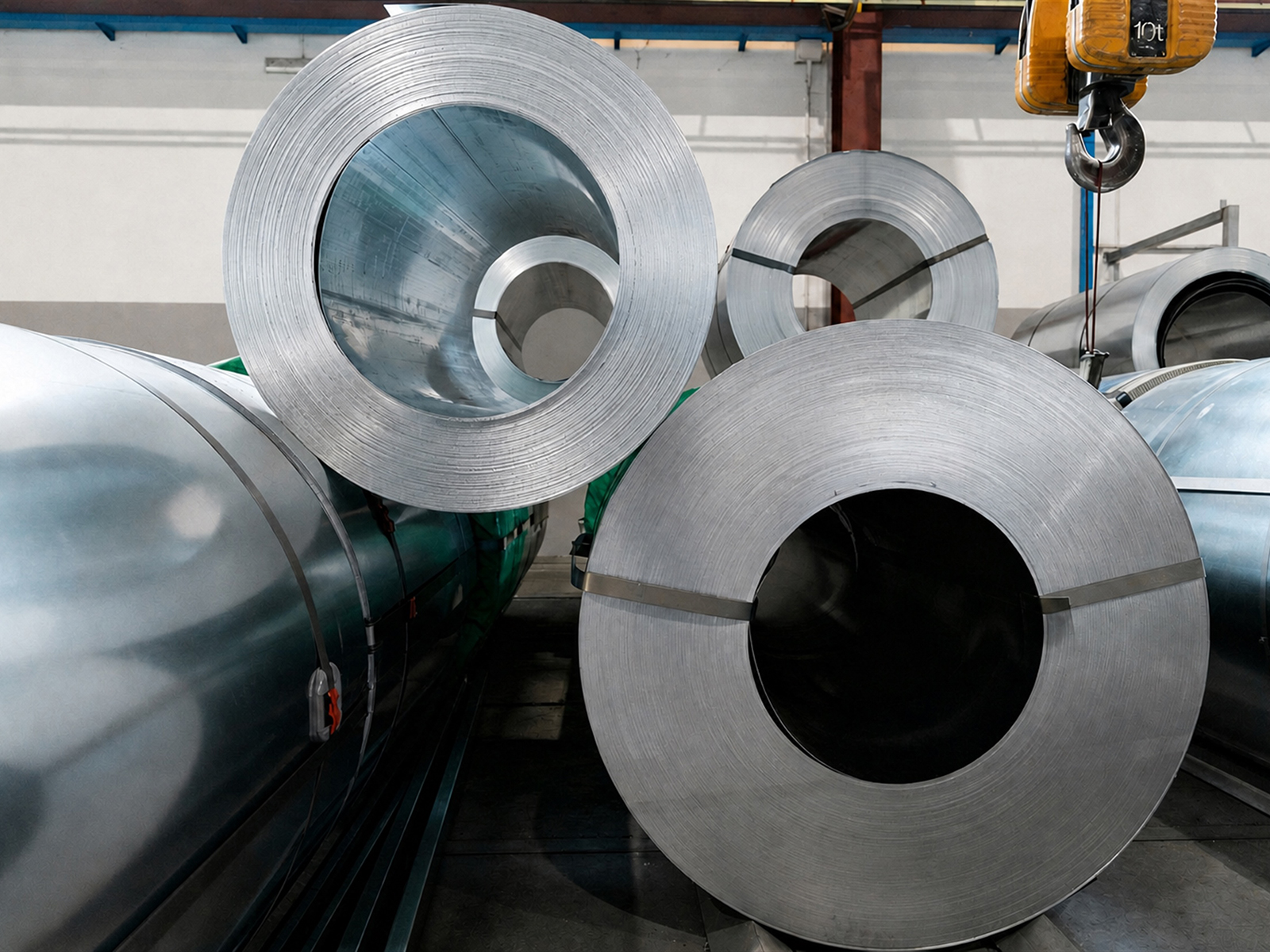
The key to choosing a suitable Gr1 titanium foil supplier is to comprehensively evaluate its technical capabilities, quality stability and delivery guarantee. A reliable partner needs to have advanced precision rolling equipment, a complete quality control system and large-scale mass production capabilities, and be able to provide ultra-thin wide products with a thickness tolerance of ± 0.001mm. At the same time, it is necessary to pay attention to whether the supplier complies with international standards such as ASTM B265, whether it can provide traceable material certification documents, and whether it has customized processing capabilities to meet the special needs of aerospace, electronic shielding, new energy and other industries. This article will help you establish a scientific supplier evaluation system from the four dimensions of production strength, quality control, technical services and industry adaptation to avoid production risks and cost losses caused by fluctuations in material quality.
1. What Should You Know About Production Equipment and Process Capabilities, the Underlying Logic That Determines the Quality of Titanium Foil?
(1) What Should You Know About the Core Role of Precision Rolling Equipment?
The production of ultra-thin and wide-width titanium foil is inseparable from high-precision rolling equipment. The 20-roller precision rolling machine can effectively control the rolling pressure distribution through a multi-layer roll system configuration and solve the problems of uneven plate shape and thickness fluctuation that are prone to occur with traditional equipment in the thickness range of 0.02-1.0mm. This type of equipment can control the thickness tolerance within ± 0.001mm, ensuring consistent material properties within the width range of 350-670mm.
(2) What Should You Know About Technical Requirements for Continuous Annealing Lines?
For the continuous annealing process under an argon protective atmosphere, the temperature control accuracy needs to reach ± 5℃ (note: the typical accuracy of industrial continuous furnaces is ± 5℃, and closed-loop control can be configured to ± 2℃ for higher requirements). This parameter directly affects the uniformity of the grain structure and the stability of mechanical properties of titanium foil. Supplementary heat treatment with a vacuum furnace can further eliminate internal stress, stabilize the tensile strength at ≥ 370MPa, and maintain the elongation at ≥ 25%, meeting the needs of subsequent deep processing.
(3) What Should You Know About Surface Treatment and Cleaning Systems?
Ultrasonic cleaning combined with alkaline solution treatment can remove the oil stain and oxide layer remaining during the rolling process of Gr1 titanium foil, stabilizing the surface dyne value at 44mN/m (Note: the dyne value unit should be mN/m, commonly expressed as “44 dyne”). A cleaning line equipped with a special degreasing agent can ensure that the surface cleanliness of materials meets the requirements of high-cleanliness application scenarios such as electronic packaging and medical equipment.
2. What Should You Know About Quality Control System, Full Traceability From Raw Materials to Finished Products?
(1) What Should You Know About Precise Control of Chemical Composition?
element | Standard requirements | actual control meaning |
Ti | ≥ 99.5% | Ensure matrix purity and corrosion resistance |
O | ≤ 0.18% | Oxygen content directly affects the balance between strength and plasticity, and the upper limit is controlled to avoid embrittlement. |
Fe | ≤ 0.20% | Avoid pitting tendency |
C | ≤ 0.08% | Prevent carbide precipitation from affecting formability |
N | ≤ 0.03% | Reduce the formation of brittle phases |
H | ≤ 0.015% | Prevent the risk of hydrogen embrittlement |
Strict impurity control ensures material performance stability. Suppliers should provide spectral analysis reports for each batch to prove that the chemical composition meets the requirements of ASTM B265 standards.
(2) What Should You Know About Online Testing of Dimensional Accuracy?
The automated production line needs to be equipped with online monitoring equipment such as laser thickness gauges and flatness detectors to collect thickness, width, and flatness data in real time. An automation rate of 90% means reducing human operating errors and ensuring batch-to-batch consistency. Key control points include rolling exit thickness, width deviation after slitting, flatness after leveling and other parameters.
(3) What Should You Know About Batch Verification of Mechanical Properties?
Samples should be taken from each roll of titanium foil for tensile testing to verify whether the tensile strength, yield strength and elongation meet the technical requirements. Hardness test (100-180HB) can quickly evaluate the soft and hard status of materials. Suppliers should establish a product database to achieve full process traceability from raw material batch numbers to finished product numbers.
3. Why Is Technical Services and Customization Capabilities, Meet Diversified Application Needs Important?
(1) What Should You Know About Stable Supply of Ultra-thin Specifications?
Application areas | Thickness requirements | Width requirement | key performance indicators |
electromagnetic shielding | 0.02-0.05mm | 500-670mm | Volume resistivity ≤ 50μΩ·cm (Note: refers to the material volume resistivity, the typical resistivity of titanium is about 40-50μΩ·cm) |
fuel cell electrode | 0.03-0.08mm | 350-500mm | Porosity is controllable (specific indicators must be in accordance with ASTM B811 or protocol requirements), acid and alkali resistance |
composite substrate | 0.05-0.1mm | 600-670mm | High bonding strength between layers |
Chemical equipment lining | 0.5-1.0mm | 350-670mm | Resistant to chloride ion corrosion |
Suppliers with an annual production capacity of 3, 000 tons can undertake large-volume orders and ensure stable delivery. For the special ultra-thin specifications of 0.001-0.008mm, it needs to be evaluated whether it can overcome the technical difficulties of extreme rolling. It should be pointed out that the product thickness range directly affects the definition of production capacity: for example, the equipment investment and process complexity of 0.02mm ultra-thin foil with an annual output of 500 tons and 1.0mm thick foil with an annual output of 500 tons are significantly different, and the thickness specifications should be clearly defined during evaluation.
(2) What Should You Know About Customization Options for Surface Conditions?
Different application scenarios have significantly different surface requirements for Gr1 titanium foil. The bright surface is suitable for applications where low contact resistance is required for electronic packaging; the frosted surface is treated with abrasive belts to enhance surface uniformity and is suitable for coating adhesion; the pickled surface can remove oxide scale and expose the pure titanium matrix. Suppliers should provide test data of the surface roughness Ra value of Gr1 titanium foil to meet the specific requirements for surface quality of the back-end process.
(3) What Should You Know About Supporting Capabilities for Complex Processing?
High-precision slitting technology determines the yield of narrow-band materials. In view of the problems that ultra-thin and wide-width titanium foil is prone to wrinkles and edge burrs, the advanced slitting line is equipped with a tension control system and high-speed cutters, which can control the slitting accuracy within ± 0.5mm. Cooperate with leveling equipment to adjust residual stress to ensure that the flatness of the material meets the requirements for automated feeding.
4. What Should You Know About Industry Qualifications and Cost-effectiveness, Guarantee Factors for Long-term Cooperation?
(1) What Should You Know About Standard Certification and Third-party Testing?
Suppliers that comply with ASTM B265, JIS H4600, EN 10204 and other multinational standards can directly enter high-end markets such as Europe, America and Japan. ISO 9001 quality management system and EN 10204 3.1 material certification documents are necessary conditions for entering the aerospace supply chain. Component analysis reports and mechanical property test reports issued by third-party testing agencies enhance the credibility of the data.
(2) What Should You Know About Capacity Scale and Delivery Cycle?
Supplier type | Annual production capacity (note: based on typical thickness 0.1-0.5mm product definition) | Standard product delivery date | Customized product delivery time |
small processing plant | <500 tons | 4-6 weeks | 8-12 weeks |
Medium-sized professional factory | 500-2000 tons | 2-4 weeks | 4-8 weeks |
Large production line | ≥ 3000 tons | 1-2 weeks | 2-4 weeks |
Large-scale production capacity directly affects supply stability. In the face of sudden order demand or production capacity fluctuations, large suppliers can respond quickly with equipment redundancy and inventory reserves. The following will further analyze the value of long-term cooperation from two dimensions: cost and synergy.
(3) What Should You Know About Whole Life Cycle Cost Analysis?
The price of purchasing Gr1 titanium foil is only a part of the cost. The stability of material quality determines the production yield. Excessive thickness tolerance will lead to an increase in the scrap rate of back-end processing. Surface defects (scratches, oxidation spots) increase rework costs. Fluctuations in batch performance affect product consistency and may lead to customer quality complaints. Choosing a supplier with mature technology, although the unit price is slightly higher, but taking into account processing loss, equipment maintenance, quality risks and other factors, the full cycle cost is better.
(4) What Should You Know About Technological Collaboration and Industrial Upgrading?
Excellent suppliers not only provide standard products, but also participate in the development of new products for customers. By sharing material performance databases, assisting in process parameter optimization, and providing sample trial production services, we help downstream companies shorten their research and development cycles. For emerging fields such as new energy vehicles and hydrogen fuel cells, a supplier’s material innovation capabilities determine whether it can grow together with its customers.
5. What Is the Conclusion?
Choosing a reliable Gr1 titanium foil supplier requires establishing a multi-dimensional evaluation framework. Core concerns include: whether precision rolling equipment can achieve a tolerance of ± 0.001mm, whether the quality system covers the entire process traceability, whether the production capacity scale can support stable batch delivery, and whether technical services can meet customization needs. By comparing suppliers’ equipment investments, standard certifications, customer cases and cost structures, partners with real long-term cooperation value can be selected to provide reliable material guarantees for enterprise product upgrades and market competition.
FAQ
Q1: How to verify whether the thickness tolerance of titanium foil reaches ± 0.001mm?
Require the supplier to provide the calibration certificate and measured data curve of the laser thickness gauge, and view the full-width thickness distribution cloud chart. At the same time, a third-party testing agency can be entrusted to randomly inspect samples, and use micrometers or thickness gauges to measure multiple points at different locations on the material to verify the actual tolerance range.
Q2: Why is surface dyne value important for titanium foil processing?
The dyne value reflects the level of surface tension, which directly affects coating adhesion, welding wettability and interlayer bonding strength of composite materials. The stable dyne value of 44mN/m ensures the reliability of subsequent electroplating, spraying or lamination processes and avoids delamination or bubble defects caused by insufficient surface energy.
Q3: How to ensure performance consistency between batches when purchasing in large quantities?
Choose a supplier with a high automation rate and require SPC statistical process control charts showing the Cpk value of key parameters ≥ 1.33. Sign a technical agreement to clarify the fluctuation range of mechanical properties, agree to provide a material certificate for each batch, and establish a sample retention system to facilitate later traceability.
How Should Looking for Professional Titanium Foil Material Suppliers?
Titanium Valley, as a high-end titanium nickel zirconium material processing manufacturer, has an annual ultra-thin wide titanium foil production capacity of 3, 000 tons (based on the typical thickness of 0.1-0.5mm product definition). It is equipped with a 20-roll precision rolling mill and a fully automatic production line. Its products comply with ASTM B265 standards and serve high-end fields such as aerospace and medical electronics. Welcome to contact us to obtain technical parameters and customized solutions: sales@titaniumvalleys.com
References
- Zhang Jianjun, Li Minghua. Precision rolling technology of titanium and titanium alloy foils. Beijing: Metallurgical Industry Press, 2021.
- Wang Xiaofeng, Zhao Guoqiang. Research on microstructure and property control of industrial pure titanium thin strip. Rare Metal Materials and Engineering, 2022, 51(3): 1024-1030.
- Chen Haitao, Liu Chunming. Application progress of ultra-thin titanium foil materials in the field of new energy. Materials Herald, 2023, 37(2): 215-222.
- Yang Wenbin. Flat shape control technology during titanium foil rolling process. Journal of Plastic Engineering, 2022, 29(8): 156-163.