
Why Is Application of Gr1 Titanium Foil in Heat Exchangers and Industrial Fields Important?
- Gr1 Titanium Foil
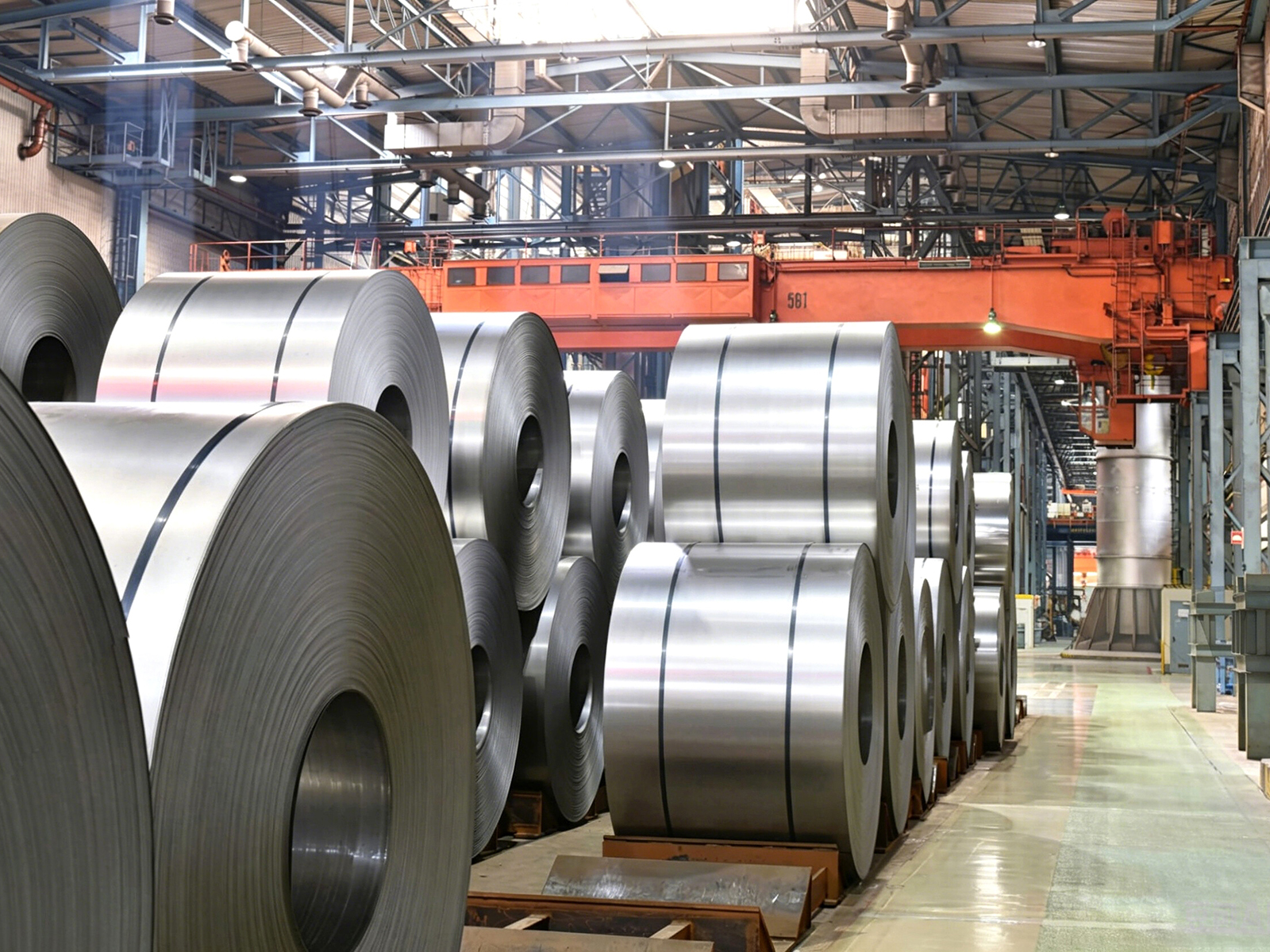
When industrial equipment faces challenges such as high-temperature corrosion, low heat transfer efficiency, or short service life, Gr1 titanium foil is becoming a key material for heat exchangers and various industrial sectors. This ultrapure titanium thin sheet, with a purity of ≥ 99.5%, demonstrates significant application value in chemical engineering, marine engineering, new energy, and other fields due to its excellent corrosion resistance, lightweight characteristics, and stable thermal conductivity. Its thickness can be controlled between 0.02-1.0mm, with a width of 350-670mm in precise specifications, and a tolerance control of ± 0.001mm, allowing Gr1 titanium foil to meet the diverse needs from plate heat exchangers to complex industrial environments, contributing to the reduction of total lifecycle costs of equipment.
1. Why Is Core Performance Advantages of Gr1 Titanium Foil Important?
(1) What Should You Know About Excellent Corrosion Resistance?
Gr1 titanium foil has a titanium purity of ≥ 99.5%, with strict control of impurity elements such as oxygen content ≤ 0.18% and iron content ≤ 0.20%, making it perform excellently in oxidative, reductive, and alternating medium environments. In strong corrosive media such as seawater, chloride ions, nitric acid, and sulfuric acid, the surface of titanium foil can quickly form a dense TiO2 passive film, preventing the penetration of corrosive media. Compared with stainless steel, which shows pitting corrosion in seawater within 6-12 months, Gr1 titanium foil can operate stably for more than 20 years (based on some engineering application cases), significantly reducing equipment replacement frequency and maintenance costs.
(2) What Should You Know About Lightweight and High Strength Coexist?
With a density of only 4.51 g/cm³, about 57% that of steel, it shows significant advantages in weight-sensitive applications such as aerospace and mobile devices. Mechanical properties with a tensile strength ≥ 345 MPa (annealed, according to ASTM B265 standard) and yield strength ≥ 250 MPa, combined with an elongation of ≥ 25%, allow titanium foil to withstand mechanical stress while also offering good formability. This balance of strength-to-weight ratio enables equipment to achieve lightweight design while maintaining structural strength.
(3) What Should You Know About Stable Thermal Conductivity and High-temperature Resistance?
With a melting point as high as 1660-1725℃, it can still maintain stable mechanical properties and microstructure under working conditions of 200-300℃. The thermal conductivity at room temperature is about 16-22 W/(m·K), which is lower than copper and aluminum, but it can continuously and stably transfer heat in corrosive environments, helping to delay efficiency degradation caused by material deterioration. The continuous argon annealing process (temperature tolerance ± 2℃) ensures uniform grains and stable microstructure, eliminates internal stress, and improves the material’s fatigue life under cyclic thermal loads.
Performance indicators | Gr1 Titanium Foil | 304 stainless steel | Copper alloy |
Density (g/cm³) | 4.51 | 7.93 | 8.96 |
Tensile Strength (MPa) | ≥ 345 (annealed state) | ≥ 485 (annealed state) | ≥ 220 |
Elongation (%) | ≥ 25 | ≥ 40 | ≥ 30 |
Resistance to seawater corrosion | Excellent | general | bad |
Service life (marine environment) | >20 years (engineering cases) | 6-12 months | Depending on the alloy, usually 2-5 years |
2. Why Is Heat Exchangers and New Energy System Applications Important?
(1) What Should You Know About Ideal Materials for Plate Heat Exchangers?
Plate heat exchangers have high requirements for the corrosion resistance, thin-wall formability, and welding performance of materials. The precise control of Gr1 titanium foil with a thickness of 0.02-1.0mm, combined with 20-roll fine rolling equipment achieving a tolerance of ± 0.001mm, helps ensure the flatness of the plates and the uniformity of the flow channels. The ultrasonic alkaline cleaning process can effectively remove oil and oxide layers, making the surface cleanliness meet the interface requirements for brazing (requiring titanium-specific brazing material or an intermediate layer) or laser welding. A supply capability with a width of 350-670mm helps reduce joint welds and lower the risk of leakage.
(2) What Should You Know About Durability Improvement of Shell-and-tube Heat Exchangers?
In shell-and-tube heat exchangers used in seawater desalination and petrochemical condensation systems, traditional copper or stainless steel tubes are prone to chloride pitting or stress corrosion cracking. Using thin-walled titanium tubes rolled from Gr1 titanium foil, with a wall thickness reduced to 0.3-0.5mm, improves heat transfer efficiency while maintaining strength. Its non-magnetic property avoids electromagnetic interference, making it suitable for sensitive environments such as near-shore nuclear power plants and offshore platforms. The batch-produced rolled material format facilitates automated processing and improves manufacturing efficiency.
(3) What Should You Know About Lightweight Solution for Compact Heat Exchangers?
Applications such as aerospace and vehicle-mounted fuel cells are sensitive to the volume and weight of heat exchangers. The high strength and lightweight characteristics of Gr1 titanium foil allow the heat transfer area per unit weight of a heat exchanger to increase by 30%-50%. Argon annealing (with ± 2℃ precision control) eliminates work hardening, improves material ductility, and facilitates stamping into complex channel structures. A 90% automated production line (covering major processes) and a comprehensive inspection system help maintain the consistency of each roll of material’s performance, meeting the requirements for mass assembly.
(4) What Should You Know About Fuel Cell Bipolar Plate Substrate?
Proton exchange membrane fuel cells (PEMFC) have high requirements for the conductivity, corrosion resistance, and lightweight properties of bipolar plate materials. Gr1 titanium foil with a thickness of 0.1-0.3 mm, after stamping or etching to form flow fields, usually needs to first form a nitride or oxide transition layer, and then be coated with a carbon-based or precious metal coating to reduce contact resistance and improve coating adhesion. The room temperature resistivity is about 42 μΩ·cm, which helps maintain current conduction efficiency; its non-magnetic properties can avoid interference from magnetic fields inside the stack. Continuous argon annealing ensures uniform microstructure and helps extend the stack’s lifespan.
3. Why Is Key Applications of Chemical and Marine Engineering Important?
(1) What Should You Know About Chemical Anti-Corrosion Lining and Reactor?
Chemical equipment is in long-term contact with highly corrosive media such as sulfuric acid, hydrochloric acid, and chlor-alkali. Traditional lining materials (such as rubber and fiberglass) have issues with peeling and aging. Gr1 titanium foil can be made into an integrally formed thin-walled lining, with a thickness of 0.5-1.0mm, and can be bonded to the equipment base by explosive composite or expansion fitting processes, forming a reliable protective layer (there are still overlaps or welds in the connection areas). Independently developed degreasers can enhance surface cleanliness, helping to maintain bonding strength with the base material. An annual production capacity of 3, 000 tons supports batch supply for large-scale installations.
(2) What Should You Know About Offshore Platforms and Seawater Desalination Equipment?
Salt spray, chloride ions, and biofouling in the marine environment pose severe challenges to materials. Evaporator bundles and condenser plates made of Gr1 titanium foil can operate stably for 15-25 years in seawater desalination plants (based on data from some engineering projects), usually outperforming the 3-5 year lifespan of copper-nickel alloys. Wide supply range (up to 670mm) helps reduce welding points and lowers the risk of stress concentration. Surface sanding processes optimize roughness, which can inhibit microbial attachment and reduce cleaning frequency.
(3) What Should You Know About Electrolytic Cell Anode Substrate?
Electrolytic cell anodes in the chlor-alkali industry, electroplating, water treatment and other fields need to withstand strong oxidation and electrochemical corrosion. Gr1 titanium foil is used as the anode substrate, and its surface is coated with precious metal oxides (such as IrO₂-Ta₂O₅) to form DSA anodes. The corrosion resistance and conductivity of titanium foil help maintain the long-term performance of the coating. Ultra-thin specifications with a thickness of 0.2-0.5mm can reduce material costs, and wide-width coils minimize weld seams, improving current distribution uniformity. Vacuum annealing treatment can eliminate residual stress and reduce the risk of coating delamination.
Application field | Material Specifications | Core Advantage | Comparison of alternative materials |
Plate heat exchanger | 0.3-0.8mm × 500mm | Lightweight, corrosion-resistant, easy to weld | Stainless steel is prone to pitting corrosion |
Seawater desalination | 0.5-1.0mm × 670mm | Long lifespan, low maintenance | Copper alloys have a relatively short lifespan |
Electrolytic anode | 0.2-0.5mm × 400mm | Conductive and stable, with a firm coating | Steel-based, easily corroded |
Chemical Lining | 0.5-1.0mm × 600mm | Integrated formation, reliable connection | Rubber is prone to aging |
4. Why Is Innovative Applications in the Field of Electronics Important?
(1) What Should You Know About Lithium Battery Tab and Current Collector?
The tab materials for power batteries and energy storage batteries need to balance conductivity, corrosion resistance, and lightweight properties. Gr1 titanium foil has a thickness of 0.02-0.1mm, and the width can be customized to 100-300mm. When used as a negative electrode current collector, its chemical stability helps prevent reactions with the electrolyte, thereby extending battery cycle life. High-precision slitting technology (tolerance ± 0.001mm) helps ensure consistency in tab dimensions and improves the yield of automated welding. The coil supply form is suitable for high-speed coating and die-cutting production lines.
(2) What Should You Know About Electromagnetic Shielding and Electronic Packaging?
High-frequency electronic devices, 5G base stations, and similar equipment have high requirements for the uniformity of shielding material thickness and electrical continuity. Gr1 titanium foil with a thickness of 0.05-0.2mm, after ultrasonic cleaning, meets surface cleanliness standards and can be used for stamping EMI shielding covers. Wide-width supply (350-670mm) helps reduce the number of seams and lowers the risk of electromagnetic leakage. Its non-magnetic properties prevent interference with precision sensors, and its density is over 40% lower than that of stainless steel, aiding in equipment lightweighting.
5. What Should You Know About High-precision Machining Capability and Quality Assurance?
(1) What Should You Know About Technological Breakthrough of Advanced Production Lines?
The company invested 36.2 million USD to build an ultra-thin wide-foil production line, equipped with a 750mm 20-roll precision rolling mill, overcoming seven major technical challenges including titanium foil springback control, plate shape stability, and performance uniformity. Multi-pass rolling combined with optimized tension control enables stable mass production of ultra-thin specifications down to 0.02mm. The continuous cleaning and annealing line integrates processes such as ultrasonic degreasing, drying, argon-protected annealing, and online thickness measurement, with an automation rate of 90% (covering the main processes). Each roll of material can be traced back to the raw material batch and process parameters.
(2) What Should You Know About Full-process Quality Control System?
From the raw material entering the factory to the finished product leaving the warehouse, multiple inspections are carried out, including chemical composition spectral analysis, mechanical tensile testing, visual and roughness inspections of surface quality, and dimension tolerance verification using micrometers. The dual assurance of vacuum annealing furnaces and continuous annealing lines helps maintain uniform grain size and hardness. Laser thickness gauges monitor thickness deviations in real time and automatically feedback to adjust the roll gap of the rolling mill. Material certificates and inspection reports issued by third-party testing agencies meet the certification requirements of industries such as aerospace and medical.
(3) What Should You Know About Customized Processing Service Capabilities?
We provide one-stop processing from titanium ingots to finished foil, supporting custom non-standard sizes with thicknesses of 0.02-1.0mm and widths of 50-670mm. Surface treatments include pickling, polishing, sanding, degreasing, and more, and we can supply bright, matte, or functional coated surfaces. High-precision slitting lines are suitable for ultra-thin materials, with slitting width tolerances of ± 0.5mm and edge burr control ≤ 0.01mm. Cross-cutting to fixed sizes and longitudinal narrow strip services help reduce customers’ secondary processing losses. An annual production capacity of 3, 000 tons ensures stable delivery cycles for large orders.
Processing capacity | Specification Range | Precision control | Surface treatment options |
Thickness Customization | 0.02-1.0mm | ± 0.001 mm | Glossy/Matte/Coating |
Width customization | 50-670mm | ± 0.5mm | Pickling/Polishing/Degreasing |
Slitting service | Customized sizing on demand | Edge burr ≤ 0.01mm | Sanding |
Annealing process | Continuous/Vacuum | Temperature ± 2℃ | Relieve stress |
6. What Is the Conclusion?
Gr1 titanium foil, with its high purity, precise tolerances, good corrosion resistance, and lightweight characteristics, demonstrates application potential in industrial fields such as heat exchangers, chemical corrosion protection, new energy batteries, and electronic shielding. Advanced 20-roll precision rolling technology and comprehensive quality control throughout the process help ensure the stability of material performance and batch consistency, providing a material foundation for extending equipment life and reducing costs while improving efficiency.
FAQ
Q1: How long is the service life of Gr1 titanium foil in a seawater environment?
Gr1 titanium foil can operate stably for more than 20 years in chloride environments such as seawater and salt spray (based on some engineering cases). Its surface passivation film has self-healing properties, generally superior to stainless steel and copper alloys, which helps reduce equipment replacement frequency and maintenance costs.
Q2: Is ultra-thin titanium foil (0.02mm) prone to damage during processing?
Using a 20-roll fine rolling and optimized annealing process, Gr1 titanium foil has an elongation of ≥ 25% and exhibits good plasticity. With the use of special molds and appropriate lubrication, stamping, bending, and other forming processes can be performed stably, resulting in a relatively high yield.
Q3: How can the consistency of material performance between batches be ensured?
The production line is 90% automated (covering the main processes) and is equipped with an online inspection system that monitors thickness, hardness, and surface quality in real time. Each roll of material comes with a material certificate and inspection report, traceable to the raw material batch and annealing parameters, which helps maintain stability.
7. What Should You Know About Call to Action?
Titanium Valley Technology (Titanium Valley), as a professional Gr1 titanium foil manufacturer and supplier, has an annual production capacity of 3, 000 tons of ultra-thin wide-width foils, providing high-precision customized services to global aerospace, chemical, and new energy customers. For technical parameters, sample testing, or bulk quotations, please contact: sales@titaniumvalleys.com
References
- Wang Jianguo, Li Minghua. Progress in the Application of Titanium and Titanium Alloys in Marine Engineering[J]. Materials Engineering, 2021, 38(6): 102-115.
- Zhang Weiqiang, Chen Xiaoli. Research on Ultra-thin Titanium Foil Precision Rolling Technology and Quality Control [J]. Rare Metal Materials and Engineering, 2020, 49(11): 3721-3728.
- Zhao Pengfei, Liu Jianjun. Research Status of Titanium-Based Bipolar Plate Materials for Fuel Cells[J]. New Energy Materials, 2022, 15(3): 201-210.
- Liu Zhigang, Wang Lei. Application and Corrosion Protection Research of Titanium Heat Exchangers in the Chemical Industry [J]. Corrosion Science and Protection Technology, 2019, 31(4): 389-396.