
Why Is Gr2 Titanium Bar Widely Used in the Industrial Field?
- Gr2 Titanium Bar
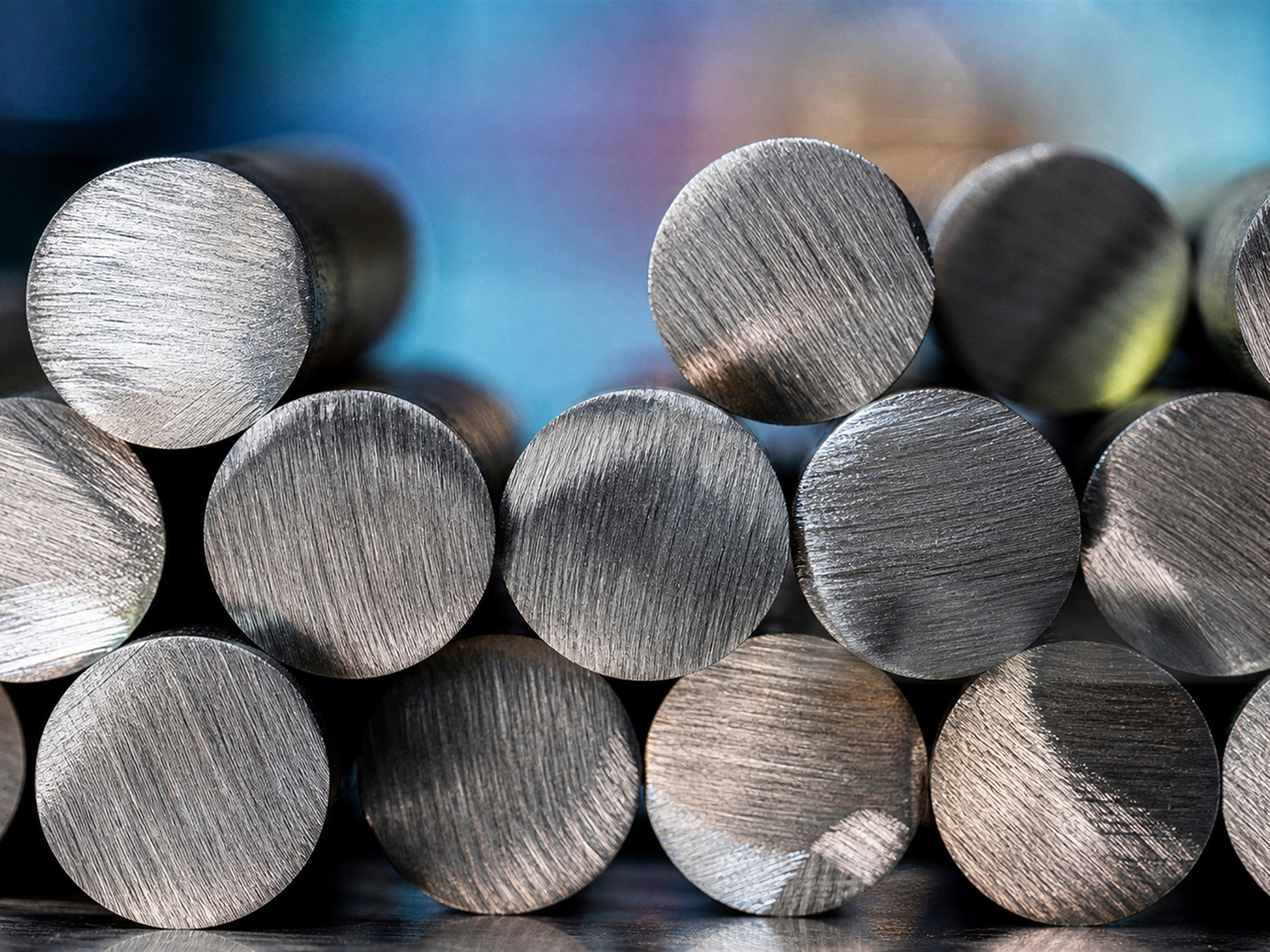
The reason why Gr2 titanium bars occupy an important position in many industrial fields is that they achieve a golden balance of material properties. As one of the most widely used grades of commercially pure titanium, Gr2 maintains a titanium purity of over 99% while precisely controlling the oxygen content to increase the tensile strength to about 340 MPa, which is approximately 42% higher than the typical value of 240 MPa for Gr1. This unique combination of properties allows it to handle medium-load conditions while retaining excellent corrosion resistance and machinability. From chemical corrosion-resistant equipment to marine engineering components, from medical implants to precision electronic components, Gr2 titanium bars, with their multi-scenario adaptability, stable quality performance, and reasonable cost range, have become the preferred material for engineers facing complex working conditions, effectively reducing material selection risks and total lifecycle costs.
1. Why Is Analysis of the Material Property Advantages of Gr2 Titanium Rods Important?
(1) What Should You Know About Unique Strength and Toughness Balance Mechanism?
Gr2 titanium bars achieve strength enhancement by controlling the oxygen content (0.18-0.25%). This oxygen content-regulated strengthening allows the material to reach a tensile strength range of 340-510 MPa and a yield strength exceeding 275 MPa without sacrificing ductility. Compared with the 240 MPa tensile strength of Gr1, the performance improvement is about 42%, sufficient to meet the requirements of medium-load conditions in pressure vessels, rotating shafts, and other applications. The material’s elongation after fracture remains above 20%, which means it has good energy absorption capability under sudden impact loads, avoiding the risk of brittle fracture.
Vacuum melting combined with subsequent forging and annealing processes ensures the uniformity of the internal structure of the material. The α-phase grains are fine and evenly distributed, eliminating segregation and inclusion defects. Multiple forging processes further break up coarse grains, forming a dense fibrous structure, enabling the material to exhibit relatively stable mechanical properties in both longitudinal and transverse directions. This lower anisotropy characteristic is crucial for the manufacturing of complex-shaped parts, reducing performance fluctuations caused by material directionality.
The heat treatment annealing process (usually held at 650-750℃) releases internal stress, restores the material’s plasticity, and returns cold-worked titanium bars to their optimal processing condition. The microhardness distribution after annealing is uniform, and the hardness values are typically controlled within the HB140-170 range, which ensures both machinability and wear resistance in service.
(2) What Should You Know About Outstanding Corrosion Resistance System?
The TiO2 passive film that spontaneously forms on the surface of Gr2 titanium rods is only 2-7 nanometers thick, yet it has extremely high density and self-healing ability. When the film is mechanically damaged, the titanium substrate reacts with oxygen or water molecules in the environment within milliseconds to regenerate the protective film. This dynamic equilibrium mechanism allows its corrosion rate in seawater to be as low as 0.001 mm/year (typical laboratory test value), far superior to the 0.01-0.1 mm/year (typical value) of 316 stainless steel.
In an oxidizing acid environment (such as nitric acid or chromic acid), the stability of the oxide film is further enhanced, and the material can withstand corrosion from nitric acid with concentrations up to 70%. Under boiling nitric acid conditions (attention should be paid to concentration and safety conditions), the corrosion rate is still kept below 0.05 mm per year. This characteristic makes Gr2 titanium rods an ideal material for acid-washing equipment in the pharmaceutical and hydrometallurgical industries.
For chloride stress corrosion cracking (SCC) issues, Gr2 titanium rods exhibit extremely low sensitivity. In a high-temperature saline environment with chloride ion concentrations up to 200, 000 ppm (under conditions not exceeding 120℃), and with stress applied up to 80% of the yield strength, the material can still remain crack-free for thousands of hours. This performance has completely changed the equipment design concepts in seawater desalination and chlor-alkali industries.
(3) What Should You Know About Key Support for Lightweight Design?
A density of 4.51 g/cm³ means that the volumetric density of Gr2 titanium rods is only 57% that of steel and 51% that of nickel alloys. Under the same load conditions, the mass of titanium rod structural components can be reduced by 40-50%, which is of significant value for mobile devices, marine platform lifting structures, and aviation auxiliary parts. The chain effects brought by weight reduction include lowering the load on supporting structures, reducing transportation costs, and improving operational convenience.
The specific strength (strength-to-density ratio) reaches 7.5×10⁴ N·m/kg, surpassing 5.2×10⁴ N·m/kg of a certain high-strength steel, which means that under the same allowable design stress, the cross-sectional area of the titanium rod can be reduced by about 30%, further optimizing structural compactness. In deepwater lifting systems in marine engineering, replacing steel cables with titanium rods reduces the weight, increasing the diving depth by 15%.
The coefficient of thermal expansion (8.6×10⁻⁶/K) is close to that of glass and ceramic materials, resulting in low thermal stress when connected with dissimilar materials, reducing the risk of joint loosening or seal failure due to temperature cycling. This characteristic is particularly critical in vacuum coating equipment and semiconductor processing equipment.
2. Why Is the Core Value Manifestation in Industrial Applications Important?
(1) What Should You Know About Reliability Assurance in the Field of Chemical Engineering Corrosion Protection?
The heat exchanger tube bundle in chemical plants is the largest application market for Gr2 titanium rods. After using titanium tube bundles in shell-and-tube heat exchangers, when facing complex process media containing chlorine, sulfur, and nitrogen oxides, the service life of the equipment is extended from 3-5 years for stainless steel to 15-20 years. After a certain chlor-alkali company upgraded its cooler material to Gr2 titanium, the annual maintenance downtime decreased from 120 hours to less than 10 hours, and the equipment availability increased to 99.2%.
The agitator shaft and baffle of the stirred reactor are subjected to both mechanical stress and corrosive media. After precision machining, the surface roughness of Gr2 titanium rods can reach Ra0.8um, reducing fluid turbulence and material adhesion to the walls. In the production of titanium dioxide by the sulfuric acid process, titanium agitator shafts can run continuously for 3 years under conditions of 18% sulfuric acid concentration and 80℃ temperature without significant wear, whereas carbon steel shafts need to be replaced quarterly.
Pump and valve components, such as pump shafts and valve stems, require materials that combine strength, corrosion resistance, and dimensional stability. Gr2 titanium bars can achieve a diameter tolerance of ± 0.05mm through cold drawing, and after grinding, the roundness error is less than 0.01mm, allowing precise control of assembly clearance and reducing the risk of leakage. After a petrochemical plant adopted titanium valve stems, the valve operating torque decreased by 30%, and the sealing life increased fourfold.
(2) What Should You Know About Long-term Service Capability of Ocean Engineering?
Application Scenario Comparison Table
Application field | Traditional materials | Service life | Gr2 Titanium Rod | Service life | Lifetime improvement factor (vs. traditional materials) |
Seawater desalination device | 316 stainless steel | 5-8 years | Gr2 Titanium Rod | 20-25 years | 3-4 times |
Offshore platform fasteners | Galvanized high-strength steel | 2-3 years | Gr2 Titanium Rod | More than 15 years | 5-7 times |
Ship cooling system | Copper-nickel alloy | 8-10 years | Gr2 Titanium Rod | Over 25 years | 2.5-3 times |
Deep-sea observation equipment | Stainless steel | 3-5 years | Gr2 Titanium Rod | 15-20 years | 4-5 times |
The evaporator tube sheets and tube bundles of the seawater desalination unit are immersed in seawater at 60-90℃ for long periods, with chloride ion concentrations reaching up to 19, 000 ppm. The pitting potential of tube bundles made from Gr2 titanium rods is above 800 mV (vs. SCE), far exceeding the 200 mV of stainless steel, fundamentally preventing the initiation of pitting corrosion. After 12 years of operation at a Middle Eastern desalination plant with a daily production of 100, 000 tons, inspections showed that the wall thickness reduction of the titanium tube bundles was less than 1% (measured at the surface in contact with the process medium), indicating they can continue to operate for more than 10 years.
The mooring systems and lifting components of offshore platforms use pin shafts and connectors machined from Gr2 titanium rods, maintaining structural integrity in harsh environments such as salt spray and splash zones. The material’s fatigue limit typically reaches 50% of its tensile strength, and no crack propagation occurs after 10⁷ cycles of wave loading, with reliability far exceeding that of welded high-strength steel structures.
In the past, the pipes and valves of ship ballast water systems used copper alloys, which were prone to biofouling and dezincification corrosion. After switching to Gr2 titanium rods, the pipe walls became smooth and less prone to marine organism attachment, the cleaning and maintenance cycle was extended from 3 months to 2 years, the pipe flow resistance decreased by 15%, and pumping energy consumption dropped by 8%.
(3) What Should You Know About Performance Matching of Medical and Precision Manufacturing?
Gr2 Titanium Rod Medical Application Performance Indicators
Performance indicators | Numerical value | Clinical significance |
Biocompatibility grade | All ISO 10993 tests passed | No cytotoxicity or sensitization |
Bone fusion rate | >85% (6 months) | High implant stability |
Magnetic resonance compatibility | Magnetic susceptibility <3 ppm | Can safely undergo MRI examination |
Young’s modulus | approximately 105 GPa | Lower than stainless steel (193 GPa), but still higher than the modulus of bone (10-30 GPa) |
Surface roughness (after polishing) | Achievable Ra 0.1-0.2 um | Reduce foreign body reaction |
Orthopedic implants such as intramedullary nails and bone plates require materials with a modulus that is not too high to avoid stress shielding, which can lead to bone osteoporosis. The elastic modulus of Gr2 titanium rods is about 105 GPa, which is 54% of that of stainless steel (193 GPa), closer to the stiffness of cortical bone, promoting uniform load transfer. The micropit structure (pore size 50-200 um) formed after surface sandblasting facilitates bone cell ingrowth, creating a biomechanically stable osseointegration interface; anodization forms a nanoscale pore structure, suitable for different surface modification needs.
Dental implants are made from Grade 2 titanium rods with a diameter of 3-5mm, precisely machined, with thread accuracy reaching IT6 level. When used with torque control at 35 Ncm, initial stability can be achieved. Clinical data show that the long-term success rate of the material exceeds 95%, and it can serve stably for more than 20 years under masticatory loads (approximately 200 N per bite, averaging 1500 times per day).
The support rods and fixtures for sputtering targets in the electronics industry need to withstand high vacuum (10⁻⁶ Pa) and thermal cycling (from room temperature to 600℃). Gr2 titanium rods feature low vapor pressure (<10⁻⁹ Pa), preventing contamination of coated products, non-magnetic properties (<1.0008 μ) that eliminate interference with magnetron sputtering, and a thermal conductivity of 16.4 W/(m·K), whose moderate heat transfer balances the temperature distribution.
3. What Should You Know About Optimization of Machinability and Cost-effectiveness?
(1) What Should You Know About Adaptability to Diverse Processing Technologies?
In cold forming processes, Gr2 titanium rods can achieve a compressive strain of over 60% at room temperature without cracking, and the bending radius can reach three times the material diameter (typical value). This excellent plasticity makes it suitable for mass forming processes such as cold heading, cold extrusion, and thread rolling. Fastener manufacturers use multi-station cold heading machines to directly form φ8mm titanium rods into M6 bolts (under appropriate equipment and process conditions), reaching a production efficiency of 60 pieces per minute with a material utilization rate of over 95%.
The machinability is between that of stainless steel and aluminum alloy. Using cemented carbide tools (YG8 grade), with a cutting speed controlled at 60-80 m/min and a feed rate of 0.1-0.2 mm/r, a surface roughness of Ra 1.6 um can be achieved. The key is to keep the tool sharp and sufficiently cooled to avoid ‘built-up edge’ and work hardening. After equipping modern CNC turning centers with high-pressure cooling systems (pressure 7 MPa), the machining efficiency of titanium rods increased by 40%.
Excellent weldability is an important advantage of Gr2 titanium bars. Fusion welding methods such as argon arc welding, plasma welding, and laser welding can all achieve welds with equivalent strength. Under general structural thickness conditions (thickness <10mm), the tensile strength of welded joints can reach more than 90% of the base material, and post-weld heat treatment is not required. A pressure vessel manufacturer used automatic argon arc welding to weld φ80mm titanium bar flanges, achieving a 100% pass rate for X-ray inspection of welds at Level I, and the welding efficiency was three times that of manual welding.
(2) What Should You Know About Whole Life Cycle Cost Analysis?
Although the unit price of Gr2 titanium bars is 4-6 times that of 316 stainless steel, calculating the total cost of ownership (TCO) from a life cycle perspective shows greater advantages. Taking chemical heat exchangers as an example, a stainless steel heat exchanger requires an initial investment of 1 million yuan and needs to be replaced after 5 years due to corrosion, with depreciation and replacement costs totaling 2.6 million yuan (including downtime losses). A titanium heat exchanger requires an initial investment of 2.4 million yuan and only needs routine maintenance over 20 years, with a total cost of 2.8 million yuan, reducing the annual unit cost by 46%.
The difference in maintenance costs is more obvious. Stainless steel equipment requires 2-3 anticorrosive coating repairs per year, costing 30, 000-80, 000 yuan each time, and requires a shutdown of 5-7 days. Equipment made of Gr2 titanium rods does not require protective treatment on the exterior surface, and the interior side of the medium is self-passivated for protection. The annual maintenance time does not exceed 24 hours, and the maintenance cost is less than 10% of that of stainless steel equipment.
Comparison Table of Material Properties and Costs
Comparison Dimension | Carbon steel | 316 stainless steel | Gr2 Titanium Rod |
Density (g/cm³) | 7.85 | 7.98 | 4.51 |
Seawater Corrosion Rate (mm/year) | 0.3-1.2 | 0.1-0.5 | <0.001 (typical value) |
Design service life (years) | 3-5 | 8-12 | 20-30 |
Unit Price Index | 1 | 3-4 | 15-20 |
20-Year Total Cost Index (Based on Specific Assumptions) | 100 | 85 | 62 |
In terms of energy consumption, the energy-saving effect brought by lightweighting cannot be ignored. A certain offshore platform replaced a 450kg steel piping system with a 260kg titanium system, resulting in reduced weight of the support structure, downgraded lifting equipment, a 12% decrease in annual electricity consumption, and an 18-ton reduction in carbon emissions. Under the EU carbon trading system, the value of carbon cost savings is significant.
(3) What Should You Know About Supply Chain Stability and Quality Assurance?
Gr2, as a globally standardized grade (ASTM B348, ISO 5832-2, JIS H4650), has sufficient production capacity and uniform quality standards. Baoji Titanium Valley Titanium-Nickel-Zirconium Materials Processing Co., Ltd. has a relatively large production scale, with Gr2 accounting for 65%. The automated production line achieves full-process quality control from forging to finishing, with dimensional accuracy reaching h9 tolerance level, and the ellipticity of φ50mm rods being less than 0.3mm.
The quality traceability system covers the complete chain from sponge titanium raw materials, smelting batches, forging process parameters to finished product inspection data. Each batch of products is equipped with a Material Test Certificate (MTC). Chemical composition analysis is performed using an optical emission spectrometer, mechanical property testing follows a 5% sampling rate, and ultrasonic testing detects defects equivalent to Φ1mm, ensuring internal quality.
Rapid response capability meets customized needs. Standard stock specifications of rods with diameters of φ10-100mm and lengths of 1-6 meters can be shipped within 3 days. Non-standard sizes, such as square 20×20mm or hexagonal 35mm across flats, can be customized and scheduled for production within 15 working days. A certain precision instrument manufacturer required rods of φ12.7mm and length 4350mm ± 5mm, and it only took 11 days from order to delivery, ensuring the project schedule.
4. What Should You Know About Future-oriented Technology Evolution Direction?
(1) What Should You Know About High Purity and Surface Modification Technology?
With the increasing requirements for material cleanliness in semiconductors and medical devices, low interstitial element Gr2 titanium bars have become a research focus. Through electron beam cold hearth melting (EBCHM) technology, the hydrogen content is reduced to <0.008% and nitrogen content to <0.02%, decreasing the tendency for embrittlement caused by gaseous elements. After long-term aging at 300℃ for 1000 hours, the impact toughness retention of ultra-clean titanium bars remains >90%, meeting the high reliability application requirements.
Surface nanocrystallization treatment forms an ultrafine grain structure of 50-200 nm on the surface layer of titanium rods through techniques such as ultrasonic shot peening and laser shock, increasing surface hardness to HV350 and improving wear resistance threefold. This gradient nanostructure maintains the toughness of the substrate while providing high surface hardness, making it especially suitable for bearing, sealing, and other friction pair materials.
Anodic oxidation coloring technology allows the surface of Gr2 titanium rods to form a colored oxide film (gold, blue-purple, black, etc.), with a film thickness of 0.1-0.5 um, hardness HV200-300, and wear resistance superior to natural oxide films. Color titanium rod processed parts are used in architectural decoration and consumer electronics housings, achieving a combination of functionality and aesthetics, and increasing product added value by more than 40%.
(2) Why Is Application Expansion in the Field of New Energy Important?
In the hydrogen energy industry chain, the anode materials of electrolyzers and the liners of hydrogen storage containers have requirements for hydrogen embrittlement resistance and fatigue performance. The critical stress intensity factor KISCC of Gr2 titanium rods in a hydrogen environment is greater than 40 MPa·m½ (the test environment and standard need to be specified), which is much higher than that of high-strength steel, which is less than 20 MPa·m½, and can withstand hydrogen pressure cycles of 70 MPa. According to published literature, after a hydrogen station adopted titanium-lined hydrogen storage tanks, the charge-discharge hydrogen cycle life increased from 10, 000 cycles to 50, 000 cycles.
The bipolar plates and current collectors of the proton exchange membrane fuel cell (PEMFC) are made from thin-walled titanium rod components processed by etching or fine blanking, with a thickness of 0.5-1.0 mm, a channel width of 0.8 mm, and a depth of 0.5 mm. The excellent acid resistance of titanium (resisting acidic environments with pH < 3) and its conductivity (requiring surface treatment to achieve a contact resistance < 10 mΩ·cm²) ensure that the stack operates stably for over 5, 000 hours, with performance degradation of less than 5%.
The heat exchange components and crucible support rods of polysilicon reduction furnaces in the photovoltaic industry withstand high temperatures of 1100℃ and corrosive atmospheres. Although Gr2 titanium rods typically have an upper service temperature limit of 300℃, after surface aluminizing and nitriding treatments to form TiAl and TiN composite coatings, their oxidation resistance temperature can be increased to 650℃, showing potential for application under short-term high-temperature conditions.
(3) What Should You Know About Intelligent Manufacturing and Digital Upgrade?
The online quality monitoring system integrates a laser diameter gauge and an eddy current flaw detector to conduct 100% inspection of titanium bars during production. Diameter deviations are fed back in real time to the rolling parameter control system, dynamically adjusting the roller gap to keep the finished product diameter tolerance stable at ± 0.05mm. The defect recognition algorithm is based on a deep learning model, capable of detecting Φ0.5mm inclusions with a false alarm rate of less than 2%.
Digital twin technology constructs a virtual model of the titanium rod forging process to simulate the effects of different deformation temperatures (850-950℃) and deformation rates (0.1-1.0 s⁻¹) on microstructure evolution. The optimized forging process refines the grain size from ASTM grade 6 to 8, increases the yield-to-tensile ratio from 0.72 to 0.78, and significantly improves material consistency.
The supply chain digital platform enables visual management of orders, inventory, and logistics. Customers can check real-time inventory and work-in-progress through the system, and production schedules and quality documents are automatically generated after placing an order. The digital quality management system records key data such as material certificates and inspection reports, and its anti-tampering features enhance quality traceability, increasing export product customs clearance efficiency by 30%.
5. What Is the Conclusion?
Gr2 titanium rods, with their excellent balance of strength and corrosion resistance, lightweight characteristics, multi-scenario adaptability, and full life cycle cost advantages, have become an irreplaceable core material in the industrial field. In the face of carbon neutrality goals and the demand for high-end manufacturing upgrades, their value in new energy, precision medical care, and marine development will continue to be highlighted, and technological innovation is driving material performance towards higher purity and greater durability.
FAQ
Q1: What performance improvements does Gr2 titanium bar have compared to Gr1?
Gr2 achieves oxygen strengthening by increasing the oxygen content to 0.18-0.25%, reaching a tensile strength of about 340 MPa, an increase of approximately 42% compared to Gr1’s 240 MPa, while maintaining good ductility (elongation >20%). It is more suitable for structural components subjected to moderate loads, such as pressure pipes, rotating shafts, and other applications, offering significantly better cost performance than high-strength titanium alloys.
Q2: How can we ensure that the purchased Gr2 titanium rods meet international standards?
Select suppliers that provide a full Material Test Certificate (MTC), and the certificate should include chemical composition spectral analysis, mechanical performance tensile testing, and ultrasonic inspection reports. Products that meet ASTM B348 and ISO 5832-2 standards should have a titanium content of ≥ 99.2%, oxygen content of 0.18-0.25%, and iron ≤ 0.30%. Certification from third-party testing organizations such as SGS can further ensure quality.
Q3: Does welding Gr2 titanium rods require special protection?
Titanium is highly reactive at high temperatures and must be protected with argon during welding. The argon flow rate for the front weld should be 12-15 L/min, and for back protection 8-10 L/min, while the heat-affected zone (within 150 mm on both sides of the weld) should also be shielded. It must be allowed to cool below 200℃ before coming into contact with air to prevent oxidation and discoloration that could degrade performance. After welding, no heat treatment is required to achieve over 90% of the base metal strength.
How Should Consult a Professional Supplier Immediately?
Baoji Titanium Valley Titanium Nickel Zirconium Material Processing Co., Ltd., as a professional manufacturer of Gr2 titanium rods, has an advanced production line with an annual output of 20, 000 tons and a strict quality system. We can provide customized services for the full range of specifications from φ4 to 300mm. Whether you need titanium rod materials for chemical corrosion protection, marine engineering, or medical precision applications, our technical team will provide professional material selection advice and ensure fast delivery. You are welcome to send your inquiry to sales@titaniumvalleys.com to obtain detailed technical information and competitive quotation solutions.
References
- Wang Zhigang, Li Minghua. ‘Microstructure, Properties, and Engineering Applications of Commercial Pure Titanium.’ Beijing: Metallurgical Industry Press, 2021.
- Zhang Jianjun, Liu Haitao. ‘Study on the Corrosion Behavior of Gr2 Pure Titanium in Marine Engineering.’ Journal of Chinese Corrosion and Protection, 2022, Vol. 42, No. 3, pp. 287-295.
- ASTM International. “ASTM B348-2019 Standard Specification for Titanium and Titanium Alloy Bars and Billets.” West Conshohocken: ASTM Press, 2019.
- Chen Zhiqiang, Zhao Yongqing. *Precision Machining Technology and Equipment of Titanium Alloys*. Shanghai: Shanghai Scientific and Technological Press, 2023.