
Why Is Ti-15-3 Titanium Foil Material Guide, Composition and Applications Important?
- Ti-15-3 Titanium Foil
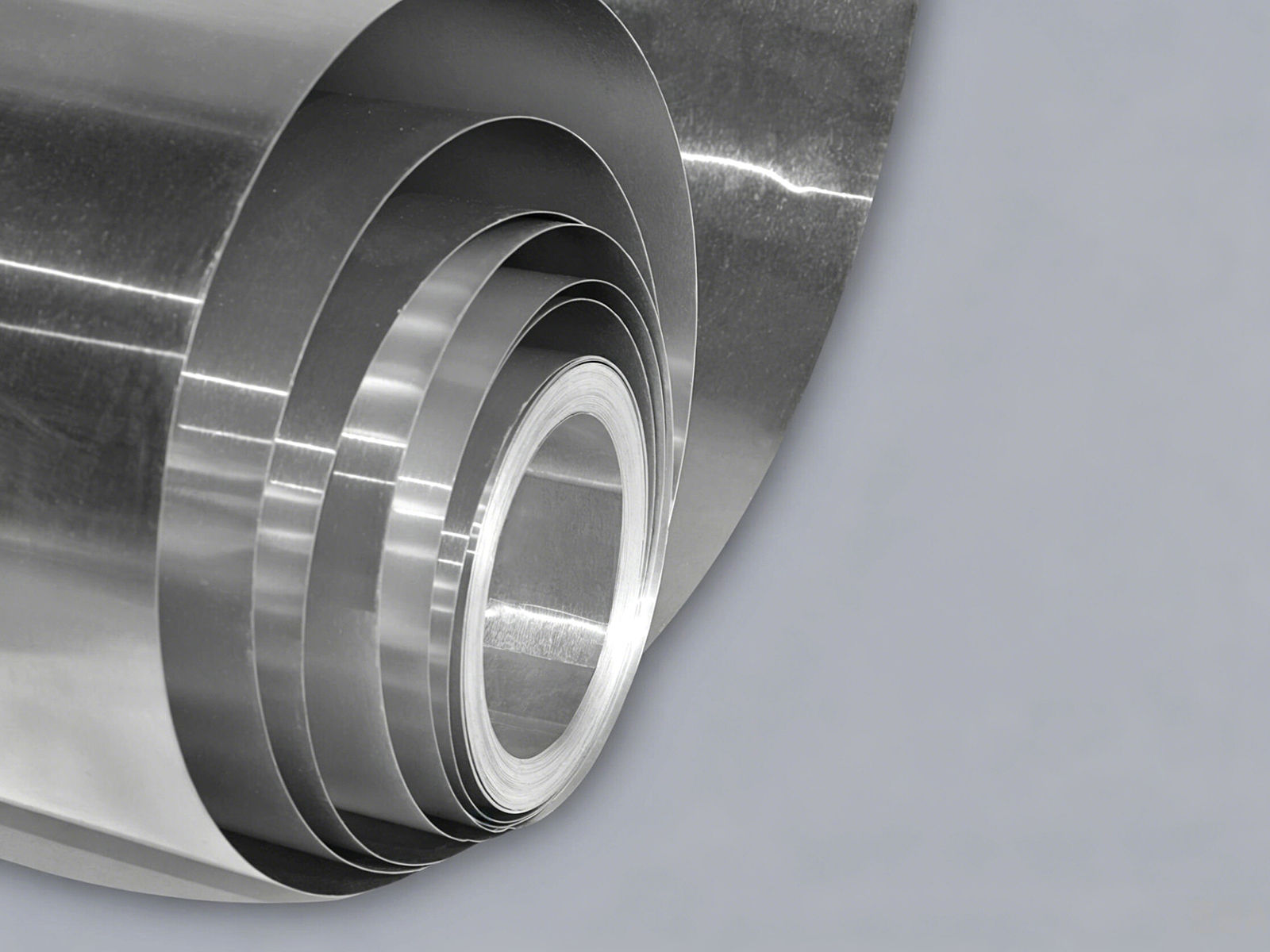
Ti-15V-3Al-3Cr-3Sn (abbreviated as Ti-15-3) is a near-β type titanium alloy foil, highly favored in high-end manufacturing industries for its unique ‘processing-strengthening stepwise realization characteristic.’ This material exhibits excellent cold forming capability in the annealed state, allowing for complex bending, stamping, and other processing operations; after aging treatment, its strength is significantly improved, meeting the standards for structural component applications. Compared to the processing difficulties of traditional Gr5 titanium alloy foils, Ti-15-3 successfully achieves the dual advantages of ‘easy processing’ and ‘high strength.’ With a density of only 4.51 g/cm³ and a melting point of 1668℃, its non-magnetic nature makes it irreplaceably valuable in aerospace, precision electronics, and corrosion-resistant structural fields. This article will provide an in-depth analysis of its alloy composition design logic, performance characteristics, and typical application scenarios.
1. What Should You Know About Alloy Composition Design Principles of Ti-15V-3Al-3Cr-3Sn?
(1) What Should You Know About the Β-stabilizing Effect of Vanadium?
Vanadium, as a typical β-stabilizing element, accounts for 15% of the Ti-15-3 alloy. The high vanadium content is the core characteristic of the near-β type. The high vanadium content allows the alloy to retain a large amount of β phase at room temperature, giving the material excellent plastic deformation capability. The body-centered cubic structure of the β phase has more slip systems, making it less prone to cracking during cold working and capable of withstanding multi-pass precision rolling at an ultra-thin thickness of 0.02 mm. This microstructural characteristic enables the Ti-15-3 alloy to achieve an elongation of over 20% in the annealed state, far exceeding the cold forming limit of α-β type Gr5 titanium alloy.
(2) What Should You Know About Synergistic Strengthening Mechanism of Aluminum, Chromium, and Tin?
3% aluminum content is used to inhibit excessive softening of the β phase, preventing strength deficiencies caused by over-softening of the β phase. Chromium not only enhances oxidation resistance but also increases the hardness of the matrix through solid solution strengthening. The addition of tin improves the alloy’s creep resistance and high-temperature stability. The composite strengthening system formed by these three elements allows the material to precipitate fine, dispersed α phase particles after aging treatment, with tensile strength increasing from 700 MPa in the annealed state to over 1100 MPa, while maintaining 8% elongation after fracture, meeting the stringent requirements for aerospace structural components.
(3) What Should You Know About Balance Between Component Ratios and Processing Performance?
Alloy design needs to seek the optimal balance between strength, toughness, and workability. The composition ratio of Ti-15-3 has been strictly verified: excessive vanadium content reduces welding performance, while too little fails to ensure cold workability; the 3% ratio of aluminum, chromium, and tin ensures the effect of age hardening while avoiding the precipitation of brittle phases. This precise ratio allows the rolled material, within a thickness range of 0.02-1.0 mm, to maintain a uniform structure after 20 passes of cold rolling, with an edge cracking rate controlled within 0.3%, far exceeding the industry’s conventional level of 5%.
element | Content (wt%) | Main function | Impact on performance |
V | 15 | β phase stable | Improve cold formability and reduce the tendency for work hardening |
Al | 3 | α phase stable | Suppress excessive softening of the β phase and enhance aging response |
Cr | 3 | Solid solution strengthening | Improve antioxidant properties and enhance corrosion resistance |
Sn | 3 | Creep Resistance | Enhance high-temperature durability and stabilize tissue |
2. What Should You Know About Performance Characteristics of Ti-15V-3Al-3Cr-3Sn Foil?
(1) What Should You Know About Excellent Cold Forming Capability?
Unlike α-β type Gr5 titanium alloys that require hot forming, Ti-15-3 foil can be processed into complex geometries at room temperature. Double-curvature forming of aircraft skins and deep drawing of electronic shielding covers can be completed in a single operation, avoiding uneven microstructure caused by multiple annealing processes. Measured data show that 0.05 mm thick foil exhibited no cracking in a 180° bending test, with a minimum bending radius of twice the material thickness (t being the sheet thickness), whereas Gr5 titanium foil under the same conditions requires a minimum bending radius of more than five times the thickness.
(2) What Should You Know About Controllable Time-dependent Performance Enhancement Tunability?
This characteristic is the most engineering-valuable feature of Ti-15-3. The annealed material has a tensile strength of about 700-850 MPa and a yield strength of 600-750 MPa, making it suitable for plastic deformation processes such as stamping and stretching. After forming the parts, aging treatment at 480-550℃ for 4-8 hours can increase the strength by more than 60%, reaching the standard required for structural components. This ‘process first, then strengthen’ approach overcomes the traditional contradiction of high-strength titanium alloys being strong but difficult to form, making the manufacturing of complex thin-walled structural components possible.
(3) What Should You Know About Excellent Dimensional Stability?
Controlling the flatness of ultra-thin foil materials is a challenge in the industry. Ti-15-3, through precision cold rolling and leveling treatment, can limit plate waviness to within 3 mm per meter, with residual stress less than 150 MPa. This stability is especially critical during laser cutting and precision stamping-the material does not warp due to stress release. An electronics manufacturer uses 0.03 mm thick Ti-15-3 foil to make mobile phone shielding covers, achieving a consistency deviation of only ± 0.02 mm across a thousand pieces, and the pass rate increased to 98.5%.
Performance indicators | Annealed state | Tense | Test standard |
Tensile Strength (MPa) | 700-850 | 1100-1200 | ASTM E8 |
Yield Strength (MPa) | 600-750 | 1000-1100 | ASTM E8 |
Elongation (%) | 20-25 | 8-12 | ASTM E8 |
Bending radius | 2t (t is the plate thickness) | 3t (t is the plate thickness) | AMS 4983 |
3. What Are the Differences in Comparison with Other Titanium Foils?
(1) What Should You Know About Performance Limitations of the Pure Titanium Series?
Gr1 titanium foil can achieve an elongation of 30%, but its tensile strength is only 240 MPa, which cannot withstand structural loads; Gr2 balances strength (345 MPa) and toughness, making it suitable for non-load-bearing applications such as chemical container linings; Gr4 has a strength increased to 550 MPa, but the difficulty of cold working rises sharply, and thicknesses below 0.1 mm are almost impossible to produce stably. A common problem of these pure titanium materials is that strength and formability are inversely related, making it difficult to meet both complex forming and high load-bearing requirements.
(2) What Should You Know About Technical Breakthrough Relative to Gr5 Titanium Alloy?
Gr5 (Ti-6Al-4V), as the most widely used α-β type titanium alloy, has a tensile strength of up to 900 MPa, but poor room temperature plasticity and a cold forming rate of less than 15%, meaning complex components must be hot processed. Ti-15-3, through near-β type design, achieves a breakthrough in cold formability exceeding 40%, and its strength after aging is no less than that of Gr5. More importantly, the production stability of wide-width foil of Ti-15-3 is far higher than that of Gr5-the latter often has an edge cracking rate exceeding 10% under a 680 mm width specification, whereas Ti-15-3, through precise control of a 750 mm twenty-roll mill, maintains a wide-width product yield rate of over 97%.
(3) Why Is Unique Advantages in the Field of Ultra-thin Specifications Important?
When the thickness drops below 0.05 mm, the processing window of the material narrows sharply. Gr5 titanium foil at this thickness is prone to microcracks, with a scrap rate as high as 30%; although pure titanium can be rolled, its insufficient strength limits its applications. Ti-15-3, owing to the high toughness of the β phase, can stably produce ultrathin specifications of 0.02 mm, and through aging treatment it achieves a strength of over 800 MPa. This capability makes it the material of choice for precision electronic shielding, miniature sensor housings, and other fields.
Comparison project | Gr1 | Gr2 | Gr5 | Ti-15-3 |
Alloy Type | Pure titanium | Pure titanium | alpha beta type | Near beta type |
Intensity Level | Low | Medium-low | Tall | Height (adjustable) |
Cold formability | excellent | Good | bad | excellent |
The thinnest stable production capacity | 0.02mm | 0.02mm | 0.08mm | 0.02mm |
Application Positioning | Extreme forming | General Industry | Structural Load-Bearing | Aerospace / High-end Electronics |
4. What Should You Know About Key Control Technology in the Production Process?
(1) What Should You Know About Thickness Uniformity Control of Multi-pass Cold Rolling?
Rolling a 10 mm medium-thick plate down to 0.02 mm, with a total reduction rate of 99.8%, requires more than 20 passes of precision rolling. The reduction amount, rolling speed, and tension for each pass must be calculated precisely; any deviation exceeding 5% can result in thickness fluctuations or strip breakage. The 750 mm twenty-roll mill uses a hydraulic servo system to achieve precise control of rolling force within ± 10 kN. Coupled with real-time feedback from a laser thickness gauge, the thickness tolerance is maintained at ± 0.003 mm, which is the foundation for the commercial production of ultra-thin foil.
(2) What Should You Know About Full-process Surface Oxygen Contamination Control?
Titanium is highly prone to oxidation above 600℃, and for every 0.1% increase in oxygen content, the material’s brittleness rises significantly. In continuous annealing, a seven-zone electric heating system is used in combination with vacuum or inert gas protection, maintaining the oxygen partial pressure below 10⁻³ Pa. An ultrasonic cleaning line removes rolling oil contamination, raising the surface Ra value to above 40, ensuring the bonding strength of subsequent coatings or welding. A certain aerospace customer reported that foil produced using a protective atmosphere process achieved a welded joint strength of 92% of the base material, an increase of 15 percentage points compared to the unprotected process (benchmark value approximately 77%).
(3) What Should You Know About Precise Control of the Flatness of Wide Products?
For a width specification of 680 mm, uneven temperature differences and stress distribution in the middle of the material edges can easily cause waviness or buckling. The high-precision leveling line uses a 15-roll S-type configuration, applying 0.5-2% micro-tension stretching to eliminate residual stress. The slitting line uses circular disc tools combined with a pneumatic compensation system, controlling width tolerance within ± 0.1 mm. These processes ensure that the positioning accuracy deviation of large-size foils during laser cutting or automated stamping does not exceed 0.05 mm, meeting the stringent requirements of precision manufacturing.
5. Why Is Typical Application Scenarios and Engineering Value Important?
(1) What Should You Know About Large Thin-walled Aerospace Structural Components?
Aircraft fuselage skin, fairings, and other components pursue lightweight and high strength. Traditional aluminum alloys have low density but insufficient strength, while Gr5 titanium alloy has sufficient strength but is difficult to process. The emergence of Ti-15-3 foil has changed the design concept: 0.3 mm thick foil can be cold stamped into complex surfaces in one go, and after aging, the specific strength reaches 2.4×10⁵ N·m/kg, reducing weight by 30% compared to aluminum alloys. After adopting Ti-15-3 skin in a certain type of unmanned aerial vehicle, the structural weight decreased by 18 kg, endurance increased by 22%, and the uneven microstructure problem caused by hot forming was avoided.
(2) What Should You Know About Electromagnetic Shielding System for Electronic Devices?
5G communications and precision medical equipment are extremely sensitive to electromagnetic interference and require comprehensive shielding. Traditional multi-piece splicing methods have seam leakage issues, while Ti-15-3 wide foil can be used to make an integrated shield, eliminating the risk of signal leakage. Its non-magnetic properties do not interfere with sensitive components, and a thickness of 0.05 mm can achieve shielding effectiveness of over 60 dB. After a certain medical imaging equipment manufacturer adopted Ti-15-3 foil shields, the image signal-to-noise ratio improved by 40%, and the FDA certification process was shortened by 3 months.
(3) What Should You Know About Corrosion-resistant Components for Chemical and Marine Engineering?
The natural oxide film of titanium gives it excellent corrosion resistance. The corrosion rate of Ti-15-3 in chloride and acidic environments is less than 0.01 mm/year. Heat exchanger tube sheets made from 0.5 mm foil can be formed integrally without welds, eliminating the corrosion risks in the welded heat-affected zones. In a seawater desalination project using Ti-15-3 foil evaporators, after 5 years of operation, the corrosion depth was only 0.03 mm, while conventional stainless steel equipment had already developed perforations and leaks, reducing maintenance costs by 70%.
(4) What Should You Know About Intermediate Layer and Laminate in Composite Materials?
Metal-resin laminates require the metal layer to have good interfacial bonding capability. After surface grinding treatment, the surface roughness Ra of Ti-15-3 foil can be controlled at 0.4-0.8 um, and the peel strength with epoxy resin reaches 8 N/mm, which is three times higher than untreated surfaces. After being combined with carbon fiber, 0.1 mm thick foil is made into a wing leading edge that combines the impact resistance of metal with the lightweight characteristics of composites. The energy absorption capacity in bird strike tests is increased by 55%, meeting airworthiness standards.
6. What Is the Conclusion?
Ti-15V-3Al-3Cr-3Sn titanium foil, designed as a near-β alloy, achieves an organic unity of cold formability and high strength, breaking through the traditional technical bottleneck of titanium alloys being “strong but difficult to process.” Its stable production capability in ultra-thin specifications of 0.02-1.0 mm and wide widths of 680 mm, combined with controllable aging strengthening characteristics, provides an ideal material choice for aerospace, precision electronics, corrosion-resistant engineering, and other fields, representing the technological development direction of high-performance titanium alloy foils.
FAQ
Q1: Will the aging treatment of Ti-15-3 titanium foil affect dimensional accuracy?
When the aging temperature is controlled at 480-550℃, the material’s linear expansion rate is about 0.08%, and the dimensional change after cooling can be neglected. Using tooling fixtures for constraint, the dimensional deviation of precision parts can be controlled within ± 0.05 mm, meeting the requirements for aerospace structural components.
Q2: Can ultra-thin Ti-15-3 foil (0.02 mm) be welded?
It can be welded by laser or electron beam, but heat input must be strictly controlled. After optimizing welding parameters, the joint strength can reach more than 85% of the base material. It is more recommended to use adhesive bonding or mechanical connection methods to avoid softening issues in the heat-affected zone.
Q3: Compared to imported similar products, what are the differences of domestically produced Ti-15-3 foil?
The control of composition and the uniformity of microstructure have reached the international level, and the key performance indicators meet international general standards. In terms of flatness control of wide products (≥ 500 mm) and the stability of ultra-thin specifications (≤ 0.03 mm), batch production has been achieved through equipment upgrades, reducing the delivery cycle by 40% compared to imports.
7. What Should You Know About Consult the Taigu Professional Team Immediately?
Baoji Titanium Valley Titanium Nickel Zirconium Material Processing Co., Ltd., as a professional manufacturer and supplier of Ti-15-3 titanium foil, has an automated production line with an annual output of 3, 000 tons of ultra-thin, wide-width foil. We offer customized thickness specifications starting from 0.005 mm, and our products meet internationally accepted standards (such as AMS 4983/4984 and ASTM standards). Whether you need aerospace-grade precision foil or industrial-grade corrosion-resistant strips, we welcome you to contact our technical team for professional advice: sales@titaniumvalleys.com
References
- Qu Henglei, Zhu Zhishou, Wang Xinnan. Research and Application Progress of Near β-Type Titanium Alloy Ti-15V-3Al-3Cr-3Sn[J]. Materials Engineering, 2019, 47(6): 12-24.
- Zhao Yongqing, Xi Zhengping, Liu Dong. Titanium Alloys and Their Processing Technology [M]. Beijing: Science Press, 2018: 275-303.
- Zhang Wangfeng, Zhao Yongqing, Bai Chenguang. Precision Rolling Technology and Microstructure-Property Control of Titanium Alloy Foils[J]. Rare Metal Materials and Engineering, 2021, 50(3): 891-899.
- He Wei, Hu Guangshan, Liu Jinxu. Progress in the Preparation Technology of High-Performance Titanium and Titanium Alloy Foils [J]. Rare Metals, 2020, 44(8): 845-854.