
How to Evaluate the Quality of Gr5 Titanium Foil?
- Gr5 Titanium Foil
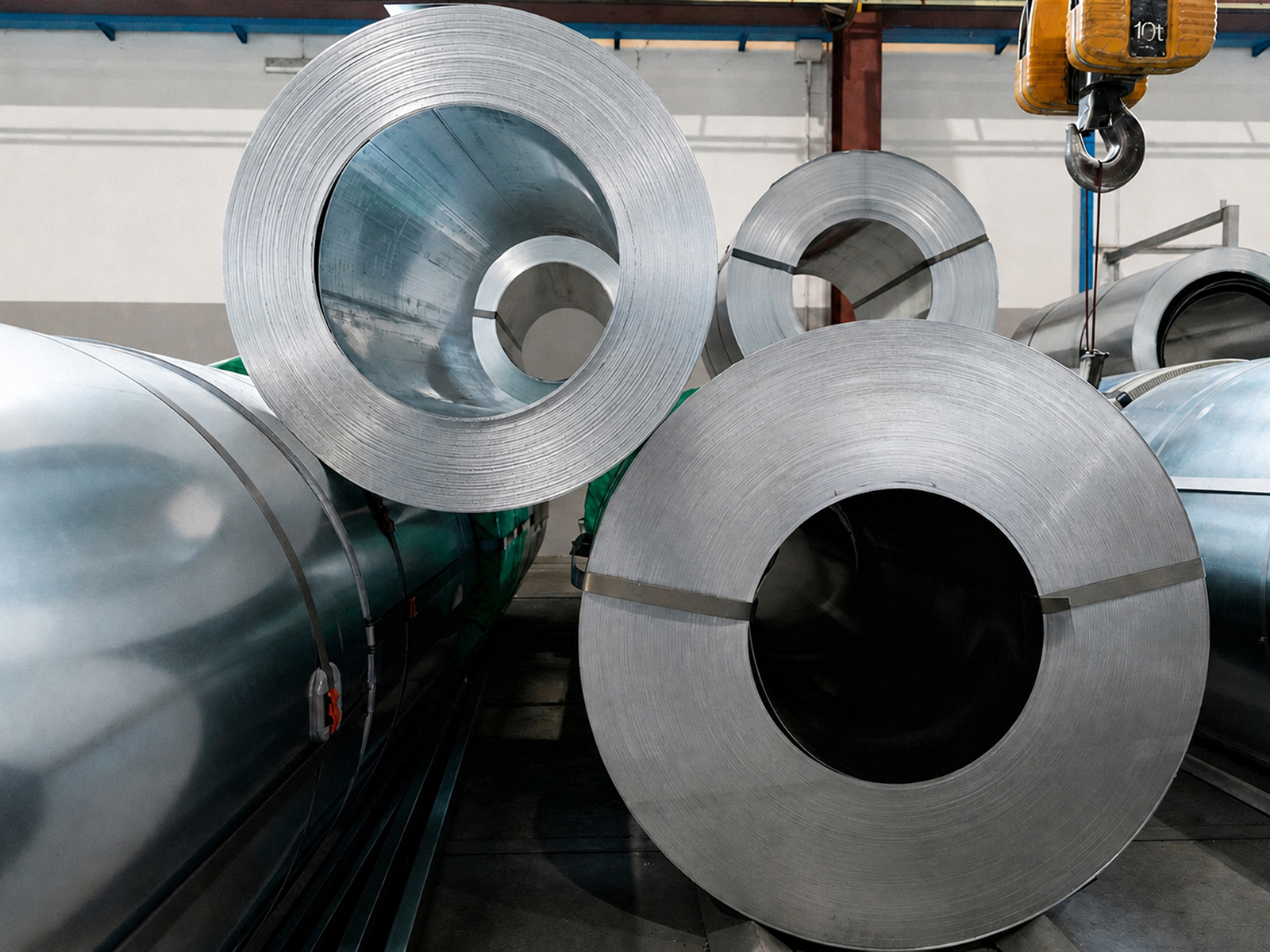
Evaluating the quality of Gr5 titanium foil (Ti-6Al-4V) requires a comprehensive consideration from multiple dimensions. As a high-strength α-β dual-phase titanium alloy, the quality of Gr5 titanium foil directly affects the performance and reliability of the final product. The core evaluation factors include: whether the chemical composition meets standards, mechanical performance indicators (tensile strength ≥ 895 MPa, yield strength ≥ 825 MPa, elongation ≥ 10%), dimensional accuracy (thickness tolerance ± 0.001 mm), surface quality (no cracks or oxidation spots), microstructure uniformity, and batch stability. High-quality Gr5 titanium foil should undergo precise cold rolling, vacuum annealing, and other strict process controls to ensure outstanding performance in high-end applications such as aerospace, medical implants, and new energy sectors. This article will systematically elaborate on the key methods and practical standards for quality evaluation.
1. What Should You Know About Chemical Composition and Material Standard Compliance Testing?
(1) What Should You Know About Strict Benchmarking Against the Standard Component Range?
The chemical composition of Gr5 titanium foil must comply with international standards such as ASTM B265 and AMS 4911. The main elements include: Ti (balance), Al (5.5-6.75%), and V (3.5-4.5%). The precise ratio of alloying elements determines the balance between the material’s fundamental strength and toughness. Aluminum enhances the stability of the α phase, and vanadium strengthens the toughness of the β phase; together, they work synergistically to form excellent overall performance.
element | Standard range | Impact on performance |
|---|---|---|
Al | 5.5-6.75% | Enhance strength and high-temperature stability |
V | 3.5-4.5% | Improve toughness and weldability |
Fe | ≤ 0.30% | Excessive reduction of corrosion resistance |
O | ≤ 0.20% | Influence on plasticity and fatigue performance |
C | ≤ 0.08% | Excess leads to increased brittleness |
(2) What Should You Know About Precise Control of Impurity Elements?
Impurity elements such as iron, oxygen, carbon, nitrogen, and hydrogen must be strictly controlled within specified limits. Excessive oxygen content can make the material brittle and affect its formability; excessive hydrogen content may cause hydrogen embrittlement, leading to cracks in stress-concentrated areas. Spectral analysis (ICP-OES) or inert gas fusion methods are used for detection to ensure the chemical purity of each batch.
(3) Why Is the Verification Value of Third-Party Material Reports Important?
High-quality suppliers should provide a complete mill test certificate, including furnace number traceability, composition test data, heat treatment records, and other information. For aerospace applications, certification documents meeting AMS standards are also required. Certification reports from independent third-party testing agencies (such as SGS or TÜV) can further enhance the credibility of quality.
2. What Should You Know About Accurate Testing of Mechanical Performance Indicators?
(1) What Should You Know About Tensile Strength and Yield Strength Measurement?
The tensile strength of Gr5 titanium foil in the annealed state (M) should be ≥ 895 MPa (usually reaching 930-1100 MPa), and the yield strength should be ≥ 825 MPa. Tensile tests should be conducted using a universal testing machine, and specimens need to be prepared according to the ASTM E8 standard. The testing environment temperature should be maintained at 20-25℃, and the tensile rate should be controlled at 2-5 mm/min to ensure data accuracy.
Performance indicators | Standard value | Actual measured value of high-quality products |
|---|---|---|
Tensile strength | ≥ 895 MPa | 930-1100 MPa |
Yield Strength | ≥ 825 MPa | 850-950 MPa |
Elongation | ≥ 10% | 12-18% |
Hardness | HB 270-330 | HB 280-320 |
(2) What Should You Know About Elongation and Formability Evaluation?
An elongation of ≥ 10% is a basic requirement, but high-end applications usually require a higher plastic reserve (12-18%). Insufficient elongation can lead to cracking during processing such as stamping and bending. Actual formability can be evaluated through bending tests (180° bend without cracks) and cupping tests. Cold-rolled (Y) titanium foil has higher strength but lower elongation, and the appropriate condition should be selected according to the application scenario.
(3) What Should You Know About Fatigue Performance and High-Temperature Stability Verification?
Aerospace components often endure cyclic loads, and fatigue strength is a key indicator. Rotating bending fatigue tests or axial fatigue tests are used to evaluate the fatigue limit at 10^7 cycles (usually 50-60% of the tensile strength). For applications requiring operation above 300℃, high-temperature tensile and creep tests should be conducted to verify the thermal stability of the material.
3. What Should You Know About Standards for Dimensional Accuracy and Surface Quality Control?
(1) What Should You Know About Uniformity of Thickness and Tolerance Control?
The thickness tolerance of ultra-thin titanium foil directly affects subsequent processing accuracy and product consistency. Within a thickness range of 0.03-0.8 mm, high-quality products should achieve precise control of ± 0.001 mm. Use a laser thickness gauge or X-ray thickness gauge for full-width continuous inspection, plot the thickness distribution curve, and identify defects such as edge thickening and center thinning.
Thickness range | Standard tolerance | precision-grade tolerance |
|---|---|---|
0.03-0.1 mm | ± 0.005mm | ± 0.002mm |
0.1-0.3 mm | ± 0.008mm | ± 0.003mm |
0.3-0.8 mm | ± 0.01mm | ± 0.005mm |
(2) What Should You Know About Width Dimensions and Flatness of the Board?
Titanium foils with a width of 350-670mm must have neat edges without burrs or tears. Flatness is measured using a flatness gauge, and defects such as waviness or camber should be controlled within ≤ 3mm/m. The 20-roll precision rolling process combined with a tension leveling system can effectively improve plate shape and enhance the processing efficiency of subsequent slitting and stamping.
(3) What Should You Know About Surface Quality and Cleanliness Inspection?
The surface should be free of defects such as cracks, folds, oxidation color differences, and oil stains. Visual inspection combined with a magnifying glass (10×) should be used, or fluorescent penetrant testing to detect microcracks. Acid-etched surfaces appear uniformly silver-gray, with bright surfaces having high reflectivity and no scratches. Ultrasonic cleaning and vacuum annealing processes can effectively improve surface cleanliness, meeting the requirements for high-cleanliness applications in medical, semiconductor, and other fields.
4. What Should You Know About In-depth Evaluation of Microstructure and Heat Treatment Processes?
(1) What Should You Know About Microscopic Analysis of Α-β Dual-phase Microstructure?
The microstructure of Gr5 titanium foil should be a uniform α+β dual-phase structure, with an α phase volume fraction of about 85-95%. Metallographic samples should be observed using an optical microscope (OM) or scanning electron microscope (SEM) to evaluate phase distribution, grain size, and morphology. In the annealed state, the α lamellae should be fine and uniform, with the β phase continuously distributed around the α phase, forming a network that provides good toughness.
(2) What Should You Know About the Effect of Annealing Process on Microstructure Uniformity?
Vacuum or inert gas annealing is key to ensuring uniform microstructure. The annealing temperature is controlled at 700-850℃, and the holding time is adjusted according to thickness (usually 0.5-2 hours), followed by slow cooling to room temperature. Improper annealing processes can lead to coarse grains, residual stresses, or uneven phase distribution, reducing the material’s fatigue life and reliability.
(3) What Should You Know About Texture and Anisotropic Feature Detection?
Cold-rolled titanium foil usually has a certain texture, resulting in differences in mechanical properties between the longitudinal and transverse directions. The texture type and intensity are analyzed by X-ray diffraction (XRD) to evaluate the degree of anisotropy. For complex forming applications, mechanical properties in different directions should be tested to ensure design requirements are met. Cross-rolling processes can effectively reduce texture intensity and improve the uniformity of material forming.
5. What Should You Know About Batch Stability and Long-Term Supply Capability Verification?
(1) What Should You Know About Batch-to-batch Performance Consistency Evaluation?
High-end applications have extremely high requirements for batch-to-batch consistency of materials. Randomly select samples from different batches for comparative testing, and statistically analyze the standard deviation and dispersion of mechanical properties and dimensional accuracy. Quality suppliers should establish a comprehensive quality management system (ISO 9001, AS9100) and use SPC (Statistical Process Control) to monitor the production process in real time, ensuring the performance of each batch of products is stable.
(2) What Should You Know About Performance Degradation Testing Under Long-term Usage Conditions?
Simulate actual service conditions (high temperature, corrosion, cyclic load) to conduct accelerated aging tests. Continuously expose to 300℃ for 500-1000 hours and measure the rate of change in strength, hardness, and elongation. After long-term high-temperature exposure, high-quality Gr5 titanium foil should have a performance degradation of ≤ 5%, and the surface should not have a noticeable increase in oxide layer thickness.
How Should Supplier Capacity and Delivery Reliability Assessment?
A production line with an annual capacity of over 3, 000 tons can ensure large-scale stable supply. Conduct on-site inspections of the supplier’s equipment advancement (750mm 20-roll mill, continuous annealing line, precision slitting line) and process control level. Review historical delivery records, customer evaluations, and certification qualifications (such as aerospace-grade supplier certification) to assess the reliability of long-term cooperation.
6. What Is the Conclusion?
Evaluating the quality of Gr5 titanium foil is a systematic process that covers multiple dimensions, including chemical composition, mechanical properties, dimensional accuracy, microstructure, and batch stability. Selecting high-quality products that have undergone vacuum annealing and precision rolling, combined with comprehensive third-party testing and certification, is essential to ensure long-term reliable application in high-end fields such as aerospace, medical implants, and new energy. A strict quality control system and stable supply capability are the core standards for assessing the professional level of suppliers.
FAQ
Q1: What are the differences in quality assessment between Gr5 titanium foil and pure titanium foil?
Gr5 belongs to α-β titanium alloys, with strength far higher than that of pure titanium (≥ 895MPa vs. 240-550MPa), requiring key evaluation of alloy element composition, uniformity of the dual-phase microstructure, and high-temperature performance, whereas pure titanium focuses more on testing elongation and corrosion resistance.
Q2: How can one quickly determine whether the surface quality of Gr5 titanium foil meets the standards?
Visual inspection of the surface should show no cracks, color differences, or oil stains. Use a 10x magnifying glass to check if the edges are neat. For high-end applications, fluorescent penetrant testing can be used to detect micro-cracks. Pickled surfaces should appear uniformly silver-gray with a roughness Ra ≤ 0.8 um.
Q3, What Quality Documents Should Be Requested From the Supplier When Purchasing Gr5 Titanium Foil?
Essential documents include the material certificate (including heat number and composition analysis), mechanical performance test report, and dimensional inspection report. For aerospace-grade applications, it is also necessary to provide ASTM B265/AMS 4911 certification, third-party inspection reports (such as SGS), and heat treatment process records.
How Should Looking for a Reliable Gr5 Titanium Foil Supplier?
As a professional titanium alloy foil manufacturer and factory, Titanium Valley has an advanced 20-roll precision rolling production line and a stable annual production capacity of 3, 000 tons, offering customized ultra-thin wide Gr5 titanium foil services in sizes of 0.03-0.8mm × 350-670mm. You are welcome to contact us for material reports and technical support: sales@titaniumvalleys.com References
1. Lütjering, G., Williams, J.C. (2007). Titanium (2nd edition). Springer-Verlag Berlin Heidelberg.
2. Boyer, R., Welsch, G., Collings, E.W. (1994). Materials Properties Handbook: Titanium Alloys. ASM International.
3. Donachie, M.J. (2000). Titanium: A Technical Guide (2nd edition). ASM International.
4. Peters, M., Kumpfert, J., Ward, C.H., Leyens, C. (2003). Titanium alloys for aerospace applications. Advanced Engineering Materials, 5(6), 419-427.