
How to Choose a Reliable Gr2 Titanium Rod Manufacturer?
- Gr2 Titanium Rod
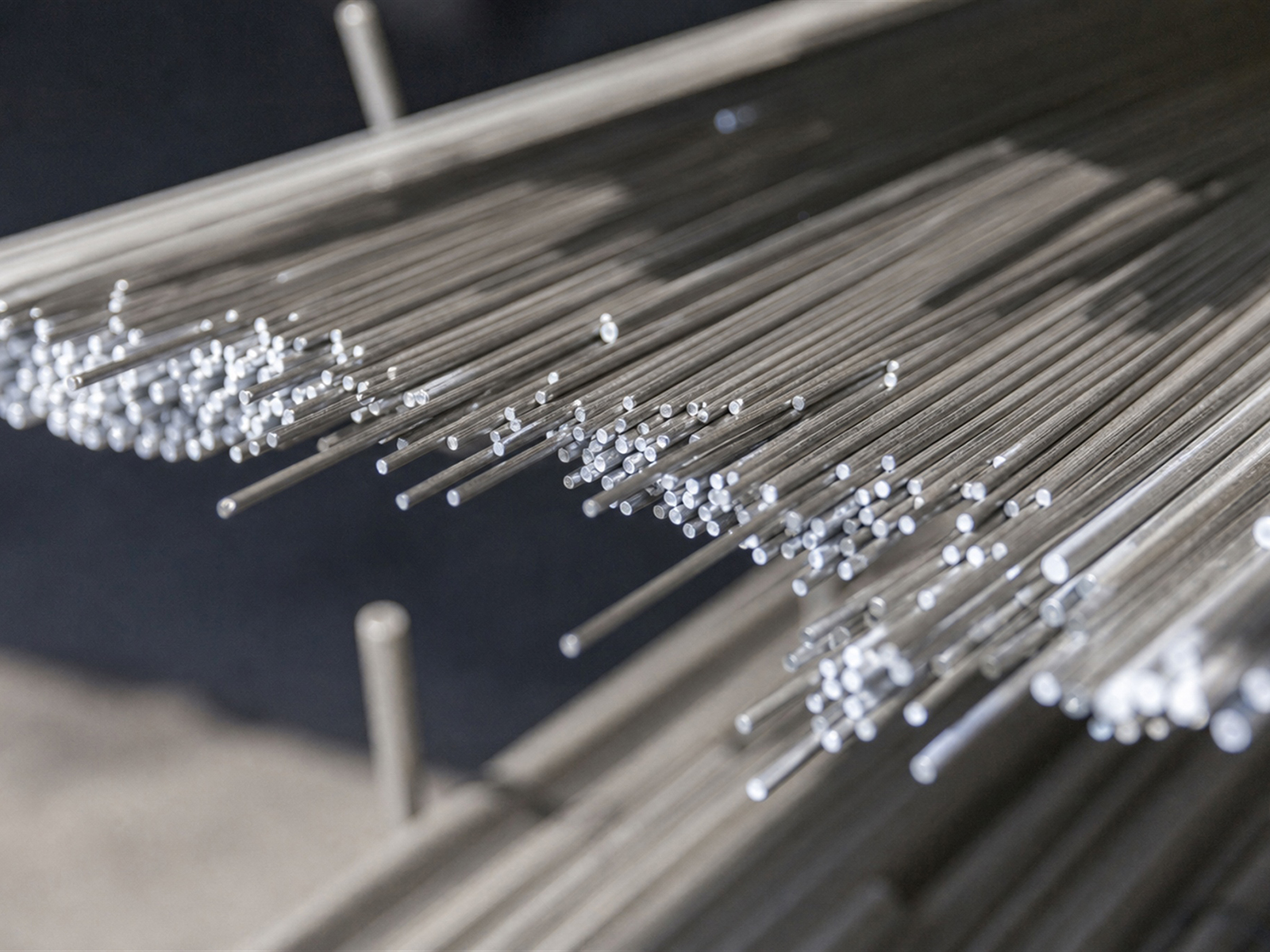
Choosing a reliable Gr2 titanium rod manufacturer requires a comprehensive evaluation of five core dimensions: production equipment and process capability, quality control system, material purity and stability, delivery capability, and after-sales technical support. A high-quality manufacturer should have advanced vacuum melting, precision forging, and heat treatment equipment, implement a strict quality traceability system, provide complete material test reports (MTC), and consistently supply products that meet the applicable versions of ASTM B348/B348M, confirming grade, size, supply condition, and inspection requirements according to purchasing specifications. Especially in high-demand fields such as chemical corrosion protection, marine engineering, and medical devices, the manufacturer’s industry experience, customer cases, and certification qualifications will directly affect the long-term reliability of the products and the success rate of projects.
1. What Should You Know About Production Equipment and Process Capability, Core Indicators of a Manufacturer’s Hard Power?
(1) What Should You Know About Vacuum Melting Technology Determines the Basic Purity of Materials?
The performance of Gr2 titanium rods begins at the raw material smelting stage. Reliable manufacturers must be equipped with a vacuum consumable arc furnace (VAR) and ensure titanium content ≥ 99.2% through at least two vacuum smelting processes, while controlling impurities such as oxygen, iron, and nitrogen within standard ranges. Vacuum smelting helps reduce the impact of gaseous elements and external contamination on the purity of titanium, but the final material quality still depends on the raw materials, smelting procedures, ingot quality, as well as subsequent processing and inspection controls. This is crucial for subsequent processing performance and corrosion resistance. Small workshops lacking vacuum smelting equipment often use ordinary smelting methods, resulting in internal porosity and segregation defects in the products.
(2) What Should You Know About the Effect of Forging and Rolling Processes on Microstructural Uniformity?
Titanium bars need to go through multiple forging or hot-rolling processes from ingots to finished products. The advanced Italian Danieli rolling production line can achieve precise control of temperature and deformation, ensuring that the internal grains are refined and evenly distributed. This uniform metal structure directly enhances the material’s fatigue resistance and machining stability. In contrast, manufacturers with outdated equipment often experience coarse structures and large performance fluctuations, causing frequent issues such as chipping and deformation during customers’ machining processes.
(3) What Should You Know About Control Over the Details of Heat Treatment and Surface Treatment Processes?
The annealing process is a crucial step to eliminate internal stress and optimize plasticity. A reliable manufacturer should have a continuous annealing furnace capable of precisely controlling heating temperatures (650-750℃) and holding time to avoid overheating or underheating. The pickling process requires using ultrasonic cleaning technology to thoroughly remove surface oxide scales and ensure surface cleanliness reaches Sa2.5 or higher. The precision of turning and polishing equipment directly determines the dimensional tolerance of titanium rods, and high-end manufacturers can control diameter tolerance within ± 0.05mm to meet precision processing requirements.
2. What Should You Know About Quality Control System, Full Traceability From Raw Materials to Finished Products?
(1) What Should You Know About Raw Material Procurement and Incoming Inspection Standards?
High-quality manufacturers strictly screen sponge titanium suppliers, requiring them to provide chemical composition analysis reports and batch traceability codes. Incoming inspections should include spectroscopic analysis, hardness testing, and metallographic examination to ensure that the raw materials meet specifications. Some irresponsible suppliers may mix recycled titanium or substandard materials, resulting in excessive composition. This hidden risk may only become apparent after a few months of product use, causing serious economic losses and safety hazards.
Test Items | Standard requirements | Testing method | Failure rate impact |
Oxygen content | ≤ 0.25% | Inert gas melting method | Reduced plasticity, prone to cracking |
Surface defect | No cracks or folds | Ultrasonic Testing | Stress concentration, fracture risk |
(2) What Should You Know About Process Control and Batch Record Management?
Each titanium rod should have a unique batch file established, recording key parameters such as the furnace number, forging temperature, and annealing time. Multiple quality control points need to be set during the production process, including post-forging dimension checks, hardness sampling after annealing, and surface inspections after pickling. ISO 9001 quality system certification is the basic threshold, while AS9100 aerospace certification and medical device ISO 13485 certification represent higher levels of quality assurance capability. Customers should request to review the manufacturer’s process control records and nonconforming product handling ledger.
(3) What Should You Know About Finished Product Inspection and Third-Party Certification Capability?
Reliable manufacturers conduct 100% dimensional inspection and ultrasonic testing on every batch of products, and perform tensile tests, impact tests, and metallographic analysis by batch. Material Test Certificates (MTC) should include complete data on chemical composition, mechanical properties, and heat treatment status, and be stamped by an authoritative third-party testing organization. The U.S. market usually requires compliance with ASTM B348 standards, the European market requires CE certification, and the medical field also requires FDA registration or EU MDR certification.
3. What Should You Know About Technology R&D and Customized Service Capabilities?
(1) What Should You Know About Experience in Special Specifications and Non-standard Product Development?
Standardized products can only meet conventional needs; what truly tests a manufacturer’s strength is the ability to provide non-standard customization. The chemical industry may require extra-long titanium rods (over 6 meters) for tower equipment, the precision electronics industry needs small-diameter cold-drawn polished rods (φ4-8mm), and medical devices demand strict surface roughness (Ra≤ 0.4um). Manufacturers with independent research and development capabilities can fine-tune compositions and optimize processes according to customer conditions, overcoming technical challenges such as ultra-thin, ultra-wide, and extra-long specifications.
(2) Why Is Application Scenario Adaptability Verification Capability Important?
Different industries emphasize different performance aspects of Gr2 titanium bars. Marine engineering highlights resistance to chloride ion pitting and requires manufacturers to provide salt spray test data; chemical equipment focuses on high-temperature strength retention and needs a 300℃ tensile test report; medical implants prioritize biocompatibility and must pass cytotoxicity tests. Experienced manufacturers will establish application databases, accumulating practical experience such as corrosion rate data in different media environments, welding process parameters, and selection of machining tools, to provide customers with systematic technical support.
(3) What Should You Know About Continuous Improvement and Investment in Process Innovation?
Titanium processing is a typical technology-intensive industry, and process improvements are endless. Leading manufacturers invest in research and development to tackle industry pain points, such as developing low-stress annealing techniques to reduce deformation, optimizing pickling formulas to improve surface quality, and improving forging processes to lower material waste rates. Modern factories established in 2022 with an investment of 68.2 million USD often have significant advantages over older equipment enterprises in terms of energy consumption, yield rates, and delivery cycles. Customers should pay attention to the number of technical patents held by manufacturers, their published industry papers, and the frequency of equipment upgrades.
4. What Should You Know About Supply Chain Stability and Delivery Assurance?
(1) What Should You Know About Production Capacity Scale and Inventory Reserves?
Large manufacturers with an annual production capacity of over 20, 000 tons can handle bulk orders and urgent demands, avoiding delivery delays caused by insufficient capacity. Maintaining inventory of standard specifications (φ8-200mm round bars) allows for fast shipping, reducing customers’ project waiting time. Small processing plants often adopt an ‘order-based production’ model, with long lead times for raw material procurement. Once the sponge titanium market fluctuates, they cannot deliver on time, severely affecting customers’ project progress and cash flow.
Production Capacity Grade | Annual output | Regular stock | Delivery lead time | Price stability |
Large enterprise | ≥ 20, 000 tons | 500-1000 tons | 7-15 days | High (contract price lock) |
Medium-sized enterprise | 5, 000-10, 000 tons | 100-300 tons | 15-30 days | Mid (Quarterly Adjustment) |
Small workshop | <1, 000 tons | Almost out of stock | 45-60 days | Low (market-dependent) |
(2) What Should You Know About Logistics Distribution and Packaging Protection Standards?
Titanium rods are prone to surface scratches or deformation due to collision and compression during transportation. Reliable manufacturers use wooden or iron boxes for packaging, wrap each titanium rod individually with plastic film, fill foam layers between rods, and mark the outer box with “Handle with Care” and “Moisture-Proof” labels. For export orders, fumigation of wooden boxes and rust-proof treatment are also required. The mode of transportation should be chosen according to the order quantity: small batches can use express logistics (3-5 days), large batches use full truckload transportation (reducing costs by 15-20%), and international orders are shipped in sea containers with freight insurance purchased.
(3) What Should You Know About Emergency Response Mechanism for Sudden Situations?
Unexpected situations such as equipment failures, surges in orders, and raw material shortages test manufacturers’ responsiveness. Excellent companies establish backup production lines, strategic inventories, and alternative supplier lists to ensure timely delivery of Gr2 titanium bars even under extreme conditions. Customers should clarify compensation terms for delivery delays, return and exchange policies for quality issues, and the response time for technical support (reply within 24 hours, on-site service within 72 hours) before cooperation.
5. What Should You Know About Industry Reputation and Client Case Verification?
(1) What Should You Know About Key Industry Client Cooperation Cases?
The customer structure of a manufacturer reflects its technological level and market recognition. Serving enterprises in the aerospace field (such as Boeing and Airbus supply chains) indicates that its quality system meets the stringent AS9100 standards; supplying medical device giants (Johnson & Johnson, Medtronic) proves that the material purity and biocompatibility meet standards; long-term orders from chemical giants (BASF, DuPont) show the reliability of products in extreme corrosive environments. Customers should request to view the manufacturer’s performance list and customer recommendation letters to verify the authenticity of the cases.
(2) What Should You Know About Third-Party Evaluation and Industry Certification Qualifications?
In addition to quality system certification, industry association membership, government quality awards, and customer satisfaction survey reports are all important references. Baoji Titanium Valley in China is known as the ‘Titanium City of China,’ and large-scale enterprises in this area usually have complete industrial chain support and a reserve of technical talent. Long-term cooperation records with customers from the United States, Germany, and Japan indicate that the products meet the strict standards of developed countries. Online reviews, industry forum reputations, and peer evaluations can also indirectly reflect the credibility of manufacturers.
(3) What Should You Know About After-sales Service and Technical Support System?
A reliable manufacturer not only provides products but also offers full lifecycle services. This includes providing technical documents such as welding process parameters, machining tool selection recommendations, and corrosion environment assessment reports for free; for bulk customers, sending technical personnel for on-site guidance and training; establishing customer files, regularly following up on usage, and collecting improvement suggestions. Quality issues within the warranty period should be unconditionally replaced or refunded, and the corresponding logistics and installation losses should be borne. After-sales response speed and problem-solving capability are often decisive factors for customer repurchase.
6. What Is the Conclusion?
Selecting a reliable Gr2 titanium rod manufacturer requires a comprehensive evaluation from five dimensions: equipment processes, quality system, technical capability, supply chain, and industry reputation. Priority should be given to large enterprises equipped with vacuum melting, precision forging, and advanced inspection equipment, requiring them to provide complete material certificates and third-party certification reports, and to verify successful cases in key industries. By conducting on-site inspections of production lines, reviewing quality records, and comparing multiple quotes, you can ultimately choose a long-term partner with the best cost-performance ratio and the most reliable service, ensuring project quality and long-term benefits.
FAQ
Q1: How to verify the material authenticity of a Gr2 titanium rod?
Require the manufacturer to provide a Material Test Certificate (MTC) for each batch, including spectroscopic analysis data and mechanical performance test reports, and verify the consistency of the heat number stamp with the documents. If necessary, a third-party testing agency can be commissioned for reinspection, with a focus on whether the titanium content, oxygen content, and tensile strength meet the standards.
Q2: How to control quality risks when making bulk purchases?
For the first cooperation, it is recommended to first test with a small batch to verify quality stability, and only sign a long-term supply agreement if satisfied. The contract should clearly specify quality standards, sampling ratios, handling methods for non-conforming products, and warranty periods. For critical projects, the manufacturer may be required to provide a quality assurance deposit or third-party guarantee.
Q3: What are the differences between imported titanium rods and domestically produced titanium rods?
Imported titanium bars from the United States and Japan have advantages in dimensional accuracy and surface finish, but their prices are 30-50% higher and delivery times are longer. Large-scale manufacturers in Baoji, China, use imported equipment and processes, and their product quality has approached international standards, offering a higher cost-performance ratio, making them particularly suitable for cost-sensitive industries such as chemicals and marine applications.
7. What Should You Know About Contact Titanium Valley Immediately?
As a professional manufacturer and supplier of Gr2 titanium bars, Baoji Titanium Valley Titanium Nickel Zirconium Material Processing Co., Ltd. owns an Italian Danieli rolling production line, with an annual production capacity of over 20, 000 tons. Our products meet the ASTM B348 standard and are ISO certified. We offer customized services and a stable global supply. For inquiries, please contact: sales@titaniumvalleys.com
References
- Zhang Wei, Li Ming. ‘Processing Technology and Quality Control of Industrial Pure Titanium Materials.’ Metallurgical Industry Press, 2021.
- Wang Qiang, Zhao Jun. ‘Titanium Alloys and Their Application Technology Manual.’ Chemical Industry Press, 2020.
- Chen Hua, Liu Yang. ‘Modern Titanium Material Production Technology and Equipment.’ Mechanical Industry Press, 2022.
- Sun Jie, Zhou Min. “Research on the Application of Titanium and Titanium Alloys in Chemical Equipment.” Journal of Corrosion and Protection, 2023, Issue 3.