
How Should Gr4 Titanium Foil, Specifications and Standards Guide?
- Gr4 Titanium Foil
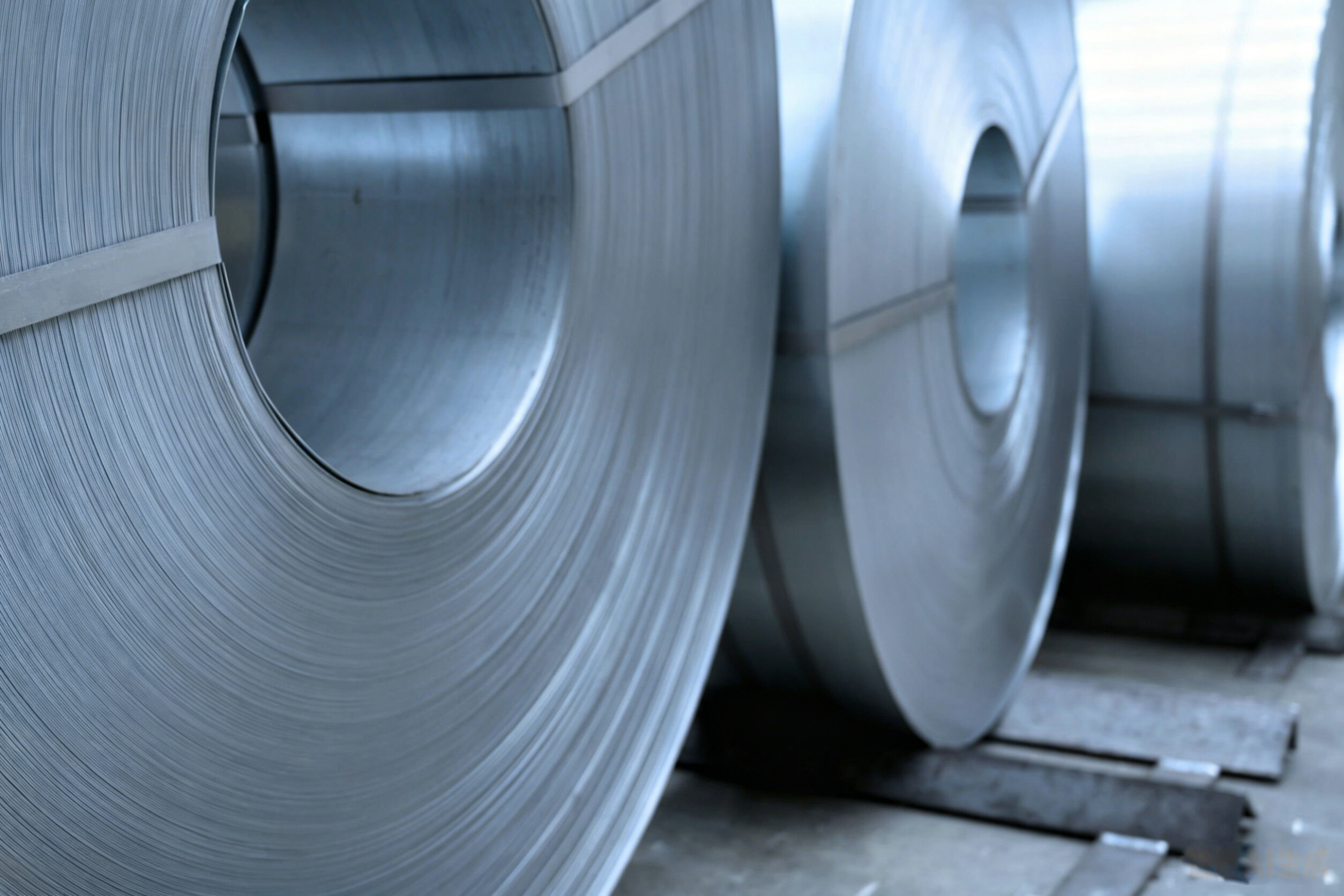
Gr4 titanium foil, as the highest strength grade among industrial pure titanium, has become the preferred material in aerospace, chemical equipment, and precision manufacturing fields due to its outstanding mechanical properties and corrosion resistance. This guide provides a comprehensive analysis of Gr4 titanium foil’s technical specifications, international standard comparisons, performance characteristics, and application essentials. From ASTM B265 standard requirements to actual processing capabilities, from ultra-thin specifications of 0.02-1.0mm to manufacturing widths of 680mm, it thoroughly explores how this high-performance material meets the dual challenges of high loads and highly corrosive environments, providing engineers and procurement decision-makers with authoritative reference for material selection.
1. What Should You Know About the Material Nature and Grading System of Gr4 Titanium Foil?
(1) What Should You Know About Grading Logic of Industrial Pure Titanium?
Industrial pure titanium is divided into multiple grades according to oxygen content and strength level, with Gr4 being the highest strength grade of α-type pure titanium. This grading system is based on the control of interstitial elements (especially oxygen and iron), which directly affects the material’s mechanical properties. In Gr4 titanium foil, the titanium purity is ≥ 99.0%, oxygen content ≤ 0.40%, iron content ≤ 0.30%, and elements such as carbon, nitrogen, and hydrogen are strictly limited to extremely low levels. This composition design allows its tensile strength to reach ≥ 550 MPa, significantly higher than Gr1’s ≥ 240 MPa and Gr2’s ≥ 345 MPa.
(2) What Are the Differences in Performance Comparison Between Gr4 and Other Pure Titanium Grades?
Material selection needs to balance strength and formability. Gr1 titanium foil has an elongation of ≥ 24%, suitable for extreme deep drawing; Gr2 has an elongation of ≥ 20%, offering a good balance between strength and plasticity and is the most widely used; Gr4 has an elongation of ≥ 15%, and although its formability is reduced, its load-bearing capacity increases by more than 40%. The density is 4.51 g/cm³, melting point 1668℃, and non-magnetic and corrosion-resistant properties remain consistent across all grades. Gr4 has a yield strength of 480-665 MPa, showing unique advantages in thin-walled parts requiring structural support.
(3) What Should You Know About Mechanism of the Influence of Chemical Composition on Performance?
As an interstitial solid solution strengthening element, oxygen has a wider control range in Gr4, enhancing the resistance to dislocation movement. The presence of iron forms fine dispersed phases, further strengthening the matrix. Strict control of carbon and nitrogen content ensures that the material’s toughness does not decrease excessively. Hydrogen content ≤ 0.015% prevents the risk of hydrogen embrittlement. This precise composition control is achieved through vacuum self-consuming arc melting, ensuring uniform distribution of impurity elements and avoiding performance fluctuations caused by local segregation.
2. What Should You Know About International Standard System and Specification Requirements?
(1) What Should You Know About Core Provisions of ASTM B265 Standard?
The ASTM B265 standard of the American Society for Materials and Testing is the authoritative specification for titanium and titanium alloy plates, sheets, and strips worldwide. This standard defines Grade 4 titanium foil as UNS R50700 and clearly specifies the upper and lower limits of chemical composition, mechanical property indicators, and testing methods. Tensile tests should be conducted according to the ASTM E8 standard, with sampling directions parallel to the rolling direction. Thickness tolerances are graded according to product form and size range, with ultra-thin specifications of 0.02-1.0 mm requiring ± 0.01-0.03 mm. Surface quality is classified as bright and matte, and must be free of defects such as cracks, delamination, and inclusions.
Performance indicators | Gr1 | Gr2 | Gr4 |
Tensile Strength (MPa) | ≥ 240 | ≥ 345 | ≥ 550 |
Yield Strength (MPa) | 140-310 | 275-450 | 480-665 |
Elongation (%) | ≥ 24 | ≥ 20 | ≥ 15 |
Density (g/cm³) | 4.51 | 4.51 | 4.51 |
(2) What Are the Differences in International Standard Comparison and Equivalent Grades?
Different countries and regions adopt their own standard systems, but equivalence can be achieved by comparing chemical composition and mechanical properties. Class 4 in Japan’s JIS H4600 standard, Ti4 in Europe’s EN 10263-4, and BT1-00 in Russia’s GOST 19807 all correspond to ASTM B265 Gr4. When purchasing internationally, attention should be paid to differences in inspection standards; for example, the European standard has additional requirements for grain size, while the Japanese standard is stricter on surface roughness. Third-party inspection reports from certification bodies (such as TÜV, SGS) can resolve disputes arising from standard differences.
(3) What Should You Know About Specification Range and Customization Capability Boundary?
The standard specifications cover a thickness of 0.02-1.0mm, a width of 15-680mm, and customizable lengths. Ultra-thin specifications can go as low as 0.005mm, suitable for microelectronics packaging and optical coating substrates. Achieving a wide width of 680mm relies on a 750mm twenty-roll precision rolling mill, gradually thinning through multiple cold rolling passes, with the reduction per pass controlled at 5-15%. Surface conditions include annealed (M) and cold-rolled (Y) states, with the former having uniform structure and stress relief, and the latter retaining work hardening effects and higher strength. Delivery forms include coils, strips, and cut-to-length sheets, meeting different processing requirements.
standard | Country/Region | Gr4 Equivalent Grade | Main Differences |
ASTM B265 | United States | Gr4 / R50700 | Dominated by mechanical properties |
JIS H4600 | Japan | Class 4 | Surface quality is strict |
EN 10263-4 | Europe | Ti4 | Grain size requirements |
GOST 19807 | Russia | BT1-00 | Different testing methods |
3. What Should You Know About Production Process and Quality Control System?
(1) What Should You Know About Principles of Twenty-Roll Precision Rolling Technology?
Traditional four-roll mills face challenges in strip shape control when rolling ultra-thin materials. The twenty-roll mill achieves a thickness accuracy of ± 0.001 mm by optimizing the pressure distribution through the supporting roll system. The work roll diameter is reduced to 80-120 mm, and the contact arc length is shortened, which decreases rolling force while improving deformation uniformity. The maximum rolling force is 3500 KN, and the line speed is 400 m/min, suitable for large-scale continuous production. The roll cooling system maintains a stable working temperature, preventing dimensional fluctuations caused by thermal expansion. The hydraulic AGC (Automatic Gauge Control) system monitors exit thickness in real time and dynamically adjusts the roll gap, ensuring consistent full-length tolerances.
(2) What Should You Know About Optimization of Continuous Annealing Process Parameters?
The dislocation density and residual stress accumulated from multiple passes of cold rolling need to be eliminated through annealing. The seven-zone electrically heated continuous annealing furnace adopts a segmented temperature control strategy: the preheating zone slowly ramps up to 600℃, the holding zone stays stable at 700-850℃ for 5-15 minutes, and the cooling zone lowers temperature stepwise to avoid thermal shock. The maximum operating temperature is 1100℃, with a temperature control accuracy of ± 2℃, and argon or vacuum protective atmosphere prevents oxidation. After annealing, the microstructure transforms into uniform recrystallized grains, with a grain size of 6-8, the yield strength decreases to the lower limit of the standard range, and elongation recovers to over 15%, providing good plasticity for subsequent forming processes.
(3) What Should You Know About Surface Treatment and Cleanliness Control?
The ultrasonic cleaning line uses a multi-tank, step-by-step cleaning process, including alkaline degreasing, acid pickling to remove oxide scale, pure water rinsing, and hot air drying. The independently developed degreasing formula effectively removes rolling oil residues, raising the surface D-value to ≥ 40, meeting the wettability requirements for subsequent coating and laminating processes. The grinding process, through fiber wheel polishing or chemical passivation, improves the surface microstructure, controlling the Ra value within 0.2-0.8 um. The high-precision leveling line applies tensile straightening to eliminate edge waves, center waves, and other plate defects, reducing residual stress by more than 60%, with a processing speed of 150 m/min that balances efficiency and quality.
4. Why Is Key Application Scenarios and Performance Matching Important?
(1) What Should You Know About the Demand for Lightweight Aerospace Structural Components?
Fuselage skin, frame stiffeners, honeycomb core materials, and other components require high specific strength and fatigue resistance. Gr4 titanium foil has only 60% of the density of steel, yet its strength is close to that of medium-strength steel, giving it excellent load-bearing capacity per unit weight. Thin-walled structures with thicknesses of 0.1-0.3 mm are formed by chemical milling or laser cutting, combined with diffusion bonding or electron beam welding, to construct complex three-dimensional frameworks. The long-term operating temperature ≤ 350℃ covers most non-engine hot-section areas. Its non-magnetic characteristics prevent interference with navigation equipment, and its low-temperature toughness ensures reliability in high-altitude environments.
(2) What Should You Know About Response to the Highly Corrosive Environment of Chemical Equipment?
Scenarios such as electrolytic cell anode substrates, thin-walled heat exchanger tubes, and membrane separation module linings face corrosion from media like chloride ions, sulfuric acid, and alkaline solutions. Gr4 titanium foil maintains a stable passive film in the pH range of 1-14, with a pitting potential higher than most stainless steels. Materials with a thickness of 0.5-1.0 mm can be fabricated into large flat panels or tubular structures through cold pressing or expansion processes, and welded joints are annealed to restore corrosion resistance. In seawater desalination modules, 670 mm wide titanium foil reduces the number of weld seams, lowers leakage risk, and has a service life of over 20 years. Its high-strength characteristics allow wall thickness to be reduced by 30% while still meeting pressure vessel design standards.
(3) What Should You Know About Functional Integration in the Field of Electronics and New Energy?
Applications such as lithium battery current collectors, fuel cell bipolar plates, and shielding layers for flexible circuit boards require both electrical conductivity and mechanical strength. Ultra-thin Gr4 titanium foil of 0.02-0.05 mm is used to prepare functional coatings through composite rolling or magnetron sputtering, with a resistivity of 0.50 μΩ·cm ensuring efficient current transmission. In battery tab welding, the high-strength substrate reduces fracture failure, increasing the stress fatigue life by 50% during charge-discharge cycles. Sensor packaging housings require non-magnetic properties and dimensional stability; the thermal expansion coefficient of Gr4 titanium foil is 8.6×10⁻⁶/K, which matches well with ceramic substrates, preventing thermal stress cracking.
5. How Should Key Points of Material Selection Decisions and Technical Support?
(1) What Should You Know About Principle of Trade-off Between Strength and Formability?
Designers need to select the material grade based on the stress state of the parts and the manufacturing process. For pure tensile loads without complex deformation, the high strength of Gr4 directly translates into a weight reduction advantage. When involving plastic processing such as deep drawing, flanging, or bending, it is necessary to assess whether a 15% elongation meets the process window, and intermediate annealing or stepwise forming should be used if necessary. Finite element simulation predicts the forming limits, and the die design is optimized in conjunction with the material’s tensile curve. Although Gr2 titanium foil has lower strength, it offers greater processing margin, and the defect rate may be lower in mass production. The cost model should comprehensively consider material price, processing difficulty, and subsequent treatment costs.
(2) What Should You Know About Supply Chain Capability and Quality Assurance System?
Stable supply capability relies on production scale and inventory management. An automated production line with an annual output of 3, 000 tons supports large-volume orders, and the minimum order quantity is flexibly adapted to the needs of small and medium-sized customers. A full-process quality traceability system from raw material melting to finished product delivery assigns a unique code to each roll of material, with electronic records of chemical composition, mechanical properties, and surface quality inspection data. ISO 9001 quality management certification, AS9100 aerospace system certification, and ISO 13485 medical device certification cover the main application areas. Material Test Certificates (MTC) and Certificates of Conformance (CoC) from third-party testing institutions are provided with the shipment, eliminating customer acceptance concerns.
(3) Why Is the Added Value of Custom Processing Services Important?
Special requirements beyond standard specifications are achieved through flexible manufacturing. Ultra-thin foil with a thickness of 0.005mm requires adjustments in rolling passes and annealing procedures; although this increases costs, it meets the requirements of high-end optical coating substrates. Non-standard widths are cut using precision slitting lines, with a tolerance of ± 0.1mm and edge burr height less than 0.02mm. Surface grinding treatment improves roughness to Ra 0.1um, suitable for bonding processes. Fixed-length cutting services provide length accuracy of ± 1mm, reducing secondary processing losses for customers. The technical team offers value-added services such as welding parameter recommendations, heat treatment design, and failure analysis, shortening product development cycles.
Application field | Typical specifications | Performance requirements | Technical difficulty |
Aerospace honeycomb core material | 0.05-0.1mm | High specific strength, fatigue resistance | Ultrathin Plate Form Control |
Chemical Electrolysis Anode | 0.5-1.0mm | High corrosion, high load | Welding performance retention |
Battery current collector | 0.02-0.03mm | Electrical conductivity, dimensional accuracy | Surface cleanliness |
Marine engineering components | 0.3-0.8mm | Seawater corrosion, salt fog | Wide and flawless |
6. What Is the Conclusion?
Gr4 titanium foil, with a tensile strength of ≥ 550 MPa, excellent corrosion resistance, and a lightweight characteristic of 4.51 g/cm³, has become an ideal choice for high-load and harsh environment applications. From international standards such as ASTM B265 to precise specifications of 0.02-1.0mm × 15-680mm, and from twenty-roll rolling to seven-zone annealing advanced processes, this material continuously creates value in aerospace, chemical equipment, new energy, and precision manufacturing fields. Reasonable material selection decisions need to balance strength and formability, relying on a reliable supply chain and technical support system to fully realize the performance potential of Gr4 titanium foil.
FAQ
Q1: How should Gr4 titanium foil and Gr2 titanium foil be selected in practical applications?
Gr4 has a tensile strength ≥ 550 MPa, suitable for load-bearing structural components and high-pressure environments, but the elongation of 15% limits complex forming; Gr2 has a strength ≥ 345 MPa and elongation ≥ 20%, with better formability, suitable for deep drawing and bending processes. Chemical high-pressure vessels are recommended to use Gr4, while thin-walled heat exchangers are recommended to use Gr2.
Q2: How is the thickness tolerance of ultra-thin Gr4 titanium foil ensured?
Using a twenty-roll precision rolling mill combined with a hydraulic AGC system, the roll gap is monitored and dynamically adjusted in real time, achieving a thickness accuracy of ± 0.001mm. Ultra-thin specifications of 0.02-0.1mm are rolled through multiple small-pass reductions, coupled with full-length inspection by a laser thickness gauge to ensure tolerance stability.
Q3: How long is the service life of Gr4 titanium foil in a seawater environment?
Titanium forms a stable TiO2 passivation film in seawater, and the pitting potential of Gr4 titanium foil is higher than 0.6V (vs. SCE), resisting chloride ion concentrations exceeding 35, 000 ppm. In marine engineering applications, under reasonable design and regular maintenance conditions, its service life can exceed 20 years, far surpassing that of stainless steel and copper alloy materials.
How Should Looking for High-performance Gr4 Titanium Foil Suppliers?
Baoji Titanium Valley Titanium Nickel Zirconium Materials Processing Co., Ltd., with an annual production of 3, 000 tons of ultra-thin wide titanium foil production line, meets ASTM B265 standards, providing full-specification customization services from 0.02-1.0mm. A high-quality partner for the aerospace, chemical, and medical industries. Contact now: sales@titaniumvalleys.com
References
- Zhao Yongqing, Zeng Weidong. Titanium Alloy Material Science and Engineering [M]. Beijing: Chemical Industry Press, 2020.
- American Society for Testing and Materials. ASTM B265-2020 Standard Specification for Titanium and Titanium Alloy Strip, Sheet, and Plate [S]. 2020.
- Li Miaoquan, Wang Kelu. Advanced Precise Plastic Forming Technology of Titanium Alloys [M]. Xi’an: Northwestern Polytechnical University Press, 2019.
- Zhang Xiyan, Zhao Xiangmiao. Microstructure, Properties, and Applications of Industrial Pure Titanium [J]. Progress in Titanium Industry, 2021, 38(3): 1-6.