
How Should Gr2 Titanium Rod Price Guide, Factors Affecting Material Costs?
- Gr2 Titanium Rod
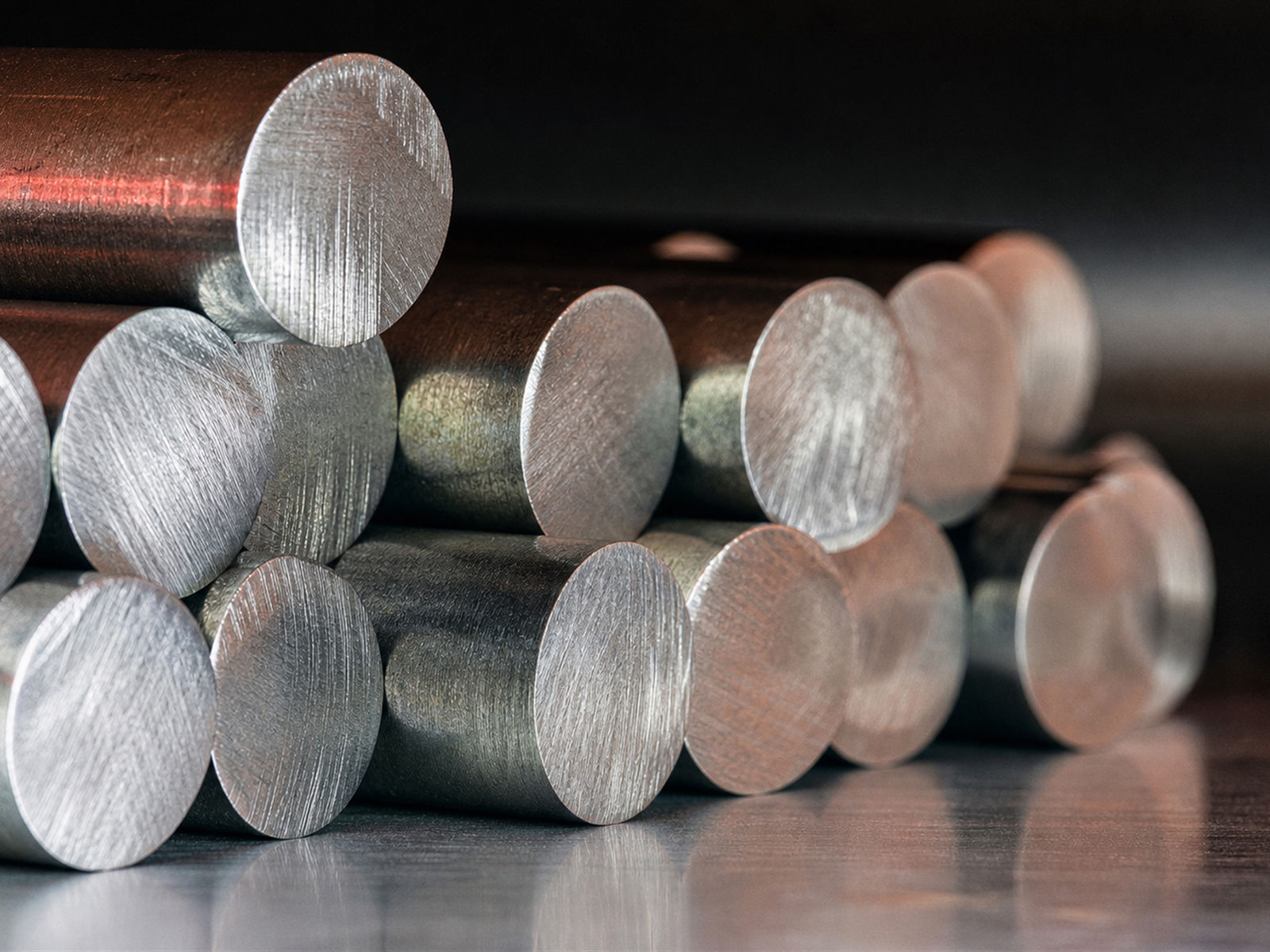
When purchasing Gr2 titanium rods, price is often a key consideration for companies’ decision-making. Currently, the price range of Gr2 titanium rods on the market is approximately $80-200 per kilogram, and this significant difference is not arbitrarily set. Prices are mainly influenced by multiple factors including raw material quality, production process complexity, specification and dimensional accuracy, order quantity, fluctuations in the international titanium market, and the technical capabilities of suppliers. For procurement personnel in industries such as chemical corrosion prevention, marine engineering, and medical devices, understanding these cost components can not only help optimize the purchasing budget but also maximize cost efficiency while ensuring product quality. This article will systematically analyze the core variables that affect the price of Gr2 titanium rods, providing practical reference for your purchasing decisions.
1. What Should You Know About Raw Material Costs, the Fundamental Factors of Price Fluctuations?
(1) What Are the Differences in Differences in the Quality Grades of Titanium Sponge?
High-purity titanium sponge is the starting point for manufacturing Gr2 titanium rods. The titanium sponge on the market is classified into different grades such as 0, 1, and 2 based on impurity content, with purity ranging from 99.0% to 99.7%. The raw materials used for medical-grade Gr2 titanium rods require titanium content ≥ 99.5%, with oxygen content strictly controlled in the range of 0.18%-0.25%. The price of such high-quality titanium sponge is 15%-25% higher than that of industrial-grade. Although oxygen content is a key element in controlling the strength of Gr2, excessive amounts can affect toughness, so raw material selection directly determines the final product’s performance and cost.
(2) What Should You Know About International Titanium Market Price Fluctuations?
The global supply of titanium sponge is mainly concentrated in China, Japan, Russia, and Kazakhstan. In the past three years, international titanium prices have undergone significant fluctuations. In 2021, prices rose by more than 30% due to the recovery of aerospace demand; in 2023, they fluctuated again due to energy costs. Geopolitics, mineral resource supply, and trends in the commodity market all affect the cost of titanium materials. When purchasing cyclical bulk orders, it is recommended to pay attention to the London Metal Exchange (LME) titanium price index and to lock in long-term contracts during periods of relatively low prices.
(3) What Should You Know About Alloy Element and Impurity Control Costs?
Although Gr2 titanium bars are commercially pure titanium, impurities such as iron, carbon, nitrogen, and hydrogen must be strictly limited within the ASTM B348 standard range. Controlling iron content to ≤ 0.30%, carbon to ≤ 0.08%, and nitrogen to ≤ 0.03% requires additional vacuum melting cycles and refining processes. Each additional vacuum arc remelting (VAR) increases costs by about 8%-12%. Top suppliers use a triple melting process to ensure internal structure uniformity, and such products are naturally priced higher than conventional twice-melted products.
2. What Should You Know About Production Process and Processing Accuracy, Technical Barriers Determine Cost?
(1) What Should You Know About Complexity of Smelting and Forging Processes?
From titanium sponge to finished titanium bars, multiple processes are required, including vacuum arc remelting (VAM), forging, hot rolling, or cold drawing. Large-diameter forged titanium bars (φ100-300mm) require 10, 000-ton forging equipment and precise temperature control systems. The forging temperature window is only between 850-950℃, and deviations of more than 20℃ may lead to structural defects. Advanced rolling production lines such as those from Italy’s Danieli can achieve continuous cooling control, improving uniformity by 40%, but the equipment depreciation costs are also factored into the product price.
(2) What Should You Know About Surface Treatment and Precision Control?
Different application scenarios have significant differences in surface quality requirements. Grade 2 titanium rods for medical devices need polishing treatment (Ra≤ 0.4um), while rods for chemical equipment can accept turned surfaces (Ra≤ 1.6um). Precision grinding processing increases processing costs by 15%-20%, but ensures dimensional tolerances of h6-h9. Non-destructive testing processes such as ultrasonic flaw detection and eddy current inspection increase costs but are mandatory requirements in the aerospace and medical industries. Cold-drawn and polished small-diameter titanium rods (φ4-30mm) have a unit price 25%-35% higher than conventional hot-rolled rods due to additional processing steps.
(3) What Should You Know About Annealing Process and Performance Stability?
Annealing is a key step to eliminate internal stress and adjust the microstructure. Standard annealing (M state) requires holding at 650-750℃ for 2-4 hours, followed by furnace cooling or air cooling. Using an automated production line with a continuous annealing furnace can accurately control the temperature profile, improving product performance consistency by 30%, but the equipment investment can reach tens of millions of yuan. Some suppliers use batch processing with box annealing furnaces, which is less costly, but the performance variation between batches can reach 10%-15%, posing a risk for applications with strict requirements.
Type of Processing Technology | Applicable diameter range | Surface roughness | Dimensional tolerance grade | Cost increase |
Hot Rolled, Bright Rolled | φ20-200mm | Ra 1.6-3.2 um | h11-h12 | Benchmark |
Cold drawing polishing | φ4-30mm | Ra 0.4-0.8 um | h7-h9 | +25%-35% |
Precision grinding | φ10-100mm | Ra ≤ 0.4 um | h6-h7 | +30%-45% |
Forging Heat Treatment | φ100-300mm | Ra 6.3-12.5 um | h12-h14 | +20%-30% |
3. What Should You Know About Specifications and Customization Requirements, Cost Premium for Non-Standard Processing?
(1) What Should You Know About the Impact of Diameter Size on Price?
The standard inventory diameters (φ8-200mm) have relatively controllable costs due to batch production, while small-diameter precision bars (φ4-8mm) and large-size forged bars (φ200-300mm) are non-standard products. Small-diameter cold-drawn titanium bars require special drawing dies, with each set costing 50, 000-100, 000 yuan, and when allocated to small batch orders, the unit price may increase by 50%-80%. Large-diameter forged bars are limited by equipment tonnage and forging ratio requirements, and orders below 100 tons often require additional furnace opening and debugging costs.
(2) What Should You Know About Length and Cross-sectional Shape Customization?
The price of standard random lengths (300-3000mm) is the most economical. Custom lengths or multiple-of-standard lengths result in 5%-15% material loss due to reduced utilization. Specialized cross-sections such as square bars or hexagonal bars require dedicated rolls or forging molds, with mold development taking 4-8 weeks and mold costs of 30, 000-80, 000 yuan to be shared by the customer or spread across the minimum order quantity. For North American customers needing imperial sizes like φ12.7mm (1/2 inch), suppliers need to adjust production parameters, and such special requirements usually add 8%-12% to the cost.
(3) What Should You Know About Special Requirements for Performance Indicators?
Although ASTM B348 specifies that the tensile strength of Gr2 titanium bars should be ≥ 340 MPa, certain application scenarios require controlling the upper limit of strength or optimizing toughness indicators. Orders requiring tensile strength within the narrow range of 340-410 MPa need to achieve this through precise control of oxygen content (0.20%-0.25%) and annealing processes. This fine control can increase production costs by 10%-18%. Gr2 titanium bars for medical implants also need to provide biocompatibility test reports and traceability documents, and testing and certification costs may account for 5%-8% of the total price of small-batch orders.
Specification Type | Market supply situation | Minimum order quantity requirements | Delivery cycle | Price premium |
Standard inventory specifications (φ10-100mm) | Plenty of stock available | 10-50kg | 3-7 days | Benchmark price |
Small diameter precision rods (φ4-8mm) | Needs customization | 200-500kg | 4-6 weeks | +50%-80% |
Large-diameter forged bar (φ200-300mm) | Produce on demand | 1000-3000kg | 8-12 weeks | +30%-50% |
Alien-shaped cross-section (square/hexagonal) | Custom mold | 500-1000kg | 6-10 weeks | +40%-70% |
4. What Are the Differences in Order Quantity and Supply Chain Management, Significant Differences in Economies of Scale?
(1) Why Is the Cost Advantages of Bulk Purchasing Important?
Titanium production has typical characteristics of economies of scale. The unit price difference between an order of 100 kilograms and 1, 000 kilograms can reach 20%-30%. Large batch orders can effectively spread the fixed costs of smelting, forging, heat treatment, etc., while also reducing raw material procurement costs. Customers with annual framework agreements usually can receive a price discount of 8%-15%, and suppliers are also willing to reserve production capacity and inventory for stable clients. For chemical and marine engineering companies with stable demand, it is recommended to adopt quarterly or semi-annual bulk procurement strategies.
How Should Supplier Capacity and Delivery Lead Time?
Large manufacturers such as Baoji Titanium Valley, equipped with Italian Danieli rolling lines, have an annual production capacity of over 20, 000 tons and can quickly respond to multi-specification demands, reducing delivery cycles by 30%-50%. In contrast, small processing companies rely on outsourcing or queued production, which may extend delivery cycles to 8-12 weeks. Delivery delays not only affect project progress but may also increase procurement costs due to rising market prices. Choosing suppliers with sufficient capacity and advanced equipment, although unit prices may be slightly higher by 5%-8%, offers better overall cost-effectiveness when considering timely delivery and product quality stability.
(3) What Should You Know About Inventory Management and Capital Occupancy?
Titanium is a high-value metal, and large inventories can tie up a company’s working capital. For project-based procurement, it is recommended to use a JIT (Just-In-Time) supply model, where suppliers deliver in batches according to the production schedule, ensuring continuous supply while reducing inventory costs. Some suppliers offer consignment services or a VMI (Vendor Managed Inventory) model, where the company only pays for the actual usage. Although the unit price may increase by 3%-5% under this model, it can significantly improve cash flow.
5. Why Is Quality Certification and Service Added Value, the Importance of Hidden Costs Important?
(1) What Should You Know About International Standard Certification System?
Meeting international standards such as ASTM B348 and AMS 4902 is the basic threshold for entering European and American markets, but obtaining industry certifications like AS9100 (aerospace) and ISO 13485 (medical devices) requires additional investment. These certifications demand strict procedures such as full-process traceability, batch testing, and third-party witnessing, and the cost of maintaining the certifications will ultimately be reflected in product pricing. Suppliers with a complete certification system may have product prices 8%-12% higher, but it can prevent customs clearance delays or customer audit failures due to incomplete material certification.
(2) What Should You Know About Material Certificate and Traceability?
Each batch of Gr2 titanium rods should be supplied with an MTC (Material Test Certificate), including key information such as chemical composition, mechanical properties, and heat treatment condition. In the medical and aerospace fields, it is also required to provide complete traceability documents such as the melt number, forging records, and ultrasonic testing reports. The witness testing fees by third-party inspection agencies (such as SGS, TÜV) usually range from $500 to $2000 per batch, and for small batch orders, this cost can account for 3%-6% of the total. Choosing suppliers who can provide a complete document package, although slightly more expensive, can significantly reduce quality risks and subsequent dispute costs.
(3) What Should You Know About Technical Support and After-Sales Service?
The value provided by high-quality suppliers is not only the product itself, but also includes technical services such as material selection advice, process guidance, and performance testing assistance. Manufacturers like Baoji Titanium Valley, which have R&D teams, can recommend the optimal material solutions based on the customer’s specific working conditions, avoiding over-design or improper material selection. Although this technical support is difficult to quantify directly, it can help customers reduce overall application costs by 10%-20%. In terms of after-sales service, services such as a rapid response mechanism for quality disputes and priority scheduling for urgent orders provide value to critical projects that far exceeds price differences.
Service Type | Basic supplier | High-quality supplier | Value difference |
Material Certificate | Standard MTC | MTC Smelting Traceability Third-Party Testing | Reduce audit risk |
Technical Support | Specification Confirmation | Material Selection, Process Recommendations, Performance Optimization | Save 10%-20% on application costs |
Delivery Guarantee | Standard cycle | Emergency orders prioritized, delivered in batches, VMI | Shorten project duration by 30%-50% |
Quality objection | 30-day response | 7-day rapid handling on-site technical support | Reduce downtime losses |
6. What Is the Conclusion?
The price of Gr2 titanium rods is influenced by multiple factors, including the quality of raw materials, production processes, specification customization, order volume, certification systems, and service capabilities. A rational purchasing strategy should optimize costs through bulk purchasing, selecting standard specifications, and long-term cooperation, while ensuring application performance. Choosing suppliers with strong technical capabilities and a complete quality system may result in slightly higher initial prices, but stable quality, timely delivery, and technical support can achieve the optimal total lifecycle cost. This is particularly important for key applications such as chemical corrosion protection, offshore engineering, and medical devices.
FAQ
Q1, Why Is There More Than a 30% Price Difference for Gr2 Titanium Bars of the Same Specifications From Different Suppliers?
Price differences mainly arise from variations in the grade of raw materials, production process levels, quality control systems, and service capabilities. Low-priced products may use secondary recycled materials or reduce the number of melting cycles; although the surface meets standards, there are potential risks in internal structure uniformity and long-term stability. It is recommended to comprehensively evaluate the completeness of material certificates, supplier certifications, and practical application cases to avoid subsequent quality risks caused by simply pursuing low prices.
Q2: How can small batch purchases (50-100 kilograms) reduce unit costs?
You can consider joint procurement with companies in the same industry to reach the supplier’s minimum economic order quantity, or choose stock inventory specifications instead of customized sizes. Some suppliers offer standard length cutting services, and although there is a 5-8% cutting loss cost, the total cost is still lower than full custom production. Establish long-term cooperative relationships with suppliers and strive for annual framework agreement prices, so that even small single orders can enjoy bulk discounts.
Q3: How big is the price difference between medical-grade Gr2 titanium bars and industrial-grade ones? Where are the actual performance differences?
Medical-grade product prices are usually 20%-35% higher, with differences mainly reflected in: higher raw material purity (titanium content ≥ 99.5%), stricter impurity control (hydrogen content ≤ 0.012%), higher surface cleanliness requirements (requiring ultrasonic cleaning and dust-free packaging), and the necessity to provide biocompatibility testing and traceable documentation. In terms of performance, medical-grade products have finer and more uniform grains, with fatigue strength and corrosion resistance increased by 15%-25%, and after implantation in the human body, the amount of metal ion release is only one-third that of industrial-grade products.
7. What Should You Know About Looking for Reliable Gr2 Titanium Rod Manufacturers?
How Should Baoji Titanium Valley Titanium-Nickel-Zirconium Material Processing Co., Ltd. Owns the Advanced Rolling Production Line From Danieli, Italy, with an Annual Titanium Rod Output of Over 20, 000 Tons, Providing Full-specification Products From Φ4-300mm and a Complete Quality Traceability System. As a Professional Titanium Supplier and Factory Direct-sale Enterprise, We Provide Cost-effective Material Solutions for the Global Chemical, Marine, and Medical Industries. for Inquiries, Welcome to Contact, Sales@titaniumvalleys.com?
References
- Zhang Wei, Li Minghua. ‘Research on the Production Process and Cost Control of Commercial Pure Titanium.’ Rare Metal Materials and Engineering, 2022.
- Wang Jianguo, Liu Xiaodong. ‘Analysis of the Price Fluctuation Mechanism of Titanium Alloy Materials.’ Journal of Chinese Nonferrous Metals, 2023.
- Chen Hua, Zhao Jun. ‘Quality Control and Certification System of Medical-Grade Titanium.’ Journal of Biomedical Engineering, 2021.
- Titanium Industry Association. “Global Titanium Market Analysis and Cost Structure Report”, 2023.