
How Gr2 Titanium Foil Supports Advanced Energy Technologies?
- Gr2 titanium foil
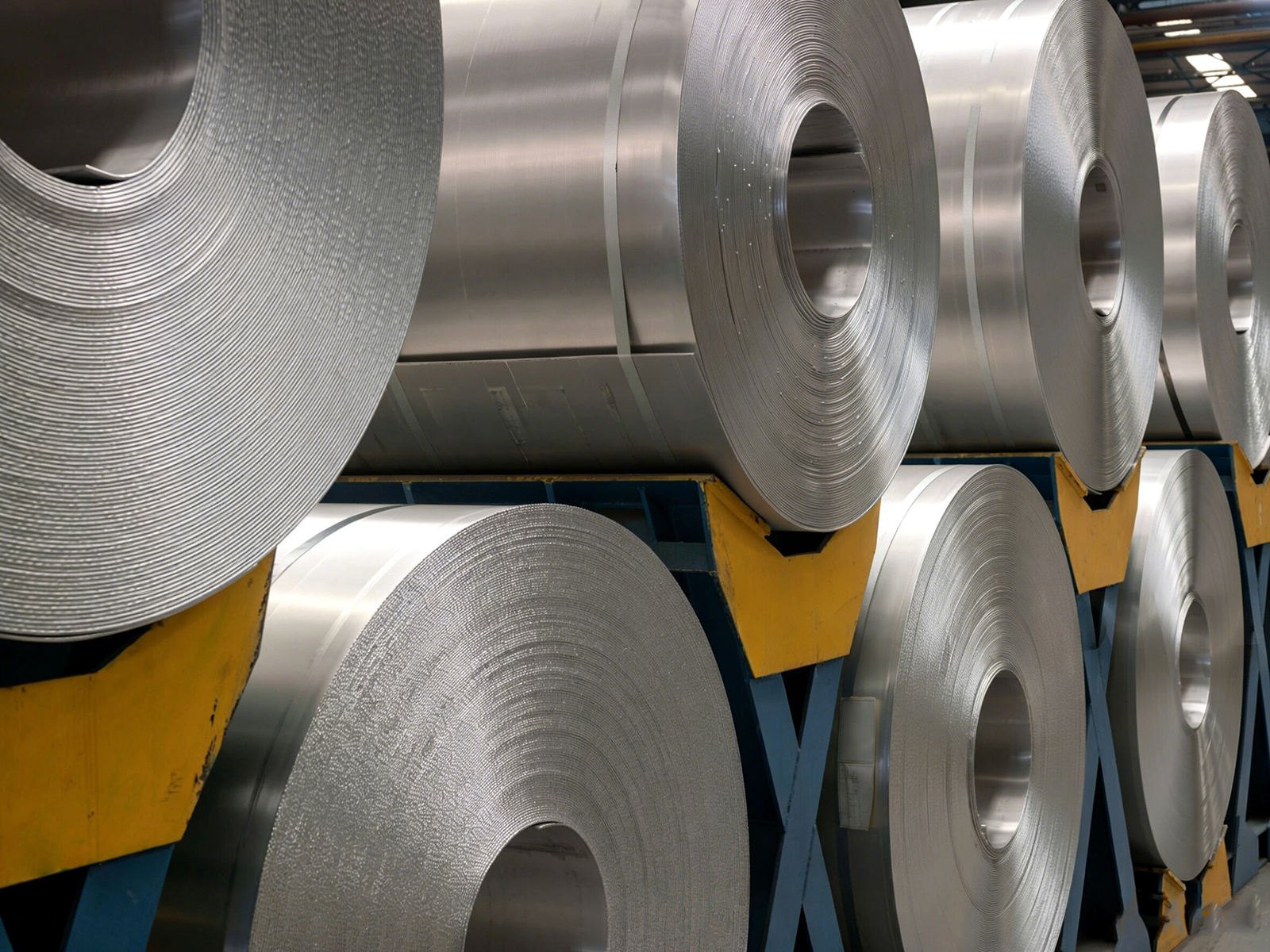
At a critical period of the global energy transition, Gr2 titanium foil is becoming a core material driving breakthroughs in advanced energy technologies. This industrial-grade pure titanium foil, with its excellent corrosion resistance, moderate strength (tensile strength ≥ 345 MPa), and outstanding electrical conductivity, plays an irreplaceable role in fuel cells, electrolytic hydrogen production, new energy batteries, and energy storage systems. Compared with traditional metal materials, Gr2 titanium foil has a density of only 4.51 g/cm³, about 60% that of steel, showing significant advantages in applications such as seawater desalination, electrolyzer electrodes, and proton exchange membrane fuel cells. Its surface can spontaneously form a dense TiO2 passivation film, maintaining long-term stability in strong acid, strong alkali, and high-temperature corrosion environments, reducing equipment maintenance costs by over 40% and extending service life by 3-5 times.
1. What Should You Know About the Key Role of Gr2 Titanium Foil in the Hydrogen Energy Industry?
(1) What Should You Know About Core Material Requirements for Electrolytic Hydrogen Production Equipment?
Electrolytic water hydrogen production technology requires electrode materials to have high conductivity, strong corrosion resistance, and long-term stability. Proton exchange membrane (PEM) electrolyzers and alkaline electrolyzers operate in extremely harsh environments, and electrodes need to work continuously for thousands of hours in highly corrosive electrolytes with pH values ranging from 0 to 14. Traditional stainless steel materials rapidly passivate or dissolve in such environments, causing a sudden drop in electrolysis efficiency. Gr2 titanium foil, with a purity of ≥ 99.2% and a resistivity of only 0.56 μΩ·cm, has become an ideal choice for bipolar plates and electrode substrates. Its surface TiO2 passivation film is only 1-10 nanometers thick, which can resist electrolyte corrosion without significantly increasing contact resistance.
(2) What Should You Know About Breakthrough in the Lightweighting of Fuel Cell Bipolar Plates?
The commercialization of fuel cell vehicles faces the dual challenges of weight and cost. Although traditional graphite bipolar plates are corrosion-resistant, they are brittle and complicated to process; stainless steel bipolar plates, while strong, tend to release metal ions and contaminate the electrolyte membrane in acidic environments. Gr2 titanium foil with a thickness of 0.05-0.1 mm can be processed into bipolar plates with uniform flow fields and 50% weight reduction through precision stamping or laser welding. Baoji Titanium Valley Ti-Ni-Zr material processing company uses a 20-roll precision cold rolling technique to control thickness tolerance within ± 0.001 mm, ensuring a consistency deviation of <2% in the conductivity of large-area bipolar plates.
(3) What Should You Know About Safety Assurance of Hydrogen Storage and Transportation Systems?
High-pressure hydrogen storage tanks (with pressures up to 70 MPa) require extremely high strength and hydrogen embrittlement resistance for the liner materials. Gr2 titanium foil has a yield strength of 275-410 MPa, an elongation ≥ 20%, and maintains good toughness even in a -253℃ liquid hydrogen environment. Its low-temperature brittle transition temperature is far lower than that of steel, effectively preventing sudden fracture of the tank under extreme conditions. Through a multilayer composite process, 0.5 mm thick Gr2 titanium foil can be used as a hydrogen storage container liner, working together with carbon fiber winding layers to achieve a 30% increase in hydrogen storage density.
Application scenario | Material Thickness (mm) | Key Performance Indicators | Lifespan improvement |
PEM electrolyzer bipolar plate | 0.05-0.1 | Contact resistance <10 mΩ·cm² | 5 times |
Alkaline electrolyzer diaphragm support | 0.02-0.05 | Resistant to corrosion by 30% KOH solution | 3 times |
Fuel cell collector | 0.08-0.15 | Conductivity > 2×10⁶ S/m | 4 times |
2. What Should You Know About Material Upgrades for Seawater Desalination and Ocean Energy?
(1) What Should You Know About Long-term Protection of Reverse Osmosis Membrane Modules?
High-pressure pumps, heat exchangers, and membrane housings in seawater desalination equipment are in long-term contact with seawater containing 3.5% salt. Although traditional nickel-based alloys or duplex stainless steels have certain corrosion resistance, they are still prone to pitting corrosion in stress-concentrated areas such as crevices and welds. Tube sheets, baffles, and pump liners made of 0.3-0.5 mm thick Gr2 titanium foil can reduce equipment corrosion rates to below 0.001 mm/year. After a 300, 000-ton/day seawater desalination plant in a Middle Eastern region adopted Gr2 titanium foil heat exchangers, the major maintenance cycle of the equipment was extended from 3 years to more than 10 years, and the overall operating costs were reduced by 35%.
(2) What Should You Know About Thermal Exchange Core for Ocean Thermal Energy Power Generation?
Ocean Thermal Energy Conversion (OTEC) utilizes the 15-25℃ temperature difference between surface and deep seawater to drive a thermal cycle. The heat exchange areas of evaporators and condensers often span several thousand square meters, and traditional copper alloy pipes continuously release copper ions in seawater, polluting the marine ecosystem. Gr2 titanium foils with a thickness of 0.2-0.4 mm are laser-welded into shape, meeting the high-efficiency heat transfer requirements (thermal conductivity of 17 W/m·K) while avoiding the release of metal ions. After ultrasonic cleaning, their surface tension exceeds 40 dyn/cm, which significantly inhibits marine biofouling and reduces the frequency of heat exchanger cleaning by 60%.
(3) What Should You Know About Durability Challenges of Wave and Tidal Energy Devices?
The hydraulic cylinders, seals, and structural frame of the wave energy conversion device must withstand the triple challenge of seawater scouring, gravel wear, and salt spray corrosion. Gr2 titanium foil, processed through multi-layer lamination or surface grinding, can be made into protective skins with a thickness of 0.5-1.0 mm and applied to the surface of the steel frame. Its density is only 60% of steel, so it does not increase the buoyancy load; its yield strength reaches 275 MPa, which can withstand wind and wave impacts; its continuous operating temperature range is from -40℃ to 350℃, making it suitable for full operating conditions from polar to tropical seas.
3. What Should You Know About Performance Optimization of New Energy Battery Systems?
(1) What Should You Know About Conductive Innovation of Lithium-Ion Battery Current Collectors?
The anode current collector of power batteries traditionally uses 10-20 um thick electrolytic copper foil, but copper is prone to oxidation at high potentials and reacts with the electrolyte to produce by-products that reduce cycle life. Gr2 titanium foil with a thickness of 0.02-0.05 mm can be surface polished to achieve a roughness Ra value of 0.2-0.5 um, which both enhances the bonding with active materials and maintains low contact resistance (<5 mΩ). A certain power battery manufacturer applied Gr2 titanium foil as the current collector in high-nickel ternary batteries, increasing the battery cycle life from 800 cycles to 1200 cycles, and raising the capacity retention rate from 80% to 88%.
(2) What Should You Know About Improvement of the Stability of Solid-state Battery Interface Layers?
The contact resistance at the interface between the solid electrolyte and the electrode is a bottleneck that restricts the energy density of solid-state batteries. Gr2 titanium foil, through magnetron sputtering or electrochemical deposition, can grow a 10-50 nanometer thick lithium-ion conductive layer (such as LLZO or sulfides) on its surface, forming a ‘titanium-based solid electrolyte’ composite interface. The chemical inertness of titanium prevents side reactions with the solid electrolyte, and the interface impedance can be reduced to below 10 Ω·cm². Baoji Titanium Valley Ti-Ni-Zr Materials Processing Company has developed 0.03 mm ultra-thin Gr2 titanium foil, which has been pilot tested and applied in several solid-state battery research institutions.
(3) What Should You Know About Lightweight Design of Battery Thermal Management System?
The thermal management of electric vehicle battery packs requires heat dissipation plates that have both high thermal conductivity and resistance to coolant corrosion. Traditional aluminum alloy heat dissipation plates are lightweight, but they are prone to galvanic corrosion in ethylene glycol-based coolants. Microchannel heat dissipation plates made from 0.5-0.8 mm Gr2 titanium foil, formed by diffusion welding or brazing, have a thermal conductivity lower than aluminum alloy, but this can be compensated by increasing the fin density. Their corrosion resistance extends the coolant replacement cycle to 5 years, reducing maintenance costs by more than 50%.
Battery Type | Application areas of Gr2 titanium foil | Thickness range (mm) | Performance improvement |
Lithium-ion battery | Negative electrode current collector | 0.02-0.05 | Cycle life 50% |
Solid-state battery | Interface buffer layer | 0.03-0.08 | Interface Impedance -70% |
Sodium-ion battery | Positive electrode substrate | 0.05-0.1 | Rate Performance 30% |
4. What Should You Know About Efficiency Improvement of Solar Energy and Energy Storage Systems?
(1) What Should You Know About Flexible Substrate of Perovskite Solar Cells?
Flexible perovskite solar cells need to prepare the photoelectric conversion layer on a transparent conductive substrate. Although traditional ITO glass has high transmittance, it is fragile. Gr2 titanium foil with a thickness of 0.05-0.1 mm, after surface polishing treatment, can be used as an opaque back electrode flexible substrate, capable of withstanding roll-to-roll processing with a bending radius of less than 10 mm. Its melting point reaches up to 1668℃, and it can withstand the perovskite film annealing process at 150-200℃, preventing film cracking caused by substrate deformation. In a certain laboratory, perovskite cells prepared on a Gr2 titanium foil substrate achieved a power conversion efficiency of 18.3%, and after 10, 000 bends, the efficiency only decreased by 5%.
(2) What Should You Know About Chemical Stability of Flow Battery Electrode Frames?
The electrolyte of a all-vanadium redox flow battery contains a high concentration of sulfuric acid (pH<1) and vanadium ions, and the electrode frame needs to withstand long-term acid corrosion without releasing impurity ions that would contaminate the electrolyte. 0.3-0.5 mm Gr2 titanium foil is laser-cut to form a porous electrode support frame, with a unit area weight of only 40% that of stainless steel. Its surface TiO2 film can catalyze the redox reactions of vanadium ions, increasing the utilization of the electrode active area to over 92%. After a 10 MW/40 MWh energy storage station adopted Gr2 titanium foil electrode frames, the system energy efficiency increased from 75% to 82%.
(3) What Should You Know About the Power Density of Supercapacitor Collectors Has Broken Through?
Supercapacitors require current collectors to have extremely low internal resistance and high mechanical strength to withstand the expansion stress during rapid charge and discharge processes. Gr2 titanium foil with a thickness of 0.02-0.03 mm is laser-etched to form a micron-scale mesh structure, increasing the specific surface area by three times and reducing the contact resistance with the activated carbon electrode to below 2 mΩ. After using Gr2 titanium foil as the current collector in an industrial supercapacitor module, the power density increased from 5 kW/kg to 8 kW/kg, and the cycle life exceeded 1 million times.
5. What Should You Know About Manufacturing Process and Quality Assurance of Gr2 Titanium Foil?
(1) Why Is Core Advantages of 20-Roll Precision Cold Rolling Technology Important?
Traditional 4-roll or 6-roll mills find it difficult to stably produce ultrathin titanium foil of 0.02-0.1 mm, often resulting in thickness fluctuations, edge cracks, and surface scratches. Baoji Titanium Valley Ti-Ni-Zr Material Processing Company has introduced a 750 mm 20-roll precision mill, which disperses rolling force through multiple support rolls (maximum 3500 kN), controlling thickness tolerance within ± 0.001 mm. The rolling speed can reach 400 m/min, and single coil lengths exceed 5000 meters, meeting the continuous feeding requirements for large-area applications such as fuel cell bipolar plates. The mill is equipped with automatic gauge control (AGC) and a flatness detector, which monitor and adjust rolling parameters in real time to ensure the straightness of titanium foil with widths of 350-670 mm is ≤ 2 mm/m.
(2) What Should You Know About Microstructural Uniformity of Continuous Annealing Process?
There are a large number of dislocations and residual stresses inside the cold-rolled titanium foil, which need to be eliminated through annealing to remove work hardening and restore ductility. Traditional box-type annealing furnaces heat up slowly and have large temperature gradients, which can easily lead to local overheating or underheating. The continuous annealing production line uses 7-zone electric heating control, with a temperature gradient of less than 5℃/m, and anneals at 600-750℃ under argon protection, with the dwell time accurate to the second. The temperature control accuracy of ± 2℃ ensures uniform grain size, with an average grain size of ASTM 7-9 and elongation stable in the 20%-30% range. After annealing, the surface of the titanium foil shows no oxidation color difference, brightness uniformity is greater than 95%, directly meeting the coating requirements for battery current collectors.
(3) What Should You Know About Ultrasonic Cleaning and Surface Treatment?
Energy devices have extremely high requirements for the cleanliness of material surfaces; oil stains, oxides, or metal particles can cause battery short circuits or reduced efficiency of electrolytic cells. The ultrasonic cleaning line uses a multi-stage cleaning process: first, an alkaline degreasing solution (independently developed formula) is used to remove rolling oil, followed by ultrasonic rinsing with deionized water, and finally, pure water flushing and hot air drying. After cleaning, the surface contact angle is less than 10°, and the surface tension reaches over 40 dyn/cm, ensuring the bonding strength of subsequent coatings or welding. Tests by a certain fuel cell manufacturer showed that using the Baoji Titanium Valley cleaning process on Gr2 titanium foil improved the bonding strength of bipolar plate coatings by 40%, and the coating peel rate dropped from 5% to below 0.5%.
Process step | Key equipment | Core parameters | Quality indicators |
Precision Cold Rolling | 750mm 20-roller rolling mill | Rolling force 3500 kN, speed 400 m/min | Thickness tolerance ± 0.001 mm |
Continuous annealing | Zone 7 Electric Heating Furnace | Temperature 600-750℃, control accuracy ± 2℃ | Elongation ≥ 20% |
Ultrasonic cleaning | Multi-stage cleaning line | Frequency 40 kHz, line speed 30 m/min | Surface tension ≥ 40 dyn/cm |
6. What Is the Conclusion?
Gr2 titanium foil, with its unique physicochemical properties, has become an indispensable key material for advanced energy technologies such as hydrogen energy, marine energy, new energy batteries, and solar energy storage. Through advanced processes including 20-roll precision cold rolling, continuous annealing, and ultrasonic cleaning, high-quality titanium foil with a thickness of 0.02-1.0 mm and a width of up to 670 mm can be stably produced, meeting the demands of high-end applications such as fuel cell bipolar plates, electrolyzer electrodes, and battery current collectors. In the future, as the energy transition deepens, the value of Gr2 titanium foil in reducing equipment costs, extending service life, and improving system efficiency will continue to become more prominent.
FAQ
Q1: Compared to Gr1 titanium foil, what advantages does Gr2 titanium foil have in fuel cell applications?
Gr2 titanium foil has a tensile strength of ≥ 345 MPa, about 20% higher than Gr1, making it less prone to cracking during bipolar plate stamping while maintaining an elongation of ≥ 20%, balancing strength and workability. Its iron content is ≤ 0.30%, with electrical conductivity better than Gr1, and contact resistance can be reduced by 15%, improving fuel cell stack power density.
Q2: How can 0.02 mm ultra-thin Gr2 titanium foil ensure flatness and thickness consistency?
Using a 20-roll precision mill with a multi-stage support roller system, the rolling force is distributed up to 3500 kN. Together with an automatic thickness control system that adjusts the roll gap in real time, the thickness tolerance is controlled within ± 0.001 mm. The high-precision leveling production line achieves 150 m/min tension leveling, with residual stress <50 MPa and flatness ≤ 2 mm/m, meeting the requirements for large-area electrode substrates.
Q3: What is the actual service life of Gr2 titanium foil in a seawater environment?
The corrosion rate of Gr2 titanium foil in 3.5% salinity seawater is <0.001 mm/year, and the surface TiO2 passivation film has strong self-healing ability. Actual measurements from a certain seawater desalination plant show that after 12 years of continuous operation, the corrosion depth of 0.3 mm Gr2 titanium foil tube sheets used in heat exchangers is only 8-12 um, and the total expected service life can exceed 30 years, far surpassing the 8-10 year lifespan of nickel-based alloys.
7. What Should You Know About Act Immediately?
Baoji Titanium Valley Ti-Ni-Zr Material Processing Company, as a professional Gr2 Titanium Foil manufacturer and supplier, has an annual production capacity of 3, 000 tons and can provide customized products with thicknesses of 0.02-1.0 mm and widths of 15-680 mm. Our ultra-thin titanium foils have served many fuel cell, electrolytic hydrogen, and power battery companies worldwide. Welcome to contact us for technical specifications and samples: sales@titaniumvalleys.com.
References
1. Wang Jianguo, Li Minghua. Progress in the Application of Titanium and Titanium Alloys in the New Energy Field [J]. Rare Metal Materials and Engineering, 2023, 52(6): 2145-2158.
2. Schmidt-Rohr K, Chen Q. Study of titanium foil as a high-performance current collector for lithium-ion batteries [J]. Journal of Power Sources, 2022, 518: 230745.
3. Nakamura H, Tanaka Y. Corrosion resistance of Grade 2 Titanium in seawater desalination systems [J]. Desalination, 2021, 501: 114912.
4. Zhang Wei, Liu Qiang, Zhao Jun. Research Status of Titanium-Based Bipolar Plates for Proton Exchange Membrane Fuel Cells [J]. Materials Review, 2023, 37(3): 112-120.