
Where Can I Buy ASTM B160 Nickel Rods?
- ASTM B160 Nickel Rod
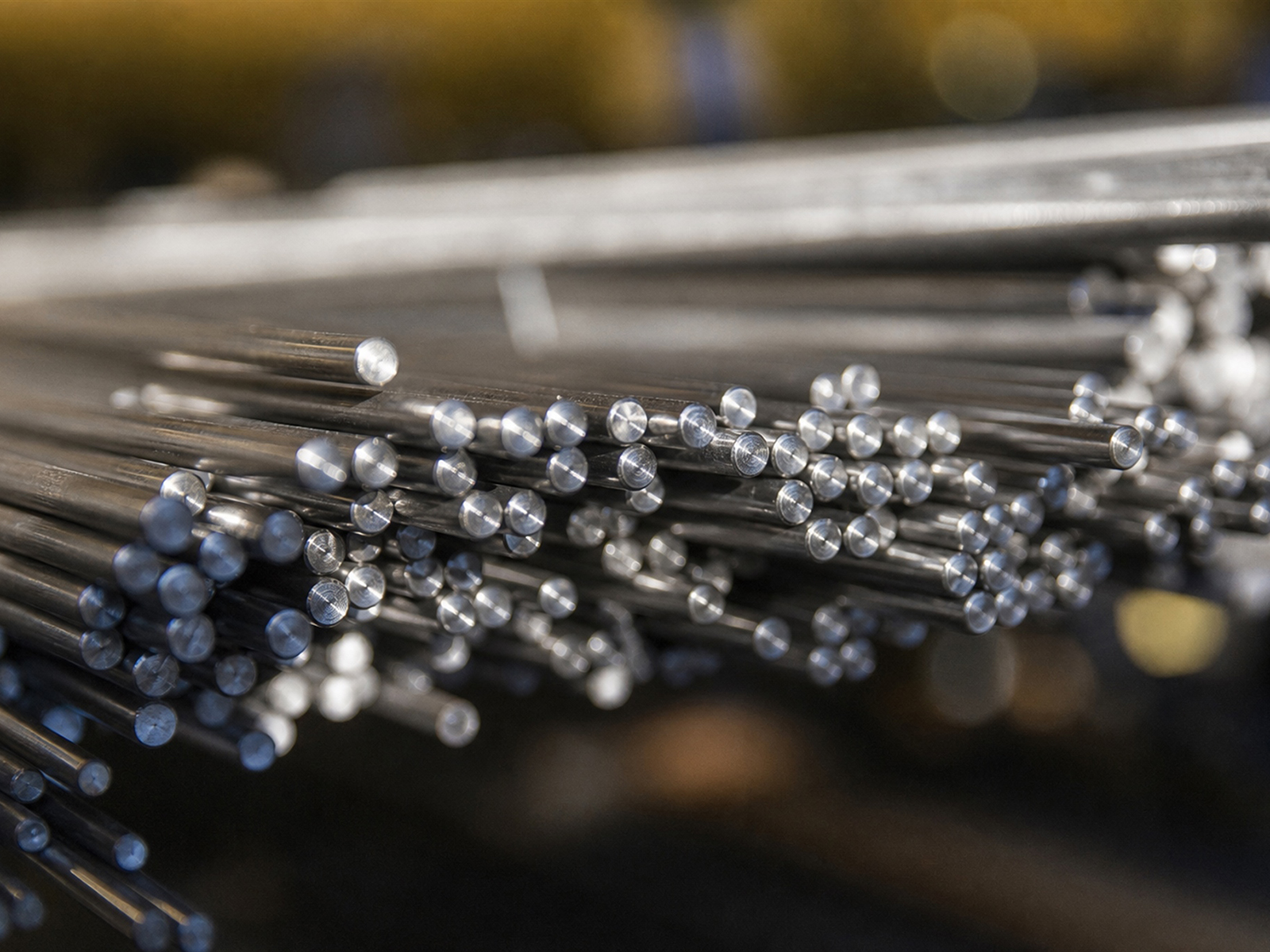
When your company faces challenges such as strong alkaline corrosion, high-purity mediums, or electrochemical conditions, ASTM B160 nickel rods become an indispensable material choice. This high-purity commercial nickel material (Ni≥ 99.0%) holds a significant position in global high-end manufacturing sectors such as chemicals, electronics, and aerospace due to its excellent alkali resistance and outstanding electrical and thermal conductivity. The main purchasing channels include three categories: professional nickel alloy manufacturers (such as Baoji Titanium Valley and other factories with complete production lines), international metal material suppliers, and regional distributors. It is recommended to prioritize direct manufacturers that have ASTM certification, provide material test certificates (MTC), and support customized processing. This approach not only ensures a stable supply and technical support but also significantly reduces procurement costs and shortens delivery times, ensuring the smooth progress of projects.
1. Why Is ASTM B160 Nickel Bar So Important in the Industrial Field?
(1) Why Is the Properties of the Material Determine Its Range of Applications Important?
ASTM B160 is a standard specification for industrial pure nickel bars and rods, mainly covering commercial pure nickel materials such as UNS N02200 (Ni200) and UNS N02201 (Ni201). Both of these materials belong to high-purity nickel materials, with nickel content typically exceeding 99%. Due to their low impurity content, commercial pure nickel exhibits good stability in many corrosive environments and is particularly suitable for strongly alkaline environments, reducing media, and industrial scenarios that require high material purity. Ni200 has good overall performance and is suitable for general industrial corrosion environments; Ni201, with its lower carbon content, has better resistance to intergranular corrosion at higher temperatures, making it commonly used in high-temperature alkaline equipment and heat treatment-related applications. The main value of ASTM B160 nickel bars is not just their high nickel content, but the balance they achieve between corrosion resistance, machinability, and long-term stability. This is also an important reason why they are different from ordinary steel and some stainless steel materials.
- (2) How Should Material Selection for Complex Corrosive Environments?
In the chemical production process, materials typically need to withstand the effects of temperature, pressure, and corrosive media simultaneously. Ordinary carbon steel, although low-cost, is prone to corrosion thinning in highly corrosive environments; certain stainless steel materials, while possessing better corrosion resistance, may still be limited in high-concentration alkaline solutions, reducing media, or special chemical environments. Commercial pure nickel materials, relying on stable chemical properties, demonstrate good corrosion resistance in many alkaline and reducing environments. Therefore, ASTM B160 nickel bars are often used to manufacture shafts, connectors, fasteners, and structural components in corrosion-resistant equipment. It should be noted that actual service life depends not only on the material grade but is also influenced by operating temperature, media concentration, processing condition, welding technology, and surface treatment methods. Thus, when purchasing ASTM B160 nickel bars, the appropriate material condition should be selected according to specific working conditions, rather than judging solely based on nickel content.
- (3) Why Is Core Performance Advantages of ASTM B160 Nickel Rod Important?
Good alkali corrosion resistance: Nickel materials have good stability in alkaline environments, especially in strong alkaline media such as sodium hydroxide, and have higher corrosion resistance compared to ordinary steel. This characteristic makes ASTM B160 nickel bars widely used in chlor-alkali equipment, chemical reaction systems, and corrosion-resistant structural components.
Stable electrical conductivity: Although the electrical conductivity of commercial pure nickel is lower than that of copper, it still has an advantage compared to many corrosion-resistant alloys. For some parts that require both corrosion resistance and electrical conductivity, such as electrical connector components and special electrolysis equipment components, nickel materials have better overall performance.
Good low-temperature toughness: Nickel has a face-centered cubic crystal structure, which allows it to maintain good plasticity even in low-temperature environments, making it suitable for certain low-temperature equipment and special industrial applications.
How to Identify High-quality ASTM B160 Nickel Bar Suppliers?
What Should You Know About Production Capacity and Quality Control System?
When choosing an ASTM B160 nickel rod supplier, price is not the only determining factor. For industrial procurement, material stability, quality traceability, and technical support capabilities are more important. A reliable supplier usually needs to have complete production process management capabilities, including raw material control, smelting and processing, dimensional inspection, and final performance verification. During the procurement process, attention should be focused on whether the supplier can provide complete material documentation, including:
- Chemical composition analysis;
- Mechanical performance testing;
- Dimensional Inspection Report;
- Product traceability information.
For high-demand projects such as aviation, energy, and chemical industries, it is also necessary to pay attention to whether the supplier has experience with similar projects and whether they can cooperate with third-party inspections or customer audits.
- What Should You Know About Processing Capability and Custom Services?
Surface condition | Main applications |
|---|---|
Black skin condition | Subsequent machining |
Skinning state | Remove the surface oxide layer |
Bright state | Precision machined parts |
Polished state | Applications with higher surface quality requirements |
ASTM B160 nickel bars used in industrial applications usually need to be machined according to the equipment structure, rather than using standard sized products directly. Professional suppliers generally can provide nickel bars in different diameters, lengths, and surface conditions. For example, small-diameter nickel bars are usually used for precision part machining, while large-sized nickel bars are more commonly used in the manufacturing of mechanical structural components. Depending on subsequent processing requirements, customers can choose different surface conditions:
Choosing reasonable sizes and surface conditions can reduce subsequent machining allowance and improve material utilization.
What Should You Know About Price Transparency and Supply Stability?
Nickel is an internationally traded metal, and its price is affected by global supply, energy costs, and market demand. Therefore, the purchasing price of ASTM B160 nickel bars is usually determined jointly by raw material costs, processing fees, specification requirements, and order quantity. Mature suppliers typically use the pricing method of ‘nickel raw material price plus processing fee,’ allowing customers to better understand the cost composition. For long-term procurement projects, establishing a stable cooperative relationship with suppliers can reduce the risk of price fluctuations and ensure the continuity of production plans.
2. What Are the Specific Differences in Demand for ASTM B160 Nickel Bars Across Different Industries?
Why Is Corrosion-resistant Applications in the Chemical and Chlor-alkali Industries Important?
The chemical industry is one of the important application fields for ASTM B160 nickel bars. Since the production process often involves sodium hydroxide, alkaline solutions, and reducing chemical media, the equipment materials need to possess both corrosion resistance and long-term stability. In the chlor-alkali industry, nickel materials are commonly used for cathode-related components, conductive connectors, heating elements, and corrosion-resistant structural parts. Compared with ordinary steel, commercial pure nickel can maintain better stability in high-concentration alkaline environments, reducing the frequency of equipment maintenance caused by corrosion. For chemical reaction equipment, nickel bars are also often processed into parts such as stirring shafts, connecting shafts, and fasteners. These components not only require materials with corrosion resistance but also the control of dimensional accuracy, internal defects, and mechanical property stability. Therefore, large-sized nickel bars usually need to undergo strict processing and inspection to meet the requirements for long-term operation.
What Should You Know About High-purity Demands in the Field of Electronics Manufacturing and Precision Equipment?
The electronics manufacturing industry has high requirements for material purity and surface quality. ASTM B160 nickel rods, with their high nickel content and good machinability, can be used for certain precision structural components, electrical connectors, and corrosion-resistant parts. In high-cleanliness environments, controlling contamination on the material’s surface is very important. Suppliers are usually required to provide composition test reports and reduce surface defects through machining, surface treatment, and other methods to avoid contamination risks during use. For precision electronic equipment, in addition to the chemical stability of the material itself, dimensional tolerance, surface roughness, and batch consistency also affect the performance of the final product. Therefore, during procurement, it is not enough to only focus on the material grade; it is also necessary to verify whether the supplier has stable processing capabilities.
- What Should You Know About Requirements for Material Reliability in the Aerospace Field?
Aerospace applications place greater emphasis on the reliability of materials, batch consistency, and complete traceability. ASTM B160 nickel bars can be used for corrosion-resistant components, connectors, and special environmental structural parts in some aerospace equipment. Although the material usage for a single part may be limited, the aerospace sector generally requires suppliers to provide complete material documentation, including chemical composition, mechanical properties, and production batch information. For aerospace-related projects, buyers usually focus more on whether suppliers can consistently provide products that meet specifications over the long term, rather than just a one-time quotation.
Why Is Food and Specialized Industrial Equipment Applications Important?
In food processing, pharmaceutical, and other clean industrial environments, materials need to meet corrosion resistance and easy-to-clean requirements. Ni201, due to its low carbon feature, has better resistance to intergranular corrosion in some high-temperature environments, making it suitable for certain equipment components that require long-term thermal cycling operation. However, whether to choose Ni200 or Ni201 depends on the actual temperature, medium, and equipment design requirements; not all applications require higher-grade materials.
3. What Key Details Should Be Noted When Purchasing ASTM B160 Nickel Rods?
What Should You Know About Clearly Define Technical Specifications to Avoid Mismatches?
Many purchasing mistakes stem from unclear specification communication. ASTM B160 covers three major categories: bars, wires, and profiles. Bars are further divided into round bars, square bars, and hexagonal bars. Round bars have a wide diameter range from φ4 to φ300 mm. Diameters of φ8 to φ30 mm mostly use cold drawing processes, resulting in a bright surface and precise dimensions; large sizes of φ100 to φ300 mm rely on forging, with a black or turned surface, requiring a machining allowance of 3-5 mm.
State codes are equally important: Annealed state (M state) with hardness HRB ≤ 85 has the best plasticity, suitable for cold heading and deep drawing; Cold worked state (Y state) increases strength through 10-30% deformation, hardness HRB 90-110, suitable for direct machining; Hot worked state (R state) retains forged structure and requires subsequent annealing to relieve stress. Choosing the wrong state can cause processing cracks or substandard performance.
Length specifications affect material utilization. The conventional length in the annealed state is 300-4000mm as random lengths, and additional cutting and loss fees are required for fixed-length processing. If the part length is 2.8 meters, ordering 3-meter fixed length saves 15% of the cost compared to 4-meter random length. For bulk purchases, suppliers can be requested to optimize the cutting plan according to the part size.
Why Is Agreement on Quality Inspection Clauses Important?
The standard procurement contract should clearly specify the testing items and acceptance criteria. Basic testing includes: chemical composition (full element analysis by spectroscopy), tensile properties (tensile strength, yield strength, elongation), hardness testing, and grain size rating. For high-end applications, additional tests include: ultrasonic flaw detection (for internal defects), eddy current testing (surface cracks), intergranular corrosion test (boiling copper sulfate method), and measurement of magnetic permeability.
The third-party inspection clause can be set as ‘The supplier provides the MTC, and the buyer retains the right to conduct random inspections, with costs borne by the responsible party.’ If any material or performance is found to be non-compliant, in addition to returns or replacements, compensation should also be claimed for processing losses and project delays caused. For some key projects, on-site supervision is required, with engineers stationed to witness the entire melting, forging, and heat treatment processes.
What Should You Know About the Professionalism of Logistics and Packaging?
The density of the nickel rod is 8.9 g/cm³. A single rod with φ100mm×3000mm weighs up to 210 kg, requiring a special pallet and reinforcement for transportation. For sea export, fumigated wooden boxes or non-fumigated plywood boxes are needed to prevent corrosion from the marine climate. Although air transport is fast, it is costly and only suitable for urgent small-batch replenishments.
Packaging labels should include: material grade, furnace batch number, specifications, quantity, gross weight, and production date. Each bundle of galvanized iron wire should be tied with no less than three straps, the ends coated with anti-rust oil and covered with plastic caps. For long-term storage, the environmental humidity should be controlled below 60% to avoid surface oxidation and discoloration affecting subsequent processing.
The payment method matches the supply cycle. For in-stock specifications, 30% can be paid in advance and 70% before delivery; for custom processing, usually 30% deposit, 40% mid-production payment, and 30% upon acceptance. Large orders can apply for letters of credit or bank guarantees to reduce risks for both parties.
Why Is the Value of After-sales Technical Support Important?
High-quality suppliers provide not only materials that meet standard requirements, but also recommendations on material selection, support for processing techniques, and technical services during application. For ASTM B160 nickel rods, the actual performance depends not only on the material grade, but also on the processing method, welding technology, equipment design, and service environment. For example, in the manufacturing of chemical equipment, suppliers can assist customers in choosing between Ni200 or Ni201 based on the type of medium, operating temperature, and stress conditions, and provide technical advice on cutting processing, welding parameters, and surface treatment to help reduce the risk of material failure.
After establishing a long-term cooperative relationship, customers can not only obtain more stable supply assurance but also receive technical support such as specification optimization, processing plan improvement, and material application upgrades. Some specialized manufacturers can also assist customers in carrying out material performance verification, corrosion environment assessment, and process optimization, accelerating the development and production application of equipment. This cooperation model, ranging from material supply to technical services, is of great value to industries such as chemical, energy, and aerospace, which have high requirements for material reliability.
4. What Should You Know About Global Major ASTM B160 Nickel Bar Production Regions and Supply Chain Layout?
What Should You Know About Baoji, China, an Emerging Rare Metal Processing Center?
Baoji, known as China’s ‘Titanium Valley,’ has seen a rapid rise in the nickel and zirconium processing industries in recent years. Baoji Titanium Valley Titanium Nickel Zirconium Material Processing Co., Ltd. invested 468 million yuan (approximately 68.2 million USD) to build production lines with an annual output of 20, 000 tons of titanium rods and wire, and 3, 000 tons of high-performance foil strips. Italian Danieli rolling equipment was introduced, achieving process stability that meets European standards.
Obvious geographical advantages: Adjacent to raw material bases such as Jinduicheng Molybdenum Mine and Baiyin Nonferrous, resulting in low logistics costs; Xi’an and Chengdu’s aerospace industry clusters create synergy; the Belt and Road land transport routes are smooth, reducing export cycles to Central Asia and Europe by 40%. Price competitiveness is prominent, with products of the same quality priced 15-25% lower than European and American suppliers, attracting a large number of international procurement orders.
The quality system is aligned with international standards and has obtained multiple certifications such as AS9100D and ISO 13485. Products are exported to more than 30 countries and regions, including the United States, Germany, Japan, and South Korea. In response to European and American customers’ RoHS and REACH regulatory requirements, a complete environmental substance control process has been established, with comprehensive third-party testing reports.
What Should You Know About High-end Manufacturing Traditions in North America and Europe?
Many century-old nickel material companies are distributed in Pennsylvania and Ohio, USA, with deep technical accumulation. Their advantages lie in long-term application experience in high-end fields such as aerospace and nuclear energy, complete material databases, and the ability to provide performance prediction models under different operating conditions. However, labor costs are high, environmental protection investment is large, and prices are generally 30-50% higher than Asian suppliers.
Companies such as ThyssenKrupp and VDM Metals in Germany focus on special nickel alloys, with ASTM B160 pure nickel rods as their basic product line. Delivery times are strict, with customized specifications taking 8-12 weeks, suitable for projects with strong planning. Compliance certifications such as EU CE certification and PED (Pressure Equipment Directive) are complete, requiring no additional certifications for the European market.
Japanese companies Sumitomo Metal and JFE Steel are technologically leading in the field of electronic-grade nickel materials, with cleanliness control reaching the highest level, but their production capacity is limited and priority is given to domestic customers. In recent years, South Korea’s POSCO and Hyundai Steel have increased their investment in nickel materials, focusing on the secondary battery industry chain, and are more willing to sell externally.
What Should You Know About Supply Chain Risk and Diversification Strategies?
Geopolitical issues, trade policies, and pandemics can all disrupt supply. The Russia-Ukraine conflict in 2022 led to restrictions on Russian nickel exports, causing global nickel prices to surge 60% in the short term, and companies reliant on a single source were forced to suspend production. Recommended procurement strategy: select major manufacturers with stable quality as primary suppliers (such as Baoji Titanium Valley), and sign annual agreements to lock in 70% of usage; backup suppliers should cover different regions to respond to sudden risks; maintain strategic inventory sufficient for 3-6 months of safe usage.
Tariffs and trade barriers cannot be ignored. The United States imposes a 25% tariff on some nickel materials from China, which can be circumvented by transshipping through a third country or choosing suppliers from free trade agreement countries. The European Union’s Carbon Border Adjustment Mechanism (CBAM) is about to be implemented, and high-carbon production processes will face additional taxes, giving manufacturers with green and low-carbon processes a long-term competitive advantage.
Digital supply chain management improves efficiency. Large enterprises use ERP systems to connect with suppliers, allowing real-time inquiries of inventory, work-in-progress progress, and logistics tracking. Blockchain technology is applied to material traceability, with an immutable “ID card” for each nickel rod, meeting the strict traceability requirements of aerospace and medical devices.
5. What Is the Conclusion?
When purchasing ASTM B160 nickel rods, companies need to comprehensively consider the material grade, supplier capability, quality documentation, processing requirements, and long-term supply stability. Although Ni200 and Ni201 both belong to commercially pure nickel materials, their applicable environments differ. Correct material selection requires judgment based on the corrosive medium, operating temperature, mechanical requirements, and processing methods. For industrial projects that require stable supply and customized processing, choosing manufacturers that can provide ASTM B160 nickel rod production capability, complete inspection documentation, and technical support can effectively reduce procurement risks and improve project reliability.
FAQ
Q1: What are the main grades of ASTM B160 nickel rods?
Common commercial pure nickel grades in ASTM B160 include Ni200 (UNS N02200) and Ni201 (UNS N02201). Ni200 is suitable for most conventional industrial environments; Ni201, due to its lower carbon content, is more suitable for higher temperatures and applications where reducing the risk of intergranular corrosion is required.
Q2: How should Ni200 and Ni201 nickel rods be selected?
The choice mainly depends on the operating temperature and working environment. If the equipment is mainly in a normal corrosive environment, Ni200 can usually meet the requirements; if it is long-term in a higher temperature environment, Ni201 can be considered to achieve better stability. The final choice should be determined in combination with temperature, medium, and equipment design requirements.
Q3, What Documents Are Required From the Supplier When Purchasing ASTM B160 Nickel Bars?
Common documents include: Material Test Certificate (MTC); chemical composition test report; mechanical properties test report; dimensional inspection records. For high-demand projects, additional testing or third-party verification documents may also be required.
Q4: What specifications can ASTM B160 nickel bars be customized to?
According to manufacturing capabilities, nickel rods can usually be customized with different diameters, lengths, and surface conditions. When purchasing, it is recommended that customers provide in advance: material grade; size requirements; quantity; usage environment; processing requirements. This way, suppliers can offer a more accurate plan and quotation.
How Should Contact Titanium Valley Immediately – Your Trusted Professional Manufacturer and Supplier of ASTM B160 Nickel Bars?
Baoji Titanium Valley Titanium Nickel Zirconium Materials Processing Co., Ltd. has world-class production equipment and a complete quality system, providing full-specification nickel rod customization services. You are welcome to send technical requirements to sales@titaniumvalleys.com, and our engineering team will respond within 24 hours and provide professional material selection solutions.
References
1. “ASTM B160/B160M-2020 Standard Specification for Forged Nickel Bars, Wire, and Shapes,” ASTM International, 2020 edition.
2. Wang Jianhua, Li Ming. “Application and Corrosion Mechanism Study of High-Purity Nickel Materials in the Chlor-Alkali Industry,” Journal of Chinese Corrosion and Protection, 2021, Vol. 41, No. 3, pp. 287-295.
3. ‘Handbook of Nickel and Nickel Alloy Processing Technology,’ edited by Zhang Tao and Liu Yong, Chemical Industry Press, First Edition, August 2019.
4. Nickel Institute of Europe, ‘Nickel in Alkaline Environments: Performance and Material Selection Guide,’ Technical Report Series No. 18, Brussels, 2022.