
Why Is Grade 4 Titanium Commonly Used in High-strength Medical Components?
- Gr4 Titanium Rod
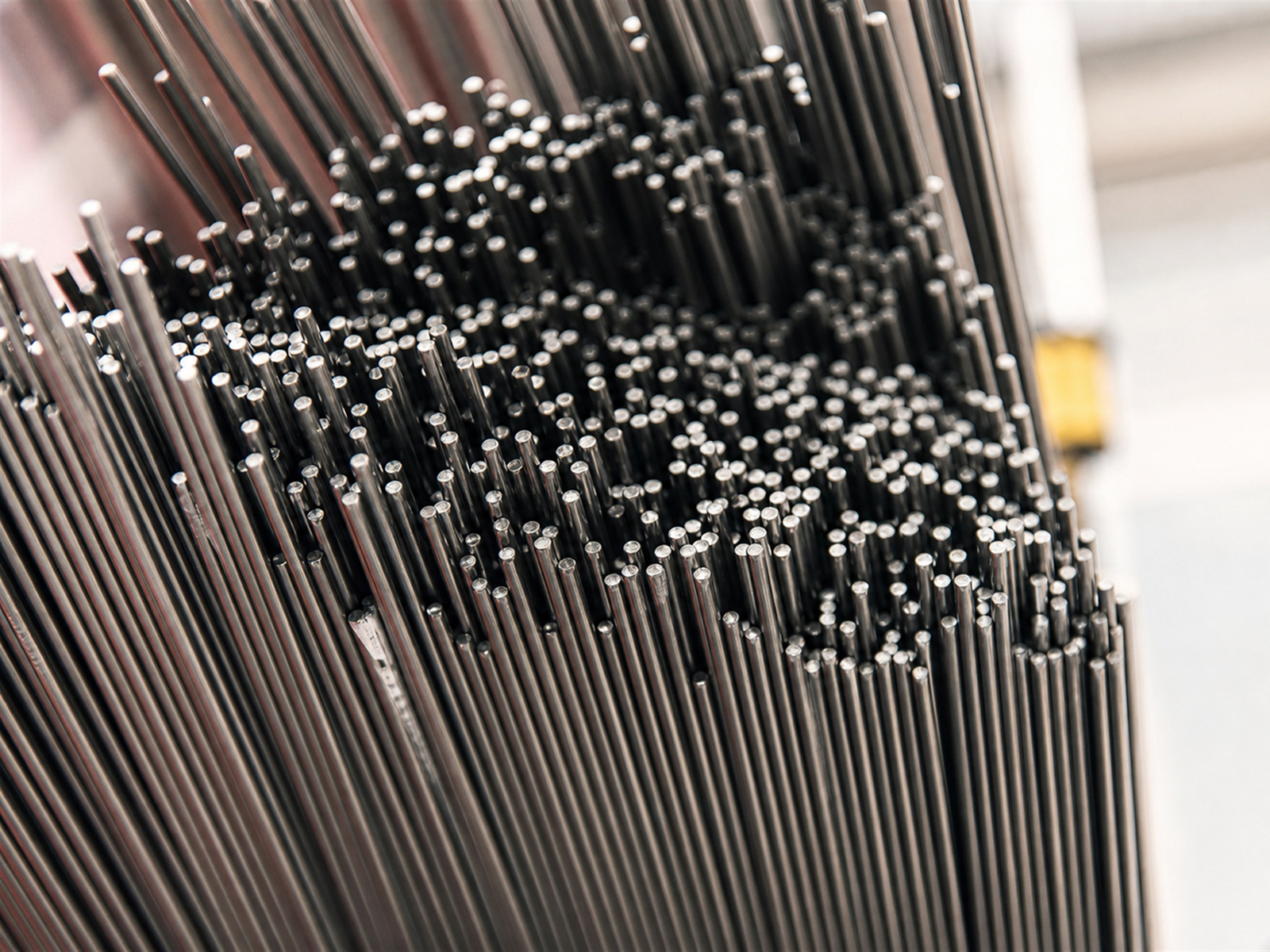
The widespread application of Gr4 titanium bars in high-strength medical components stems from their unique combination of material properties. As the highest-strength grade among commercially pure titanium, Gr4 titanium bars have a tensile strength of 485-550 MPa, far exceeding that of Gr1 and Gr2 grades. In the field of medical implants, load-bearing components such as orthopedic screws, spinal fixation systems, and artificial joints need to withstand long-term dynamic loads from the human body. The high-strength characteristics of Gr4 can effectively resist fatigue failure. At the same time, its excellent biocompatibility ensures that the material does not trigger immune rejection or toxic reactions, its non-magnetic property allows it to be safely used in MRI environments, and its low density of 4.51 g/cm³ reduces the burden on patients. The synergy of these properties makes Gr4 titanium bars an ideal material choice for high-strength medical components.
1. How Do the Mechanical Properties of Gr4 Titanium Rods Meet the Load-bearing Requirements of Medical Implants?
(1) What Should You Know About the Clinical Significance of Tensile Strength and Yield Strength?
The tensile strength of Gr4 titanium rods reaches 485-550 MPa, and the yield strength exceeds 380 MPa. This level of mechanical performance is among the highest in commercially pure titanium. In orthopedic implant applications, load-bearing components such as femoral stems and intramedullary nails need to withstand several times the body weight. In comparison, the tensile strength of human cortical bone is about 130-180 MPa. The strength reserve of Gr4 titanium rods ensures that implants maintain structural integrity even under extreme stress conditions. Its balanced combination of strength and ductility allows the material to absorb more energy before plastic deformation, effectively preventing the risk of sudden fracture.
(2) What Should You Know About the Impact of Fatigue Performance on the Long-term Stability of Implants?
Medical implants need to withstand millions of cyclic loads, and the excellent fatigue resistance of Gr4 titanium rods is crucial. The fatigue limit of the material under alternating stress is about 50-60% of the tensile strength, which means that under reasonably designed loads, the implant can achieve a service life of over 20 years. The vacuum arc remelting process effectively reduces the segregation of interstitial elements such as oxygen and nitrogen, making the material’s microstructure more uniform and eliminating the origins of fatigue cracks. This long-term reliability makes Gr4 titanium rods particularly suitable for manufacturing components that require permanent implantation, such as spinal fusion devices and dental implants.
(3) What Should You Know About the Role of Hardness and Wear Resistance in Joint Prostheses?
The Vickers hardness of Gr4 titanium rods is usually in the range of 180-210 HV. Although not as high as titanium alloys, it is already the highest among pure titanium. In the manufacturing of artificial hip and knee joint prostheses, the surface of components needs to resist abrasive wear in joint fluid. Through surface treatment technologies such as nitriding and anodic oxidation, the surface hardness of Gr4 titanium rods can be increased to 600-800 HV, forming a ceramic protective layer. This combination of surface modification and the high strength of the substrate not only ensures the overall load-bearing capacity of the implant but also enhances the durability of the contact surface, extending the service life of joint prostheses.
2. How Do Biocompatibility and Corrosion Resistance Ensure the Safety of Medical Components?
(1) What Should You Know About Physiological Stability of the Passive Film on Titanium Surface?
The surface of Gr4 titanium rods instantly forms a dense oxide film (TiO2) with a thickness of about 2-6 nanometers upon contact with air or body fluids. This passive film has a very strong self-healing ability. In the human physiological environment, with a pH range of 6.8-7.4 and a chloride ion concentration of about 0.9%, this complex electrolyte environment poses a severe challenge to metal materials. The passive film of Gr4 titanium rods can effectively isolate the substrate from direct contact with body fluids, with a corrosion rate of less than 0.01 mm/year, far lower than that of medical stainless steel. Even if locally damaged, the passive film can regenerate within milliseconds, ensuring the safety of long-term implantation.
(2) What Should You Know About Control of Metal Ion Release and Tissue Response?
The core of the biosafety of medical implants lies in controlling the release of metal ions. The high-purity design of Gr4 titanium rods (titanium content ≥ 99.0%) limits impurity elements such as iron, nitrogen, and carbon to very low levels, effectively reducing the driving force for electrochemical corrosion. Clinical studies have shown that the concentration of titanium ions in the tissues surrounding Gr4 titanium rod implants is below 5 ppb, far below the cytotoxicity threshold. The material surface does not induce chronic inflammation or fibrous encapsulation, and bone cells can directly attach to the titanium surface to achieve osseointegration. This good tissue compatibility is key to the success of orthopedic implants.
(3) Why Is Clinical Value of Stress Corrosion Cracking Characteristics Important?
In chlorine-containing environments (such as bodily fluids), stainless steel materials are prone to stress corrosion cracking, which can lead to sudden implant failure. Gr4 titanium rods have a natural immunity to chloride-induced stress corrosion due to the stability of their single α-phase structure. Under the combined action of tensile load and corrosive media, the material does not exhibit intergranular corrosion or pitting propagation. This characteristic makes Gr4 titanium rods particularly suitable for manufacturing components that bear cyclic loads, such as fracture fixation plates and spinal internal fixation systems. Even in cases of patient infection or abnormal metabolism, the implant can maintain structural integrity, buying time for a secondary surgery.
3. How Do Machinability and Manufacturing Processes Affect the Accuracy and Cost of Medical Components?
(1) What Should You Know About Weldability Supports the Manufacturing of Complex Structures?
Gr4 titanium rods have excellent performance in argon arc welding, laser welding, and electron beam welding, with weld strength reaching 85-95% of the base material. In the manufacture of customized implants, it is often necessary to weld titanium rods with components such as titanium plates and titanium mesh into complex shapes. Under inert gas protection, the elongation of Gr4 titanium rod weld joints remains above 10%, avoiding the risk of brittle fracture. This weldability allows designers to optimize component structures, achieving both weight reduction and reinforcement. For example, in spinal fixation systems, porous titanium cages can combine Gr4 titanium rods with 3D-printed porous structures through welding processes, creating innovative designs that provide both load-bearing and bone ingrowth functions.
(2) What Should You Know About the Impact of Hot and Cold Working Performance on Dimensional Accuracy?
Gr4 titanium bars can be processed through cold drawing, hot forging, and other techniques into various specifications with diameters ranging from 0.5 to 200 mm, with dimensional tolerances controlled within ± 0.02 mm. The work hardening characteristics of cold processing increase the material’s strength by 15-20% during deformation, which is particularly beneficial for components requiring surface reinforcement. The hot processing temperature window is in the range of 850-950℃, with good material fluidity, allowing precise forging of complex cross-sections. Vacuum annealing can eliminate residual stresses, restore material ductility, while maintaining a high strength level. After precision grinding and turning, the surface roughness can reach Ra0.4 um, meeting the stringent surface quality requirements of implants.
(3) What Should You Know About Balance Between Material Utilization and Manufacturing Cost?
Processing method | Material Utilization Rate | Processing cycle | Applicable component types |
|---|---|---|---|
Traditional turning | 55-65% | 2-4 hours | Standard orthopedic screws and axles |
Precision forging | 75-85% | 1-2 hours | Hip stem, custom implants |
Additive Manufacturing | 95-98% | 4-8 hours | Customized cranial plates, porous structure |
The good machinability of Gr4 titanium bars significantly reduces manufacturing waste. Although traditional subtractive manufacturing has mature equipment, it results in significant material waste; near-net-shape forging technology increases material utilization to over 80%, making it especially suitable for mass production. Although additive manufacturing technology has a longer cycle time, it has unique advantages in producing complex geometries. By combining processes, manufacturers can choose the optimal solution based on the characteristics of the components, controlling costs while ensuring quality, which is crucial for promoting the widespread adoption of high-strength medical components.
4. How Do Non-magnetic and Low-density Characteristics Enhance Safety and Comfort in Medical Applications?
(1) What Should You Know About the Impact of Magnetic Susceptibility on Imaging Diagnosis?
The magnetic susceptibility of Gr4 titanium rods is close to zero (χ<0.2×10⁻⁶ SI), and they do not produce magnetic field distortion or heating effects under 1.5T or 3.0T MRI field strengths. For patients with implanted titanium rods, MRI examinations can be safely performed postoperatively without removing the implants, which is crucial for clinical workflows such as tumor monitoring and neurological assessments. In contrast, stainless steel implants generate large artifacts in MRI images, affecting lesion identification. The non-magnetic characteristics of Gr4 titanium rods eliminate this limitation, allowing patients to take full advantage of medical imaging services and improving diagnostic accuracy and treatment outcomes.
(2) Why Is Improvement of Patient Perception by Density Advantage Important?
The density of titanium is about 4.51 g/cm³, only 57% of that of stainless steel (7.9 g/cm³) and 54% of that of cobalt-chromium alloy (8.3 g/cm³). In spinal fixation systems, using Gr4 titanium rods can reduce the total weight of implants by 40-50%, significantly decreasing the pressure on surrounding soft tissues. For craniofacial reconstruction, lightweight implants reduce skin tension and the sense of foreign objects, improving patients’ quality of life. This density advantage is even more valuable in pediatric orthopedics – the reduced weight of implants means less interference with growth and development, aligning with the concept of minimally invasive treatment.
(3) What Should You Know About Elastic Modulus Matching and Stress Shielding Issues?
Material | Elastic Modulus (GPa) | Ratio to bone tissue modulus | Stress shielding risk |
|---|---|---|---|
Human cortical bone | 15-25 | 1.0 | – |
Gr4 Titanium Rod | 105-110 | 4.5-7.0 | Medium |
Stainless steel | 200-210 | 10-14 | Tall |
Titanium alloy Ti6Al4V | 110-115 | 5.0-7.5 | Medium |
Although the elastic modulus of Gr4 titanium rods is still higher than that of bone tissue, it has significantly decreased compared to stainless steel. In fracture fixation, excessively high implant stiffness can lead to a stress shielding effect-where the load is mainly borne by the implant, and the bone undergoes disuse atrophy due to a lack of stress stimulation. The relatively lower modulus of Gr4 titanium rods allows for a more reasonable stress distribution, promoting callus formation and bone reconstruction. Combined with surface porosity treatment, the mechanical environment can be further optimized, achieving functional integration of the implant and bone tissue.
5. How Does the Quality Control System Ensure the Medical-grade Stability of Gr4 Titanium Bars?
(1) What Should You Know About Key Aspects of Raw Material Purity Control?
The manufacturing of Gr4 titanium rods begins with the selection of high-purity sponge titanium, with oxygen content controlled below 0.40% and iron content below 0.50%. The vacuum arc remelting process uses secondary or tertiary remelting techniques, and by precisely controlling the melting current and protective atmosphere, the hydrogen content is reduced to below 0.015%. Hydrogen embrittlement is the main hidden risk for titanium material failure, and strict dehydrogenation processes ensure the material’s toughness under stress. The batch stability of the chemical composition is verified through both spectroscopic analysis and mass spectrometry, with composition fluctuations for each batch controlled within ± 0.02%, providing a reliable foundation for subsequent processing.
(2) What Should You Know About Regulation of Microstructure by Heat Treatment Processes?
Heat treatment process | Temperature Range (C) | Insulation time | Organizational Effectiveness |
|---|---|---|---|
Recrystallization Annealing | 650-750 | 1-2 hours | Eliminate processing stress and restore material plasticity |
Stress annealing | 480-600 | 2-4 hours | Reduce residual stress and maintain the overall performance of the material |
Homogenization Annealing | 800-900 | 30-60 minutes | Optimize organizational uniformity and improve long-term stability |
Heat treatment under vacuum or an inert atmosphere can effectively prevent surface oxidation and the risk of hydrogen absorption. Recrystallization annealing can improve the microstructure after cold working, keeping the α-phase grains evenly distributed, enhancing material plasticity while maintaining strength. Stress-relief annealing is particularly suitable for precision-machined medical components, as it can reduce internal residual stress and improve long-term dimensional stability.
(3) What Should You Know About Nondestructive Testing and Surface Quality Verification?
Ultrasonic testing technology can detect internal defects with a diameter of 0.5 mm or larger, ensuring the material’s volumetric integrity. Eddy current testing is used to identify surface and near-surface cracks, with a detection sensitivity of up to 0.1 mm. For medical-grade Gr4 titanium rods, the surface roughness must reach below Ra1.6um, achieved through precision grinding and acid pickling passivation. Surface cleanliness testing uses ion chromatography and carbon-sulfur analysis to ensure residual contaminants are below 10 ppm. Each batch of products comes with a material test certificate (MTC) containing complete information such as chemical composition, mechanical properties, and ultrasonic inspection reports, enabling full-chain quality traceability. This strict quality control system ensures that the pass rate of Gr4 titanium rods remains stable above 99.5%, meeting the regulatory requirements of the medical device industry.
6. What Is the Conclusion?
The widespread application of Gr4 titanium rods in high-strength medical components is essentially the result of a deep integration of materials science and clinical needs. Its high-strength characteristics meet the mechanical requirements of load-bearing implants, excellent biocompatibility ensures long-term implantation safety, good machinability supports the manufacturing of complex structures, and non-magnetic and lightweight features enhance the patient treatment experience. With the advancement of surface modification technology and additive manufacturing processes, the application potential of Gr4 titanium rods will be further unleashed, bringing more innovative medical devices to fields such as orthopedics, dentistry, and neurosurgery.
FAQ
Q1: What are the differences between Gr4 titanium rods and Ti6Al4V titanium alloy in medical applications?
Gr4 titanium bars belong to commercially pure titanium, featuring excellent biocompatibility and good machinability, making them suitable for various medical applications such as dental implants and bone fixation components. Ti6Al4V titanium alloy has higher strength and fatigue performance (tensile strength usually exceeding 860 MPa), making it more suitable for high-load applications such as artificial joints and load-bearing orthopedic components. The main differences between the two lie in mechanical properties, processing characteristics, and specific application requirements.
Q2: How long is the lifespan of Gr4 titanium rod implants?
Under normal physiological load, the designed lifespan of GR4 titanium rod implants usually exceeds 20 years. The actual lifespan is affected by factors such as the patient’s weight, activity level, and implantation site. Clinical follow-up data show that the 15-year retention rate of orthopedic fixation systems exceeds 95%, and the 10-year success rate of dental implants reaches 92-98%. Regular imaging examinations can monitor the condition of the implants.
Q3: How to verify whether Gr4 titanium rods meet medical device standards?
Gr4 titanium rods used in medical applications usually need to meet international material standards such as ASTM F67 or ISO 5832-2. Manufacturers should provide quality documents (MTC) including chemical composition, mechanical properties, and non-destructive test results, and validate through the relevant quality system to ensure that the material meets the requirements for medical device manufacturing.
How Should Looking for Reliable Gr4 Titanium Rod Suppliers?
Baoji Titanium Valley Titanium-Nickel-Zirconium Materials Processing Co., Ltd. focuses on the precision manufacturing of medical-grade Gr4 titanium rods, with a complete vacuum melting, precision processing, and quality inspection system. We offer customized size services and bulk supply capabilities to meet the stringent standards of medical device manufacturers worldwide. Contact us now for technical specifications and samples: sales@titaniumvalleys.com
References
1. Wang Jianjiang, Li Minghua. Research progress and clinical application of medical titanium and titanium alloys. Journal of Biomedical Engineering, 2021, 38(4): 785-792.
2. Zhang Wei, Liu Chenglong. Study on the Correlation between Mechanical Properties and Biocompatibility of Commercial Pure Titanium. Rare Metal Materials and Engineering, 2020, 49(11): 3856-3863.
3. Chen Hua, Zhao Donglin. Surface modification technology and biological evaluation of titanium-based implant materials. Chinese Journal of Tissue Engineering Research, 2022, 26(15): 2401-2408.
4. Sun Jianfeng, Zhou Lei. Fatigue performance and failure analysis of titanium materials for orthopedic implants. Materials Engineering, 2019, 47(8): 12-19.