
How Does the Strength of Gr2 Titanium Rods Compare to Other Metals?
- Gr2 Titanium Rods
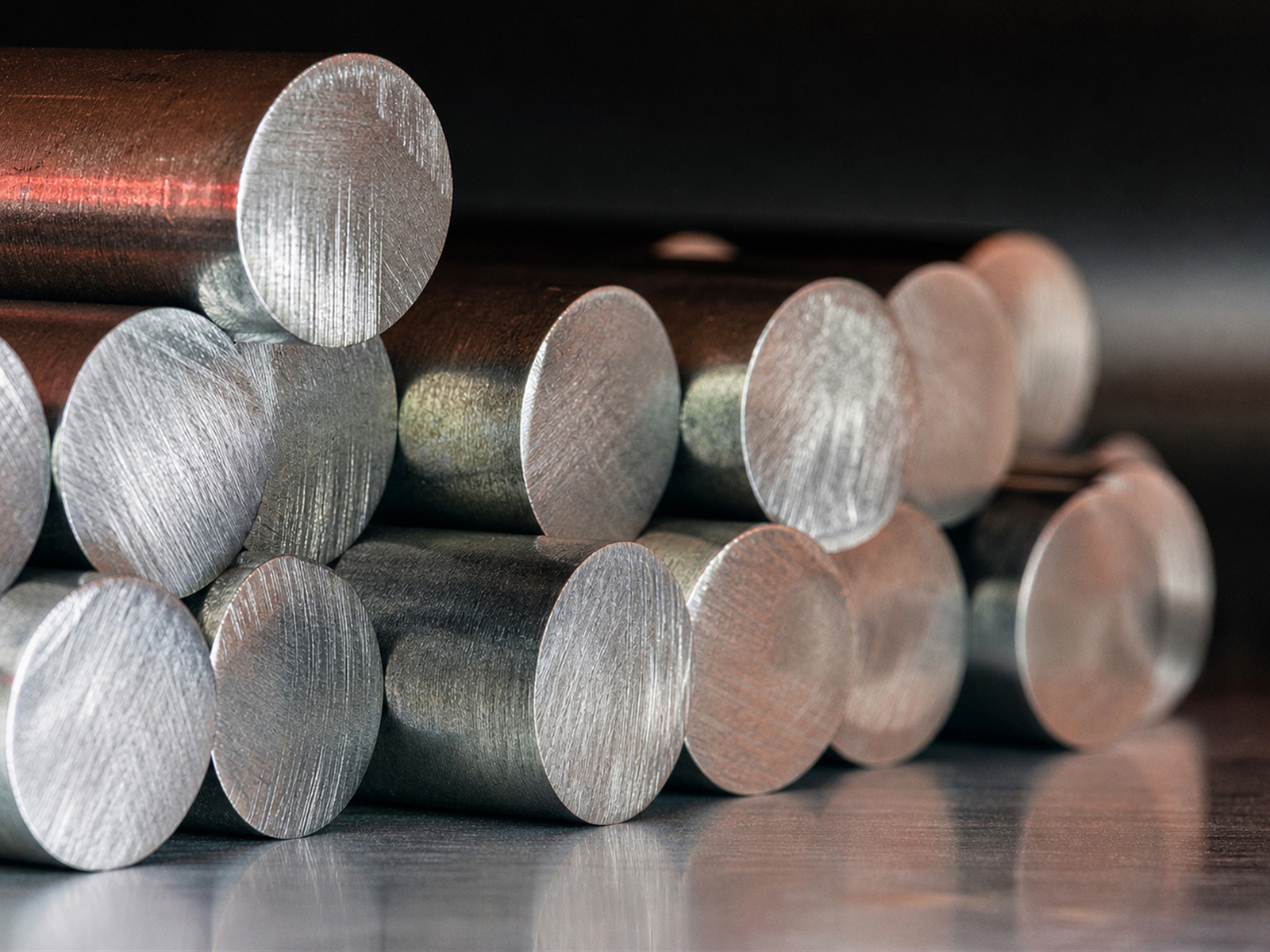
In industrial material selection, strength has always been a core indicator of concern for engineers. Gr2 titanium bars, as the main grade of commercial pure titanium, have a tensile strength of 340-470 MPa and a yield strength of about 275-410 MPa, positioning them in the balanced range between pure titanium and titanium alloys. Although slightly lower than ordinary carbon steel, considering its density of only 4.51 g/cm³ (57% that of steel), its specific strength (strength-to-density ratio) is excellent. This characteristic gives Gr2 titanium bars a unique advantage in medium-to-light load, highly corrosive environments-they can meet structural load requirements while significantly reducing equipment weight and providing a maintenance-free service life of 20-30 years, making them an ideal choice for chemical, marine engineering, and precision manufacturing fields.
1. What Are the Differences in Comparison of the Strength of Gr2 Titanium Rods with Common Metals?
(1) What Are the Differences in Strength Differences with Carbon Steel and Alloy Steel?
The tensile strength of carbon steel (such as Q235) is usually between 370-500 MPa. On the surface, it appears comparable to Gr2 titanium rods, but its density is 7.85 g/cm³. Under the same load, titanium can be designed into lighter and thinner structures. Alloy steel (such as 42CrMo) can reach strengths above 1000 MPa, but it is prone to pitting in chloride-containing media, whereas the oxide film on Gr2 titanium rods can self-repair, giving it corrosion resistance 30-50 times that of carbon steel.
(2) What Are the Differences in Comparison with the Performance of the Stainless Steel Series?
304 stainless steel has a tensile strength of about 520 MPa, and 316L about 485 MPa, both higher than Gr2 titanium bars. However, in a seawater environment, stainless steel has a significant risk of stress corrosion cracking and needs to be replaced periodically. Although Gr2 titanium bars have slightly lower strength, their corrosion allowance is minimal. Based on typical industrial application cases, the actual strength retention rate over 30 years can exceed 95%, whereas 316L may experience a 20-30% strength reduction after 10 years in the same environment.
(3) What Are the Differences in Comparison with Aluminum Alloys and Copper Alloys?
6061 aluminum alloy has a tensile strength of about 310 MPa and a density of 2.7 g/cm³, which seems lighter, but its corrosion resistance is far inferior to titanium, and its maximum service temperature is only 150℃. Copper alloys (such as brass) have a strength of 300-500 MPa, but they are prone to dezincification corrosion in acidic environments. Gr2 titanium rods can operate stably in the range of -253℃ to 400℃, maintaining over 80% of their strength at 300℃, which is unattainable for aluminum and copper materials.
Material Type | Tensile Strength (MPa) | Density (g/cm³) | Specific strength (MPa·cm³/g) | Seawater Corrosion Rate (mm/year) | Operating Temperature Range (C) |
Gr2 Titanium Rod | 340-470 | 4.51 | 75-104 | <0.001 | -253 ~ 400 |
Q235 Carbon Steel | 370-500 | 7.85 | 47-64 | 0.1-0.5 | -20 ~ 450 |
316L stainless steel | 485-690 | 8.0 | 61-86 | 0.01-0.05 | -196 ~ 800 |
6061 aluminum alloy | 310 | 2.7 | 115 | 0.005-0.02 | -50 ~ 150 |
Note: Specific strength is the ratio of tensile strength to density, with units of MPa·cm³/g, and the values in the table are approximate calculations; the corrosion rate of aluminum alloys in seawater varies greatly due to surface condition differences, and local corrosion can easily occur without protection, so the actual rate may be higher than the data shown in the table.
2. Why Is the Unique Value of the Strength of Gr2 Titanium Bars Important?
(1) Why Is Weight Reduction Benefits Brought by Specific Strength Advantages Important?
According to a case from an aerospace medical equipment manufacturer, after replacing stainless steel brackets with Gr2 titanium rods, the weight per piece dropped from 2.3 kg to 1.2 kg, a reduction of about 48%, significantly improving portability. In a seawater desalination project, using titanium heat exchanger tube bundles reduced the overall weight by 35%, lowered transportation costs by about 28%, and shortened the installation period by about 40%. This weight reduction does not come at the expense of strength but rather represents an improvement in material efficiency.
(2) What Should You Know About Economic Account of Long-term Strength Retention?
Comparative tests by a certain chemical company showed that after 5 years of service in a chlor-alkali solution, the actual strength of a 316L stainless steel pump shaft decreased from 520 MPa to 410 MPa, necessitating replacement; whereas the strength of a Gr2 titanium rod pump shaft remained at 445 MPa even after 10 years, exceeding twice its design life. Although the initial procurement cost is 15% higher, the total lifecycle cost is reduced by 42%.
(3) Why Is Additional Value of Non-magnetic Properties Important?
The magnetic permeability of pure titanium is close to 1 (usually <1.002), making Gr2 titanium rods irreplaceable in MRI equipment and precision sensor fields. A medical device manufacturer uses titanium rods to process surgical guides, which not only meet the 150 MPa load requirement but also completely do not interfere with the magnetic field-something no high-strength steel can achieve. In the electronics and semiconductor industry, vacuum chamber support rods are also chosen using Gr2 titanium rods for this reason.
3. What Should You Know About Strength Matching Strategies Under Different Working Conditions?
(1) What Should You Know About the Optimal Choice for Medium-light Load Scenarios?
Heat exchanger tube sheet bolts usually withstand tensile stresses of 50-120 MPa. With a tensile strength of 340 MPa for Gr2 titanium rods, there is about a threefold safety factor. The agitator shaft, under alternating loads of 20-80 MPa, has a fatigue limit for titanium of about 40-50% of its tensile strength (approximately 170-235 MPa, calculated based on the lower limit), far exceeding actual operational requirements. Excessively pursuing high strength, on the other hand, increases costs.
(2) What Should You Know About Strength Reserve in Complex Corrosion Environments?
The support components of the desulfurization tower spray layer need to withstand a stress of 80 MPa while facing an acidic environment with a pH of 2. Carbon steel requires coating protection but is prone to peeling. The oxide film on Gr2 titanium rods forms naturally in the air, with a thickness of only 2-10 nanometers yet extremely dense, a corrosion rate of less than 0.001 mm/year, and an effective strength still above 330 MPa after 20 years, meeting long-term operational requirements.
(3) What Should You Know About Strength Performance Under Extreme Temperature Conditions?
The support rods of a liquid hydrogen storage tank operate at -253℃, where ordinary carbon steel suffers from brittle fracture, whereas Grade 2 titanium rods actually have increased strength at this temperature (according to some low-temperature test data, up to around 520 MPa), with impact toughness remaining at 90% of that at room temperature. For titanium alloy agitators in high-temperature chemical reactors, the strength retention rate at 300℃ is 82%, far superior to aluminum’s 30% retention rate.
Operating condition type | Typical Stress (MPa) | Recommended materials | Safety factor | Life expectancy (years) |
room temperature neutral medium | 50-100 | Carbon Steel/Gr2 Titanium Rod | 3-5 | 10-15 / 25-30 |
Seawater Chloride Ion Environment | 60-120 | Gr2 Titanium Rod | 3-4 | 20-30 |
Acidic high temperature (200℃) | 80-150 | Gr2 Titanium Rod / Titanium Alloy | 2-3 | 15-25 |
Low temperature cryogenic (-196℃) | 100-200 | Gr2 Titanium Rod | 2.5-3 | 20+ |
4. What Should You Know About Strength Optimization Processing Technology for Gr2 Titanium Rods?
(1) What Should You Know About Mechanism of the Effect of Hot Working on Strength?
It is recommended to forge Gr2 titanium rods in the α-β phase region (750-850℃), where the best combination of strength and toughness can be obtained. If the temperature enters the β phase region (850-950℃), it may cause coarse grains and a 15-20% decrease in strength; temperatures that are too low can lead to work hardening and deteriorated plasticity. It is recommended to use a three-pass forging process, with the deformation amount in each pass controlled at 30-50% (slightly higher for small specifications) to ensure uniform microstructure.
(2) What Should You Know About Precision Control of Cold Work Strengthening?
Cold drawing can increase the strength to 480-520 MPa, but the elongation will decrease from 20% to 12%. Precision shaft components that undergo 12% cold work and are annealed at 480℃ can achieve a high strength of 420 MPa while retaining 15% elongation, meeting the requirements for subsequent machining. During surface grinding, the feed rate should be controlled to avoid grinding burns or surface microcracks caused by excessive grinding.
(3) What Should You Know About Strength Regulation of Heat Treatment Annealing?
Recrystallization annealing (holding at 650-750℃ for 2 hours) can eliminate residual stress, with strength stabilized at 340-370 MPa, suitable for welded components. Stress relief annealing (holding at 480-550℃ for 1 hour) retains part of the work hardening effect, with strength up to 400 MPa, suitable for high-precision machined parts. For online annealing systems, it is recommended to control furnace temperature uniformity within ± 5℃, and batch performance fluctuations can be controlled to less than 3%.
(4) What Should You Know About the Improvement of Fatigue Strength by Surface Treatment?
Shot peening reinforcement forms a 0.2-0.5 mm compressive stress layer on the surface, and the fatigue limit can be increased by 30-40%. Electrochemical polishing removes surface defects, reducing roughness from Ra3.2 to Ra0.4, and the fatigue life can be extended 2-3 times. After Gr2 titanium bars used in a certain offshore platform underwent shot peening and polishing composite treatment, the measured life under 80 MPa alternating load can reach more than 10⁷ cycles.
5. How Should Strength Trade-off Principle in Material Selection Decisions?
(1) What Should You Know About Avoid the Cost Trap of Over-design?
A water treatment equipment factory initially chose TA9 titanium alloy bars (strength 680 MPa), but the actual working stress was only 60 MPa. The material cost was 2.3 times higher than Gr2 titanium bars, and the processing difficulty increased by 40%. After switching to Gr2, a 5-fold safety factor fully met the requirements, reducing the cost of a single piece of equipment by 12, 000 yuan and saving 860, 000 yuan annually on procurement.
(2) What Should You Know About Full Lifecycle Intensity Assessment Model?
It is necessary to comprehensively consider initial strength, corrosion allowance, and fatigue damage accumulation. Although carbon steel has high initial strength, after 10 years of corrosion the thickness loss is 3-5 mm, resulting in an effective strength reduction of 50%; for Gr2 titanium rods, the 10-year corrosion is less than 0.01 mm, and the strength retention rate is 98%. A comprehensive evaluation index of ‘initial strength × retention rate ÷ (density × price)’ is established, showing the obvious advantage of titanium materials.
(3) What Should You Know About Synergistic Enhancement of Composite Materials?
Titanium-steel composite plates are used in pressure vessels, where the titanium layer provides corrosion resistance and the steel layer provides strength support. The combined corrosion resistance and strength performance is superior to that of a single material. When Gr2 titanium rods are used as connectors, explosive welding can achieve an interface shear strength of 100-200 MPa (depending on the type of steel), enabling efficient synergy between dissimilar metals.
Evaluation dimension | Carbon steel scheme | 316L plan | Gr2 Titanium Rod Solution |
Initial Investment (10, 000 yuan) | 10 | 18 | 23 |
10-year maintenance cost (ten thousand yuan) | 25 | 12 | 2 |
Replacement Frequency (times/10 years) | 3 | 1 | 0 |
Total Ownership Cost (Ten Thousand Yuan) | 35 | 30 | 25 |
Comprehensive cost-performance rating | 6.5 | 7.8 | 9.2 |
Note: The comprehensive cost-performance score is calculated based on weighted factors such as initial investment, maintenance costs, and replacement frequency. For specific scoring rules, you can consult the supplier.
6. What Is the Conclusion?
Although the strength of Gr2 titanium rods is not the highest among metallic materials, their tensile strength of 340-470 MPa, combined with excellent specific strength, long-term retention, and stability across the full temperature range, creates a unique performance advantage. In applications with medium to light loads, harsh corrosive conditions, and critical weight reduction requirements, titanium materials demonstrate superior overall value compared to traditional steel by reducing total lifecycle costs and improving equipment reliability. Correctly understanding the suitability of strength indicators rather than their absolute values is key to optimizing material selection.
FAQ
Q1: Can Gr2 titanium rods be used instead of high-strength bolts?
A: Partially replaceable. Specifications below M12 are feasible in non-critical load scenarios (design stress <120 MPa) and require anti-loosening measures. For high load conditions, it is recommended to use TA9 or TC4 titanium alloy. Preload calculation and selection services can be provided.
Q2: Can the strength of Gr2 titanium rods remain stable after cold working?
A: Annealing stabilization treatment is required. Although the strength in the cold-drawn state is high, the residual stress is large. It is recommended to perform stress-relief annealing at 480℃ for 1 hour, which can retain about 70% of the work hardening effect (i.e., the strength is still higher than the annealed state), while eliminating the risk of dimensional deformation. This is especially suitable for precision shaft components.
Q3: How can the actual strength of a Gr2 titanium rod be verified?
A: It is possible to request the supplier to provide stretch test reports for each batch (including yield, tensile strength, and elongation), and samples of key parts need to be re-inspected. All products are equipped with Material Test Certificates (MTC), which can be traced back to the titanium sponge batch number, and third-party SGS testing is accepted.
7. What Should You Know About Call to Action?
As a professional manufacturer and supplier of Gr2 titanium bars, Titanium Valley is equipped with an Italian Danieli rolling production line, with an annual production capacity of over 20, 000 tons. We offer full-specification products from φ4 to φ300 mm and customized processing services. The ultrasonic flaw detection pass rate is 99.7%, with dimensional tolerances of ± 0.05 mm. We can quickly respond to the needs of industries such as aerospace, medical, precision electronics, and chemical anti-corrosion. Welcome to contact sales@titaniumvalleys.com for technical selection solutions and sample testing.
References
- Zhao Yongqing, Qu Henglei. Research on the Synergistic Optimization of Strength and Corrosion Resistance of Titanium Alloy Materials [J]. Rare Metal Materials and Engineering, 2021, 50(3): 245-253.
- Wu Jian, Zhou Hui, Li Guobin. Long-term service behavior of industrial pure titanium Gr2 in complex corrosive environments[J]. Chinese Journal of Corrosion and Protection, 2020, 40(2): 159-166.
- Zhang Xiaodong, Wang Feng. Research on Cold Processing Technology and Mechanical Property Regulation of Pure Titanium [J]. Progress in Titanium Industry, 2019, 36(4): 18-25.
- Liu Wei, Chen Hua. Study on Interface Microstructure and Shear Strength of Explosion-Welded Titanium-Steel Composite Plate [J]. Journal of Welding, 2021, 42(6): 45-51.
- Li Miaoqian, Zhang Yonggang. Factors Affecting the Mechanical Properties of Commercial Pure Titanium and Process Control [J]. Journal of Plastic Engineering, 2020, 27(5): 112-119.
- Wang Zhiqiang, Zhao Ming. Analysis of Weight Reduction and Long-Term Application of Gr2 Titanium Rods in Seawater Desalination Devices [J]. Materials Review, 2022, 36(14): 200-207.