
How Is ASTM B550 Zirconium Wire Manufactured?
- ASTM B550 Zirconium Wire
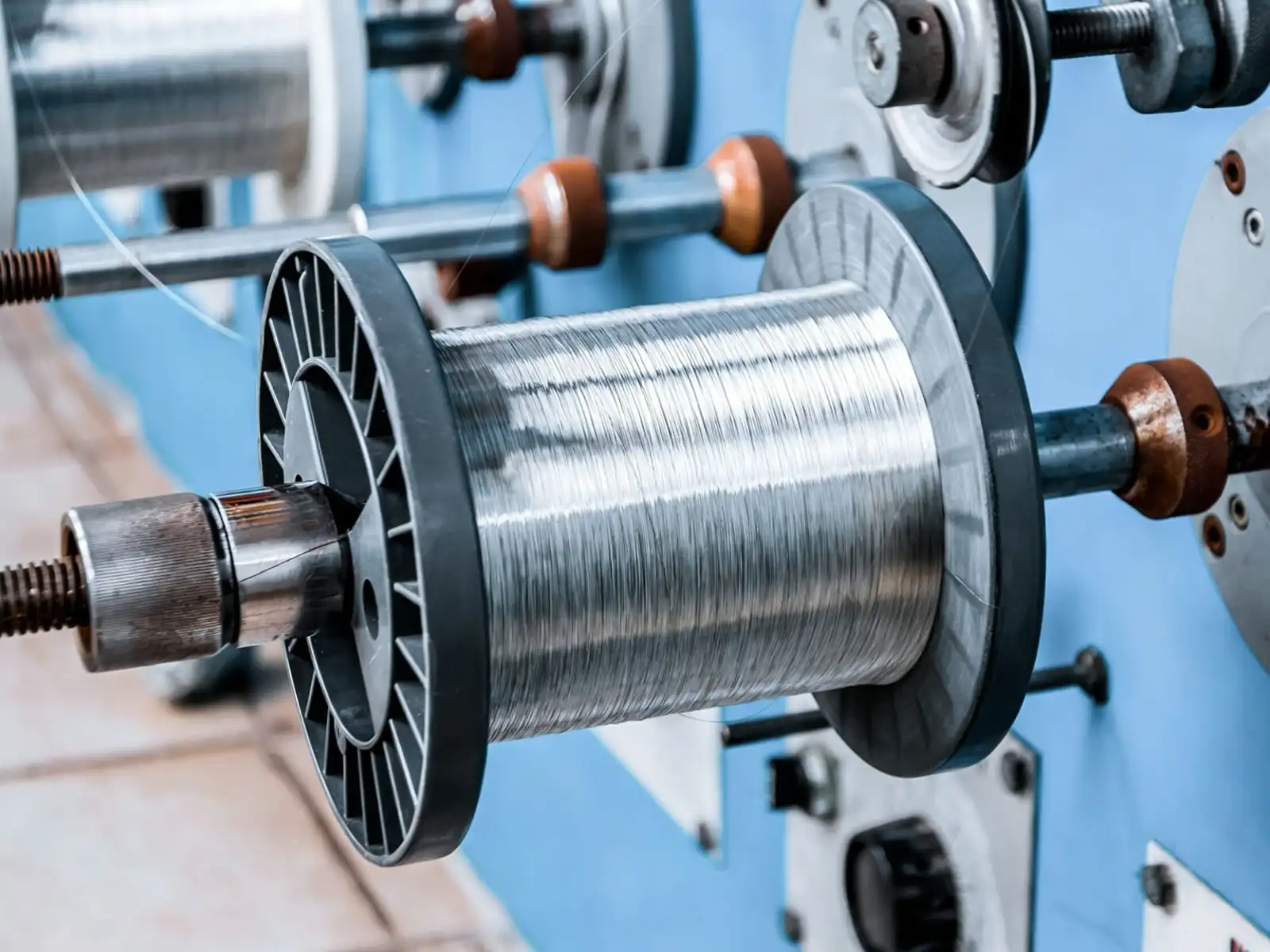
The manufacturing of ASTM B550 zirconium wire is a complex and precise processing procedure that involves key stages such as vacuum self-consuming melting, multiple-pass hot rolling, precision drawing, heat treatment, and surface treatment. The entire production process begins with high-purity zirconium sponge raw material, followed by melting and casting ingots, forging and opening billets, continuous rolling, precision wire drawing, and annealing treatment, ultimately producing high-quality zirconium wire that meets the ASTM B550 standard. This wire possesses excellent corrosion resistance, precise dimensional tolerances, and stable mechanical properties, and is widely used in high-end fields such as chemical corrosion protection, nuclear power, medical devices, and aerospace. Every detail of the manufacturing process directly affects the quality and performance of the final product.
1. What Should You Know About Raw Material Preparation and Smelting Process?
(1) How Should Selection Criteria for High-Purity Zirconium Sponge?
The manufacturing of zirconium wire begins with the careful selection of high-purity zirconium sponge. Industrial pure zirconium (R60702) requires a zirconium content ≥ 99.2%, while zirconium-niobium alloy (R60705) needs the addition of 2.0-3.0% niobium to enhance strength. Impurity elements in the raw materials must be strictly controlled: iron ≤ 0.20%, carbon ≤ 0.05%, oxygen ≤ 0.18%, nitrogen ≤ 0.025%, and hydrogen ≤ 0.005%. These indicators directly determine the corrosion resistance and processing performance of the final zirconium wire. High-quality zirconium sponge appears gray-white, with uniform granules, no obvious oxidation discoloration, and must be inspected batch by batch using methods such as spectroscopy and chemical analysis.
(2) What Should You Know About Vacuum Self-Consumption Electric Arc Melting Technology?
The reactive chemical nature of zirconium requires the use of the Vacuum Arc Remelting (VAR) process. This technique is carried out in a high vacuum environment of 10⁻² to 10⁻³ Pa, where a direct current arc gradually melts the zirconium sponge electrode, and the molten droplets solidify from bottom to top into an ingot in a water-cooled copper crucible. This directional solidification method effectively eliminates pores, inclusions, and segregation, forming a dense and uniform microstructure. High-end production lines usually perform secondary or tertiary remelting to further purify and homogenize the composition. The key parameters of the melting process include current density, melting rate, vacuum level, and cooling rate, which must be precisely controlled to ensure ingot quality.
(3) What Should You Know About Ingot Quality Inspection and Alloying Treatment?
The smelted zirconium ingots need to undergo multiple inspections, including ultrasonic testing, chemical composition analysis, and metallographic examination. Qualified ingots have smooth, crack-free surfaces and uniform, dense internal structures. For R60705 zirconium-niobium alloy, the uniform distribution of niobium is crucial and must be verified through electron probe or energy dispersive spectroscopy. Non-conforming ingots will be returned for remelting. The ingot surface must have the oxide layer and defects mechanically removed to prepare for subsequent hot processing. The entire raw material preparation and smelting process accounts for about 40-50% of the cost of manufacturing ASTM B550 zirconium wire and forms the foundation for ensuring product performance.
2. What Should You Know About Hot Forming Process Route?
(1) What Should You Know About High-temperature Forging and Billet Processing?
Zirconium cast ingots need to undergo high-temperature forging to achieve initial plastic deformation. The forging temperature is usually controlled between 750-950℃, based on the phase transformation characteristics of zirconium: below 750℃, zirconium has low plasticity, while above 950℃, abnormal grain growth can easily occur. Forging is carried out using a hydraulic press or forging hammer, processing the cylindrical ingot into a square or round billet through multi-directional upsetting, stretching, and other procedures, with a compression ratio of over 3: 1, to break the coarse grains of the cast state and improve microstructure uniformity. The forging process must be conducted in an inert atmosphere or vacuum to prevent high-temperature oxidation. After forging, the billet needs to be cooled slowly to room temperature to avoid cracks caused by thermal stress.
(2) What Should You Know About Continuous Rolling Technology?
Modern zirconium wire manufacturing uses a continuous rolling production line, achieving continuous diameter reduction of the billets through multi-frame series connection. The billets are preheated in an induction heating furnace to 950-1150℃, a temperature range suitable for large deformation in the initial rolling stage; as the rolling passes progress, the billet temperature gradually decreases to 850-1050℃ for continuous rolling, and finally, finishing and sizing are completed at 750-850℃. A reversible mobile blooming mill performs the preliminary breaking of large-size ingots, while the continuous rolling main unit ensures ovality ≤ 0.05mm through precise roll gap control and tension adjustment. The fully automated control system monitors process parameters in real time to achieve stable production.
(3) What Should You Know About Online Slitting and Coiling Processing?
The rolled zirconium rods are cut to size through online flying shears, removing the defective parts at both ends. The qualified rods can be either cut into straight bars (length 500-3000mm) or coiled for collection (single coil weight 200-500kg) depending on the requirements of subsequent processes. Coiled zirconium rods provide continuous raw materials for the following drawing operations, improving production efficiency. Straight zirconium rods are suitable for special specifications or small batch production. After cutting, the zirconium rods need to be labeled with grade, furnace batch number, and other information to establish a complete quality traceability system.
Hot processing procedure | Temperature range | Degree of deformation | Key equipment |
Hot forging | 750-950℃ | Compression ratio ≥ 3: 1 | Hydraulic forging machine |
Blooming and rolling | 950-1150℃ | φ100→φ30mm | Reversible Rolling Mill |
Continuous rolling | 850-1050℃ | φ30 → φ6.5 mm | Continuous rolling mill |
Precision Rolling and Sizing | 750-850℃ | φ6.5→φ5.0mm | Finishing mill |
3. What Should You Know About Precision Drawing and Dimensional Control Technology?
(1) What Should You Know About Multi-pass Cold Drawing Process?
From rolled rods of φ5-6mm to finished zirconium wire of φ0.06-7.0mm, 10-30 passes of cold drawing are required. The drawing uses carbide dies, with a reduction per pass controlled between 10-25%, and the total reduction can reach over 99%. During drawing, the surface of the zirconium wire must be coated with a special lubricant to prevent die sticking and surface scratches. The drawing speed is adjusted according to the wire diameter: coarse wire (above φ3mm) can reach 30-50m/min, fine wire (φ0.3-3mm) drops to 5-15m/min, and ultra-fine wire (φ0.06-0.3mm) needs to be controlled at ≤ 5m/min.
(2) What Should You Know About Intermediate Annealing Treatment?
Cold drawing causes work hardening of ASTM B550 zirconium wire, increasing tensile strength but decreasing plasticity. After every 3-5 drawing passes, intermediate annealing is required to restore plasticity. Annealing is carried out in a vacuum furnace or argon-protected furnace, at a temperature of 550-750℃, with a holding time of 1-3 hours. After annealing, the microstructure of ASTM B550 zirconium wire recrystallizes, with fine and uniform grains, providing good processing performance for subsequent drawing. Annealing process parameters need to be precisely adjusted according to the grade and degree of deformation of ASTM B550 zirconium wire. For R60705 alloy, due to the presence of niobium, the recrystallization temperature is higher, and the annealing temperature needs to be appropriately increased.
(3) What Should You Know About Ultra-precision Drawing and Dimensional Tolerance?
The final several drawing steps before the finished product use precision molds and meticulous control to ensure dimensional tolerances of ± 0.01mm. Straightness is controlled within ≤ 1mm/m, and surface roughness Ra ≤ 0.4um. Drawing ultra-fine zirconium wires (φ0.06-0.3mm) is more difficult, requiring multiple gradual reductions, low-speed drawing, and high-frequency online inspection technologies. Laser diameter meters are used throughout the process to monitor wire diameter in real time and automatically feedback to adjust drawing parameters, achieving closed-loop control.
4. What Should You Know About Final Heat Treatment and Surface Treatment?
(1) What Should You Know About Finished Product Annealing and Performance Stabilization?
Finished zirconium wire needs to undergo final annealing to eliminate residual stress and stabilize its structure and performance. The annealing temperature is selected according to its application: soft state (annealed state) 600-700℃, hold for 2-4 hours, then furnace cool to room temperature, with a cooling rate controlled at ≤ 10℃/min to achieve optimal ductility, suitable for cold forming, welding, and other applications; hard state (cold-drawn state) is not annealed or is low-temperature annealed (≤ 450℃) to maintain high strength, suitable for structural parts such as springs and fasteners. The annealing furnace uses vacuum or high-purity argon protection, with oxygen content ≤ 10ppm, to prevent high-temperature oxidation contamination.
(2) What Should You Know About Pickling and Surface Cleaning?
The surface of zirconium wire has oxide scale, oil, and drawing residues, which need to be removed through chemical pickling. A typical pickling solution is a mixture of HF and HNO3, with HF concentration of 5-10% and HNO3 concentration of 30-40%, soaking at room temperature for 5-20 minutes. Pickling removes 0.01-0.05 mm in thickness, exposing a clean metal surface. After pickling, thorough water washing, neutralization, and drying are required to prevent corrosion from residual acid. For high-purity applications such as medical and semiconductor uses, deep cleaning treatments like ultrasonic cleaning, deionized water rinsing, and drying are also necessary.
(3) What Should You Know About Diverse Surface Treatment Options?
According to customer requirements, zirconium wire can be provided in a variety of surface conditions:
Pickled surface: After chemical pickling, the surface is matte gray-white, roughness Ra 0.4-0.8um, suitable for chemical corrosion protection and general welding.
Bright surface: Achieved through mechanical polishing or electrochemical polishing, the surface is mirror-bright with Ra ≤ 0.2 um, suitable for medical devices and electronic leads.
Electrochemical polishing: Dissolving surface micro-protrusions at the anode in a specific electrolyte to obtain an ultra-smooth surface (Ra≤ 0.1um) and extremely high cleanliness, used for semiconductors and medical implants.
Lubricating coating: The surface is coated with a special lubricant to facilitate subsequent cold processing and forming, and to prevent mold sticking.
Surface treatment type | Surface roughness | Main application areas | Processing technology |
Pickled surface | Ra 0.4-0.8 um | Chemical engineering corrosion protection, general welding | Soaking in HF-HNO3 mixed solution |
Glossy surface | Ra ≤ 0.2 um | Medical devices, electronic leads | Mechanical Polishing Electrolytic Polishing |
Electrochemical polishing | Ra ≤ 0.1 um | Semiconductors, biomedicine | Dedicated electrolyte anode treatment |
Lubricating coating | Ra 0.3-0.6 um | Precision cold forming, spring processing | Special lubricant coating |
5. What Should You Know About Quality Inspection and Finished Product Packaging?
(1) What Should You Know About Full-process Quality Control System?
The production of ASTM B550 zirconium wire has established a complete quality control system from raw materials to finished products. Raw material inspection includes chemical composition, impurity content, and sponge quality; process inspection covers ingot flaw detection, forged billet microstructure, rolled material dimensions, and drawn wire diameter; finished product inspection performs multiple indicators such as dimensional tolerances, surface quality, mechanical properties, metallographic structure, and corrosion resistance. Advanced testing equipment such as spectrometers, universal testing machines, metallographic microscopes, and scanning electron microscopes are equipped. Each batch of ASTM B550 zirconium wire products provides a material certificate and inspection report to achieve full traceability of the furnace batch number.
(2) What Should You Know About Mechanical Performance and Corrosion Resistance Verification?
Finished zirconium wire needs to undergo mechanical performance tests such as tensile strength, yield strength, and elongation. R60702 soft zirconium wire has a tensile strength ≥ 380 MPa (tested according to ASTM E8) and elongation ≥ 20%; R60705 zirconium-niobium alloy has a tensile strength ≥ 550 MPa (tested according to ASTM E8), combining high strength with good plasticity. Corrosion resistance is verified through simulated working condition corrosion tests, such as boiling hydrochloric acid, sulfuric acid, and organic acid immersion tests, with a corrosion rate of ≤ 0.1 mm/year. High-end applications also require specialized tests such as intergranular corrosion, stress corrosion, and pitting potential.
(3) What Should You Know About Finished Product Packaging and Supply Forms?
Zirconium wire is supplied in two forms according to specifications and uses:
Coiled zirconium wire: Wound on plastic, metal, or wooden reels, with a single reel length of 500-3000 meters and a weight of 10-50 kg. Suitable for automated welding and continuous production lines. The coils need to be lined with moisture-proof paper, wrapped in plastic bags, and packed in cartons or wooden boxes to prevent damage during transportation.
Straight Zirconium Wire: After straightening and cutting, standard lengths are 500-3000mm per piece, bundled together. Suitable for manual operation and small-batch processing. Each bundle is labeled with grade, specification, furnace batch number, and other information.
The packaging box contains the product certificate, material certificate, user manual, and other documents.
Supply form | Specification Range | Unit length/weight | Applicable Scenarios |
Coiled zirconium wire | φ0.1-3.0mm | 500-3000m/roll | Automatic welding, mass production |
Straight zirconium wire | φ0.5-7.0mm | 500-3000mm per piece | Manual operation, custom processing |
Ultrafine zirconium wire | φ0.06-0.3mm | 100-500m/roll | Precision instruments, medical devices |
Welding wire spool | φ0.8-3.0mm | 1000-5000m/roll | TIG/MIG Automatic Welding |
6. What Is the Conclusion?
The manufacturing of ASTM B550 zirconium wire is a highly specialized precision processing procedure, encompassing core processes such as vacuum melting, hot working and forming, precision drawing, heat treatment, and surface treatment. The precise control of each step determines the corrosion resistance, mechanical properties, and dimensional accuracy of the final product. Modern production lines, by introducing advanced equipment and full-process automated control, have achieved stable mass production of high-end zirconium wire, meeting the strict requirements of industries such as chemical, nuclear power, medical, and aerospace, providing reliable key material support for high-end manufacturing.
7. What Should You Know About Frequently Asked Questions?
Q1: Why must ASTM B550 zirconium wire be produced using vacuum self-consumption melting?
Answer: Zirconium reacts very easily with oxygen, nitrogen, and hydrogen at high temperatures. Smelting in the atmosphere can introduce brittle compounds, which damage plasticity and corrosion resistance. Vacuum self-consuming smelting is carried out in a high-vacuum environment, effectively isolating reactive gases, and through water-cooled copper crucible directional solidification, it eliminates segregation and pores, ensuring the ingot is pure and dense.
Q2: How is the hot working temperature of zirconium wire controlled?
Answer: The forging temperature is controlled between 750 and 950℃, and during the rolling stage it can be extended to 750 to 1150℃. Below 750℃, zirconium has insufficient plasticity and is prone to cracking, while above the upper limit, the grains grow abnormally long and performance decreases. In the entire process, inert gas protection is required to prevent oxidation.
Q3: Why does cold drawing need to be done in multiple passes with intermediate annealing?
Answer: Zirconium work-hardens quickly, and a single pass reduction rate exceeding 25% can easily cause cracking. After every 3 to 5 drawing passes, vacuum annealing at 550 to 750℃ is required to allow the microstructure to recrystallize and restore plasticity. Pure zirconium is annealed at about 600℃, while zirconium-niobium alloys need to be heated above 700℃.
Q4: What are the surface conditions of zirconium wire? How to choose?
Answer: Pickled surface (Ra 0.4-0.8 um) is suitable for chemical corrosion protection and general welding, with moderate cost; bright surface (Ra ≤ 0.2 um) is used for medical devices and electronic leads; electropolished surface (Ra ≤ 0.1 um) is specially used for ultra-high cleanliness scenarios such as semiconductors and biomedical implants; semi-bright surface with lubricating coating is suitable for subsequent cold forming processing.
What Should You Know About Contact Us Immediately?
Baoji Titanium Valley Titanium-Nickel-Zirconium Materials Processing Co., Ltd. (Titanium Valley), as a professional ASTM B550 zirconium wire manufacturer, relies on vacuum self-consuming arc melting, continuous rolling, precision drawing, and a full-process online inspection system to provide full-specification zirconium wire with diameters of φ0.06-10 mm, dimensional tolerance of ± 0.01 mm, and surface roughness Ra 0.1-1.5 um, fully customizable, covering all grades R60702, R60703, R60704, R60705, meeting the stringent requirements of fields such as chemical corrosion resistance, nuclear power industry, medical devices, and aerospace.
We provide complete material certificates compliant with EN 10204-3.1 certification, including actual chemical composition values per heat batch, mechanical performance curves, metallographic reports, and eddy current/ultrasonic non-destructive testing records, ensuring full-chain traceability. Whether you need coiled welding wire, straight structural wire, or ultra-fine precision wire, our technical team can provide comprehensive support from grade selection and process matching to batch traceability. You are welcome to contact us via email at sales@titaniumvalleys.com to confirm specific requirements and obtain product samples, technical information, and detailed quotations.
References
- Wang Junjie, Li Minghua. Processing Technology of Zirconium and Zirconium Alloy Materials. Metallurgical Industry Press, 2019.
- Zhang Guodong, Liu Xiaofeng. Application of Vacuum Self-Consuming Melting Technology in the Preparation of Reactive Metals. Rare Metal Materials and Engineering, 2021, 50(3): 687-694.
- Chen Zhiqiang, Zhao Yongqing. Research on the Hot Working Process and Microstructure Properties of Zirconium Alloy. Materials Review, 2020, 34(12): 12056-12062.
- Liu Jianming, Yang Guanjun. Application of precision drawing technology in the preparation of rare metal wires. Rare Metals, 2018, 42(5): 523-530.
- Zhou Wei, Wang Hua. Surface Treatment Technology of Zirconium Materials and Its Corrosion Resistance Performance Evaluation. Corrosion Science and Protection Technology, 2019, 31(4): 401-408.