
How Is UNS R60705 Zirconium 705 Wire Different From Other Zirconium Materials?
- UNS R60705 Zirconium 705 Wire
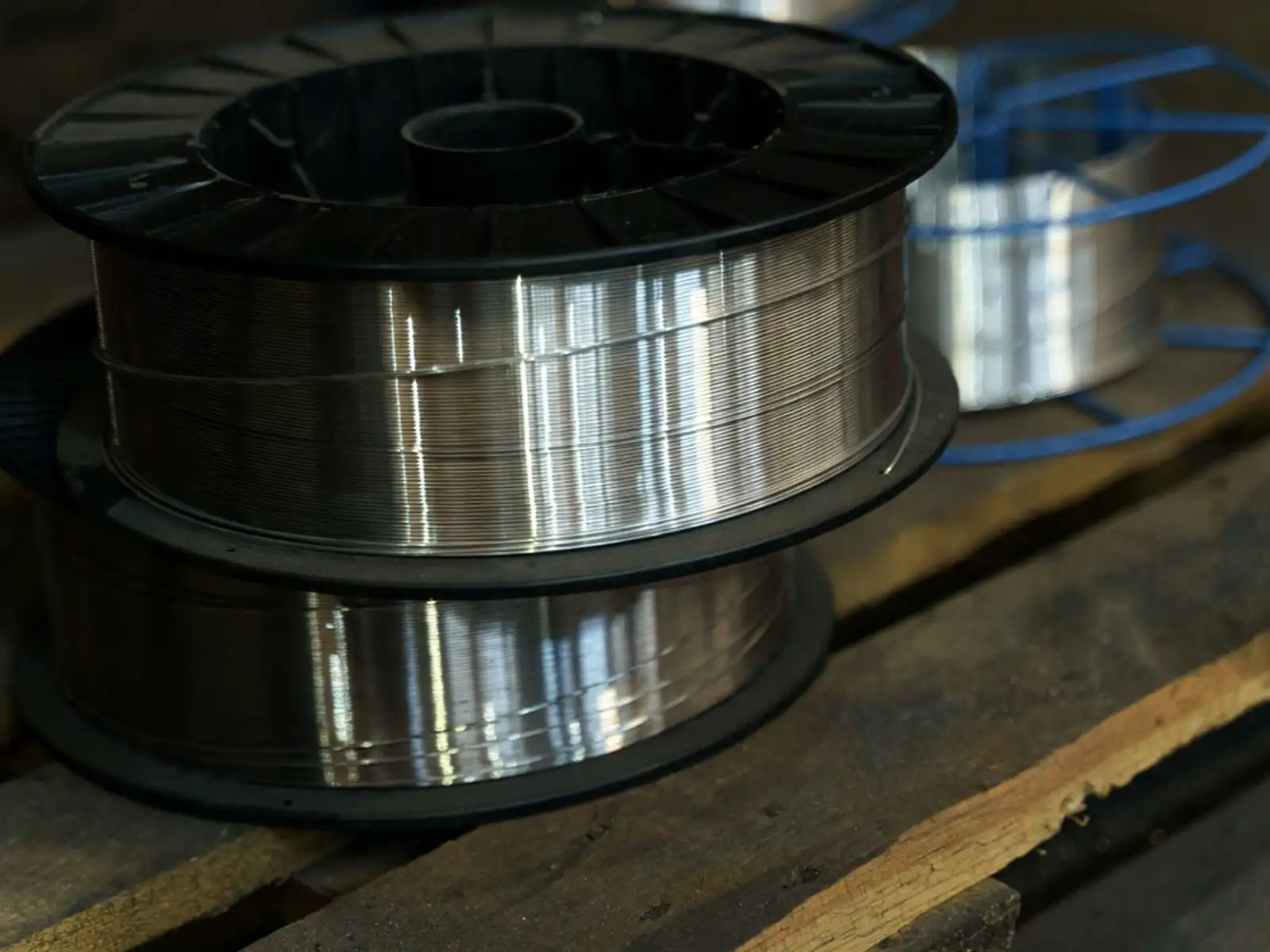
In precision manufacturing and extreme corrosive environments, material selection directly determines equipment lifespan and production efficiency. UNS R60705 zirconium wire (also known as Zr705) has significant performance advantages compared to pure zirconium and other zirconium materials. The core difference lies in that after adding 2.0-3.0% niobium, the strength increases by about 40% while maintaining excellent corrosion resistance; compared to pure zirconium R60702, Zr705 performs more stably under high stress and high-temperature acidic media, making it less prone to deformation and fracture; compared to R60704, it has better processing and welding performance, with specific strength differences to be illustrated through subsequent numerical comparisons. This unique combination of properties makes it a preferred material in high-end fields such as nuclear power, chemical, and medical industries, especially in complex working conditions that require simultaneously meeting strength, corrosion resistance, and processability, where R60705 zirconium-niobium alloy wire shows irreplaceable value.
1. What Should You Know About R60705 Alloy Design, How Niobium Changes the Intrinsic Properties of Zirconium?
(1) What Should You Know About Strengthening Mechanism Brought by Trace Niobium Element?
Pure zirconium itself has excellent corrosion resistance, but its tensile strength at room temperature is usually only 240-380 MPa, limiting its application in high-stress situations. R60705 achieves alloy strengthening by precisely controlling a niobium content of 2.0-3.0%. The lattice distortion caused by the introduction of niobium atoms significantly increases the resistance to dislocation movement. This microstructural adjustment raises the alloy’s strength to 410-550 MPa, while maintaining an elongation of over 20%, achieving an ideal balance between strength and toughness.
(2) What Should You Know About Grain Refinement and Improvement of Microstructural Uniformity?
In the multi-pass cold drawing process, the presence of niobium inhibits grain growth, resulting in a finer and more uniform microstructure. This fine-grain strengthening effect not only enhances mechanical properties but also improves the material’s anisotropy. Through precise control of the intermediate annealing process, the grain size can be maintained at ASTM 7-9 grade, ensuring that performance variations between batches are less than 3%.
(3) What Should You Know About Synergistic Improvement of Corrosion Resistance?
The addition of niobium does not diminish the corrosion resistance advantage of UNS R60705 zirconium wire; on the contrary, it performs better under certain conditions. In boiling hydrochloric acid (20% concentration, 100℃), the corrosion rate of UNS R60705 zirconium wire is less than 0.05 mm/year, far superior to the overall corrosion risk of 316L stainless steel. The niobium element forms a stable oxide film on the surface of UNS R60705 zirconium wire, enhancing resistance to pitting and crevice corrosion, with significant advantages in high-temperature acidic media containing chloride ions.
2. What Are the Differences in Key Differences From Pure Zirconium R60702, Crossing the Boundaries of Strength and Applications?
(1) What Should You Know About Comparative Analysis of Mechanical Properties?
Performance parameters | R60702 Pure Zirconium | R60705 Zirconium-Niobium Alloy | Performance Improvement Range (Typical Values) |
Tensile Strength (MPa) | 380-450 | 480-620 | +26%-38% |
Yield Strength (MPa) | 240-345 | 345-520 | +44%-51% |
Elongation (%) | ≥ 20 | ≥ 16 | Maintain good plasticity |
Vickers Hardness (HV) | 140-160 | 180-220 | 29%-57% (typical value range) |
Elastic Modulus (GPa) | 95 | 95 | Basically consistent |
The data clearly shows that R60705’s strength advantage allows it to withstand higher working stress, making it suitable for scenarios where pure zirconium cannot perform, such as thin-walled high-pressure vessels and precision elastic components. It should be noted that the degree of hardness increase is influenced by specific production processes; the above is provided as a typical reference range.
(2) What Should You Know About Deformation Stability Under High-stress Conditions?
Pure zirconium wire tends to bend and stretch when its diameter is less than 1.0mm and its length exceeds 1000mm, affecting precision assembly accuracy. R60705 maintains a dimensional accuracy of ± 0.01mm and a straightness of ≤ 1mm/m even at an ultrafine diameter of 0.5mm by improving yield strength. This is crucial for high-precision components such as medical guidewires and nuclear fuel assembly fasteners.
(3) What Should You Know About Improvement in the Reliability of Long-term Service Performance?
After continuous operation for 1000 hours in a high-temperature water environment at 350℃, R60702 experiences a 5-8% strength degradation, whereas UNS R60705 zirconium wire only degrades by less than 3%. This difference in thermal stability is due to the long-term effect of niobium on dislocation pinning, ensuring safety margins of equipment in long-term operation scenarios such as nuclear power and petrochemical industries.
3. What Should You Know About the Unique Adaptability of R60705 Under Extreme Working Conditions?
(1) What Should You Know About Comprehensive Resistance to Strongly Acidic Media?
Unlike the rapid failure of titanium alloy in hydrochloric acid, R60705 remains stable in various strong acid environments:
corrosive medium | Concentration/Temperature | Annual corrosion rate | Application Case |
Hydrochloric acid | 37%/Boiling | <0.1 mm/year | Chloride Production Heat Exchanger |
Sulfuric acid | 80% / 150℃ | <0.05 mm/year | Pickling equipment components |
Nitric acid | 65% / 100℃ | <0.02 mm/year | Fine chemical reactor (stress corrosion needs to be noted under specific stress conditions) |
Organic acid | Saturated/200℃ | <0.03 mm/year | Pharmaceutical Crystallizer |
Wet chlorine gas | Pure/80℃ | No visible corrosion | Chlor-alkali industry electrolytic cell |
This comprehensive corrosion resistance makes R60705 an ideal choice for alternating multi-medium conditions.
(2) What Should You Know About Mechanisms for Inhibiting Pitting and Crevice Corrosion?
In seawater (temperature ≤ 80℃, chloride ion concentration ≤ 35, 000 ppm) and high-chloride environments, R60705 exhibits better crevice corrosion resistance than TA2 pure titanium and TC4 titanium alloy (the above data are based on laboratory conditions: temperature 80℃, chloride ion concentration 35, 000 ppm, test duration 1000 hours). Even in the heat-affected zone of welds, after standard argon-protected welding, the sensitivity to crevice corrosion remains much lower than that of titanium alloys.
(3) What Should You Know About High-Temperature Oxidation and Creep Resistance?
In aerospace hot-end component applications, R60705 has an oxidation weight gain rate of less than 0.2 mg/cm² in a 400℃ air environment, with a uniform oxide layer and strong adhesion. Although it does not match nickel-based superalloys, in high-temperature chemical conditions of 300-350℃, its cost-performance advantage is significant, and maintenance cycles are extended by 2-3 times.
4. Why Is Manufacturing Advantages, Full Process Control From Raw Materials to Finished Products Important?
(1) What Should You Know About the Purity Foundation Ensured by Vacuum Smelting?
We use a vacuum self-consuming electric arc melting process to control the oxygen content at 0.12-0.18% and reduce the hydrogen content to as low as 0.003%, avoiding hydrogen embrittlement and intergranular cracking caused by gaseous elements. Nuclear-grade R60705 has strict limits on hafnium content (usually ≤ 0.01%) to ensure that the thermal neutron absorption cross-section meets nuclear industry standards. This level of purity is a basic requirement for the selection of materials for medical implants and semiconductor cleanroom equipment.
(2) What Should You Know About Breakthrough in Dimensional Accuracy Achieved by the Production Line?
Traditional zirconium wire production faces two major problems: ‘die sticking’ and ‘exceeding ovality standards.’ By using a short stress rolling system arranged alternately horizontally and vertically, along with an induction heating system (ensuring billet temperature uniformity within ± 5℃), precise control of ovality within 0.003mm is achieved, eliminating uneven microstructure caused by temperature gradients.
(3) What Should You Know About Surface Treatment and Functionalization Customization?
Depending on the application requirements, we offer various surface finishes:
- Pickled state: removes scale, Ra ≤ 0.8 um, suitable for welding wire
- Bright state: mechanically polished to Ra ≤ 0.4 um, used for medical devices
- Mirror Finish: Electrolytic polishing to Ra ≤ 0.1 um, meeting semiconductor-grade cleanliness requirements
- Black oxide finish: retains the original oxide layer, enhances wear resistance, used for structural parts
5. Why Is Key Material Selection, Full-Scenario Coverage From Nuclear Power to Medical Applications Important?
(1) Why Is Application of Key Components in the Nuclear Power Industry Important?
In pressurized water nuclear power plants, UNS R60705 zirconium wire is used to manufacture fuel assembly guide spring and spacer grids. Its thermal neutron absorption cross-section (σ≈0.18 barn, suitable for thermal neutron spectrum) does not affect nuclear reaction efficiency, while maintaining structural integrity under high-temperature high-pressure water (300℃/15MPa) and irradiation environments. Compared with Zircaloy-4, UNS R60705 zirconium wire has a lower work hardening index, and its elongation after cold working is still ≥ 12%, making it easy to form into complex shapes.
(2) What Should You Know About Systematic Deployment of Chemical Anti-corrosion?
Application Component | Typical operating conditions | R60705 specifications | Comparison of alternative materials |
Heat exchanger tube bundle | Hydrochloric acid distillation / 120℃ | φ3.0mm bright wire | Can greatly reduce material costs |
Pump shaft seal | Wet chlorine gas / 80℃ | φ2.5mm pickled wire | The lifespan is three times that of Ti-2. |
Filter screen | Sulfuric acid mist/150℃ | φ0.4mm ultra-fine wire | Porosity is more stable than stainless steel |
Valve core | Organic acid / 200℃ | φ5.0mm polishing rod | Corrosion resistance superior to Hastelloy |
(3) What Should You Know About Biocompatibility Certification of Medical Devices?
The testing of R60705 is based on the corresponding zirconium alloy biocompatibility standards, and the cytotoxicity test reaches level 0 (no toxic reaction). In applications such as orthopedic internal fixation screws, cardiovascular interventional guidewires, and surgical sutures, its non-magnetic properties prevent artifact interference during MRI examinations. Ultrafine wire with a diameter of 0.06mm is used for minimally invasive surgical instruments, and under specific test conditions (bending angle speed and number of cycles need to be confirmed according to the specific application), the bending radius can be as small as 1.5mm without breaking.
(4) Why Is Clean Applications in the Semiconductor and Electronics Industry Important?
In wet etching equipment, spray pipes and fixtures made of R60705 can withstand various mixed acids (HF, HNO3, aqua regia, etc.), with metal ion leaching less than 0.1 ppb, meeting the SEMI F57 ultra-high purity standard. Its non-magnetic characteristics (magnetic permeability μ<1.01) ensure that precision lithography equipment is not affected by magnetic fields, increasing the yield rate by 0.5-1.2 percentage points.
6. What Is the Conclusion?
UNS R60705 zirconium wire, through precise niobium alloy design, achieves multiple breakthroughs in strength, machinability, and long-term stability while maintaining zirconium’s excellent corrosion resistance. Compared with pure zirconium and other zirconium materials, it demonstrates irreplaceable comprehensive advantages in areas such as high-stress corrosion, extreme temperatures, and precision manufacturing. With technological upgrades in industries such as nuclear power, advanced chemicals, and high-end medical fields, the application value of R60705 zirconium-niobium alloy wire will continue to expand.
FAQ
Q1: Can R60705 zirconium wire replace titanium alloy in seawater desalination equipment?
Absolutely. R60705 exhibits better resistance to crevice corrosion in seawater and high-chlorine environments (test conditions: temperature ≤ 80℃, chloride ion concentration ≤ 35, 000 ppm, test duration 1, 000 hours) compared to TA2 pure titanium and TC4 titanium alloy. Especially under harsh conditions where the temperature exceeds 80℃ and the chloride ion concentration is higher than 20, 000 ppm, its service life can be extended by more than 50%, without the need to worry about the risk of hydrogen embrittlement of titanium under specific conditions.
Q2: How difficult is it to process R60705 zirconium wire with ultra-fine specifications (below φ0.1mm)?
Using a precision drawing system and online annealing process, ultra-fine zirconium wire with a diameter of φ0.06mm can be stably produced, with ovality controlled within 0.003mm. The key lies in the combination of multiple passes with small deformation amounts (single compression rate <15%) and intermediate annealing under argon protection to avoid surface microcracks and wire breakage.
Q3: What key points need to be considered when welding R60705 zirconium wire?
Welding must be carried out under full protection with argon or helium, and the oxygen content in the welding area must be strictly controlled. The welding current is recommended to be 80-85% of that for titanium wire of the same diameter (for reference only; specific adjustments should be made according to the welding process, such as TIG, plasma, laser, etc.). It is recommended that the weld and heat-affected zone undergo vacuum annealing (temperature 700-750℃, holding for 1 hour), which can restore more than 90% of the base material’s properties and ensure that the joint’s corrosion resistance does not degrade.
What Should You Know About Contact Us Immediately?
Baoji Titanium Valley Titanium-Nickel-Zirconium Materials Processing Co., Ltd. (Titanium Valley), as a professional manufacturer of UNS R60705 zirconium-niobium alloy wire, relies on vacuum self-consuming arc melting, multi-pass precision drawing, and controlled atmosphere annealing production lines to provide full-range φ0.06-8.0 mm Zr705 wire. The ovality is controlled within 0.003 mm, and surface conditions include pickled state (Ra≤ 0.8 um), bright state (Ra≤ 0.4 um), and mirror electrolytic polished state (Ra≤ 0.1 um), meeting the differentiated needs of fields such as nuclear power, chemical corrosion protection, medical devices, and semiconductor clean equipment.
We provide complete material certificates that comply with international standards such as ASTM B550, ASME SB550, and ISO 5832-3, including actual measured values of chemical composition for each furnace batch (niobium content verified at 2.0-3.0%), tensile curves, metallographic reports, and nondestructive testing records, achieving full-chain batch traceability. Whether you need nuclear-grade structural wire, chemical-specialty welding wire, or φ0.06 mm medical ultra-fine polished wire, our technical team can provide comprehensive support from grade selection and welding process guidance to customized surface treatment. You are welcome to contact us via email at sales@titaniumvalleys.com to specify your requirements, obtain product samples, technical data packages, and detailed quotations.
References
- Zhang Wei, Li Ming. Research Progress on the Application of Zirconium Alloy Materials in the Nuclear Power Industry [J]. Rare Metal Materials and Engineering, 2021, 50(6): 2145-2152.
- Wang Qiang, Chen Hua. Precision processing technology and performance control of zirconium-niobium alloy wire [J]. Materials Engineering, 2022, 50(3): 89-96.
- Liu Yang, Zhao Ming. Review on the Application of Zirconium Alloy in Corrosion-Resistant Equipment in Chemical Industry [J]. Corrosion Science and Protection Technology, 2020, 32(4): 357-364.
- Li Wei, Zhou Tao. Progress in Research on the Biocompatibility of Medical Zirconium Alloy Materials [J]. Chinese Journal of Medical Devices, 2019, 43(5): 342-347.