
Applications of UNS R60705 Zirconium Wire in Modern Industrial Manufacturing
- UNS R60705 Zirconium Wire
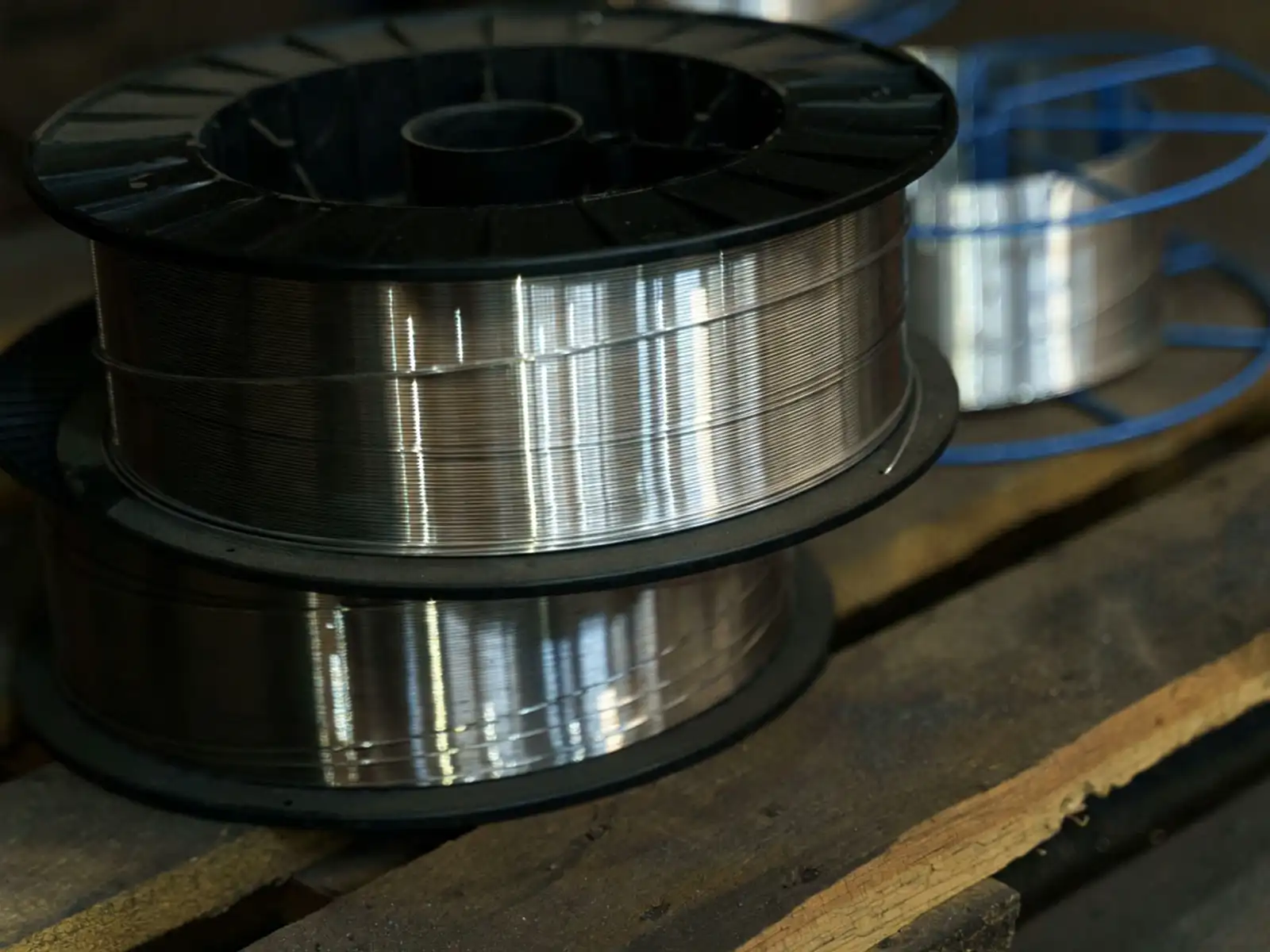
UNS R60705 (Zr-2.5Nb) zirconium wire is a high-strength zirconium alloy wire product that plays a critical role in nuclear industry, chemical engineering, marine engineering, and medical devices. By adding 2.0–3.0% niobium, this alloy significantly enhances the strength and high-temperature performance of pure zirconium while maintaining the inherent excellent corrosion resistance characteristic of zirconium materials. This article systematically introduces the applications of UNS R60705 zirconium wire in modern industrial manufacturing from four perspectives: material properties, application areas, processing techniques, and quality control.
1. Material Properties of UNS R60705 Zirconium Wire
(1) Balance of High Strength and Excellent Corrosion Resistance
The tensile strength of UNS R60705 zirconium wire reaches 550–700 MPa (annealed state), far exceeding that of pure zirconium wire (Grade 2, 340–450 MPa). The addition of niobium significantly improves material strength through solid-solution strengthening and fine second-phase precipitation. Meanwhile, the inherent corrosion resistance of the zirconium matrix is maintained, with corrosion rates in seawater, chlorides, and alkaline solutions below 0.001 mm/year.
(2) Outstanding Resistance to Hydrogen Embrittlement
In hydrogen-containing environments such as nuclear reactors, UNS R60705 zirconium wire demonstrates excellent resistance to hydrogen embrittlement. The addition of niobium reduces the diffusion rate of hydrogen in the zirconium matrix, slowing the formation and growth of hydrides. In environments at 300–350°C with hydrogen content up to 500 ppm, the hydrogen embrittlement sensitivity of UNS R60705 is significantly lower than that of pure zirconium.
(3) Low Neutron Absorption Cross-Section
UNS R60705 zirconium wire has a low neutron absorption cross-section (0.18 barns) and does not significantly absorb neutrons in nuclear reactors. Therefore, it is widely used as spacer grid wire for nuclear fuel assemblies and spacer retainers for fuel rods.
Table 1. Performance Comparison of Zirconium Alloys
| Performance Index | UNS R60705 | Grade 2 Pure Zr | 316L Stainless Steel |
| Tensile Strength (MPa) | 550–700 | 340–450 | 515–620 |
| Yield Strength (MPa) | 400–550 | 275–345 | 290–515 |
| Elongation (≥) | ≥15% | ≥20% | ≥20% |
| Density (g/cm³) | 6.55 | 6.52 | 8.0 |
2. Main Application Areas of UNS R60705 Zirconium Wire
(1) Nuclear Industry
In the nuclear industry, UNS R60705 zirconium wire is primarily used to manufacture spacer grid wires for fuel assemblies, guide tube supports, and in-core instrument positioning components. Its high strength ensures the structural stability of fuel assemblies in the high-temperature, high-pressure water flow within the reactor core, while its low neutron absorption cross-section guarantees neutron economy of the reactor.
(2) Chemical Engineering Equipment
In the chemical industry, UNS R60705 zirconium wire is used to manufacture corrosion-resistant springs, fasteners, and filter meshes. Its excellent resistance to chloride corrosion gives it unique advantages in salt chemical industry, chlor-alkali industry, and seawater desalination equipment.
(3) Marine Engineering
In marine engineering, UNS R60705 zirconium wire is mainly used to manufacture reinforcement cores for deep-sea cables, subsea valve springs, and structural components of ocean monitoring equipment. Its corrosion resistance to seawater far exceeds that of stainless steel and titanium alloys, with a service life of over 50 years in 3,000-meter deep-water environments.
(4) Medical Devices
UNS R60705 zirconium wire exhibits good biocompatibility and can be used to manufacture orthopedic implants, dental orthodontic wires, and surgical sutures. Its high strength allows for the design of finer medical instruments, reducing trauma to patients.
Table 2. Application Areas Summary
| Application Area | Specific Components | Key Performance Requirements | UNS R60705 Performance |
| Nuclear Industry | Spacer Grid Wires | High Strength + Low Neutron Absorption | Meets Requirements |
| Chemical Equipment | Corrosion-Resistant Springs | Chloride Corrosion Resistance | Excellent |
| Marine Engineering | Deep-Sea Cables | Seawater Resistance + Fatigue Resistance | Good |
| Medical Devices | Orthopedic Implants | Biocompatibility + High Strength | Complies with Standards |
3. Processing Technology of UNS R60705 Zirconium Wire
(1) Melting and Casting
UNS R60705 zirconium wire is produced using Vacuum Arc Remelting (VAR) or Electron Beam Cold Hearth Melting (EBCHM) processes. During melting, interstitial elements such as oxygen, nitrogen, and hydrogen are strictly controlled to ensure material purity. Typical composition control requirements are: oxygen ≤ 0.18%, nitrogen ≤ 0.03%, hydrogen ≤ 0.005%.
(2) Hot Rolling and Forging
After the ingot is heated to 1,000–1,100°C, multi-pass hot rolling and forging are performed to process the material into billet bars. Argon gas protection is employed during hot working to prevent material oxidation and gas absorption.
(3) Cold Drawing
After pickling and phosphate saponification treatment, the billet undergoes multi-pass cold drawing to produce zirconium wire of the required diameter. During cold drawing, the deformation per pass (typically 5–15%) must be controlled, and intermediate annealing is performed to eliminate work hardening.
(4) Heat Treatment
The annealing temperature for UNS R60705 zirconium wire is typically 550–650°C, held for 1–2 hours followed by furnace cooling or air cooling. Heat treatment eliminates cold-working stresses and restores the material ductility and corrosion resistance.
Table 3. Key Processing Parameters
| Processing Step | Temperature Range | Deformation per Pass | Precautions |
| Hot Rolling | 1,000–1,100°C | 20–30% | Argon Gas Protection |
| Cold Drawing | Room Temperature | 5–15% | Intermediate Annealing |
| Annealing | 550–650°C | – | Hold for 1–2 Hours |
| Pickling | Room Temperature | – | HF + HNO₃ Mixed Acid |
4. Quality Control of UNS R60705 Zirconium Wire
(1) Chemical Composition Analysis
Direct-reading spectrometers and gas analyzers are used to detect the chemical composition of UNS R60705 zirconium wire, ensuring that the niobium content is within the 2.0–3.0% range and interstitial element content meets standard requirements.
(2) Mechanical Property Testing
Tensile tests are conducted in accordance with ASTM E8 to measure tensile strength, yield strength, and elongation. Hardness testing uses Vickers hardness (HV), with at least 3 points tested per batch.
(3) Non-Destructive Testing
Eddy current testing (ET) is used to detect surface and near-surface defects in zirconium wire, with detection sensitivity equivalent to a φ0.1 mm flat-bottomed hole. Ultrasonic testing (UT) is used for internal defect detection.
(4) Metallographic Examination
Representative samples are prepared for metallographic examination, and the microstructure is observed under an optical microscope. The standard microstructure of UNS R60705 zirconium wire consists of fine Nb-rich phases distributed on an α-Zr matrix. The grain size should reach ASTM Grade 8 or finer.
5. Conclusion
With its high strength, excellent corrosion resistance, and low neutron absorption cross-section, UNS R60705 zirconium wire plays an irreplaceable role in nuclear industry, chemical engineering, marine engineering, and medical devices. With advances in materials science and manufacturing technology, the application scope of UNS R60705 zirconium wire will continue to expand.
FAQ
Q1: What advantages does UNS R60705 zirconium wire have compared to pure zirconium wire (Grade 2)?
The tensile strength of UNS R60705 is approximately 50–60% higher than Grade 2, with better high-temperature performance and stronger resistance to hydrogen embrittlement. However, the cost is also higher, approximately 1.5–2 times that of Grade 2.
Q2: Can UNS R60705 zirconium wire be welded?
Yes. UNS R60705 zirconium wire can be welded using TIG and MIG welding processes. During welding, high-purity argon gas protection must be used to prevent high-temperature oxidation.
Q3: What are the standard specifications for UNS R60705 zirconium wire?
The standard diameter range is 0.1–10.0 mm, with custom lengths available per customer requirements. Surface roughness Ra ≤ 0.8 μm, straightness ≤ 1.0 mm/m.
Finding a Reliable UNS R60705 Zirconium Wire Supplier
Baoji Titanium Valley Titanium-Nickel-Zirconium Material Processing Co., Ltd., as a professional manufacturer of high-end rare metal processing, is equipped with Danieli rolling production lines from Italy, with an annual zirconium wire production capacity exceeding 500 tons. The company provides full-size customization and EN 10204 3.1 certification services. Contact us immediately for technical support and quotation: sales@titaniumvalleys.com
For a broader view of available grades, supply forms, and related specifications, explore our Zirconium Wire category.
For product-level details and supply options, you can also review our UNS R60705 Zirconium Wire page.
References
ASTM B551-21 Standard Specification for Zirconium and Zirconium Alloy Bars and Rods[S]. West Conshohocken: ASTM International, 2021.
GB/T 27634-2011 Nuclear-Grade Zirconium Alloy Tubes, Bars and Wires[S]. Beijing: Standards Press of China, 2011.