
How Do You Interpret the Stress-Strain Curve of Gr2 Titanium Wire?
- Gr2 Titanium Wire
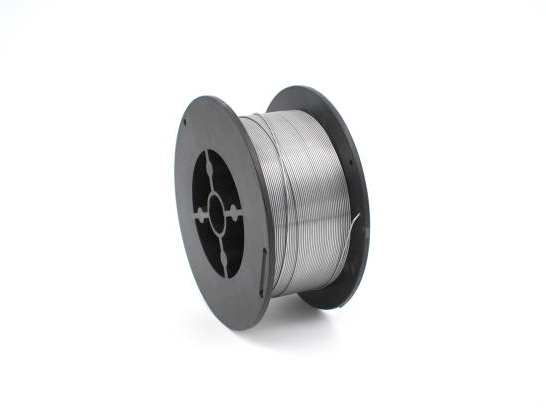
The stress-strain curve acts as a core tool to evaluate mechanical properties of Gr2 titanium wire. The curve shows four distinct sections: elastic zone, yield zone, work hardening zone and fracture zone. We obtain elastic modulus, yield strength, tensile strength and elongation from the curve. Per ASTM B863, annealed Gr2 titanium wire has yield strength from 275 MPa to 410 MPa, tensile strength from 345 MPa to 480 MPa and elongation above 20%. Engineers refer to these parameters to optimize designs for chemical equipment, marine facilities and medical devices. It prevents fatigue failure and brittle fracture, and boosts product safety and economic benefits.
1 Basic Structure and Physical Meaning of Stress-strain Curves
1.1 Four Key Stages of Curve Changes
Gr2 titanium wire follows typical metal deformation rules during tensile tests. The elastic zone shows a linear trend. The slope equals elastic modulus at about 105 GPa. The material fully returns to original shape after load removal. A clear yield plateau or deviation from the linear line marks the start of plastic deformation. Annealed material has yield strength from 275 MPa to 410 MPa. Stress keeps rising in the work hardening zone until it reaches peak tensile strength of 345 MPa to 480 MPa. Local strain surges in the necking stage and leads to final fracture.
1.2 Curve Differences under Different Heat Treatment States
Annealed Gr2 titanium wire has elongation above 20%. Its work hardening section stays gentle. It suits complex forming work. Cold worked wire gains higher strength but lower elongation. Its curve has a steeper slope. Cold worked material still has definite yield strength. Do not ignore these values when calculating allowable stress. Refer to actual test data for performance of cold worked products, which varies with cold reduction.
1.3 Influence of Material Purity on Curve Shape
Oxygen content ≤ 0.25% is a major factor for Gr2 titanium wire. Oxygen atoms create interstitial solid solution strengthening. It raises strength and reduces ductility. Iron impurities ≤ 0.30% form second-phase particles. They make yield points more obvious and cut uniform elongation. Strictly control hydrogen content ≤ 0.015% to avoid hydrogen embrittlement and early fracture on the curve.
2 Extraction and Engineering Significance of Key Mechanical Parameters
2.1 Measurement of Elastic Modulus and Yield Strength
Calculate elastic modulus from the slope of the elastic section. Gr2 titanium wire has elastic modulus around 105 GPa. We use the 0.2% offset method to determine yield strength. Draw a line parallel to the elastic line at 0.2% strain. The stress at the intersection point is yield strength. Engineers generally take 60% to 70% of yield strength as allowable stress for chemical equipment.
2.2 Practical Application of Tensile Strength and Elongation
Tensile strength stands for the maximum load the material can bear. Annealed Gr2 titanium wire with 345 MPa to 480 MPa tensile strength meets most industrial requirements. Elongation reflects plastic deformation capacity. Elongation above 20% prevents cracks during welding and bending. Good ductility lets titanium wire absorb wave impact energy without brittle fracture in marine facilities. It also supports precision bending and weaving for medical parts.
2.3 Calculation Value of Strain Hardening Exponent
Calculate strain hardening exponent (n value) via logarithmic analysis on the work hardening section. A higher n value means more obvious strength gain during plastic deformation. It benefits cold forming. Proper strain hardening raises wire strength during wire drawing. Control the range to avoid excessive hardening and difficult processing. This parameter sets the interval for intermediate annealing in multi-pass drawing.
| Mechanical Parameter | Annealed | Cold Worked | Application Guidance |
|---|---|---|---|
| Tensile Strength (MPa) | 345 ~ 480 | Increases with cold reduction | Select grade by load capacity |
| Yield Strength (MPa) | 275 ~ 410 | Increases with cold reduction | Determine allowable design stress |
| Elongation (%) | ≥ 20 | Decreases | Evaluate formability |
| Elastic Modulus (GPa) | About 105 | About 105 | Calculate elastic deformation |
Note: Data follows ASTM B863 standards.
3 Influence of Temperature and Environment on Curve Characteristics
3.1 Deformation Behavior at Low Temperatures
Gr2 titanium wire keeps good toughness down to -253 ℃ (liquid hydrogen). Its yield strength and tensile strength rise at low temperatures. Elongation remains within normal range. Its hexagonal lattice structure resists ductile-brittle transition. It works well for cryogenic tanks and low-temperature piping.
3.2 Strength Attenuation at High Temperatures
The curve shows obvious softening at high temperatures. Yield strength and tensile strength drop while elongation rises. High temperature accelerates creep deformation and creates time-dependent strain. Revise allowable stress according to operating temperature when designing chemical reactors.
3.3 Stress Corrosion Sensitivity in Corrosive Media
The curve may show early fracture in seawater and acid solutions. This phenomenon indicates stress corrosion cracking. Commercially pure titanium has stable passive film and good resistance. Take precautions in hot concentrated hydrochloric acid and fluorine-containing media. Use ASTM B117 salt spray tests to evaluate long-term performance in marine environments.
| Environmental Condition | Temperature Range | Strength Trend | Elongation Trend | Typical Application |
|---|---|---|---|---|
| Low Temperature | -253 ℃ ~ Room Temperature | Rises | Stable | Liquefied gas tanks, cryogenic equipment |
| Room Temperature Atmosphere | 20 ℃ ~ 100 ℃ | Standard value | ≥ 20 % | Chemical pipes, general structural parts |
| High Temperature | 300 ℃ ~ 450 ℃ | Drops | Rises | Heat exchangers, high-temperature reactors |
| Corrosive Media | Room Temperature | May drop | May cause early fracture | Marine engineering, electrolytic cells |
Note: Actual performance changes depend on temperature, medium and exposure time. Verify via field tests.
4 Application of Curve Analysis in Quality Control and Material Selection
4.1 Batch Stability Evaluation
Compare stress-strain curves of different batches to judge production stability. Keep deviation of key mechanical parameters within specified limits. Advanced automatic production lines ensure uniform microstructure and steady performance across batches.
4.2 Identify Defective Products via Abnormal Curves
Internal defects lead to early yield, abnormal strength or reduced elongation on curves. Surface cracks cause sudden stress drop at low strain. Inclusions trigger premature fracture. Combine eddy current and ultrasonic testing with curve analysis to screen unqualified products. Control dimensional tolerance strictly to avoid uneven stress from geometric defects.
4.3 Material Selection for Different Scenarios
| Application Field | Key Curve Features | Performance Advantages |
|---|---|---|
| Welded Parts | High elongation, gentle hardening section | Good weld matching, low crack risk |
| Chemical Equipment | Balanced strength and ductility | Good corrosion resistance and formability |
| Marine Engineering | Stable performance under cyclic load | Long service life |
| Medical Devices | High ductility, low residual stress | Suitable for precision forming |
| Elastic Components | Distinct elastic section, moderate yield strength | Stable elastic recovery, long fatigue life |
5 Advanced Testing Technologies to Improve Curve Accuracy
5.1 High-precision Tensile Testing Equipment
Modern electronic universal testing machines adopt high-resolution sensors. Force accuracy stays within 0.5%. Displacement accuracy reaches 0.01 mm. Special clamps prevent fracture at gripping points for wire from φ0.1 mm to φ6.5 mm. Control strain rate at 0.5% ~ 5% per minute for repeatable data. Temperature compensation systems reduce errors from ambient fluctuation.
5.2 In-situ Observation of Micro Deformation
Combine digital image correlation (DIC) technology to observe surface strain distribution in real time. We see expansion of Lüders bands in the yield stage and uniform necking in the hardening stage. Transmission electron microscopy reveals dislocation movement and twinning. These microscopic principles explain macroscopic curve changes. Optimize heat treatment parameters to adjust curve shapes precisely.
5.3 Correlation between Fatigue Performance and Stress-strain Curves
Draw fatigue curves via cyclic loading tests. The area of hysteresis loops reflects energy dissipation and relates to fatigue life. Materials with larger hysteresis loops and higher elongation perform better under alternating load. Use this rule to select materials for sports equipment and vibrating parts.
Conclusion
The stress-strain curve links material properties and engineering applications. Accurate curve reading helps engineers obtain elastic modulus, yield strength and elongation. Master the influence of temperature and media to select materials reasonably. Modern testing tools raise data accuracy. This method provides reliable reference for chemical, marine and medical industries.
FAQ
1. How to judge if Gr2 titanium wire fits welding work via stress-strain curves?
Jagged lines stand for uneven deformation. Inclusions, inconsistent microstructure or surface defects cause this issue. Qualified products have smooth continuous curves. Advanced production and full inspection eliminate such problems.
Heat treatment and cold reduction create differences between annealed, half-hard and full-hard wire. Tiny changes of oxygen and iron content also affect curve shapes. Strict composition control guarantees batch consistency.
Contact Us
Baoji Titanium Valley Titanium Nickel Zirconium Material Processing Co., Ltd. is a professional supplier of Gr2 titanium wire. We run world-class Danieli production lines with annual output of 5000 tons. We offer customized Gr2 titanium wire from φ0.06 mm to φ10 mm. Send your requirements for technical solutions and quotations: sales@titaniumvalleys.com
References
- Liu Qing. Microstructure and Properties of Titanium and Titanium Alloys [M]. Beijing: Metallurgical Industry Press, 2011.
- Zhou Lian, Zhang Xiaoming, Zhao Yongqing. Materials Science and Technology of Titanium Alloys [M]. Beijing: Science Press, 2008.
- Li Chenggong, Wang Zhendong. Titanium and Its Applications [M]. Beijing: Chemical Industry Press, 2006.
- Zhao Yongqing, Hong Quan, Ge Peng. Handbook of Titanium Alloys [M]. Beijing: Chemical Industry Press, 2012.